

Andrew C. Revkin, one of the most influential and respected reporters on the environment, will take a buyout from The New York Times as part of the paper’s current round of budget cuts. His departure, after nearly fifteen years at the Times, is sure to leave a big hole in the publication’s coverage of climate change at a time when this controversial issue—and what to do about it—is at the top of the American and international agenda as never before. Revkin is currently on assignment covering the Copenhagen climate change summit and will step down from his staff reporting post next Monday after returning to New York.
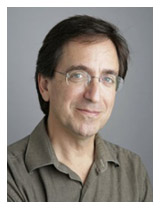 Although Revkin will leave the Times’s staff, he told CJR he hopes to continue writing his popular New York Times blog, Dot Earth, at least through the end of the year and is talking with the paper’s management about continuing to do so on a contract basis beyond that. He has also accepted a new position as a “senior fellow for environmental understanding” at Pace University, where he will teach, write and develop new environmental programs at the Pace Academy for Applied Environmental Studies in White Plains, New York. He received an honorary doctorate from Pace in 2007.
“I want to look at the role of journalism in the larger world of environmental communication, how information matters in terms of policy and behavior,” Revkin, 53, said in a recent interview. He plans to join the Pace Academy in February for the spring semester. Revkin’s editor at the Times, Erica Goode, declined to comment on his imminent departure, saying that she is not at liberty to discuss the buyouts.
[Update: Late this morning, Goode confirmed that Revkin would be leaving the staff, but continuing to do his Dot Earth blog for the Times.
“We’re really sorry that Andy is leaving,” Goode said. “Obviously, his enormous depth of knowledge is of such great value here. But I also know that he is doing something he wants to do and that he had been thinking about this for a number of years…. Dot Earth is an important and popular part our environmental coverage. I’m delighted that he will continue to keep doing it.”]
In addition, Revkin will focus on writing books, including a new one about climate change, the environment, and the linked issues of sustainability and population — “how the Earth can head toward 9 billion people in 2050 with the fewest regrets,” he said. This is the topic explored on Dot Earth, whose audience has grown to about 300,000 unique visitors each month since he started it in October 2007. Revkin is also finishing a book on “the age of disasters” for middle-school children.
“I need to do more synthesis. I haven’t had time for years,” said Revkin, adding that he has been thinking of making a shift toward academia for the last two years. Since joining the Times in 1995, his front-line reporting on climate change has often led the way for national and international coverage of the issue. In a career spanning more than 25 years, Revkin has become one of the most versatile, prolific and pioneering multimedia science journalists covering all aspects of the environment, from basic science to rough-and-tumble policy and politics.
On a personal level, he said that 2009 “has been the hardest year I’ve experienced on this beat,” including virtually around-the-clock coverage for both the print edition and his blog. Moreover, Revkin has increasingly found himself—and his paper’s coverage—the target of critics on both the right and the left, particularly in the often vitriolic blogosphere. He described himself as “an advocate for scientific reality,” not for either side of the debate. “The stakes are clearly higher now,” Revkin said, “[it’s] jaw-dropping to see how far things can go.”
Most recently, he was in the unusual position of covering the emerging “Climategate” controversy over leaked emails from prominent American and British climate scientists, while also being part of the story: In one email, Michael Mann of Pennsylvania State University, warned a colleague to be careful of what he shared with “Andy” because, “He’s not as predictable as we’d like.” (A piece by Times public editor Clark Hoyt recently concluded that Revkin and the paper “handled Climategate appropriately—a story, not a three-alarm story.”
In October, following reports of comments he made about population control on a climate change panel, Revkin drew the ire of conservative commentator Rush Limbaugh. Limbaugh’s harsh comments on the air that Revkin should kill himself if he cared so much about cutting back carbon emissions became a widely covered story (“If he really thinks that human beings, in their natural existence, are going to cause the extinction of life on Earth,” Limbaugh asked, “Mr. Revkin, why don’t you just go kill yourself, and help the planet by dying?”)
Earlier, Revkin’s coverage of the Bush administration’s handling of climate change led to a string of breaking stories in 2005 and 2006 about how conservative politics was interfering with science, particularly at the National Aeronautics and Space Administration. His story that the Bush administration was trying to restrict public comment by NASA’s top climate expert, Dr. James E. Hansen, long one of the most outspoken scientists on climate change dangers, created a firestorm.
One of Revkin’s passions has been showing science in action, not just writing about it from an armchair. Even before publications started pushing reporters toward multimedia reporting, Revkin carried a camera and video equipment in addition to his reporter’s notebook. He has traveled extensively for his environmental coverage, starting with a trip to Tahiti long ago and including three trips to the Arctic. In 2003, he became the first Times reporter to file stories and photos from the sea ice around the North Pole. He spearheaded a Times series, “The Big Melt,” and one-hour documentary in 2005 on threats to the Arctic. He has also covered major catastrophes such as Hurricane Katrina and the Asian tsunami, as well as the September 11 terrorist attack on New York City.
Revkin’s work has received numerous awards, including the National Academies of Sciences’ inaugural Communication Award in 2003 for his global climate change reporting and the American Association for the Advancement of Science Journalism Award in 2002. Last year, he was awarded Columbia University’s prestigious John Chancellor Award for his “dogged reporting” on the environment and climate. He received a master’s degree in journalism from Columbia University and earlier graduated from Brown University with a bachelor of science in biology. He has taught at Columbia’s Graduate School of Journalism and the Bard Center for Environmental Policy.
Revkin has written three books, including a children’s book, “The North Pole Was Here” (2006) and “Global Warming: Understanding the Forecast” (1992). His prize-winning first book, “The Burning Season” (1990), which chronicled the life of the slain Amazon rain forest activist Chico Mendes, was made into a television movie. Revkin began his career in 1983 at Science Digest before spending a year at the Los Angeles Times. In 1987, he moved to Discover magazine where he spent two years as a senior editor and published his first cover story on climate change. Revkin freelanced and wrote books for a number of years before joining the Times in 1995.
Although intense as a reporter, Revkin is also known for his laid-back approach to life, including his alter-ego as a guitar-playing songwriter who is part of what he calls a “fun retro-rootsy band” known as Uncle Wade. He lives in New York’s Hudson River Valley with his wife and youngest son and also has a grown son who is currently serving in the Israeli army.
[Update: Tom Yulsman, who has known Revkin since the beginning of his career and is now co-director of the Center for Environmental Journalism at the University of Colorado, had this to say at the CEJournal blog:
“I’ve known Andy since 1981, where we both started our careers as science writers at a magazine called Science Digest. On a personal level, while I’m sorry to see the Times lose him (and I think their environmental coverage will never be the same), I’m also very happy for him. In recent years, the demands of reporting for the Times and maintaining his ground-breaking blog, DotEarth, have consumed pretty much all of his waking hours. In a recent conversation, he even admitted that he wasn’t playing guitar much — and Andy is an extraordinarily talented musician. When I heard that, I knew something had to give. On balance, I’m glad it finally has.”]
Revkin is, appropriately, ending his long and distinguished career as a daily reporter at the Copenhagen climate summit, which many view as the culmination of years of effort to draw attention to the threat of global warming. The meeting is not expected to produce a legally binding treaty to reduce global greenhouse-gas emissions, however. World leaders hope to strike such a deal in 2010, but whatever transpires, the political, economic, and scientific debates over man made climate change is bound to continue for years to come. Revkin will undoubtedly remain a strong influence in the field, and one can only hope that others journalists will continue to cover climate change as assiduously as he has.
Charles Kaiser is a former media critic for Newsweek and the author of three books, most recently The Cost of Courage, about one family in the French Resistance.