

Andrew C. Revkin, one of the most influential and respected reporters on the environment, will take a buyout from The New York Times as part of the paper’s current round of budget cuts. His departure, after nearly fifteen years at the Times, is sure to leave a big hole in the publication’s coverage of climate change at a time when this controversial issue—and what to do about it—is at the top of the American and international agenda as never before. Revkin is currently on assignment covering the Copenhagen climate change summit and will step down from his staff reporting post next Monday after returning to New York.
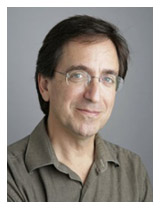
Although Revkin will leave the Times’s staff, he told CJR he hopes to continue writing his popular New York Times blog, Dot Earth, at least through the end of the year and is talking with the paper’s management about continuing to do so on a contract basis beyond that. He has also accepted a new position as a “senior fellow for environmental understanding” at Pace University, where he will teach, write and develop new environmental programs at the Pace Academy for Applied Environmental Studies in White Plains, New York. He received an honorary doctorate from Pace in 2007.
“I want to look at the role of journalism in the larger world of environmental communication, how information matters in terms of policy and behavior,” Revkin, 53, said in a recent interview. He plans to join the Pace Academy in February for the spring semester. Revkin’s editor at the Times, Erica Goode, declined to comment on his imminent departure, saying that she is not at liberty to discuss the buyouts.
[Update: Late this morning, Goode confirmed that Revkin would be leaving the staff, but continuing to do his Dot Earth blog for the Times.
“We’re really sorry that Andy is leaving,” Goode said. “Obviously, his enormous depth of knowledge is of such great value here. But I also know that he is doing something he wants to do and that he had been thinking about this for a number of years…. Dot Earth is an important and popular part our environmental coverage. I’m delighted that he will continue to keep doing it.”]
In addition, Revkin will focus on writing books, including a new one about climate change, the environment, and the linked issues of sustainability and population — “how the Earth can head toward 9 billion people in 2050 with the fewest regrets,” he said. This is the topic explored on Dot Earth, whose audience has grown to about 300,000 unique visitors each month since he started it in October 2007. Revkin is also finishing a book on “the age of disasters” for middle-school children.
“I need to do more synthesis. I haven’t had time for years,” said Revkin, adding that he has been thinking of making a shift toward academia for the last two years. Since joining the Times in 1995, his front-line reporting on climate change has often led the way for national and international coverage of the issue. In a career spanning more than 25 years, Revkin has become one of the most versatile, prolific and pioneering multimedia science journalists covering all aspects of the environment, from basic science to rough-and-tumble policy and politics.
On a personal level, he said that 2009 “has been the hardest year I’ve experienced on this beat,” including virtually around-the-clock coverage for both the print edition and his blog. Moreover, Revkin has increasingly found himself—and his paper’s coverage—the target of critics on both the right and the left, particularly in the often vitriolic blogosphere. He described himself as “an advocate for scientific reality,” not for either side of the debate. “The stakes are clearly higher now,” Revkin said, “[it’s] jaw-dropping to see how far things can go.”
Most recently, he was in the unusual position of covering the emerging “Climategate” controversy over leaked emails from prominent American and British climate scientists, while also being part of the story: In one email, Michael Mann of Pennsylvania State University, warned a colleague to be careful of what he shared with “Andy” because, “He’s not as predictable as we’d like.” (A piece by Times public editor Clark Hoyt recently concluded that Revkin and the paper “handled Climategate appropriately—a story, not a three-alarm story.”
In October, following reports of comments he made about population control on a climate change panel, Revkin drew the ire of conservative commentator Rush Limbaugh. Limbaugh’s harsh comments on the air that Revkin should kill himself if he cared so much about cutting back carbon emissions became a widely covered story (“If he really thinks that human beings, in their natural existence, are going to cause the extinction of life on Earth,” Limbaugh asked, “Mr. Revkin, why don’t you just go kill yourself, and help the planet by dying?”)
Earlier, Revkin’s coverage of the Bush administration’s handling of climate change led to a string of breaking stories in 2005 and 2006 about how conservative politics was interfering with science, particularly at the National Aeronautics and Space Administration. His story that the Bush administration was trying to restrict public comment by NASA’s top climate expert, Dr. James E. Hansen, long one of the most outspoken scientists on climate change dangers, created a firestorm.
One of Revkin’s passions has been showing science in action, not just writing about it from an armchair. Even before publications started pushing reporters toward multimedia reporting, Revkin carried a camera and video equipment in addition to his reporter’s notebook. He has traveled extensively for his environmental coverage, starting with a trip to Tahiti long ago and including three trips to the Arctic. In 2003, he became the first Times reporter to file stories and photos from the sea ice around the North Pole. He spearheaded a Times series, “The Big Melt,” and one-hour documentary in 2005 on threats to the Arctic. He has also covered major catastrophes such as Hurricane Katrina and the Asian tsunami, as well as the September 11 terrorist attack on New York City.
Revkin’s work has received numerous awards, including the National Academies of Sciences’ inaugural Communication Award in 2003 for his global climate change reporting and the American Association for the Advancement of Science Journalism Award in 2002. Last year, he was awarded Columbia University’s prestigious John Chancellor Award for his “dogged reporting” on the environment and climate. He received a master’s degree in journalism from Columbia University and earlier graduated from Brown University with a bachelor of science in biology. He has taught at Columbia’s Graduate School of Journalism and the Bard Center for Environmental Policy.
Revkin has written three books, including a children’s book, “The North Pole Was Here” (2006) and “Global Warming: Understanding the Forecast” (1992). His prize-winning first book, “The Burning Season” (1990), which chronicled the life of the slain Amazon rain forest activist Chico Mendes, was made into a television movie. Revkin began his career in 1983 at Science Digest before spending a year at the Los Angeles Times. In 1987, he moved to Discover magazine where he spent two years as a senior editor and published his first cover story on climate change. Revkin freelanced and wrote books for a number of years before joining the Times in 1995.
Although intense as a reporter, Revkin is also known for his laid-back approach to life, including his alter-ego as a guitar-playing songwriter who is part of what he calls a “fun retro-rootsy band” known as Uncle Wade. He lives in New York’s Hudson River Valley with his wife and youngest son and also has a grown son who is currently serving in the Israeli army.
[Update: Tom Yulsman, who has known Revkin since the beginning of his career and is now co-director of the Center for Environmental Journalism at the University of Colorado, had this to say at the CEJournal blog:
“I’ve known Andy since 1981, where we both started our careers as science writers at a magazine called Science Digest. On a personal level, while I’m sorry to see the Times lose him (and I think their environmental coverage will never be the same), I’m also very happy for him. In recent years, the demands of reporting for the Times and maintaining his ground-breaking blog, DotEarth, have consumed pretty much all of his waking hours. In a recent conversation, he even admitted that he wasn’t playing guitar much — and Andy is an extraordinarily talented musician. When I heard that, I knew something had to give. On balance, I’m glad it finally has.”]
Revkin is, appropriately, ending his long and distinguished career as a daily reporter at the Copenhagen climate summit, which many view as the culmination of years of effort to draw attention to the threat of global warming. The meeting is not expected to produce a legally binding treaty to reduce global greenhouse-gas emissions, however. World leaders hope to strike such a deal in 2010, but whatever transpires, the political, economic, and scientific debates over man made climate change is bound to continue for years to come. Revkin will undoubtedly remain a strong influence in the field, and one can only hope that others journalists will continue to cover climate change as assiduously as he has.


However the Times disguises this change, it's one more chink on its armour, another example to prove that printed media is losing its fight against societal change, another IQ-lowering move that shows, Marathon.wise, that ignorance is stepping ahead. Luckily, in this case Mr. Revkin will fall on his feet and keep on wirking, but for every Revkin there's plenty of news workers that'll have to switch to a more nurturing profession. A sad day for many of us.
Posted by Horacio Salazar on Mon 14 Dec 2009 at 02:06 PM
I worked with a fellow nuclear engineer in the '90's whose wife was finishing up her Phd in Molecular biology. One of Revkin's favorite whipping boys at the time was genetically modified plants.
I remember my associate, one day, bringing a "marked up" Revkin article to work. His wife was FURIOUS at the whole content. I managed to convince her NOT to waste her time writing a letter. "Wrestling pigs in mud.." was the phrase. I also pointed out that since the NYT readers were on the left side of the bell curve, it was of no worry what Revkin wrote.
Nothing has changed.
Posted by Dr. Joe Papp on Mon 14 Dec 2009 at 05:42 PM
Dr. Papp: So you've judged an entire career by one article that the wife of someone you worked with more than a decade ago showed you?
Would you like to be judged that way?
Posted by Tom Yulsman on Mon 14 Dec 2009 at 06:14 PM
In my opinion, Revkin is one of those increasingly rare journalists who actually takes the time to do the homework to get the story correct. I have had the pleasure to deal with Andy a number of times regarding rapid climate change in the Arctic. I always felt that I could talk to Andy openly and without fear of being misrepresented. He will be missed.
Posted by Mark C. Serreze on Mon 14 Dec 2009 at 06:46 PM
Glad to hear you will continue with NYT Dot Earth. Best of luck in your new endeavors.
Posted by Westword on Mon 14 Dec 2009 at 07:14 PM
I'm sad to hear this-- he's a voice of clarity. I'm glad that he'll continue working on contract.
Posted by Jim on Mon 14 Dec 2009 at 07:40 PM
Mark: Thank you for lending your voice here. These days, good journalists like Andy need all the support they can get.
Posted by Tom Yulsman on Mon 14 Dec 2009 at 10:53 PM
"One of Revkin's favorite whipping boys at the time was genetically modified plants. "
Some boys deserve to be whipped, and Monsanto's boys top that list.
http://www.vanityfair.com/politics/features/2008/05/monsanto200805
GMO's are as complex and potentially dangerous an entity as any there is. We talk about the unplanned effects of natural species introduction and chemical pollutants in our environment, there is no way to calculate the unexpected effects of gene introduction into the earth's species,
http://www.purefood.org/ge/klebsiella.cfm
genes which are someone's intellectual property and thus require a license in order for you to breed a pig or grow grain.
We have no way of quantifying gene expression and, since we are often eating the products of these expressing genes, we have no idea how these products affect our biology when consumed.
We are the gene industry's grand experiment.
Posted by Thimbles on Mon 14 Dec 2009 at 11:26 PM
The book that the article links to Global Warming - Understanding the Forecast is by David Archer. The book of the same title by Andrew Revkin is here.
Posted by Ken Pite on Mon 14 Dec 2009 at 11:29 PM
Horacio, did you read the article? Revkin took a buyout. He wasn't fired. He had other things that he had long wanted to do, and by taking a buyout he gets a trunkload of money to start his new life, and he doesn't have to worried about the New York Times going belly up later and letting people go without a buyout package.
Posted by Manfred on Tue 15 Dec 2009 at 01:26 AM
Andy will be missed for his in depth and professional journalism on environmental issues, in particular climate change. I had the pleasure to spend a few days with Andy on the Greenland ice sheet and was deeply impressed by his dedication and rigor to find “the truth” about anything he wrote. I will miss his reporting in NYT.
Posted by Konrad Steffen on Tue 15 Dec 2009 at 02:03 AM
The BIG problem here is, what will the Times do now for climate coverage? The only other person they have who has paid some attention to the scientific issues is Tierney. He seems to think, even now, that the louder critics deserve at least as much space, and respect, as the many scientists who have actually produced useful work on aspects of climate. To get up to speed on climate will take more time, effort, and actual scientific understanding than Tierney has demonstrated. So now what will happen to the Times climate coverage? It's worrying.
Posted by Spencer on Tue 15 Dec 2009 at 09:37 AM
Although I'm in the "denier" camp on the man-made global warming issue ( that's because I'm an atmospheric physicist, and not a computer climate modeler ) I've enjoyed Andrew's work in the NYT, and will continue to follow his career with interest. He has great potential, and may emerge as a genuinely neutral environmental reporter after leaving the NYT liberal barnyard.
Best of luck, Andrew...
Posted by Jim Peden on Tue 15 Dec 2009 at 02:10 PM
Monsanto..world's most evil company in my opinion.
http://www.google.com/hostednews/ap/article/ALeqM5j8W6nfSayRO5KaPsqecPMSfTXjKQD9CIJ1Q00
------------------------------------------------------------------------------------------
Confidential contracts detailing Monsanto Co.'s business practices reveal how the world's biggest seed developer is squeezing competitors, controlling smaller seed companies and protecting its dominance over the multibillion-dollar market for genetically altered crops, an Associated Press investigation has found.
With Monsanto's patented genes being inserted into roughly 95 percent of all soybeans and 80 percent of all corn grown in the U.S., the company also is using its wide reach to control the ability of new biotech firms to get wide distribution for their products, according to a review of several Monsanto licensing agreements and dozens of interviews with seed industry participants, agriculture and legal experts.
Declining competition in the seed business could lead to price hikes that ripple out to every family's dinner table. That's because the corn flakes you had for breakfast, soda you drank at lunch and beef stew you ate for dinner likely were produced from crops grown with Monsanto's patented genes.
Monsanto's methods are spelled out in a series of confidential commercial licensing agreements obtained by the AP. The contracts, as long as 30 pages, include basic terms for the selling of engineered crops resistant to Monsanto's Roundup herbicide, along with shorter supplementary agreements that address new Monsanto traits or other contract amendments.
The company has used the agreements to spread its technology — giving some 200 smaller companies the right to insert Monsanto's genes in their separate strains of corn and soybean plants. But, the AP found, access to Monsanto's genes comes at a cost, and with plenty of strings attached.
For example, one contract provision bans independent companies from breeding plants that contain both Monsanto's genes and the genes of any of its competitors, unless Monsanto gives prior written permission — giving Monsanto the ability to effectively lock out competitors from inserting their patented traits into the vast share of U.S. crops that already contain Monsanto's genes.
Monsanto's business strategies and licensing agreements are being investigated by the U.S. Department of Justice and at least two state attorneys general, who are trying to determine if the practices violate U.S. antitrust laws. The practices also are at the heart of civil antitrust suits filed against Monsanto by its competitors, including a 2004 suit filed by Syngenta AG that was settled with an agreement and ongoing litigation filed this summer by DuPont in response to a Monsanto lawsuit...
Monsanto's provision requiring companies to destroy seeds containing Monsanto's traits if a competitor buys them prohibited DuPont or other big firms from bidding against Monsanto when it snapped up two dozen smaller seed companies over the last five years, said David Boies, a lawyer representing DuPont who previously was a prosecutor on the federal antitrust case against Microsoft Corp.
Competitive bids from companies like DuPont could have made it far more expensive for Monsanto to bring the smaller companies into its fold. But that contract provision prevented bidding wars, according to DuPont.
"If the independent seed company is losing their license and has to destroy their seeds, they're not going to have anything, in effect, to sell," Boies said. "It requires them to destroy things — destroy things they paid for — if they go competitive. That's exactly the kind of restriction on competitive choice that the antitrust laws outlaw."...
"They have the capital, they have the resources, they own lots of companies, and buying more. We're small town, they're Wall Street," said Bill Cook, co-owner of M-Pride Genetics seed company
------------------------------------------------------------------------------------------
Posted by Thimbles on Tue 15 Dec 2009 at 04:29 PM
Andrew Revkin is an intelligent man.
What would you do in his place if you
-checked the raw data and saw what is happening to the climate (nothing much)
-saw that the people who created the scare (Phil Jones, Michael Mann, Keith Briffa) are under inquiry, with legal action stopping them from further destroying their own records, and new revelations on their science ethos coming out daily, but
-you couldn't speak about it lest millions of fans would vilify you as a traitor, and
-you would stand the real risk of being a scapegoat and have your career and personal safety in danger when it all comes down - soon, it started already.
You would have to get out fast, if only for while, and then come back as the voice of reason. But how?
- get an academic job (ideal place to weather storms, leaves record intact), or
- leave to write a book (less prestigious, you cannot write a book on climate till the dust settles), or
- leave to spend more time with your family (where was your family before?) or
- leave to find yourself (soft hearted fans will love it, the rest will get the shivers)
So I'm glad for Mr. Rivkin, who went into academia, and wish him well.
Under the circumstances, an honest man who isn't a martyr could do no better...
Posted by Adrian Ocneanu on Fri 18 Dec 2009 at 05:10 AM
NewsBusters: NYT Environmental Reporter Departs; Global Warming Unmentioned in Long Farewell
http://newsbusters.org/blogs/p-j-gladnick/2009/12/24/nyt-environmental-reporter-departs-global-warming-unmentioned-long-far
Posted by StewartIII on Thu 24 Dec 2009 at 11:05 AM
I agree with Adrian Ocneanu that Andy Revkin is intelligent enough to realize that has been used & abused by the Climate Alarmist aka Criminals to maximize their deceit. I will give Andy even more credit if he will now support open and scientific proof instead of Science Activism. What say you Mr. Revkin please support realism on this issue.
Posted by WestWright on Thu 24 Dec 2009 at 12:57 PM
Calling an attempt by Macy's Marxists to nationalize our energy "science" is not a plus for science.
Posted by John Lloyd Scharf, Salem, Oregon on Sat 26 Dec 2009 at 06:25 PM
Jesus Christ guys, give it up. You have thousands of emails over 16 years and contained within is no proof of conspiracy to falsify data.
Nor is the data getting any weaker with time.
You can cherry pick all day but the facts of the matter are:
1. Carbon Dioxide and other green house gasses absorb radiation and emit heat.
2. Carbon Dioxide and other greenhouse gasses have increased by about a third so far.
3. The carbon sinks that suck up about 40% to 60% of our emissions are full to saturation and are failing.
4. The temperature keeps rising and the ice keeps melting.
None of your misinterpreted cherry picking changes any of that. Am I wrong? Show me. All you email fetishists have done so far is talk, troll, and wallow in misinformation and ignorance.
Grow up.
Posted by Thimbles on Sun 27 Dec 2009 at 12:21 PM
