Sign up for the daily CJR newsletter.

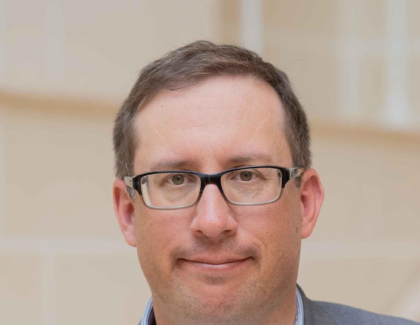
Todd Heisler
Todd Heisler of the Rocky Mountain News won the Pulitzer Prize for feature photography this week for the intense and intimate moments he captured in “Final Salute,” a special report published last Veterans Day. “Final Salute” chronicled a year in the life of Major Steve Beck, a Marine casualty assistance officer, as he guided several families through the grief and ritual of saying goodbye to loved ones lost in Iraq — bringing Pulitzers for both Heisler and reporter Jim Sheeler. Heisler, 34, worked as a chief photographer and photo editor for a group of community weeklies in Illinois before joining the Rocky Mountain News in 2001, where he was part of the team that won a Pulitzer for breaking news photography in 2003 for coverage of Colorado’s worst wildfire season.
Edward B. Colby: How did it feel to hear your paper’s managing editor call out your name to the newsroom announcing your Pulitzer win Monday afternoon?
Todd Heisler: I was relieved, but it was actually surreal. I was kind of in a daze. As soon as I heard that I might be a finalist, that week right before, I was kind of in a daze, all week. I thought the closer I got, the easier it would get, but it was even more surreal the closer I got to the moment. And once we got to that point, it was just unbelievable. …
I was relieved because everybody was talking about it, and it was on the Editor and Publisher [Web site], and you keep hearing about it and hearing about it, and there comes a point where you want it to be over with so you can get the news either way. And if you win it, well, then it’s all gravy.
EBC: The most famous photo to emerge from “Final Salute” shows passengers peering out their airplane windows as Marines unload the casket of Jim Cathey from the cargo hold below. Were you envisioning a photo like that, or did it just happen?
TH: It just happened. I think it’s one of those photographs [where there] was a lot of serendipity involved. I had photographed that scene a couple of times before, and I knew about the people [above, but] I was never able to catch it. I actually didn’t think it was possible, just because I had seen it a couple of different times, and I read this quote that ran with the photo … where Major Beck says, from the first airport we went to, [that] ‘You see the people in the windows, they’re gonna remember bringing that Marine home for the rest of their lives, and they should.’ And so we had that quote, and we knew about the people, but every time I tried to photograph it, it never worked, so I didn’t think it could happen.
And then, when I was actually in that scene, when I went out to Reno [Airport], I thought, ‘Well, I should keep an eye on the people, see if I can make it happen.’ And just all the elements came together — the fact that it was at night, the fact that I was with the family, standing next to the family when it was happening, gave me the right angle and the right expressions … You hate to express gratitude for elements coming together in a photograph like that because of the subject matter, but I guess it was one of those magical moments.
EBC: How did your three trips to cover the war in Iraq — including the roadside explosion that you and a News columnist survived last April — prepare you for this project?
TH: Well, I think it gave me a better understanding of a lot of elements in this project — about military culture, and about commitment, and things like that. But it also gave me insight in the abstract, of understanding what it feels like to leave. One of the photos — actually one of my favorite photos in the piece — is Katherine [Cathey, a 23-year-old pregnant widow] sleeping in front of the casket, her husband’s casket, the night before his burial. She said, ‘You take it for granted the night before they leave, and you don’t know if they’re going to make it home.’ And I know what it feels like to lay in bed at night before you leave for Iraq, next to your wife, and that’s what’s on your mind, and so I went to that place.
And I think, especially even having a near-death experience over there, put me in this mental place. I can’t verbalize what that place is, I can’t really put words to it, but it just took me to another place mentally, and that’s how I finished the story, I think. When I would cover a funeral, you couldn’t always see the Marines in the caskets, but I saw faces there, because I had been over there and I know that these are real people involved.
EBC: On Tuesday, a News columnist wrote that [some] shots you took … felt like an intrusion to you. “Sometimes,” you said, “the best photographs are the ones you don’t make.” What did you mean by that?
TH: Well, there were a lot of moments throughout this story where I photographed a situation, but I made [only] one or two frames, say when Katherine was with the casket and when she was pushing her belly against the casket. That’s one of those moments where it felt intrusive, so I wanted to do the best I could to make the images and then fall into the background.
I think those things, it’s about respect and trust — letting people have their own moments, deciding maybe that moment is just for them to have, and that I shouldn’t take that from them. At the same time, obviously there are some very personal images in that project, and there had to be to do it right — it had to be personal. But you can’t be shooting frame after frame all day long, because it’s just too much on them, it’s too much burden on them.
EBC: It seems like you and your paper made an extraordinary connection with the subjects of this story — but as you also said, “The hardest thing was to get close, but not too close.” On such a consuming story, how did you try to maintain some distance?
TH: [I]t wasn’t so much about maintaining distance, just because of the nature of the relationship there already was enough distance. I think part of that is giving people enough space, trying to decide when the time was to leave … when to not photograph people, when to [try] to use your gut to say they need a break, maybe we need to just go back to the hotel and let ’em be. But at the same time, you had to spend a lot of time, you had to listen to people … because you have to care. And there were a lot of times, say with Katherine, seeing her going through so much, you just want to reach out and hug somebody, to comfort ’em. And we did — I didn’t want to be a robot — but there were times when you have to step back.
EBC: The Pulitzer board called your work “haunting.” And among the powerful photographs that ran with “Final Salute” were shots of Katherine collapsing into Steve Beck’s arms, Katherine draping herself over her husband’s casket, and Jim Cathey’s father’s face wet with tears as he hugged a Marine. What images linger in your mind from working on this project?
TH: Well, like I said before, the image of Katherine sleeping by Jim’s casket, that’s the one that stays with me the most. Just because I think about my own wife and having to leave her behind to do an assignment over in Iraq, and to know how that feels, and to see the outcome of that — of somebody who didn’t make it home — it really stuck in my mind.
Also, that moment for me … [came] after about nine months of working on this story and four days of following [the Catheys] — that’s after I made the airplane photo and those really intense scenes on the tarmac where Katherine drapes over the casket — so after that moment, [I] just [kept] thinking about all that we had seen and been through on this journey, really an intense journey.
Has America ever needed a media defender more than now? Help us by joining CJR today.