Sign up for the daily CJR newsletter.
Last week saw NPR CEO Vivian Schiller resign after the organization’s chief fundraiser was caught in a hidden-video sting seemingly calling the Tea Party racist, Republicans stupid, and declaring that NPR would be better off without government funding. The sting was the latest imbroglio for the broadcaster in the lead-up to what will be a tough fight in a congress flush with representatives baying for the CPB’s blood and treasure. We thought it would be interesting to see how public broadcasting controversies play in other countries.
Unlike NPR, the Australian Broadcasting Corporation (ABC)—which includes television, radio, and online—is fully and directly funded by the Australian government (bar for a small slice of revenue from retail sales at ABC stores); like NPR, it is frequently the subject of right-wing attacks. Assistant editor Joel Meares spoke to the ABC’s Jonathan Holmes, host of twenty-year-old media watchdog show Media Watch, about the NPR situation, the difference between public broadcasters in the U.K., Australia, and the U.S., and why he couldn’t work for PBS. This is an edited transcript of that conversation.
What did you make of the way that NPR was stung in this situation, and the way the organization responded—by firing CEO Vivian Schiller?
I haven’t been reading everything written about the situation, but I’m a little bit surprised because there’s no suggestion that she was actually involved in that meeting. Clearly, the whole thing is a classic example of entrapment, which in all honesty would not be legal in Australia (although you could justify it in public interest terms, possibly). All states in Australia have a law that used to be called the Listening Devices Act and nowadays is called the Surveillance Devices Act that applies to cameras as well as microphones. It basically says you cannot secretly record a private meeting and use that recording to do a public report without the consent of all people. There is a public interest defense: Someone would have to argue it was in the public interest, but the courts are very strict about that. That kind of entrapment is very rare in journalism in this country.
Australia’s two big tabloid news-magazine shows, Today Tonight and A Current Affair, don’t use hidden cameras?
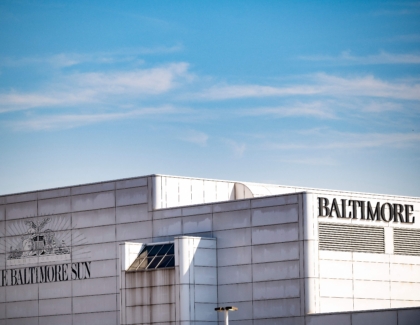
No, they don’t, and for precisely this reason. There was a very recent case here that shows this—though, mind you, it’s not perfectly comparable. A seventeen-year-old girl was having an affair with a football coach—and football in Melbourne is far more important than politics. This guy had very unwisely gotten involved with this girl who had previously been involved with some of his players. She videoed him and tipped off The Herald Sun, the biggest newspaper in Melbourne, and the reports were all based on these recordings that were made without his knowledge. It would have been illegal to use them. Eventually, people did use them, but only after the story had been rumbling along for several days. So far, nobody has taken either the girl or the television station that finally used these shots to court. They were very concerned at the time that it was illegal to do it.
So there is that constraint. In the NPR case I suppose you could argue that there’s a much clearer public interest. We’re talking about a partly publicly funded institution. That kind of deception and entrapment, which is used all the time in the U.K., would be very dodgy if done in Australia.
That’s a legal difference. But is there a difference in the political nature of the U.S. and Australia that changes the dynamic of the attacks on a public broadcaster?
It might be clearer from this distance than when you’re in the middle of it, but the degree of political divide in the United States is and has been for many years far more dramatic than in most other Anglophone countries. The consequence of that is that organizations like NPR and PBS, which are publicly funded and expected to be in the middle of the fray to a greater degree than the mainstream media, have an even greater difficulty than the classical mainstream media.
The truth, which everybody knows but which they’re always very reluctant to admit, is that the sort of people who are attracted to work at places like NPR and PBS, with their modest salaries and their particular output, are overwhelmingly people with left-of-center views. If you don’t have left-of-center views, you either go to a bank and make a lot of money or you end up working at Fox or something. And yet those organizations still have to steer a middle course in political terms. There is that constant tension, and you will get it to a much lesser degree working at the ABC and at the BBC. They have similar umbrellas but the degree of the political partisanship and indeed the bitterness of the political partisanship, is not anything like the same degree.
Having grown up in Australia though, I can recall the ABC being maligned in a similar way as a leftist organization. From my own father for one.
Certainly those allegations are made all the time by the right in Australia. And, as I say, it’s not entirely unjustified in the sense that I think if you asked anyone who was honest to examine which way the bulk of ABC employees vote I’d be very, very surprised if it wasn’t 70 or 80 percent voting for the left-of-center party over the right-of-center party (to the extent that there’s any distinction these days). And there might be a much higher percentage than in the general population who would vote Green, for that matter. The issue is: To what extent do people working for the ABC overcome those biases in terms of their reporting? I think the truthful answer is that they’re pretty good at it. The bias comes in more in the selection of topics to write about and report on rather than the way it’s done.
These are all very well rehearsed issues that have been knocking around about public broadcasting in English-speaking countries for decades. I worked for PBS in the 1980s. The fear of being accused of being politically biased was greater there—even though we were working on a long-term documentary series—than it ever was at the BBC or the ABC.
What kind of pressures did you experience while at PBS?
In the 1980s, when I was at WGBH in Boston, they had produced a series about the Vietnam War in co-production with a British commercial station, Central Television [now ITV Central]. They had one Brit on a team of about four producers—he was a fairly classic sort of pugnacious, lefty, British TV documentary maker. There were really quite terrible culture clashes as to how opinionated the program should be, and the extent to which it should regard the North Vietnamese point of view as being as legitimate as the American, and so on.
I did a similar series on nuclear weapons immediately after that, when there was quite a lot of sensitivity at GBH about how I would turn out. And indeed, I had similar arguments, and I didn’t last the course in the end—I made two out of the three films I was supposed to make. I found it a very difficult working environment.
Difficult because of the political pressure you found yourself under?
In a sense, it was. We would make a documentary on a very complicated topic and take a long time to do it. It would then be taken by the executive producer and taken to a committee of advisors who, in the filmmaker’s absence, would go through a bunch of criticisms that would then be brought back to us. Most of those would be: you haven’t said this and you haven’t said that. The answer was: well, I’ve got forty-eight minutes. It was just agonizing. This was funded by the Annenberg Foundation, which is a fairly mainstream and, if anything, right-leaning organization. It wanted a series that could be shown in educational institutions and that was therefore devoid of any controversy whereas I was from a school where what you looked for was the controversy when you do a thing like that.
These kinds of internal disputes have always been there, in my experience, in PBS and NPR, because the right has always hated the notion of those places existing—even though they don’t even begin to compare in terms of their place in the communications forum with the role of the ABC in Australia, let alone the BBC, which is a monster. NPR and PBS combined are little minnows in comparison. But that traditional anti-statist, free enterprise, capitalist approach of the mainstream in the United States is much more suspicious of anything that looks like state-owned media than is the case in Europe.
Does the ABC have anything close to the kind of vetting process you experienced when making your documentaries for PBS?
No—but that was a question of the fact that most of the funding was coming from an outside body which wanted to exercise editorial oversight that went with that funding. To the extent that the ABC co-produces, which it does occasionally for documentaries, though never for news and current affairs, there is quite a bit of a battle of shared editorial control. But largely speaking, and certainly for news and current affairs, there is no oversight much above the level of executive producer for almost anything.
Of course, the government, which is your sole funder, must have had some issues with ABC content over the years and attempted to interfere?
There have been occasions in which the government has made it clear that in its view what the ABC is doing is not satisfactory. There are two famous examples. The first was during the Gulf War in 1991. The then-prime minister, Bob Hawke, who is very pro-Israel, was furious at the amount of prominence the ABC gave to an American Middle East expert who was known for his pro-Palestine views. His expertise in this instance was all about Iraq, and he was very good, and I thought pretty impartial in terms of what he was talking about regarding the war in Iraq. But because of his history of anti-Israel comment the pro-Israel lobby, which included the prime minister, became very incensed. The outcome was that the ABC didn’t really give way—the prime minister called for the sacking of various people who weren’t sacked—and it blew over in time.
The second and rather similar row was in the coverage of the current Iraq war. The Howard government had taken Australia into that war and the communications minister, Senator Richard Alston, was incensed by what he saw as biased political coverage, particularly on radio, and he basically wrote a formal complaint to the ABC—which is kind of bizarre, as though he were just another viewer, when he was the minister in charge of the ABC ultimately. The letter had around forty-five very specific complaints about what he claimed was biased coverage and it went through the normal ABC complaints procedure, through the independent review panel, and on from there to the official government regulator of broadcasting, at that time the Australian Broadcasting Authority. These people found various elements of the complaint justified, and most of them not justified.
But the government does not have the power to instruct the ABC board and through the board to instruct ABC programmers to do one thing or another. Even in that instance, there was no other real way he could make note of his displeasure.
Here the complaints are more than that. There’s a very loud movement to see the Corporation for Public Broadcasting defunded. Are there similar calls in Australia from the ABC’s attackers?
There is a small lobby, mainly from the libertarian right, led by a couple of sort of militant Friedman-esque think tanks, largely on economically ideological grounds—a deep dislike of state funding of anything that doesn’t have to be state-funded. They would argue there that if people want the kind of programming that the ABC provides these days they can pay for it through cable, or whatever, and in this age of media plenty there is far less justification for the existence of the ABC than there was when there was a real restriction of waveband.
It’s a very respectable argument in its way but it doesn’t have a chance of getting much headway given the ABC’s popularity with the public as a whole, which is considerable. Every time they do surveys of what people think about the ABC, asking whether they think it’s biased, there’s a massive majority who say they don’t think it is. When they ask whether people value the ABC as an institution, there are massive majorities in favor.
Even though it has a smaller audience than the commercial media in television, for example, its spread in radio means it’s very widely listened to—in the bush, etc. And its television audiences are respectable—they channel 15 percent when a popular commercial station will get 23, 24, 25 percent.
Someone in the coalition [of the conservative Liberal and National Parties] once said, “The ABC is our enemies talking to our friends.” There is a certain truth in that. Whatever the ideological propensities of the people who work at the ABC, it is kind of middle class welfare—an awful lot of people who vote conservative prefer the ABC to commercial media because of the kinds of programs it makes and because it doesn’t have huge swathes of advertisements all the way through it.
Your role seems something like that of an ombudsman. Do you see yourself, and your job, that way?
I don’t have any official function at all, but I do criticize the ABC, as well as everybody else in the media when I think that’s justified. At an official level we do have a director of editorial policies whose function, especially now that he is just about to put in charge of the whole ABC complaints procedure, in a sense makes him effectively the ABC’s ombudsman. He’s not in the editorial chain of command. On the whole, Australian media organizations don’t have ombudsmen in the way that a lot of mainstream news organizations do in the U.S.
Has America ever needed a media defender more than now? Help us by joining CJR today.