Sign up for the daily CJR newsletter.
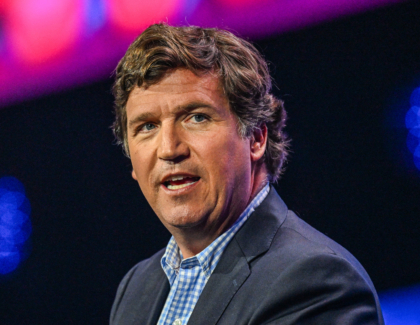
Thursday afternoon, Daily Caller editor Tucker Carlson tweeted the link to a story on his website, saying “and the poor get poorer.” The only problem? The Daily Caller item contains no evidence of any kind for Carlson’s assertion.
“Pessimism about the impact of government anti-poverty programs is widespread, according to a new poll released by Rasmussen,” reads the story. “45 percent of poll respondents said that anti-poverty programs actually increase poverty.”
The claim is technically true. Rasmussen Reports—a pollster who, critics contend, designs its questions to get politically conservative results—did indeed poll on that question and get the results that the Caller reports. But the result is completely meaningless, and without journalists providing the proper context can lead readers to precisely the confusion from which Carlson himself appears to suffer.
The entire article runs through the various statistical results of the poll but offers no actual facts. Do anti-poverty programs in fact make people poorer? The answer cannot be found in an opinion poll, because it is not a matter of opinion. The data, which the Caller made no effort to examine, tend to show that anti-poverty programs reduce the rate of poverty or its most malign effects. Social Security and Medicare, for example, have significantly reduced the incidence of poverty and the attendant lack of access to health care among the elderly.
Of course, what constitutes an anti-poverty program is itself a debatable proposition. But the Caller does not bother to define “anti-poverty programs” for its readers. Social Security and Medicare are not means-tested, so while they are designed to prevent and combat poverty some might argue they should not be included. Even programs that specifically target the impoverished—such as Medicaid, food stamps, and welfare—serve different purposes, and each would show different rates of ameliorating poverty.
Even the term poverty itself has a specific definition that the Caller neglects to explain. Currently the federal government sets the poverty line at less than $22,351 per year for a family of four. Many economists have argued in recent years that the federal formula for calculating the poverty level is flawed, and that the line is too low. (Try housing, feeding, and clothing four people on $24,000 per year in New York City and see how rich you feel.) Given how many working people live just above the nominal poverty line, various programs, such as the Earned Income Tax Credit and the Affordable Care Act’s expansion of Medicaid and subsidies for buying health insurance, are designed to aid that group, sometimes known as the “working poor” or “near poor.” Do these qualify as anti-poverty programs? Since many would argue that a lot of their beneficiaries are living in poverty they would also contend that these are anti-poverty programs.
The Caller piece goes on to recite the poll’s findings of public opinion on other matters of demonstrable fact. “In a separate inquiry, respondents were asked to rate the effectiveness of anti-poverty programs. 71 percent found them ineffective, 24 somewhat effective, and just 3 percent very effective,” writes the Caller’s Steven Nelson. “Rasmussen found that 69 percent believe that poverty has increased over the last ten years.” The poverty rate is a statistical question, and the public’s guess is only a worthy subject for reporting if their perception is measured against reality. The poverty rate is indeed higher today than it was in 2001, thanks to the Great Recession, although it might be more illuminating to compare its average over five-year periods, in order to smooth out the fluctuations. As for the effectiveness of anti-poverty programs, that can be measured—but only once you’ve specified which programs and what their intended effect is.
Meanwhile, the Caller reports, 34 percent of respondents thought the government should spend more on anti-poverty programs even though only 27 percent thought they were even somewhat effective. So seven percent of respondents apparently think the government should spend more on ineffective programs. This hints at the problems with the poll itself: asking a bunch of non-experts vague questions with undefined terms will lead to conflicting answers. Social Security, Medicare, Medicaid, and S-CHIP, which provides health insurance for children, are all popular programs. Do the respondents realize they may be talking about those programs when they answer the question? If not, why even write an article about this poll? (Perhaps because the Daily Caller is a conservative opinion website whose staffers and readers likely already believe that anti-poverty programs are ineffective.) If you quickly peruse the article and see the words “anti-poverty programs” and “ineffective,” you may conclude, as Carlson himself apparently did, that such programs actually make poor people poorer, even though there is no evidence contained in the article nor the poll for such a claim.
Journalists are not supposed to merely reflect the public’s misconceptions back to them. They are supposed to correct those misconceptions. But there is a word for this kind of article, and the word is not journalism—it’s propaganda.
Has America ever needed a media defender more than now? Help us by joining CJR today.