Sign up for the daily CJR newsletter.
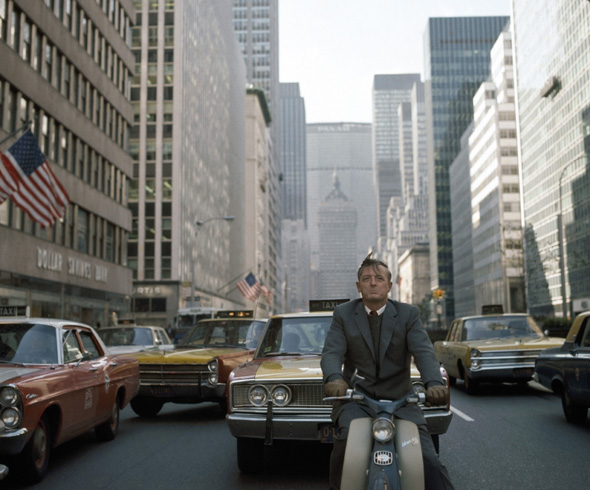
When William F. Buckley Jr. died in February 2008, I happened to be in another of the endless arguments with myself about whether to sue him. I knew it was probably a bad idea. But I was sick of letting him make me look (and feel) like an idiot.
In his dotage, Buckley, once the young firebrand who published God and Man at Yale at 26 and began National Review at 29, had become a beloved, almost cuddly figure in popular culture; a throwback to a period when apparently, grace, erudition, and civility ruled our public discourse. The Washington Post eulogized him as “urbane, charming, and erudite”; the Associated Press offered “good-natured,” “intelligent,” and “witty.” And in a show devoted to his memory, Charlie Rose announced, “We celebrate his ideas.”
Who says irony is dead? After all, these encomia, and many more just like them, were directed at a figure who originally came to the attention of much of the television-viewing public by replying to Gore Vidal on ABC News (during the 1968 Democratic Convention), “Now listen, you queer, you stop calling me a crypto-Nazi or I’ll sock you in the goddamn face.” Okay, so Vidal did call him a Nazi. But the love shown the man upon his demise failed to note that he had never gotten around to repudiating a series of political views that were well beyond the bounds of common decency.
Buckley remained, for instance, an anti-civil-rights white supremacist to the end. In August 1957, he authored an editorial in National Review, “Why the South Must Prevail,” citing the alleged “cultural superiority of white over Negro” and with it, the need for the South’s white population to “take such measures as are necessary to prevail, politically and culturally, in areas where [they do] not predominate numerically.” When Terry Gross asked him about the editorial on NPR 32 years later, he assessed it to be “absolutely correct.”
Nor, insofar as I am aware, did Buckley ever recant his enthusiasm for South Africa-style apartheid, which in 1961 he termed “that brilliantly conceived structure” that helped “black Africans” avoid their apparently well-known “tend[ency] to revert to savagery.” Buckley never reconsidered his embrace of Joe McCarthy’s thuggish tactics, mocking instead what he termed “liberals’ fetishistic commitment to democracy.” Then there was his enthusiastic support for fascist dictators like Franco and Pinochet and, fueled by his fanatical anti-Communism, his calls for nuclear attacks on both China (1965) and North Vietnam (1968). The outrages continued through the ages. In 1986, he said “everyone detected with AIDS should be tattooed in the upper forearm . . . and on the buttock.” According to New York Times Book Review editor Sam Tanenhaus, author of a forthcoming Buckley biography, he refused to consider David Brooks to be editor of National Review because he was Jewish (or, more precisely, not a “believing Christian”).
But polite society had long ceased to worry about views like these. In his final decades, Buckley was also a man who kept television discourse civil and conservatism (relatively) sane. He was the almost impossibly enviable fellow who wrote Overdrive (1983), excerpted in The New Yorker, in which he explained that he preferred a custom-fitted Mercedes to a plain old limousine, but could not recall whether it was more or less expensive. For all his reactionary political views, Buckley appeared strikingly ecumenical in his personal life. He skied in Gstaad with his superliberal friend John Kenneth Galbraith. He lunched regularly with the editor and publisher of The New York Times. Mike Kinsley, then America’s sharpest liberal pundit and on-again, off-again editor of the leftish flagship, The New Republic, was more than happy to serve as Buckley’s liberal sidekick on Firing Line.
Politics aside–and I do believe in putting politics aside in personal matters–I could not help but admire what beer commercials call the “gusto” of his lifestyle. To me, he was one of the last of the lions: the great literary and political figures of the ’50s and ’60s–Norman Mailer and Susan Sontag were others–who made the world their own but said quite a few silly things on the way. Whatever he thought about this or that, the man knew how to live, and he created both a lifestyle and a persona, that, as a young political writer with both literary and intellectual ambitions, offered up a model, however unreachable, to which I might aspire.
The first time I laid eyes on Buckley in person was when he gave a paid lecture at Cornell during my freshman year there. The night before his speech, a bunch of lefties had gone around campus and turned all the “Buckley” signs into “Fuckley” signs. (It was 1978, and that’s what passed for political protest.) Buckley spoke on behalf of a flat 15-percent income tax for everyone, I believe, but what made the evening memorable was when, during the question period, one of the lefties stood up, and with a quivering voice, said he wished to ask “one simple question: Mr. Buckley, have you ever gone hungry?” Buckley replied, “Why, yes. My yacht experienced an unfortunate shortage of stuffed goose recently off Nassau in the Bahamas.” Since I identified with the questioner politically in those days, I found myself feeling guilty for thinking that the punk had gotten what he deserved. But I learned a lesson: Humor always trumps self-righteousness, no matter how weak one’s case.
I managed to stay out of Buckley’s way for the next 13 years. I got a master’s degree at Yale, but unlike some of my contemporaries there, I did not get invited to Buckley’s estate in Sharon, CT, to swim naked in between martinis and harpsichord recitals (as the stories at the time went). But in 1990, shortly before returning to graduate school to get my doctorate at Stanford, I authored an article in The Nation in which I–mistakenly, I now think–defended Patrick Buchanan against the charge of anti-Semitism then being leveled in semi-hysterical tones by New York Times columnist (and former executive editor) A. M. Rosenthal. Not long after, Buckley devoted an entire issue of National Review to an essay on the topic of anti-Semitism and ended it by citing my argument as an implied model of good sense on the topic.
Naturally, I was pleased. I had been making a decidedly meager living as a lefty freelance writer–the future prospects of which had sent me back to graduate school–and here I was being cited as an authority on a big topic by a big man in a big way. The “old” right was paying tribute to the “new” left. I imagined the phone call that would invite me on sailing trips in the Côte d’Azur with “Kenny G” (as I thought I might call Galbraith) and a princess or two. We’d all fly back on Buckley’s private plane in time to knock off a Firing Line before a midnight meal at ’21.’ I wrote Buckley a thank-you note and that, dear reader, is where my troubles began.
Buckley published my letter without my permission in National Review. This drove me crazy. I had written (in confidence, I thought) that I had just been turned down for the job as The Nation‘s Washington editor–something I really didn’t want people I knew to know. Gore Vidal had written a then-infamous, rather anti-Semitic essay in The Nation‘s 125th anniversary issue, and I also told Buckley that I had, much to my chagrin, agreed more with Neocon sourpuss Norman Podhoretz’s attack on Vidal and The Nation than with Nation editor Victor Navasky’s defense of said article. I had told Navasky this at the time–but I didn’t want anyone thinking myself disloyal to the man who had helped to launch my career, and would become a close friend and frequent mentor (as well as the chairman of this magazine). Rather presumptuously, moreover, I saluted the “care and grace” Buckley brought to the topic of anti-Semitism.
I was shocked by the cavalier disregard with which Buckley felt free to treat what I understood, and certainly intended, to be private correspondence. I had never given Buckley permission to publish it, and having followed the arguments over “fair use” law that tortured J. D. Salinger’s biographers, I felt pretty sure he had no legal right to do so.
I complained; he apologized. End of story. . . . I wish.
It turns out that when Buckley decided to violate your privacy, he didn’t hold back. He republished my letter in the book version of the essay, too. When I complained again, he apologized again, blamed a printer’s error, and then published it again in the paperback version. He appeared to enjoy my outrage.
In 1992, I published a history of punditry, and Buckley, naturally, figured rather prominently in its pages. We had had a relatively pleasant interview, and I was awfully kind, all things considered. Two years later, he wrote me out of the blue to say that he had “sighed but accepted as inevitable the populist blather about my superordinate concern for skiers in Gstaad and yachtsmen in the Caribbean.” What bothered him was my description of him as a “self-styled aristocrat.” He said he would be “grateful if [I] would explain to [him] how [I] came upon that designation” since he had never referred to himself as such, adding, “(which incidentally, aristocrats would never do).” Then came a particularly Buckley-esque afterthought: “Ah. Maybe that’s it! Because I have never called myself an aristocrat, I therefore take on that mannerism of an aristocrat–becoming one, to be sure, self-styled.” He asked how best to spot such a self-styled aristocrat. “Share your secrets. Be a redistributionist á outrance,” he begged before offering his “cordial regards.”
I’ll admit I was happy to hear from the old guy. I replied almost immediately, telling him that since it was Christmas eve, I imagined he was in Gstaad, “or better yet, some Caribbean island of which I have not even heard.” Dear reader, I fear I cannot help but admit that even after the previous episode of abuse, this letter was even more nakedly suck-upish (and naïve) than the previous one. I (pathetically) congratulated Buckley on the audaciousness of his reply to that moron about the stuffed goose 16 years earlier. I only half-jokingly suggested that the guilt I hoped he felt over his mistreatment of me three years earlier would have garnered me at least an invitation to be a substitute liberal on Firing Line (visions of Galbraithdom dancing in my head). Then I got into real trouble: Responding to his “self-styled aristocrat” inquiry, I compared Buckley to the “vulgar rich among my friends’ parents and my parents’ friends” in suburban Westchester. I did not mean to say they were particularly vulgar as rich people go, just that they were unlikely to call themselves “the vulgar rich.” Similarly, I added, in a country where all aristocrats are by definition of the self-styled variety, no wonder Buckley didn’t think to call himself one. I admitted that this might constitute a minor victory for Buckley, but one that was “so slight” it was “beneath the quality of those to which [he had] become accustomed. I mean, after electing a malleable dolt like Ronald Reagan to the highest office in the land, getting a punk like me to withdraw an adjective must seem an awful anticlimax.”
In his reply, Buckley disputed my memory, insisting that he didn’t even know what stuffed goose tasted like. (He apparently forgot that he had been joking . . .) He advised me that my modifiers had been misplaced. It was not, he noted, Mr. Reagan who had turned out to be “malleable, but the Soviet Union.” Finally, he said, “The victory I have won may be slight in your eyes, but inasmuch as it is the only victory I set out to win,” he was pleased. He added that my “capitulation on this modest point is welcome.”
The sailing invites remained unsent. What I got instead was a furious phone call from my mom, saying how hurt she was that I had insulted her friends in a national magazine. I took a few moments to collect myself before figuring out what had happened. The SOB had done it again–published my private correspondence without bothering to ask permission. I was furious. Remember, I am a Jewish boy, taught to make my parents proud. The idea of hurting my mother in a public way was intensely painful to me. I immediately wrote Buckley of his inexcusable violation of the code between gentlemen. He wrote back, explaining that he “routinely” published the letters he received, and so he believed the onus was on the writer to be aware of this and to act accordingly. That’s it–no apology, no nothing. I wrote back that I found his cavalier treatment of my right to privacy to be an affront to “common decency,” and given that he had now behaved thoughtlessly three times, he was clearly a hopeless case. I closed: “Mr. Buckley, you are not, after all, a gentleman. When your number comes up, and your supplicants are fawning over your alleged virtues, as they have done for your racist and anti-Semitic comrade, Richard Nixon, I will do the my best to remind the larger public of the truth,” and this time, gave him permission to print the letter.
Which he did.
Twice.
The first time was in National Review. The second was in what would turn out to be the last book he published during his lifetime, called Cancel Your Own Goddam Subscription: Notes and Asides From National Review (Basic, 2007). Amazingly, he again included the letter that so upset my mom, which was why I was thinking about suing him. Alas, he died a few months after its October publication.
This infuriated me more than I can say, but even if Buckley hadn’t died, I couldn’t be sure I could win a suit or that I could afford one if I didn’t. I did believe I had the law on my side. Buckley’s violation of the rights to my letters had vastly exceeded “fair use” laws. I deserved retribution and looked forward to throwing a big party with (a part, I hoped, of) the cash settlement that might go along with it.
But here’s the thing: Writers make a living based on a calculation in which one’s genius must be at least proportional to one’s reputation for being a pain in the ass. Being good at what you do is only part of the job; a second, no-less important qualification, at least in the days when I was learning the trade, is that one prove oneself “clubbable,” to use an extremely old-fashioned term. One needed to know how to go to expensive lunches and fancy cocktail parties and not cause too much trouble outside of one’s work (unless like, say, Christopher Hitchens or P. J. O’Rourke, “trouble” was your thing). I did not mind garnering a reputation for being “difficult” about trying to protect what I understood to be the quality and integrity of my writing; indeed, I suppose I cultivated one. But at the same time I was careful not to threaten my clubbability in matters social and personal.
I had had a couple of occasions to confront Buckley. One, ironically, was on a boat. The Nation sent me on a National Review cruise to Alaska in 1997 (the piece about my adventures was called “Heart of Whiteness”). The night I was scheduled to sit at the captain’s table with Buckley, he did not show, preferring to have a private dinner with his sister. He dropped by to say hello, and that was that. Another evening, many months later, we exchanged a few pleasantries at a Peggy Siegal movie screening. Had I made a big deal of Buckley’s mistreatment of me at this or any similar occasion, it would not have mattered a whit whether I had been right or wrong; I would have developed a reputation for being a troublemaker in public, and the invitations would have dried up, along with writing assignments.
Then there was the “principle” of the matter. As it happens, I have foresworn all principles, except those relating to poker (I never bet when I’m sitting directly on the dealer’s left). Most journalists I know hold to the principle that journalists should not sue other journalists for revealing information that someone, especially the journalist in question, would prefer to keep secret. I agree with this argument in the abstract. An expansive interpretation of the protections granted by the First Amendment are a cornerstone not only of my profession but also of my personal and political philosophy. Did the fact that Buckley was treating me like a contemptible schmuck and getting away with it outweigh my belief in unfettered freedom of speech? Now add the complication that Buckley himself had successfully sued Vidal way back when for calling him a Nazi on ABC News. He clearly believed in lawsuits that had the potential to stifle freedom of speech. Why did he deserve to benefit from a principle he obviously did not share himself?
Yet another wrinkle developed. I became friendly with the estimable Christopher Buckley, son of the great man. We were not spend-the-holidays-together friends; we were more the run-into-one-another-at parties-and-drink-too-much kind of friends. (These parties, one might correctly surmise, were often chez Hitchens, and I have little memory of the details.) I do remember that when Chris was the editor of Forbes FYI, he was good enough to send me off around the globe, and I don’t even know if he ever published my articles.
The last time I saw Buckley père, at a party at Tina Brown’s, he was clearly ailing. He was leaning on the bar, as then-tabloid gossip columnist Lloyd Grove regaled him with boasts of having banned Paris Hilton from his column. Buckley clearly did not know who Paris Hilton was, and did not really want to know, but did not want to appear rude. It was simultaneously sad and somewhat comical. When I said hello, he appeared glad to be interrupted and said, “Ah yes, the lefty Mr. Alterman. How goes the revolution?”
“Charming,” you might say, and I’d be forced to agree. I walked away and let Grove get on with it. So there you have it. That was that. William Buckley repeatedly made a monkey of me whenever he felt the urge, and I let him. Not because it was the “right” thing to do, but because it served my purposes in my personal and professional ecosystem. Why was Buckley so celebrated by the journalistic and political establishment, despite the ugly politics he promoted? Because the man had style. Because being in his orbit looked like lots of fun. Because he knew how to live. Whether the content of his character justified any of this, well, that barely enters into the equation. Just ask the lefty Mr. Alterman . . .
Has America ever needed a media defender more than now? Help us by joining CJR today.