Sign up for the daily CJR newsletter.
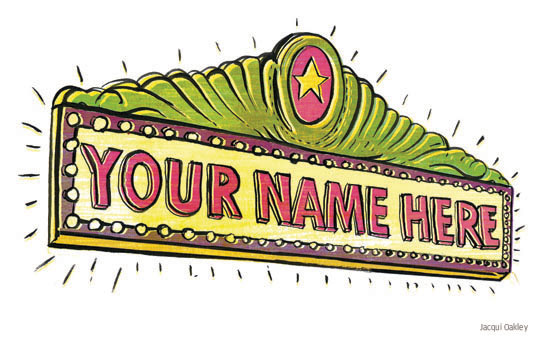
If print media is truly in an advanced stage of decline, if journalism’s great hope is online, why do journalists still like so very much to see their names in print? By now, it ought to be like advertising one’s preference for filing by Telex, but even the new media apostle who once blogged that “print is where words go to die” admits that seeing his name—and work—in print carries special satisfaction.
“I have to acknowledge my own hypocrisy,” says digital guru Jeff Jarvis, whose second book came out in fusty hardcover in the fall of 2010, and who recently asked a European magazine to send hard copies of an article he’d written. “I want to see it in print.”
Et tu, Jarvis? But he and other writers defend their position: they have bills to pay. Plenty of mainstream magazines pay $2 and $3 a word. Big newspapers pay far less, but hundreds of dollars for a thousand or so words is reasonable enough these days. Blog posts and online-only articles? Fifty bucks, give or take.
Given the economics, writing for online outlets invites the assumption that you did it for free or for very little, which is only a half-skip from the conclusion that your work wasn’t all that good to begin with or you would have gotten paid more for it. This compliment has a cousin in the widely held belief that most websites, with their unlimited real estate and volume-equals-traffic mandates, would publish a seven-year-old’s report card if it could be turned into a slide show and illustrated with puppies.
Sometimes that’s true. Low-paying, poorly edited, traffic-whoring sites don’t help the cause, and anyone can self-publish online. Meanwhile, print pubs, with layers of editing and shrinking feature wells, maintain the professional velvet rope. Explaining her evolution from online comics to work for The New Yorker, cartoonist Kate Beaton put it this way on National Public Radio: “I really wanted to do something where you have to be good enough to get in.”
Of course, print doesn’t always win out. Brand still matters. So does reach. And it’s not always clear. A blog post for The Washington Post is better, by most standards, than a clip from The Aspen Times. But what if it’s nytimes.com versus the Chicago Tribune? Or Slate versus US News & World Report? It depends on who you are, what you want, and, often, what your friends—or your mother—read.
But between the prestige and the big(ger) payoff, it’s hard to fault writers who still see a print byline as the gold standard for written stories. History is on their side. Newspapers and magazines would not exist without articles and essays. Online, though, written pieces have an optional feel, like movies that go straight to video.
Here’s a prediction: the preference for seeing our names in print will persist as long as it’s more lucrative, but also as long as freelancers and staff writers think of stories as blocks of text. Think outside the blocks, on the other hand, to a time when interactive graphics, videos, and slideshows don’t just complement a story but supplant it, and a print byline suddenly carries much less weight.
That’s surely a long way away. Right now, magazines and newspapers get a twofer with an article, which can run in both media. Truly digital content doesn’t offer the same economy. But the smaller print runs become, the more widely we turn online, the more parity we’ll see.
Already, I hear, there are pockets of journalists who care far less about whether their stories run in print or online: foreign correspondents, for instance. They never see the paper anyway, and on the Internet, no one knows you were on A1.
Has America ever needed a media defender more than now? Help us by joining CJR today.