Sign up for the daily CJR newsletter.
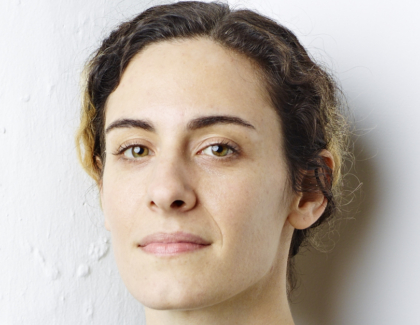
CANCÚN, MEXICO—Joydeep Gupta wants to know where the money is, and he’s going to keep asking everyone he can that very same question.
Reporting for the Indo-Asian News Service, Gupta is in Cancún for the sixteenth annual Conference of the Parties of the United Nations Framework Convention on Climate Change, or COP 16. At last year’s conference in Copenhagen, developed countries promised to spend $30 billion over the course of three years in developing countries where the impacts of climate change—caused by the historic and current emissions of the industrialized world—are already occurring.
Developing countries will only trust in the process, Gupta says, if they actually see money on the ground. Currently, there is a “trust deficit,” he says: “Developed and developing countries just don’t trust one another.”
And so he keeps asking the question: Where is the money? And because neither delegates nor NGOs seem to know—or are willing to answer—he asks it again and again during the entire two weeks of meetings in Mexico.
Walking between two press conferences at the Moon Palace, the luxury seaside resort where the UN talks are being held this year, Gupta darts through the crowds of journalists, most of them lugging laptops, recording equipment, smart phones, and flip cameras. With only a small notebook and the daily program folded in one hand and a cigarette in the other—“Are you going to kill me if we talk while I smoke this cigarette?”—he seems always to be surrounded by other reporters. They’re asking him questions (What has he heard about progress on Kyoto?) and he dispels rumors (What does he know about this secret text The Guardian is reporting?) or else offers counsel (You need to ask so-and-so that question, and then you need to ask it again of someone else).
He’s also gauging progress of the negotiations, which are done behind closed doors: “It’s hanging in the balance over the Kyoto Protocol,” he says a few days before the end of meetings. “That’s what I’ve been told repeatedly by the Americans, Indians, South Africans, Chinese, Europeans, Japanese, whoever I’m talking to,” he says. Gupta is a whirlwind, always moving, listening, looking for the pieces of the story.
Finally, separated from the crowd, he explains that coverage of the conference itself is pretty boring.
“I think we need to do a lot more on-the-ground coverage, not conference coverage,” he says, pointing out that COPs offer the chance to meet the scientists and economists who are presenting their findings. Those face-to-face meetings offer story ideas as well as story tips upon which he can later follow up.
Whether talking about India or the United States, local coverage of climate change is what’s lacking, says Gupta, Gupta, who also runs the Delhi branch of the Third Pole Project, a partnership of Internews and chinadialogue.net dedicated to covering the impacts of climate change in the Himalayas and downstream countries whose water supplies and systems are already being affected by glacial melting.*
Reporters need to bring the issue home, he says. Otherwise, their audiences are not going to care about climate change. “If I’m sitting in Denver and someone says to me, ‘Bangladesh is going to lose half its land,’ I will say, ‘Oh, that’s very sad’ and turn the page,” he says. “But if I’m sitting at my home in Denver, and I’m told that the glacier above my home in the Rockies is losing water, and I’m going to lose my ski slope, then I’ll be worried and I’ll try to do something about it.” His question to U.S. journalists is: Why isn’t that type of coverage being brought home?
Whether reporting in India, the U.S., or elsewhere, reporters should also confront the hidden biases in their work. This is particularly true when covering the energy sector.
Addressing climate change—whether through emissions reductions or adaptation—will obviously be expensive to industry, Gupta says. But it’s only fair for journalists to show readers to what extent the fossil fuel industry is contributing to the problem of climate change and to track the subsidies it currently receives from governments.
“You do a story on solar, and the next thing you know, you’ve got twenty e-mails saying it costs three bucks a unit to produce electricity from coal and seventeen bucks a unit to produce from coal—and that is the impression that is ultimately left in the reader’s mind,” he says. “But this does not take into account the subsidies that go into the fossil fuel industry.” Reporters need always to follow the money, he says. “If you calculate the subsidies for both of them, solar will go from seventeen bucks to twenty bucks, but coal will go from three bucks to nine bucks—and that is a huge difference.”
The fossil fuel industry affects reporting and government action in both India and the U.S., Gupta says, arguing that Ryan Lizza’s recent story in The New Yorker about the fossil fuel industry’s role in killing U.S. climate change legislation should be required reading for reporters in the U.S. and the developing world alike.
One big difference between the U.S. and the developing world is how much attention journalists here pay to climate change skeptics. Speaking at a media clinic during the second week of the climate summit, Gupta pointed out that the press in the developing world spends very little time on skeptics. “Part of the reason, I think, is climate skeptics don’t bother to reach over to us,” he told the crowd of about fifty journalists from the U.S. and developing countries. “I would go looking for this, if there were any reason for me to believe that their work was peer-reviewed or was worth looking for.”
Now, sitting outside the Moon Palace, with grackles belting out shrill tunes above him, he says that U.S. journalists have created a false balance by giving undeserved coverage to climate skeptics. “Because 97 percent of scientists say that we do have a problem, and it’s a problem created by us—so it’s 97 percent versus 3 percent,” he says. “If we give them both equal space, we are not balancing them.”
That said, he’s just as skeptical of those “people who are telling us we’re all about to die all around the world,” he says. To deserve coverage by the press, scientists and activists alike must have proven themselves and their data.
He finishes a last cigarette and readies for the next press conference. Before he makes it to the steps of the Moon Palace, he stops to answer a question from another Indian journalist: “You need to cross-check that information….”
CORRECTION 1/6/11: The original article incorrectly described Internews’s relationship to the Third Pole Project, and Gupta’s position at the initiative. The text has been corrected.
Has America ever needed a media defender more than now? Help us by joining CJR today.