Sign up for the daily CJR newsletter.
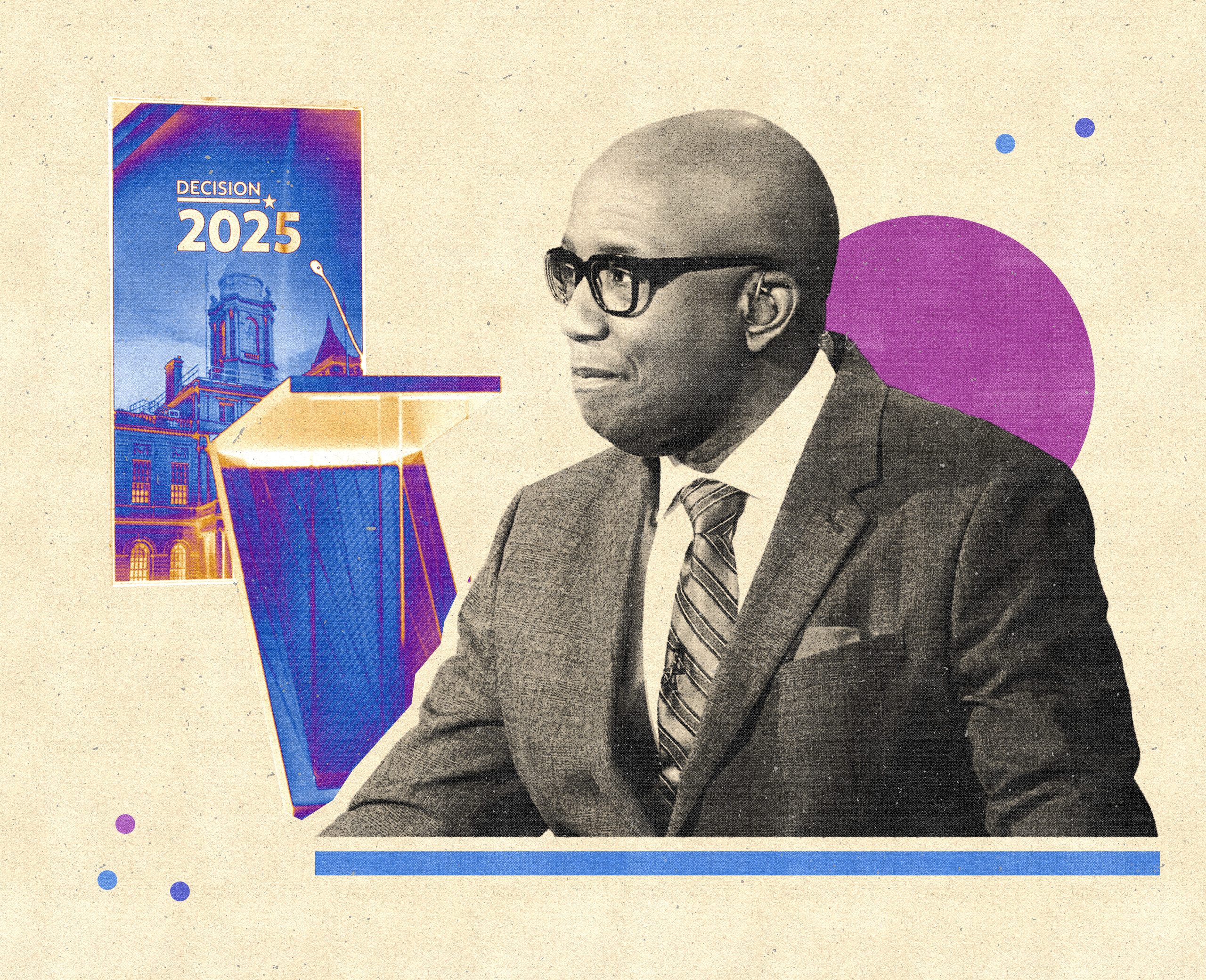
On a recent afternoon in Manhattan, Errol Louis, a political correspondent, was at the offices of Spectrum News NY1, getting ready to moderate (with WNYC’s Brian Lehrer and The City’s Katie Honan) New York’s last mayoral debate before voters head to the polls. Louis has the style of an on-camera man—that day, he wore a pin-striped suit with a pocket square—and the pensiveness of a writer. “You prepare the way a candidate would,” he said, “meaning you explore the issues down to the nubs. We field-test and we grind down on every word of every question. And then, with that as your backdrop, you can relax and let them go at it.”
Louis, who has spent decades as a sharp and loving chronicler of New York for newspapers including the City Sun (from Brooklyn, now defunct) and the Daily News (hanging on, after many layoffs), is now sixty-three and at the height of his power. Since 2010, he’s been a mainstay at NY1, the twenty-four/seven local news station. His coverage on a politics show, Inside City Hall; a podcast, You Decide; and a column for New York magazine has made him indispensable during a wild mayoral election season featuring Andrew Cuomo, New York’s former governor, who was forced to resign amid sexual misconduct allegations, and who lost the Democratic nomination despite overwhelming name recognition and financial advantage; Zohran Mamdani, a progressive insurgent who became the upset Democratic primary winner; and Curtis Sliwa, the Republican nominee, an outsize character best known for founding the Guardian Angels, a crime prevention group that wears red jackets and berets, and for his love of cats. The upcoming debate added a degree of scrutiny for Louis: whatever he and the candidates say may well get picked up and spun by Donald Trump. “The rest of the world is tuning in,” Louis said. “But in the end, it’s not that different from when I used to do city council debates in a church basement. You’ve got to keep control. You’ve got to be prepared.”
Louis, a longtime Crown Heights resident whose father had been a precinct commander for the New York Police Department and whose mother was a bookkeeper, was staying even-keeled. “You could say this race is like all the other ones I’ve covered in that something truly unusual has happened,” he said. That is, the rise of Mamdani: “I’ve never seen anything like it.” Louis has moderated so many debates that he’s lost track; just since 2017, he counts more than sixty. He views his job as providing a service on behalf of voters, helping them make the most informed choice. “What I’m usually trying to do, it’s exposition and explanation,” he said. “Once in a while, a confrontational question will elicit the information you’re looking for. But what works best for me is just to get them talking. People will sometimes reveal more than they intended. But the real point is to have them tell you what they’re planning to do. We place so much power in the hands of the mayor—it is essential you know where they’re coming from. And you won’t find that out if it’s a battle where they have their defenses up.”
NY1, which debuted in 1992, is the only TV news station dedicated solely to covering New York City. Its focus has delivered Louis—alongside colleagues including Pat Kiernan, Cheryl Wills, and Dean Meminger—cult followings. Louis cultivates relationships with viewers. “I’m one of those people who read the comments,” he said, sheepishly. He’s befriended a few people he first encountered as avid, nitpicky NY1 commenters. When he’s out on the street, Louis said, passersby regularly “stop me and ask me about shows that aired ten years ago. Literally. And they’re picking it up as if we had just gone to a commercial break.” Recently, someone brought up a question he posed to Bill de Blasio. “And I’m like, ‘De Blasio?! De Blasio hasn’t been mayor for five years!’ But I get it. The intended effect is to engage people—to make them feel like it’s their show and you’re their guy. They want to keep the conversation going? I’m here for it.”
When done right, local news feeds a certain obsessiveness, shared between newscaster and audience member. That day at NY1, during debate prep, Louis’s colleagues tried to think everything through: Michael Kurtz, the station’s news director, shot off sample questions; the staff parried all; broadcast jargon rang out with talk of lower thirds, robocams, bumper shots, preview packages, donuts, a live bug. The group discussed whether or not the station’s reporters would be able to speak to the candidates after the debate, or just surrogates. Bob Hardt, NY1’s political director, was unperturbed: “It’s fine. It’s people talking. It’s good live TV.”
Louis was focused on the task at hand—though he carried a flame for everything beyond City Hall. “I wish we could do more,” he said. “I wish we had more reporters. There’s so many communities that we have not had a chance to focus on because it’s a very, very big city, and there’s a lot going on.”
He noted one storyline, and set the stakes. “The West African population in the Bronx has been growing for a long, long time,” he said. “Sooner or later they are going to have a breakthrough candidate who wins a significant race. The politics of the development of that community are really interesting to me.” Still, he remained a realist. “We can’t get to it right now. We’re days from the biggest election we’re gonna cover in years.”
Has America ever needed a media defender more than now? Help us by joining CJR today.