Sign up for the daily CJR newsletter.
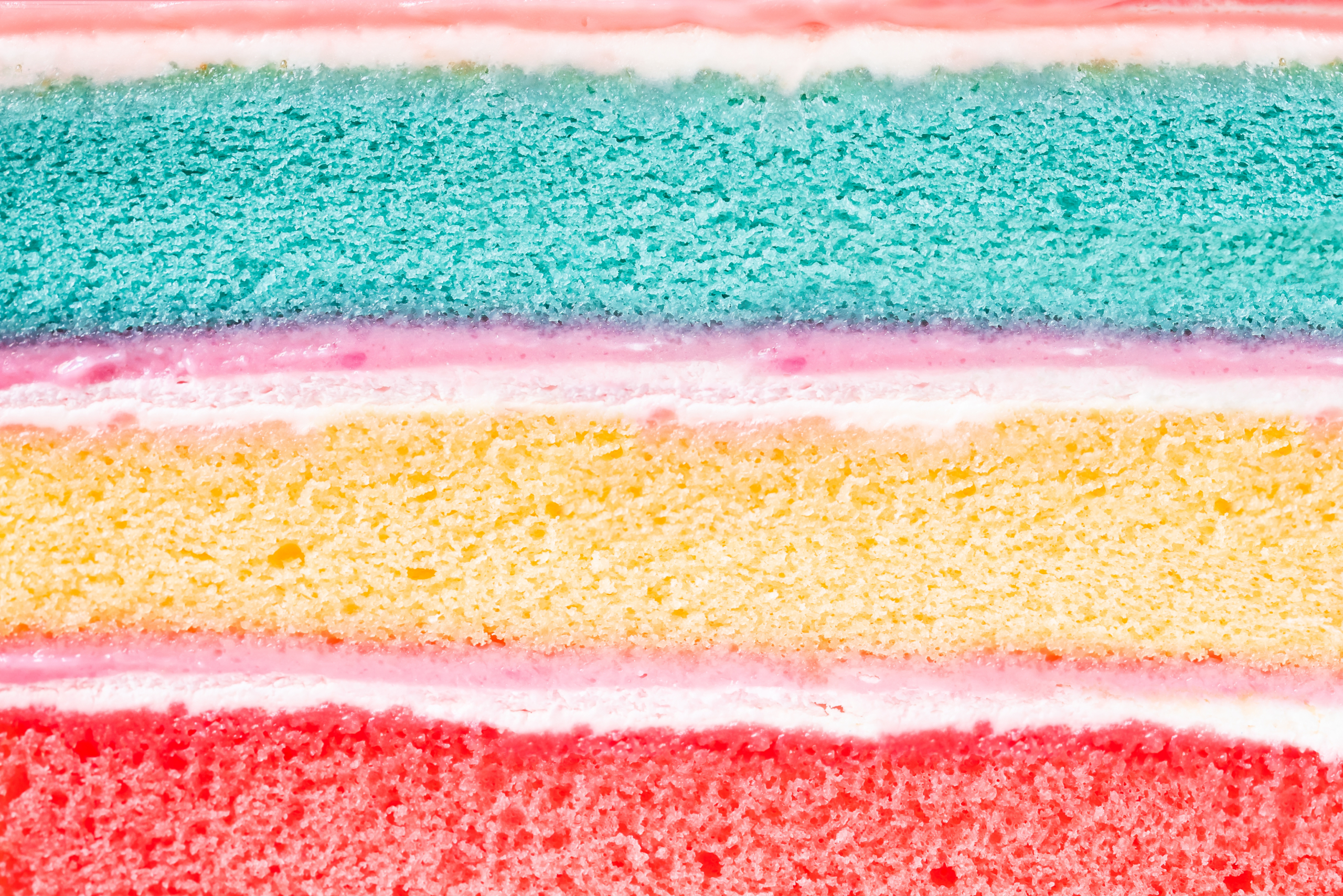
For the past few weeks, social media has been layered with cake. Cake that looked like a full English breakfast, or raw chicken breasts, or toilet paper, or a heavily tattooed hand and forearm, until a sharp knife, causing momentary confusion, revealed the inner layers. Most of them came from Ben Cullen, a British baker who posts as TheBakeKing and who has captured attention and sometimes disgust at the range of objects he can portray in cake.
Which brings to mind the expressions that involve “cake.” As the Oxford English Dictionary says, “Cake is often used figuratively in obvious allusion to its estimation (esp. by children) as a ‘good thing.’ ” But not always.
The classic is “let them eat cake,” supposedly uttered by Marie Antoinette when told that the people had no bread to eat. But in the French, “Qu’ils mangent de la brioche,” brioche is a sweet bread; gâteau is cake. And there is no evidence that Marie Antoinette said it. Antonia Fraser, in her 2002 biography Marie Antoinette: The Journey, says that the expression should be attributed to another Marie—the Spanish wife of Louis XIV, Marie Thérèse, in the late seventeenth century. And she was telling the peasants to eat the crust of pâté, or “Qu’ils mangent de la croûte de pâté.” No cake at all.
Finding that out was not a “cakewalk,” or an easy task. That expression originated among Black slaves in the American South, the OED says, as “A black Americans’ contest in graceful walking, with a cake as the prize.” The dance functioned as a critique of racist oppression—“created by plantation slaves as a satire of Southern white society,” as the New York Times put it. Cakewalks were later incorporated into racist minstrel shows, which popularized usage of the word.
A “cakewalk” could be an elaborate, ornate dance; the word was not always meant to refer to an easy task. (In 1894, Mark Twain panned a biography of Percy Bysshe Shelley as “a literary cake-walk. The ordinary forms of speech are absent from it.”) But the OED says in 1906 it was used to mean something easy, and that’s what’s stuck with us.
“It’s a piece of cake” is similar to a “cakewalk.” The OED’s first citation is 1936 in a piece by Ogden Nash, but the Random House Dictionary of Popular Proverbs and Sayings says it was popularized by British soldiers in World War II who “used the expression to describe a mission that was extremely easy to accomplish.” (The Partridge Dictionary of Slang says the expression was common in the Royal Air Force. Partridge also lists other slang uses of “cake,” some of them intended to disparage and degrade.) An even earlier phrase for an easy task or something of little substance, “cake and gingerbread,” appears in late eighteenth-century translations of Don Quixote.
In 1847, William Trotter Porter wrote in A Quarter Race in Kentucky that people put up money for a race and “the winning horse takes the cakes.” M-W says “take the cake” means to carry the honors, to win. The OED says it is “often used ironically or as an expression of surprise.” (In British English it’s “take the biscuit,” and Partridge says it came along at the turn of the twentieth century.) The Cambridge Dictionary says it means “to be especially annoying, surprising, etc. or to be the worst or best of its kind.”
“Cake,” Partridge says, “has traditionally been associated with wealth.” What could be richer than “having your cake and eating it too”? This might be the oldest of our “cake” expressions, tracing to the late sixteenth century and The Proverbs of John Haywood¸ from the English writer and playwright: “Would yee both eat your cake and have your cake?” (If it’s a big enough cake, you can.)
That expression probably derives from a much older expression from another playwright, Plautus. In 194 BC, he wrote, “Non tibi illud apparere si sumas potest”—“If you spend a thing you cannot have it.”
The word “cake” traces to about 1230 in English, the OED says, and was originally “A comparatively small flattened sort of bread, round, oval, or otherwise regularly shaped, and usually baked hard on both sides by being turned during the process.” The Scottish version was made of oat, giving the nickname “Land of Cakes” to the lowlands of Scotland. But in England, the OED says, cakes “have long been treated as fancy bread, and sweetened or flavoured.” That’s just the icing on the cake.
THE MEDIA TODAY: Ninety-nine days to do better
Has America ever needed a media defender more than now? Help us by joining CJR today.