Sign up for the daily CJR newsletter.

For six months, Chalkbeat New York has been embedded at ELLIS Preparatory Academy, a Bronx school that specializes in working with older immigrant students trying to find their footing in the US. One of those students is “Bridget,” the pseudonym for a newly arrived Ecuadorean teenager who allowed reporter Michael Elsen-Rooney to follow her and her mother’s anxiety-ridden journey through the maze of America’s education and immigration systems. (His story runs in two parts, here and here.)
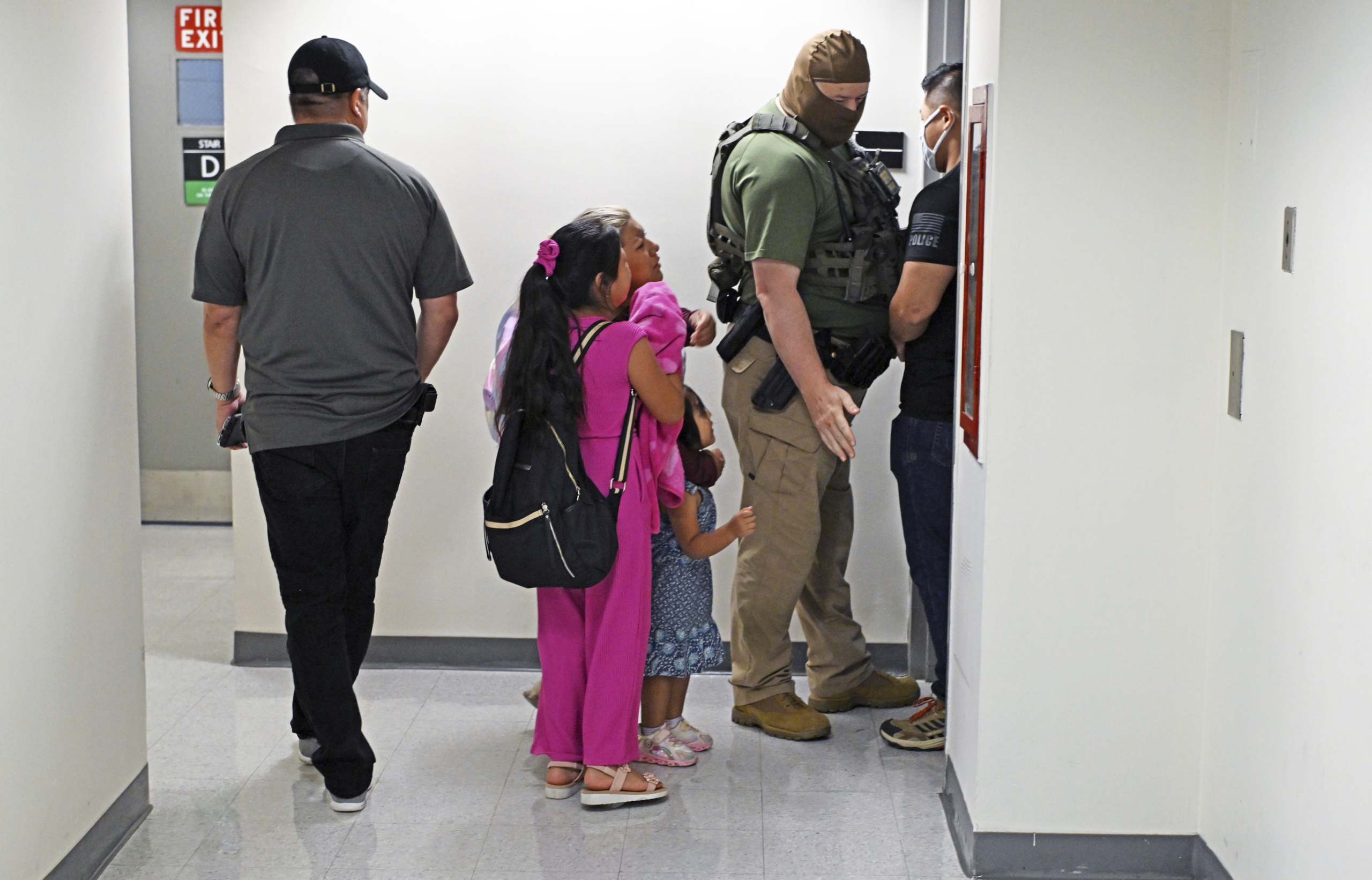
Elsen-Rooney’s eye for detail is impressive, as he sees Bridget awarded A and B grades while she proves a quick study in English and math. Meanwhile, her mother collects cans on the street to scrape together twenty dollars a day as they squeeze into a relative’s apartment. And they do all of this amid President Trump’s immigration crackdown, including the ICE arrest of one of Bridget’s ELLIS classmates. “Normally, in the final month of school, students were worried about moving to the next grade or graduating,” Elsen-Rooney writes. This year, a counselor told Chalkbeat, they wondered, “Is a masked person going to grab me off the street?”
At one point, Bridget was offered a place in a shelter that would provide additional support, but she would have had to live apart from her mother. “My mom is very frightened with everything and so am I,” she wrote her counselor. “To tell the truth I don’t feel good about all of this.… I know things are going to get worse and I think it would be best to go back to Ecuador.”
The story ends with Bridget and her mom nervously heading to Downtown Manhattan late last month for an ICE check-in. Elsen-Rooney is there as they walk past a photo of Trump on the wall of 26 Federal Plaza. He describes the outcome, but I won’t spoil it for you. You will want to read it for yourself.

By now, you’re likely aware of the man in Washington, DC, who tossed his salami sub at a Customs and Border Patrol cop. He was arrested and charged with assault on a federal employee, a crime that could (but won’t) put him in prison for eight years.
The man was identified by the feds as Sean Dunn, who works for the Department of Justice. This showed, according to Attorney General Pam Bondi, that the “Deep State” was alive and well in the agency she oversees.
The story got a great deal of play, and CBS News was on top of it last Thursday. Well, sort of. Their three-byline story named Dunn as a suspect and then went on to state that “Dunn’s LinkedIn page says that he worked as a trial attorney at the department.” The problem is, DOJ identified the suspect as being thirty-seven years old. The LinkedIn page for the Sean Dunn who works as a DOJ attorney states that he was a 1993 alum of James Madison University. Which means that if the CBS account was correct, the sandwich-tosser was an unusually precocious lad, graduating college at the age of five or six. More likely, CBS just assumed that the Justice Department, with more than 115,000 employees, had only one “Sean Dunn” on its staff and got the wrong one.
I wasn’t the first to notice this. Sean Davis, CEO of The Federalist, tweeted that “a cursory look at the significant age difference between the two” would’ve alerted CBS to the error. Independent journalist Jacqueline Sweet posted on Bluesky: “Three staff reporters at CBS couldn’t read the college dates on the LinkedIn they reference.… I want to scream sometimes.”
Apparently, CBS folks don’t spend much time on social media, because the mistake sat there for a full day. I finally reached out to their PR department a day after the story was published, and a few hours later, CBS put a misleading “editor’s note” at the bottom of the story, stating that ”Dunn was a paralegal, not an attorney.” That made it sound like the reporters simply got his title wrong. But it was worse. Their story misidentified the suspect, pinning this high-profile incident on someone who was blameless.
Speaking of the Washington situation…
President Trump’s stated goal is to reduce crime in the District. But the city’s carjackings and murders are not spread evenly. Many of them occur in predominantly Black neighborhoods, and some Trump supporters have portrayed the influx of federal agents as a way to protect those residents.
Now, there are two ways of handling this story.
One is to sit in front of your computer and do what The Atlantic did—hypothesize what people in higher-crime areas might say. The story included this kicker: “I have little doubt that a mother in Ward 8 might draw comfort from a National Guard soldier standing watch near her child’s school. And I try to imagine having the audacity to insist to her that the homicides and the danger that are her daily reality are somehow a phantasm.”
Or—wait for it—you can go to DC and talk to people, where you gain a more nuanced version of the situation, where people share concerns about crime and overreactions by law enforcement.
That’s what Alecia Taylor and Brandon Tensley did at Capital B. “Many Black residents fear that this increased law enforcement presence will lead to overpolicing, while doing little to meaningfully address crime,” they found. A Howard University student’s “first thought when they saw agents near the restaurant was, ‘Why are they here?’”
That’s what Clyde McGrady and Kenny Holston did at the New York Times. McGrady saw similar trends, including in Ward 8, a part of DC that has had thirty-eight homicides so far this year. One man told McGrady that “he is supportive of more law enforcement, so long as Black residents aren’t the target.”
That’s what Geoff Bennett and his colleagues did at PBS. They interviewed people around the District, ranging from a teenager in Ward 8 who said he saw federal agents intimidating the neighborhood (saying they arrive with “big weapons, and…are just basically harassing us for real”) to a gym owner in Northeast DC who welcomed more law enforcement (“I have been seeing a lot of atrocity, a lot of murders, a lot of innocent children…and there’s nothing done about it”).
Republican Senator Marsha Blackburn, who recently announced that she’s running for Tennessee governor, visited Memphis last week. It’s not necessarily friendly territory, since Kamala Harris won Memphis’s county by twenty-five points, almost the same margin as the state as a whole voted for Trump.
Still, it’s the kind of event that most politicians hope will be covered by the local press, given that her stop was a roundtable discussion with a few dozen citizens and officials to discuss juvenile crime. Blackburn’s office did invite reporters from the local paper and NBC affiliate. But the senator included this restriction, according to the Commercial Appeal: “Local reporters were allowed to listen to but not directly report on” the meeting. Or, in the words of WMC-TV: “Media representatives were forbidden from recording any audio during the discussion on afterschool programs, but they were allowed to record video of the event.” (Their stories included an interview with Blackburn after the event.)
Why insist on privacy, when the speakers include people from organizations like the Memphis Police Department and the YMCA? GOP state senator Brent Taylor attributed it to concerns about “a lot of Soros-funded, paid protesters who are paid to be disruptive.” Melvin Cole, founder of a local private boys’ school, justified the restrictions this way: “To be able to help kids, you’ve got to have a safe space to have uncomfortable dialogue where you can kind of hash out your differences.”
And why would local media provide coverage of an event they can’t cover? They had leverage, since Blackburn wanted the publicity. Moreover, the topic of juvenile crime must be of considerable interest, given that the city ranks near the top in homicides per capita. WMC’s reporter and news director didn’t answer my query, and Mark Russell, executive editor of the Commercial Appeal, offered this: “We have nothing further to share beyond what we noted in the story.” Which wasn’t much.
If you think your friend’s or teenager’s college tuition is expensive, try sending your toddler to preschool in Oregon.
The Willamette Week’s Joanna Hou found that a state program designed to subsidize preschool education was paying vast sums to educate very few kids. One North Portland school was granted “$464,000 to serve two children, $232,994 to serve four children, and $136,500 to serve three children” over a three-year period ending in 2023. That works out to more than $92,000 per child per year.
And there’s another wrinkle to this story. The school’s owner is now running another preschool program for the county. Her salary is $151,669.
We will not labor next Friday, August 29, to get us in the right mood for the Labor Day weekend. Laurels and Darts will return September 5.
If you have a suggestion for this column, please send it to laurelsanddarts@cjr.org. We can’t acknowledge all submissions, but we will mention you if we use your idea. For more on Laurels and Darts, please click here. To receive this and other CJR newsletters in your inbox, please click here.
Has America ever needed a media defender more than now? Help us by joining CJR today.