Sign up for the daily CJR newsletter.
John Archibald, 55, has seen plenty of change in the Alabama newsroom where he has worked for more than three decades, but none that has run its course faster than in the last six years. In 2012, three newspapers, including The Birmingham News, where Archibald started in 1986, merged into the Alabama Media Group with a shared website, AL.com. Of the roughly 100 journalists working in the newsrooms, nearly two-thirds were laid off. Now, roughly half a dozen of those who survived remain on staff after a roster of mostly younger reporters, editors, video journalists, producers, designers, and data whizzes were hired to fill some of the vacancies.
The new company has put a premium on innovation and even entirely new brands as AL.com has steadily grown its online audience. Printed newspapers are now produced just three days a week. Projects like its series of highly produced videos of everyday Alabamians reading verses from Walt Whitman’s “Song of Myself” have won it widespread praise.
ICYMI: Fox News issues an apology
In the wake of the upheaval, Archibald, who won this year’s Pulitzer Prize for commentary for his coverage of state politics, says he initially lost sleep worrying about the job he loved. “The thing that kept me awake at night was the fear of not being able to do that work,” he says. Since then, he’s mostly put those fears aside, but for mid- and late-career journalists working in American newsrooms, the anxiety is real and comes in many flavors. The changes in Alabama have been dramatic, but they are only a more pronounced expression of the same trend in most American daily newspapers. Reductions in overall headcount—and the replacement of older journalists with younger ones (who bring a native fluency to digital work) through buyouts, layoffs, or even simple attrition—have been underway for the better part of a decade. The American Society of News Editors stopped trying to estimate the number of journalists working for daily US newspapers after 2015, the year it projected fewer than 33,000 employees in daily newsrooms. That figure came down from 55,000 as recently as 2007, and while the fears of what continued cutbacks portend are shared throughout the industry, it is older journalists who are having to struggle to adapt to a field that is altogether different than the one in which they started.
Many of these concerns are not new. More than a decade ago, in 2006, Geneva Overholser, then a professor at Missouri and previously an ombudswoman for The Washington Post and editor of the Des Moines Register, published “On Behalf of Journalism: A Manifesto for Change.” In what she called “a document of hope for a difficult time,” she urged journalists to shed their understandable “comfort in the way things were” and rethink the profession from top to bottom. “The long-building plaint is now undeniable: Journalism as we know it is over,” she wrote.
This call for a widespread re-evaluation of newsrooms, from the boardroom mechanics of who owns the news, to new thinking about age-old taboos as basic as front-page ads and as complex as notions of journalistic objectivity, makes for strange reading 12 years later. So much about journalism as it is practiced today seems wholly new compared to 2006, midway through George W. Bush’s second term and the year an embryonic Twitter first launched as a text-messaging service. Deadlines are no longer merely tight; they are constant. A story that once would have entirely dominated a news cycle is dated and pushed off the homepage within the hour. Stories are no longer written, edited, and published; they’re produced, often matched with graphics, video, a social media campaign, and online reader engagement strategies.
Fielding these challenges are newsrooms full of veteran reporters scrambling to adapt to and even embrace the digital priorities of their bosses, not to mention the digital expectations of their readers, and of younger, digital-native journalists for whom the work habits and approaches of their older colleagues can seem prehistoric. And yet, when you talk to veteran reporters and other journalists who remain, such overarching worries about the future of the business can also seem quite remote. Some are simply too busy, others too driven, to let the uncertainties that many say have always shrouded daily journalism worry them overmuch.
Trending: NYT reporter’s tweet sparks controversy among journalists
“I don’t want to be Pollyannaish. We’ve lost a lot of people and lost a lot of capacity. It’s scary. But I don’t sit around and pine for the old days,” Archibald says. “I am a columnist. I’ve got my head down worrying about what tomorrow’s column is going to be about. I don’t have time to worry about the rest of it.”
His colleague across the newsroom, Carol Robinson, 54, is another survivor of the 2012 cull, and has been writing about cops and public safety for most of her three decades at the paper. She’s got what Archibald calls a “beautiful sickness,” in that she files more stories than many reporters can fathom—and has the out-of-sight readership numbers to show for it.
“I write at least five stories every day,” Robinson says, adding that she probably averages eight per day, and occasionally posts as many as 15 or more. Going digital has not changed her job all that much, she says. “The difference is that when we were strictly print, we didn’t always have the space for me to write 13 or 18 stories a day, so we’d pick and choose the best ones for print. Now, I throw them all up there.” Many reporters might balk at that kind of production. But Robinson says she’s found the pace empowering because it lets her connect with readers in ways not previously possible. “Years ago, we had an actual edict: Don’t do missing persons stories unless police suspect foul play. But now, we can do those stories. That’s great, because it might just be a 14-year-old runaway, but I can throw up a quick post about that in five minutes and maybe that kid will get found. There is a real public service in that.” Her bosses give her the time to take deeper dives when she asks for it, though she says she rarely does. “It works for my psychology,” she says. “I have a short attention span and I don’t want to spend weeks and weeks on the same story. That’s why we have investigative reporters.”
Still, intergenerational tensions can flare when a print-oriented newsroom reorients itself into a digital-first website. A story produced quickly for a Web audience can strike a veteran reporter as embarrassingly thin. Some digital natives arrive in the newsroom so accustomed to creating—and consuming—stories through social media channels that they’re left wondering what kind of world could have produced a reporter who spends 20 precious minutes on deadline searching through a stack of just-dumped city documents. Others may look at a respected critic’s output and wonder why so many resources are devoted to cultural pieces that rarely vie for the top of most-read analytics reports.
These kinds of tensions inevitably put reporters and editors from one generation at odds with those from the next. Patrick Ferrucci, an assistant professor of journalism at the University of Colorado-Boulder, recently completed a research project in which he interviewed more than two dozen digital journalists who were both veterans and newer entrants to the field. In sometimes overt language, both older and younger reporters spoke with near-contempt for their colleagues on the other side of the generational divide.
“We get these fresh-faced kids who know all about Pro Tools and Storify or whatever’s the flavor of the day, but can they interview someone? No,” said one journalist with a decade’s worth of experience. “Do they understand the difference between journalism and P-fucking-R? No. But if I need them to cut a video, well, there they are. That’s not journalism. That’s an IT person.”
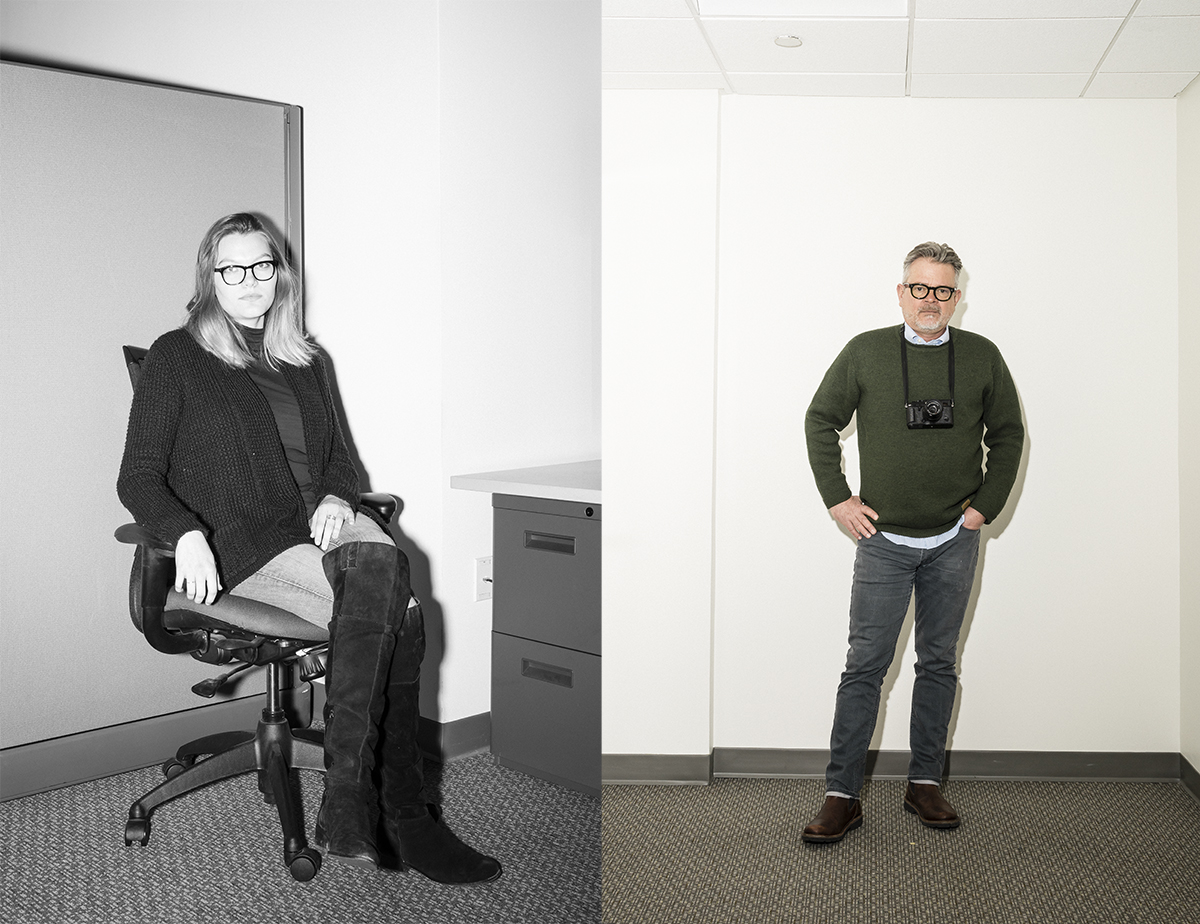
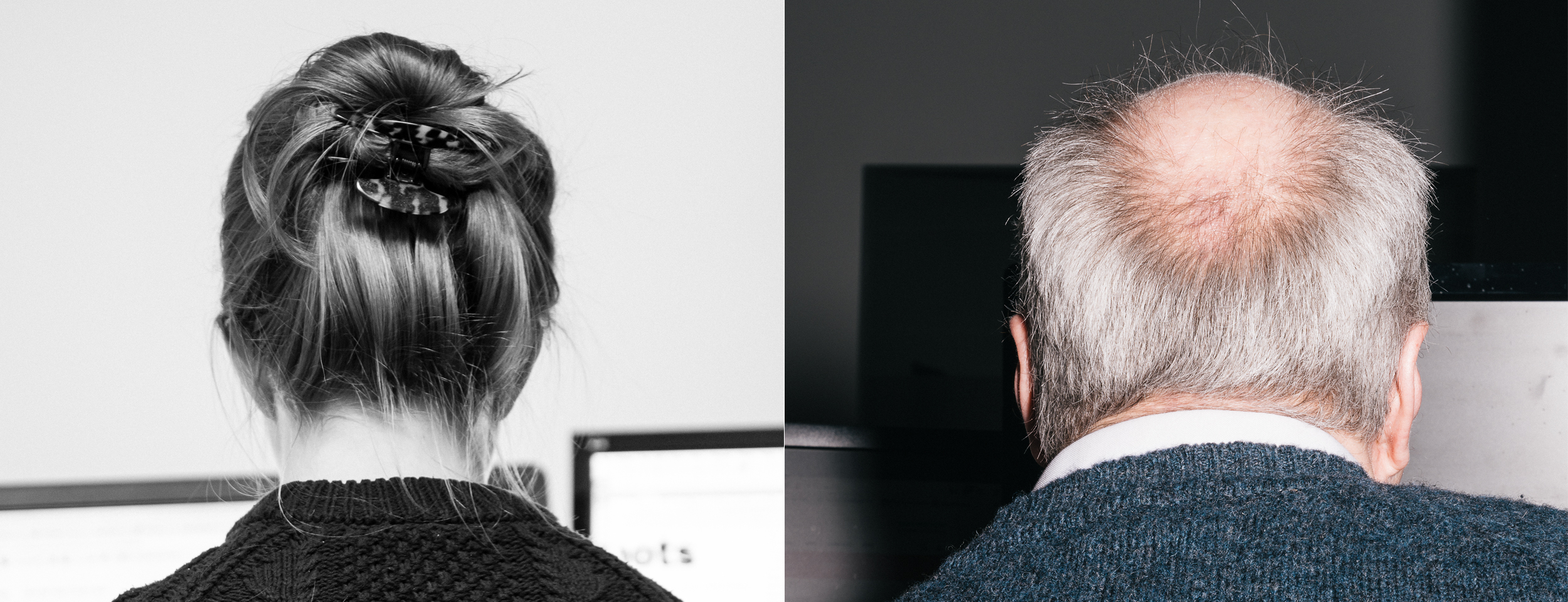
The oldest and youngest members of the Washington City Paper newsroom: Housing Complex Reporter Morgan Baskin, 22, (left) and photographer Darrow Montgomery, 54. Photographs by William Mebane.
The views from the younger side of the newsroom were no less caustic. One reporter with less than two years on the job told Ferrucci, “Everybody at [my organization] who’s been here for any real amount of time talks about certain standards, like they came down from God. My teachers [in college] did, too. I think they do this not because they believe this is the right way to journalize, but because it gives them power.” A young staffer on the digital side of a legacy broadcast outfit said, “All these old white men like to scream and wave their arms that journalism is dying. They say, Oh my, it’s dying, guys. But they’re the ones cutting budgets and trying to do things the same way they’ve always done things. Did that work out okay for you, guys? Shit no, it didn’t. We need to move on from how people did it in the fucking 1600s. Get over that shit . . . . I want to be like, Your model died, dude. Seriously, we need to reinvent journalism as we know it. Throw out the playbook.”
That kind of blunt language may not often be used out loud in newsrooms, but it’s hard to talk to journalists anywhere today who don’t feel those tensions at some level. At a few places, though, the natural suspicion of one generation by another has been eased by something as simple as working together closely on small teams with common goals.
Doris Truong, 42, has nearly 15 years on staff at The Washington Post, where she began as a copy editor and is now the weekend homepage editor. Widely traveled and with stints working on top prizewinning projects, Truong served as the 2011-12 president of the Asian American Journalists Association, part of her lifelong work as a champion for newsroom diversity. After a decade at the Post, she switched four years ago from the copy desk to the homepage team to master new skills she knew would become increasingly relevant as digital products took on more importance. Now she’s in the middle of frequent experiments at the Post—which management, led by Amazon founder Jeff Bezos, routinely describes as a “technology company”—on new ways to bring its journalism to larger audiences and more subscribers. “To stay relevant in my job, I have to be aware of where the industry is going,” she says, “and, specifically, of all the tools we are using in our newsroom.”
The Post is in rarefied company, in that it has the resources to maintain old-school journalism skills (investigative reporting, narrative journalism, blanket news coverage), while also investing in both the pricey expertise required by technology firms (engineers, designers, data scientists) and new storytelling forms (documentary-style video, virtual reality).
In a speech in 2014, Post editor Marty Baron praised the new, largely younger, primarily digitally oriented arrivals as the paper’s future. But he also mapped out the divisions in his newsroom. “These young journalists are true digital natives. And it shows. Journalists of a previous generation can learn new digital skills. They can adapt. They can work hard and diligently at telling stories in new ways. And they can be really good at it. But digital is not their native language,” he said. “It’s like those who immigrate to this country as an adult. They can speak perfect, even elegant, English. And yet their accents are unlikely to disappear. These new journalists enter the field without an accent that hints of foreignness to the new medium.”
When editors were asking for volunteers to work alongside a new Snapchat team, Truong eagerly raised her hand. She spent two months working on stories specifically designed for that youth-powered platform. The lessons she learned influence her decisions on headlines and other homepage calls. “I am asking, How can we present something to a home page audience that isn’t wildly different from what they’d expect,” she says, “but which engages with new audiences, too?”
Truong has watched as even small changes in the newsroom—say, the migration to Slack as the primary interoffice communication tool—have been met with varying degrees of discomfort. Some reporters have embraced the new medium, and others still seem stuck on email, she says. In the same way, she says not all reporters have been equally quick to adopt the reigning ethos in the digital age that values speed over thoroughness, at least when news is first breaking.
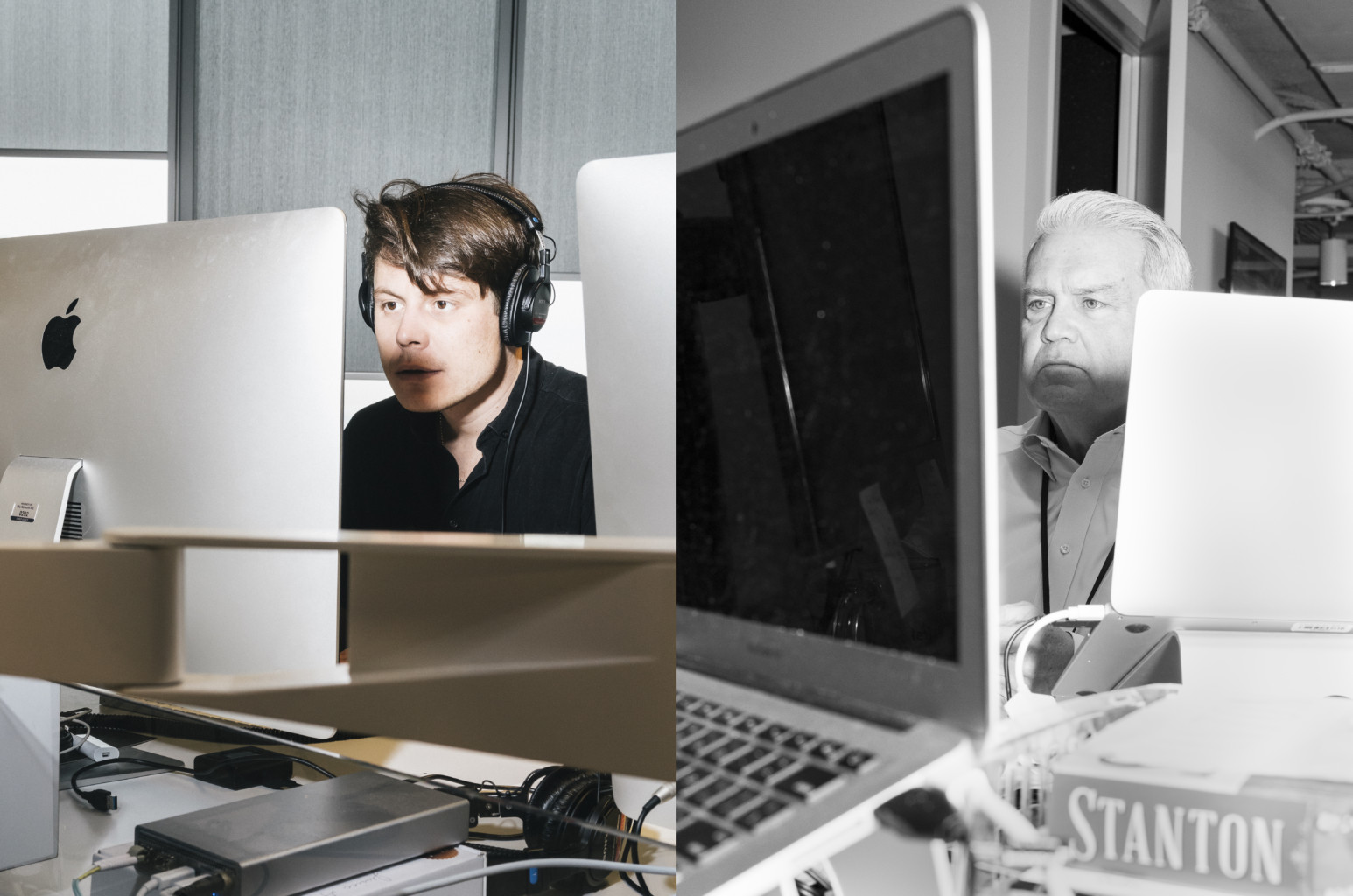
Mic Shooter/Editor George Steptoe (left), and HuffPost DC Copy Desk Editor Don Frederick. Photographs by William Mebane.
“The biggest thing in recent years is embracing the need to not even just get a first draft online, but getting a part of a first draft up as soon as it is ready. We’ve learned that if you get published first, you’ll have a better chance of grabbing an audience that will stick with you as you update the story,” she says. Wait too long, and that audience is following a competitor’s developing story instead. That can be a tough lesson to learn for reporters who came up in newsrooms where the highest value was placed on the smartest, most thorough, and best-written takes.
She says her work with the Snapchat team didn’t just help her engage with younger readers; she’s also found benefit in working more closely with some of the youngest staff members in the newsroom. Many of her teammates during that period were 10 or 15 years younger, she says. “It really got me to think about how they think we should be connecting with our audience.”
That’s something not every mid-career journalist is willing to do—learn from someone with far less experience. But Truong says that education has helped her to stay relevant in her own job, too.
Digital transformation in American newsrooms has meant changes for everyone, from small-town newspaper reporters to editors at national dailies, and in radio, television, and other media. Andrea Stahlman, 47, is the news director at Hearst’s WLKY-TV in her hometown of Louisville, where she’s worked since 1993. She’s seen change affect her own career, and has watched as journalists who work for her have had to adjust, too.
People trained as journalists are used to learning new things, but Stahlman says the larger changes she’s witnessed have been in the ways journalists have been forced to change their attitudes. “Gone are the days of saving a story for a newscast,” she says. “Longtime reporters had to be retrained to not only learn new technologies, but also change their daily workflow.” Another change? Constant expectations that reporters engage on social media. “This is not natural for longtime journalists, [and] it’s second nature for those who grew up with mobile and social technology,” she says.
Amid all that motion, something remains stalwart. “The key is having passion for the work . . . . If you are a professional journalist with a passion for getting to the truth,” she says, “then new technologies and new ways of content distribution are just skills you must acquire to do the job you love.”
For Archibald, the Pulitzer-winning columnist in Birmingham, the rise of digital journalism hasn’t swept him into such a different job. He keeps his head down searching for the next day’s column, even as he says he’s enjoying the larger audience that now reads his work. Journalism has always been a roller coaster ride, he points out, and reporting on politics in a state like Alabama is always going to provide unexpected highs. “One year, you’re putting someone in jail, and the next you’re wondering if you’re even connecting,” he says. “But whenever things look bleakest, it’s the news that is going to save you.”
ICYMI: Meet the journalism student who found out she won a Pulitzer in class
Has America ever needed a media defender more than now? Help us by joining CJR today.