Though it seemed to register barely a ripple outside of the host country, the G20 Summit held three weeks ago in Toronto has likely left scars that will long exist in the minds of local citizens, journalists, politicians, and the police.
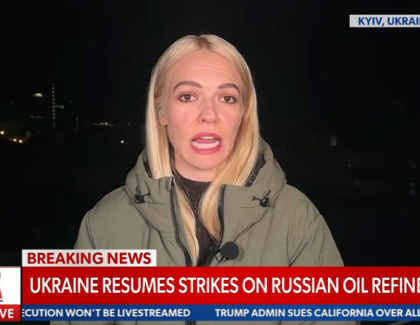
Mike Drolet, Toronto correspondent for Global National, the evening newscast of one of the Canada’s three national networks, covered the demonstrations that were held over the course of G20 weekend. He saw and reported on the sporadic violence that erupted, and he has stayed on the story. There’s been a lot to cover in the ensuing weeks.
The Canadian media, of which I’m a member, are still grappling with what happened to the city, to citizens—and to themselves. In the wake of the G20, four reporters filed complaints with the provincial police watchdog alleging “that police physically assaulted and threatened to sexually assault the female reporters during the G20 summit.”
The media are also facing criticism for the quality and accuracy of their G20 coverage. The most common complaint is that reports—from TV news, in particular—focused on images of burning police cars instead of peaceful demonstrations, on episodes of violence rather than the widespread arrests of people, some of whom did nothing more than leave their houses at an inopportune time. (Two of the more popular YouTube video making the rounds post-G20 show a line of police charging a peaceful crowd that has just finished singing “O Canada,” and a police officer telling a young woman that she will be arrested if he’s touched by one of the soap bubbles that she’s blowing. She ends up being taken away.)
The criticisms of mainstream media coverage are, for the most part, not being met with official responses. Just as some members of the public feel as though those in charge of the planning and security of the G20 are not being brought to account, there is a segment of the population who express the same sentiment when it comes to the press. That lingering resentment found a focal point this week when bloggers and Twitter users accused Drolet and Global National of inserting misleading footage into a G20 report.
On Saturday, Drolet delivered a report about a march held by several groups to demand a full public inquiry onto police actions during the G20. Part of the report included clips of the violence that erupted on the streets during the G20. There were images of a shattered Starbucks window, of burning police cars, and of clashes with police. Here’s the report:
Did you spot the three-second shot of a demonstrator attacking two newspaper boxes? As eagle-eyed blogger Norman Farrell later noted, the boxes belonged to two newspapers in Vancouver, not Toronto. Clearly, that image had nothing to do with G20.
“I guess they were lacking in sufficiently outrageous footage of Toronto G20 vandals so they cut in a video of Vancouver black-bloc crazies knocking over two newspaper street boxes during the 2010 Olympics,” Farrell wrote.
He expanded in a follow-up post:
I raised the issue about Global TV carelessly or deliberately (choose one) spicing its national news report about G20 demonstrators with video showing Vancouver Olympics vandals in action because I see it as part of a pattern. Sometimes through carelessness, other times through intention to shape the message, the news is distorted. Neither is tolerable. Democracy depends upon a free and accurate, unbiased press.
Farrell’s posts and the video soon made their way into the #G20 discussion on Twitter, among other places. Farrell also took the step of filing a complaint with the Canadian Broadcast Standards Council (CBSC), the independent body that administers standards for the country’s private radio and television broadcasters.
When I reached Drolet earlier this week, he was apologetic about the mistake and emphasized that it was completely unintentional—an editor working on the piece had mistakenly included the Vancouver footage.
“We had a large bank of tape made with all of the footage from the G20 and intermingled within it was a three-second shot from the Vancouver Olympics [protest],” he said. “This guy [Farrell] rants and raves like I’m trying to make it look worse than it was. The Vancouver riots were nothing compared to the G20.”
I also spoke with Neill Fitzpatrick, executive producer of Global National. He said Farrell would receive a letter from him explaining the error, and that a correction would be broadcast’s in tomorrow’s newscast. The mistaken report was originally broadcast on a Saturday, so the correction will air on the same day. The network will also be sending a letter to the CBSC. Yesterday, Farrell published a copy of Fitzpatrick’s letter to him, and you can read it here.
The mistake was unintentional, but it fed into the existing perception that mainstream media coverage of the G20 painted demonstrations as violent and destructive and, in the process, delivered an inaccurate depiction. Global’s careless mistake was understandable in its nature (lord knows it has happened many times before in TV newsrooms the world over). But it took on additional significance and meaning for some people because, rightly or wrongly, it was seen as part of the larger narrative of G20 media coverage.
Tomorrow’s on-air correction from Global will attempt to fix the mistake—but what about that larger perception? How do we address that? My fear is that we in the press won’t make any attempt to do so. People will forget the Global mistake, but the perception will remain.
While this issue is not the focus of reporters and newsroom leaders in this country, the press is, however, following up on the treatment of reporters during the summit. Canadian Journalists for Free Expression has launched a survey of journalists “who believe their freedom of expression was compromised by police/security personnel during the G20 security operation.” A Web site run by the Canadian Journalism Foundation has been publishing first-person accounts from reporters who were caught up in the protests and violence that erupted over the weekend.
The country’s newspaper columnists are also weighing in, with one prominent writer, The Globe And Mail’s Christie Blatchford* offering a critical assessment of some of the people who called themselves reporters during the G20, declaring that “journalism is not merely a collective of the self-anointed.” Yes, the argument of who is and isn’t a journalist is once again part of the discussion.
Blatchford added: “… in the G20 protests, journalists, real or self-appointed, traditional or otherwise, had no special rights to go where we wanted and no special badge of protection against arrest.” The lack of discussion within Canadian media about the nature of coverage leads me to wonder if perhaps we feel as though there’s a “special badge of protection” that frees us from asking tough questions about our coverage the way we’re attempting to press the leaders responsible for the summit?
I’m just as deserving of this criticism because, as part of the team at OpenFile.ca, a recently-launched collaborative local news site for Toronto, I spent G20 weekend helping direct coverage while also producing some reporting of my own. (Our G20 work is collected here.) We haven’t done a post-G20 examination of our work, or that of the Canadian press as a whole. Perhaps this column is a first step towards doing so.
Many Canadian citizens are now calling for a full public inquiry into the G20, and a civilian-led review is planning to examine police actions (though there is debate about how effective this will be). It will be months or perhaps years before any of these processes are borne out, if at all. When it comes to an accounting of the good and bad of media coverage, we should do better by the public and be fast, thorough, and open about examining the faults and mistakes, no matter how small or accidental—present company included.
Correction of the Week
Lawyer did not have a drug problem: A story published in some Thursday editions about Curtis Kyles, a suspect in the killing of Crystal St. Pierre, reported incorrectly that criminal defense attorney Paul Fleming had problems with drug abuse and prostitution. The story should have said that Fleming questioned a detective about whether St. Pierre had drug and prostitution problems. – The Times-Picayune
Correction: This article originally misspelled Christie Blatchford’s first name as “Christy.” We regret the error.

Non-violent demonstrations by Tea Partiers or anti-illegal-immigration activists get baited by MSM reporters, and the 'nasty' climate of verbal hostility is played up. By instructive contrasts, demonstrations by anti-capitalist students or by pro-illegal-immigration groups are euphemized as 'mostly peaceful'. You kids who want to go into MSM political reporting, you better learn your duckspeak before applying.
#1 Posted by Mark Richard, CJR on Fri 16 Jul 2010 at 12:45 PM
The most common complaint is that reports—from TV news, in particular—focused on images of burning police cars instead of peaceful demonstrations, on episodes of violence rather than the widespread arrests of people, some of whom did nothing more than leave their houses at an inopportune time.
To Mark’s point, now you know how the Tea Party folks feel.
In general though, the bad apples of the G20, WTO, World Bank (take your pick) protesters do tend to paint all participants with the same brush. The Black Block types are true devotees to “Propaganda of the Deed”, believing, as they have for the past 150 years, that the next crisis of capitalism will be the one that puts the “system” in its grave. To this end, every protest is an opportunity to create some anarchy, get the authorities to crack some skulls so the hard core lefties can have their “AHH HA!” moment, proclaiming that this retribution from the state somehow smashes the façade of free speech and openness that all the “sheeple” have. This was demonstrated most famously at the DNC conventional 1968: provoke and agitate and then play the victim.
You go to a protest to peacefully speak out against the G20 but don’t like being arrested or being tear gassed? Tell the asshole trust fund revolutionary dressed in all black with the Klansesque bandana on whose mommy and daddy’s money bought them a ticket from Gstaad to behave or he/she wont have to worry about the cops, you’ll kick his/her ass.
Like this protestor did.
The three tasks of the police are to maintain/reestablish order, protect lives and protect property. If you put any of those at risk, expect a well deserved ask whomping.
Unfortunately, the press outlets most sympathetic to protestors do nothing to convey these simple truths.
Many Canadian citizens are now calling for a full public inquiry into the G20, and a civilian-led review is planning to examine police actions (though there is debate about how effective this will be).
There is debate? That’s the understatement of the century. Aside from getting Betty White to host SNL, what the hell has a FB page ever done except give people too lazy to truly participate the option of showing solidarity with the click of a mouse. Its truly a meaningless gesture.
#2 Posted by Mike H, CJR on Fri 16 Jul 2010 at 01:27 PM
Strange that Drolet's crew at Global News make a mistake by salting a report with unrelated footage and he accuses me of "rants and raves." I held them to account. I followed the procedure they and their industry group provide for making a complaint. I even published unedited their response.
My blog Northern Insights is defined on the home page as providing my views, often about political matters affecting Western Canada, most examining ethical behavior by public officials and media. Global TV News claim to broadcast a national news cast. Their budget is millions of dollars, mine is nothing.
I lose any remaining respect for Drolet and Global TV News for their whining accusation that I am ranting or raving. I also criticized Drolet for reporting opinion without identifying it as such. By example, he said those calling for an official inquiry into police G20 responses were "hardcore protesters" who were "losing followers." In fact, the call by citizens and opposition politicians was building when he spoke those words. He was reporting his own opinion and that is not appropriate if fairness and balance is sought.
I've been accused by some of creating false evidence with photoshop or of making something out of nothing. Neither is true
#3 Posted by Norm Farrell, CJR on Fri 16 Jul 2010 at 02:21 PM
As a regular reader of Mr. Farrell, I must add that the views expressed on his website are meticulously researched and well thought out. I cannot say the same for Global National, or their print media that dominates most of the printed media in Canada, Canwest Global. They are heavily partisan in their reporting and donate frequently to the neoconservative movement in Canada.
I get my news online and never buy these Canwest rags. Thanks for airing this important issue. Democracy in Canada is under attack and the more people that are aware of this, the better.
#4 Posted by Kim Poirier, CJR on Fri 16 Jul 2010 at 08:02 PM
With respect, Craig, I think you let Fitzpatrick off a little easy with his "mistake" excuse. How is it possible that six-month-old footage was intermingled with new footage? Is Global's bank so seriously screwed up that they can't keep digital files separate? It really doesn't pass the smell test for me.
I would understand if they were planning a piece on black bloc tactics and put the footage together for that purpose. But surely their archived footage is properly tagged and sorted. It can't possibly be just a sock drawer where you have to reach in and pull out two that sort of look alike.
You'll have to forgive progressive types like us who harbour a serious distrust of CanWest Global. This is a media company which, after all, has held a virtual monopoly on print titles across BC and who donated tens of thousands to the ruling right-wingers. Tell us that attitude doesn't trickle down onto their news team.
And finally, it's telling that Drolet would use the phrase "rants and raves" about Norman's work. His blog is a heck of a lot more reasoned than many of what Drolet's confreres at the CanWest-owned Province have put out. Don't believe me? Read Mike Smyth or Jon Ferry sometime. They make Norman look like a piker when it comes to ranting and raving.
#5 Posted by Tony Martinson, CJR on Sat 17 Jul 2010 at 04:51 PM
It has become pretty clear to me that the Canada has lost it independence from the US and operates as a satellite state. folks can be as shocked , outraged and angered as you want, it doesnt make any difference to the people in control. Toronto is a police state that can be invoked anytime it is needed .
#6 Posted by craig tindale, CJR on Sun 18 Jul 2010 at 03:45 PM
Living in downtown Toronto and having a front row seat to the G20 I often found the television/radio media coverage did not always match the reality on the ground. I found the reports on television and radio to be peppered with hyperbole and conjecture. I can't tell you how often I heard the word "explosion" being used when reports were made about the burning police cars. I'm not sure if it is the inexperience of Toronto journalists in covering situations such as this or a deliberate effort to increase their audience and sense of importance but it left a bad taste in mine mouth.
I was looking forward to some in the Toronto media looking critically at the media coverage of the G20 but I'm still waiting. I am still hoping that there are some in the business that will look at this as an area of need of review and coverage. Self evaluation and criticism is a challenge but I believe the media has a duty above and beyond many other groups to ensure this happens.
#7 Posted by MarkinToronto, CJR on Wed 21 Jul 2010 at 11:11 AM
One thing that has to be remembered is that these incidents of looting and a car being set afire, took place in a context in which a billion dollars had been spent for security, billion with a 'B', and people were being arrested for having lawyers' phone numbers on their arms and blowing bubbles, bubbles with a 'B',
http://www.youtube.com/watch?v=GP_LB_ZhcTA
Why the paradox between expensive and overpowered security on the one hand and riot they failed to prevent on the other?
Naomi Klein explains in an important interview:
http://www.democracynow.org/2010/6/28/naomi_klein_the_real_crime_scene
"the police are feeling really cornered and feeling like they have to justify something which is completely unjustifiable. And that is the price tag that they put on what it would cost to provide security for the G8 and G20 summit. Security for this summit cost, as you mentioned, an estimated $1 billion. Just to put that in perspective, it’s more than security has ever cost for any summit ever in the world. And, you know, Canada is not a country which has a history of terrorist attacks. So, it isn’t at all clear why they felt they needed to spend such a huge amount of money...
Basically what happened is they were able to buy all kinds of new toys, water cannons, sound cannons, you know, all kinds of high-tech stuff. But the real cash grab was overtime pay for the police. I mean, they were absolutely extravagant in their overtime demands, unyielding. They said, "If you want security, this is what it costs." So, before the summit started, there was a public opinion poll that was conducted that found that 78 percent of Canadians believed that the cost was unjustified.
So, what happened on Saturday, when you saw those burning cop cars and windows breaking, was what I can only describe as a cop strike. Essentially, they were just letting it happen. And people were watching this, not understanding why, for hours, the same police car was just allowed to burn. I mean, these guys had just bought themselves a brand new water cannon, and yet they couldn’t seem to find themselves a fire extinguisher.
Now, while that was happening, media outlets were getting press statements. And I’ll just read you one. This is from the Toronto Police Department: "All you have to do is turn on the TV and see what’s happening now. Police cars are getting torched, buildings are being vandalized, people are getting beat up, and [so] the so-called 'intimidating' police presence is essential to restoring order." In other words, the police were playing public relations, overtly. They were saying, "OK, you’re telling us our price tag was too high. We’re getting in political trouble for our outrageous demands. So now we’re going to show you this huge threat that we’re up against." And so, we have a police commissioner named Julian Fantino, who’s now started to talk about activists as organized crime. He says it’s not enough to call them thugs, they’re organized criminals. So, what’s dangerous here is that in order to justify their own unjustifiable actions, they need to overinflate a threat.
And so, that has played itself out in two ways: one, by allowing what happened on Saturday to happen with almost no intervention; and then—that was stage one—and stage two was using that inaction as justification for scooping up hundreds of other activists, beating up journalists, just going on a rampage. Now, it they were serious about getting the people who had broken the windows, they would have done the arrests there at the time. But that’s not what they’d done. They went to other parts of the city. They waited hours. And that’s who they arrested."
#8 Posted by Thimbles, CJR on Wed 21 Jul 2010 at 07:22 PM