

Sign up for the daily CJR newsletter.
Welcome back to Ask Anika, a column for addressing questions about the ethics, legal considerations, and best practices of adopting new technologies in journalism. Send me your questions at askanika@cjr.org.
Q: I’ve heard that the Associated Press recently warned that journalists shouldn’t anthropomorphize AI and describe it as having humanlike characteristics. Why is this something to worry about, and what should I do instead?
A: When OpenAI’s hack of Hugging Face made headlines this summer, I was on vacation, preoccupied by a different set of rogue agents, my niblings. As I set down my things at the hotel, the elementary-age one with an iPad had already figured out how to connect to the Wi-Fi and started playing Roblox. I was perplexed; the kiddo stared at me blankly and let me know the secret, obtained thanks to a previous vacation: the internet password required only a last name and room number. Did this agent go “wild”? “Escape containment”? Attain “superintelligence”? No, it was just a child with good pattern-recognition skills and a ton of motivation.
That’s the same way that I’ve been summing up my views to anyone who asks about the recent rash of safety failures by AI companies, because I’ve lost count of the number of stories about AI agents “going rogue” lately. When we ascribe AI-like traits to a child, we can see the absurdity of this terminology. Long before LLMs first discombobulated society, there was a misguided practice of ascribing human characteristics to computer systems. Two years ago, OpenAI introduced (and paused) a “talking” chatbot that sounded eerily similar to Scarlett Johansson in the 2013 science fiction movie Her, and as I wrote at the time, by anthropomorphizing their autocomplete machines, AI companies removed “the accountability for and acknowledgment of the flaws and limitations embedded by human design into the systems.”
When journalists follow suit, borrowing the companies’ own anthropomorphizing language, they add to the problem—one that has become so widespread that last month, the Associated Press warned journalists: “Artificial intelligence systems do not think, feel, want, or understand.” Rather, journalists should “explain what a system does, how well it performs, who built it, and who could be affected by it.”
But how? As usual, I recommend asking experts. For me, this often looks like roaming the floors of Pulitzer Hall to ask my colleagues with degrees in statistics or computer and data science to explain some nuanced machine-learning concept that might end up as a sentence in my column. For others, I recommend tapping the writing of critical AI scholars such as Eryk Salvaggio, an artist and former Tech Policy Press fellow with me, who has noted that “Models Don’t Go Rogue,” along with Emily M. Bender and Nanna Inie, professors at the University of Washington and the IT University of Copenhagen, respectively, who suggest identifying “which word choices are anthropomorphizing” and propose alternative language to get into a habit of using in your writing. For example, rather than writing about a chatbot’s “answer,” use the word “output” instead.
Bender has other advice for journalists and recently reminded them that “extraordinary claims require extraordinary evidence.” Or, as I counseled a former student, “don’t let anyone blow AI smoke up your ass.” It is not a journalist’s job to build hype for AI as companies increasingly stoke fears of exterminating humanity and tout the alleged consciousness or sentience of the machines they are building in their image. Doing that kind of PR for AI companies only skyrockets their valuations and mints new billionaires in their impending IPOs. It also muddles the technology’s true capabilities, allowing companies to advocate that only they understand how it works and thus can be the only ones to regulate it.
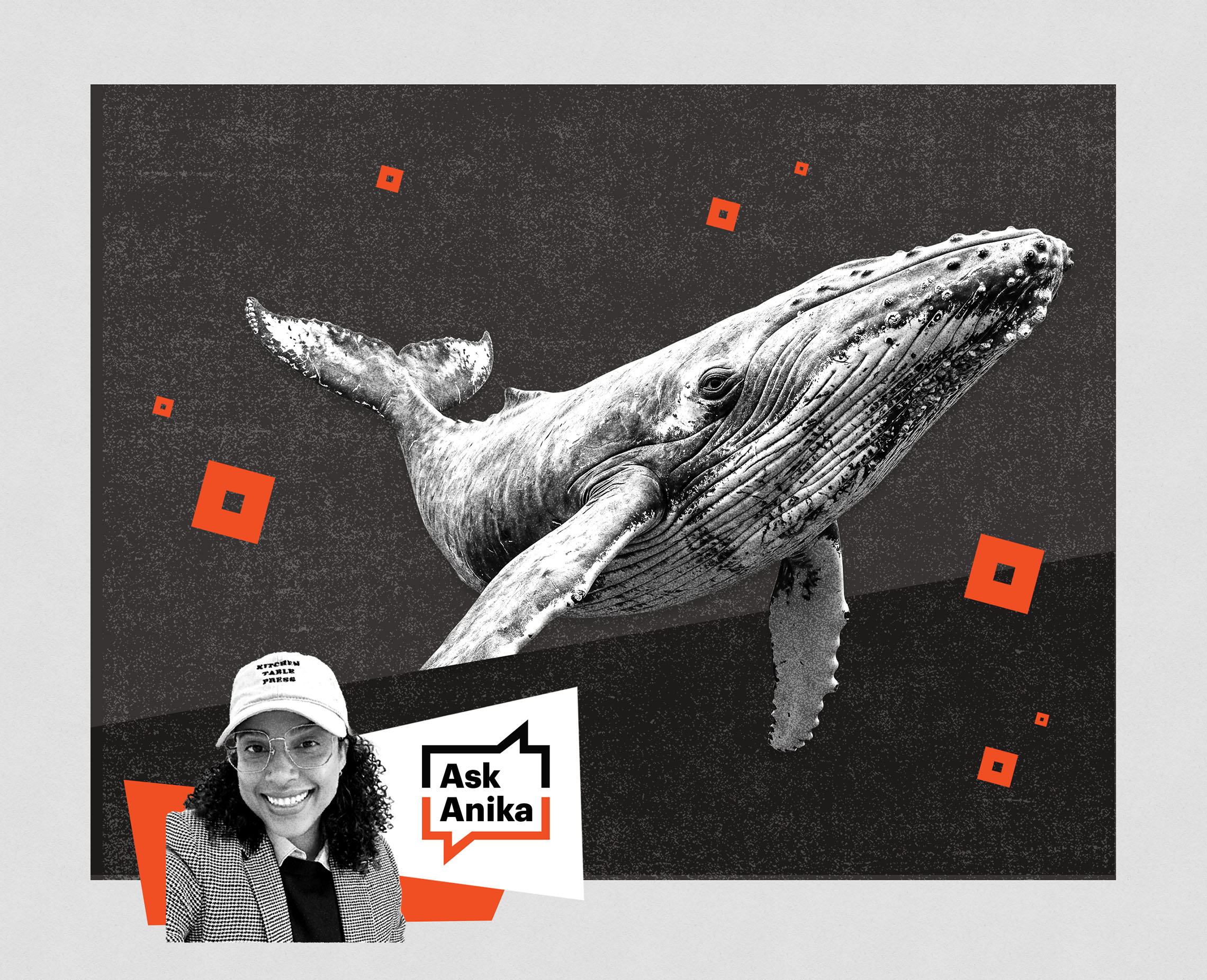
So yes, I’ve lost count of the number of stories about AI agents “going rogue” lately. But knowing that I was writing this column, I have paid attention to other stories where this phrasing was being used, correctly: airline pilots suspected of attempting to crash a plane, a “rogue whale” that photobombed a cheerleader, and—in a horrifyingly effective example of humans gone rogue with tech—current and former police officers illegally accessing Flock surveillance cameras to stalk and harass former romantic partners. AI’s pattern-recognizing agents shouldn’t make the cut.
(AI disclaimer: I used Google Search’s AI Overview to find a few links, including the whale example, which was embedded in Fox’s Screencaps column. By the way, since I began writing these disclaimers, and modeling my argument for radical AI disclosure from journalists, I have found myself intentionally not using AI tools anymore because it is embarrassing to know that I will have to publicly cop to it. Thus, AI transparency can apparently also lead to AI abstinence.)
Has America ever needed a media defender more than now? Help us by joining CJR today.