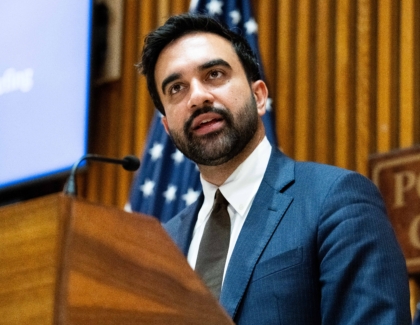
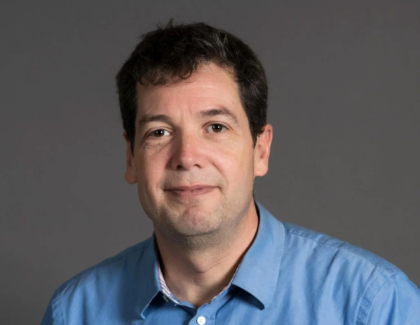
Last night, The Columbia School of Journalism played host to Bill Keller and Alan Rusbridger, the top editors at The New York Times and The Guardian who worked together in 2010 on three sensational WikiLeaks document releases.
Beyond the novelty of seeing them on stage together, nothing much emerged that hasn’t been covered in either Keller’s detailed article in last weekend’s New York Times Magazine, the Guardian’s serialization of their upcoming WikiLeaks book, and reporting by many others on the collaboration. (A video of the event is here.)
One exception would be in Keller’s description of suspicious and unauthorized e-mail activity that he has connected to the ongoing WikiLeaks saga.
In his magazine article, Keller thinly and vaguely mentioned activity that “suggested” that three people “associated with the project” had had their e-mail accounts hacked “at a point when relations between the news organizations and WikiLeaks were rocky.”
Keller drew a somewhat sharper picture of what he knows about this in response to an audience question asked by Time’s Barton Gellman.
“I don’t want to say very much about this, because we are still in the process of investigating it, which is extremely complicated,” Keller began. “It involves getting access to some places that are difficult to get access to.”
“There were three individuals—one in the U.S., one in the U.K., and one in Germany—who all had virtually identical, uh, eruptions, shall we say, of their e-mail accounts. They were all the same e-mail server.” Keller continued.
“The forensics expert who looked at ours said that it was clearly hacked, but they didn’t leave any fingerprints that are readily available,” Keller continued. “So we’re sort of taking it to the next level.”
While relaying the claim from the Times’s computer forensics specialist that the emails were “clearly hacked” is good deal more concrete of an assertion than Keller had previously ventured, his comments left much unanswered. He provided no date for this event, nor did he specify who held the accounts, or even if they all worked for the Times—a possibility that his phrasing pointedly leaves open.
When pressed on what he meant by “eruptions,” Keller smiled and offered a chuckle—but no more detail.

It would have been useful if there had been a full update of the UK Telegraph's recent WikiLeaks articles. Still, it all pales in significance beside the extensive coverage of Peace Corps by ABC, and the recent stories in the student press that ignore that coverage in "recruitment" articles:
ABC NEWS INVESTIGATION: Parents of Slain Volunteer Say Peace Corps Error Led to Murder:
Whistleblower's name revealed to suspect accused of sexually abusing children. By ANNA SCHECTER and BRIAN ROSS Jan. 14, 2011
The family of a 24-year old Peace Corps volunteer from Atlanta, Kate Puzey, says agency personnel set her up to be murdered by revealing her role in the dismissal of an employee she accused of sexually abusing children at a school in the African country of Benin. The young woman was found with her throat slit shortly... [continue]
The Cornell Daily Sun: Peace Corps Ranks Cornell Fourth Top University
FEBRUARY 4, 2011 BY SHANE DUNAU
Cornell placed fourth in the nation among mid-sized schools on the Peace Corps’ 2011 ranking of colleges and universities, released Tuesday. Fifty five former Cornell undergraduates are currently serving in the Peace Corps, making the University the tenth largest contributor of volunteers in the country. [...]
The Ithaca metropolitan area ranks number one in former Peace Corps volunteers per capita, according to the Peace Corps.
#1 Posted by Clayton Burns, CJR on Sat 5 Feb 2011 at 11:17 PM
The Brown Daily Herald:
Peace Corps’ challenge lures students abroad Sarah Forman Staff Writer
Published: Friday, February 4, 2011
When Charlie Wood '10 wants to withdraw his monthly paycheck, he leaves home at 4:30 a.m. and spends five hours traveling through southeastern Africa in the back of a pickup truck alongside 20 to 30 people, produce for a local market, a few chickens and a goat. Once he makes it to the closest city — Nampula — he stops at the bank, turns around and starts the whole process over again.
The lack of transportation was only one of the difficulties Wood faces as a Peace Corps volunteer teaching physics to eighth and 11th grade students in a rural village in Mozambique, he wrote in an e-mail to The Herald. [...]
Part of the allure of the Peace Corps is its promise of complete integration into local culture, since volunteers live in the same conditions as their community members and see few other Americans, according to the organization's website. Jeanine Chiu '10 said the chance to see a developing nation at a "grassroots level" compelled her to sign up as a Peace Corps volunteer in southern Jordan, teaching English at a girls' school. [...]
Chiu was sworn in as a volunteer last month, so the real substance of her work has yet to begin, she wrote. [...]
Like Chiu and Wood, 19 other Brown undergraduate alums are currently serving abroad and dealing with their own set of challenges. "Each volunteer brings his own expectations, history, tradition," said Norm Tremblay, a recruiter and return volunteer. [...]
Brown is currently the 25th largest feeder school for the Peace Corps among medium-sized universities and colleges, with 21 volunteers in the field. [...]
Nearly 600 Brown graduates have completed Peace Corps terms, according to a recent press release, so there are plenty of alums available to share their experiences with potential applicants.
#2 Posted by Clayton Burns, CJR on Sat 5 Feb 2011 at 11:29 PM
Congress to Investigate Peace Corps Treatment of Sex Assault Victims
Texas Republican Demanded Hearing After Watching '20/20' Report on Peace Corps BY ANNA SCHECTER Jan. 27, 2011 ABC
In the wake of an ABC News "20/20" investigation, a Congressional committee announced plans for hearings on the Peace Corps' handling of more than a thousand cases of female volunteers who were raped or sexually assaulted over the last decade.
#3 Posted by Clayton Burns, CJR on Sat 5 Feb 2011 at 11:44 PM