

This is the seventh in a series examining how the candidates’ health care proposals will affect ordinary people who live in the river town of Helena-West Helena, Arkansas, and how the press could cover that angle. The entire series is archived here.
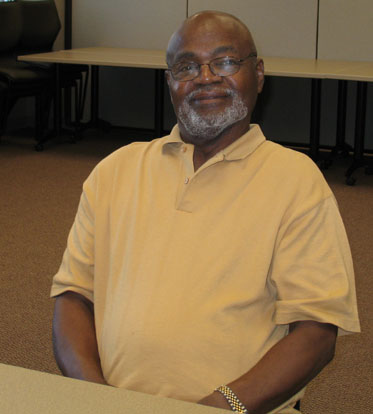
Sidney Randle
Sidney Randle, sixty-nine, has lived with Medicare for a long time. He worked twenty-one years for the Mohawk Rubber Company, until 1979, when it closed. Then he worked at a service station until his back and shoulder went out of whack, and his diabetes, which he has had for nearly thirty years, worsened. “I got so many problems, I don’t know which ones put me on disability,” he says. Randle has been receiving Social Security disability payments since 1987, and got his Medicare card a couple years after that. It’s his lifeline to medical care.
He takes seven medications—for high blood pressure, diabetes, COPD (chronic obstructive pulmonary disorder), an enlarged prostate, and heart disease. Surgeons have placed a stent to open a blocked artery, and a stroke two years ago made it harder for him to walk, although Randle told me he is exercising at a gym and losing weight—“twelve pounds lately,” he says proudly. Like many seniors, he has had trouble paying for his prescriptions; the $1249 monthly check from Social Security doesn’t stretch far enough to cover them all. You could say that it was a godsend when Medicare Part D, providing seniors with a prescription drug benefit, took effect in 2006. But that benefit came with a catch—a big one, too.
After people on Medicare accumulate $2510 in drug expenses (most of which, after a deductible and coinsurance, are covered by the government), they hit the infamous “donut hole.” Congress knew that the government couldn’t pay for all the drugs someone might need, so it funded only a portion of seniors’ medication expenses during each year. Once in the donut hole, a person is on the hook for the next $3,216 in prescription costs. Then Medicare returns with another layer of coverage. After drug costs total $5,726 for the year, catastrophic coverage kicks in, and a senior’s Part D drug plan pays all but 5 percent of the cost.
Sicker people like Randle hit the donut hole each year. In a report released in August, the Kaiser Family Foundation found that, last year, one-quarter of those with Part D coverage (some 3.4 million people) fell into the gap. Four percent eventually qualified for catastrophic coverage. That leaves a lot of people on fixed incomes scrambling to pay for their medicines. Kaiser said that people in the donut hole had devised ways to compensate once they had to pay the full price of their prescriptions. Some stopped taking their medicines, some switched to a similar but cheaper drug, and others simply reduced the number of drugs they were taking.
When Randle hit the donut hole, he went to the Delta Area Health Education Center, where Cal Woodridge, the prescription assistance coordinator, found drug company programs that give him free medicines until his benefit renews. Woodridge told me that his clients are hitting the donut hole a month earlier this year. “That tells us that the prices of medicines are going up and some of the coverage is not as good,” he said. “They are spending more money quicker.” While more people are using generic drugs, drug makers are raising prices for brand-name drugs, propelling seniors into the donut hole even faster. Those increases are also reflected in higher drug benefit premiums, which will rise 12 percent next year.
How Randle would fare under the candidates’ proposals
Neither candidate has talked much about Medicare; nor have the media pressed them for their solutions to the looming financial problems facing the system—solutions that may involve raising taxes so that current benefits can continue. When Newsweek asked Joseph Newhouse, a Harvard professor and Medicare expert, why this is, he called Medicare “an issue that will only lose you votes.” Since a lot of elderly people on Medicare vote, Newhouse said, “it’s very heavy political lifting to cut benefits or services.”
John McCain has proposed revamping Medicare’s payment system to reward doctors who produce better health outcomes. But for the most part, the candidates’ prescriptions for Medicare nibble around the edges of the drug benefit instead of addressing the system’s long-term sustainability.
John McCain’s proposal
McCain, who voted against the drug benefit in 2003, would accelerate the introduction of generic drugs and allow the re-importation of U.S.-made drugs that are sold more cheaply in other countries. Before Part D, savings-conscious seniors bought drugs in Canada and Mexico. Today, re-importation means very little, since Part D has taken some of the sting out of high prescription costs.
The faster introduction of generics will hardly help Randle. He takes mostly brand name drugs; when they are too expensive, the free medicine he gets while in the donut hole continues to tie him to drug companies’ more expensive brands—which, of course, means higher mark-ups and market share.
Barack Obama’s proposal
Obama would promote the use of generic drugs. OK, maybe Randle can go to Wal-Mart and cheaply fill some of his prescriptions with generics. Doctors would have to agree the generics would work well for him. Plus, he would need some consumer education to make the switch, and must be willing to give up the free drugs while he is in the donut hole. It would be a cost/benefit calculation. Obama would allow the federal government to negotiate prices of pharmaceuticals used by Medicare recipients. When Congress established the drug benefit, lawmakers banned the government from negotiating cheaper prices, as it does in the VA system. So far, Congress has failed to overturn the ban. If the new Congress can do that, the price of drugs for Randle might drop, and he wouldn’t reach the donut hole as fast. But it’s unclear whether price negotiation will affect the system’s long-term fiscal health.
Since we don’t know where the candidates stand on fixing the overall finances of Medicare, it’s hard to say which candidate would help or hurt Randle the most. Cutting benefits to shore up the system would certainly pinch, since he would have to finance more care from his own slim income. Increasing premiums and copayments for certain Medicare services would also hurt him. One solution on the table is making wealthier beneficiaries pay more for their benefits, either through higher premiums or higher coinsurance, a move that some say leads to the further privatization of Medicare. Even if Congress defines “wealthy” as incomes around $50,000, which a few experts think could happen, Randle’s very low income keeps him safe for now.
Trudy Lieberman is a longtime contributing editor to the Columbia Journalism Review. She is the lead writer for CJR's Covering the Health Care Fight. She also blogs for Health News Review and the Center for Health Journalism. Follow her on Twitter @Trudy_Lieberman.