Sign up for the daily CJR newsletter.
Muslim Americans are more likely to marry outside their faith tradition than Protestants. A third of the members of this religious community live at or below the poverty line. Seventy-five percent were registered to vote in 2018. About four in ten Muslim American children reported experiences of bullying because of their faith, sometimes at the hands of teachers and administrators.
Each of these numbers comes from reports and surveys carried out by the Institute for Social Policy and Understanding, a Dearborn, Michigan-based research institute focused solely on the religious minority.
Though Muslim Americans make up about one percent of the US population, they often seem to occupy a disproportionate role in the public imagination—as threats to national security, for instance, or when held up as pioneers for reaching mundane milestones. Under Donald Trump, the community has been demonized deliberately, with Muslims cast as foreigners and enemies by the administration’s policies and rhetoric.
ICYMI: The thankless, fruitless art of the presidential interview
ISPU aims to put data into the hands of journalists and public policy experts to challenge these stereotypical portrayals of the community.Similar to Pew or Gallup, the institute uses survey data to gauge the attitudes of Muslim Americans, and the general American public, on a wide range of topics in its annual American Muslim Poll. Those topics include political leanings, attitudes on censorship, experiences of discrimination, and responses to religiously motivated violence.
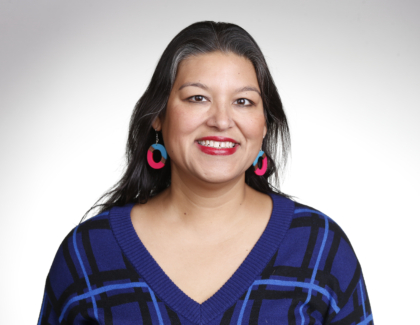
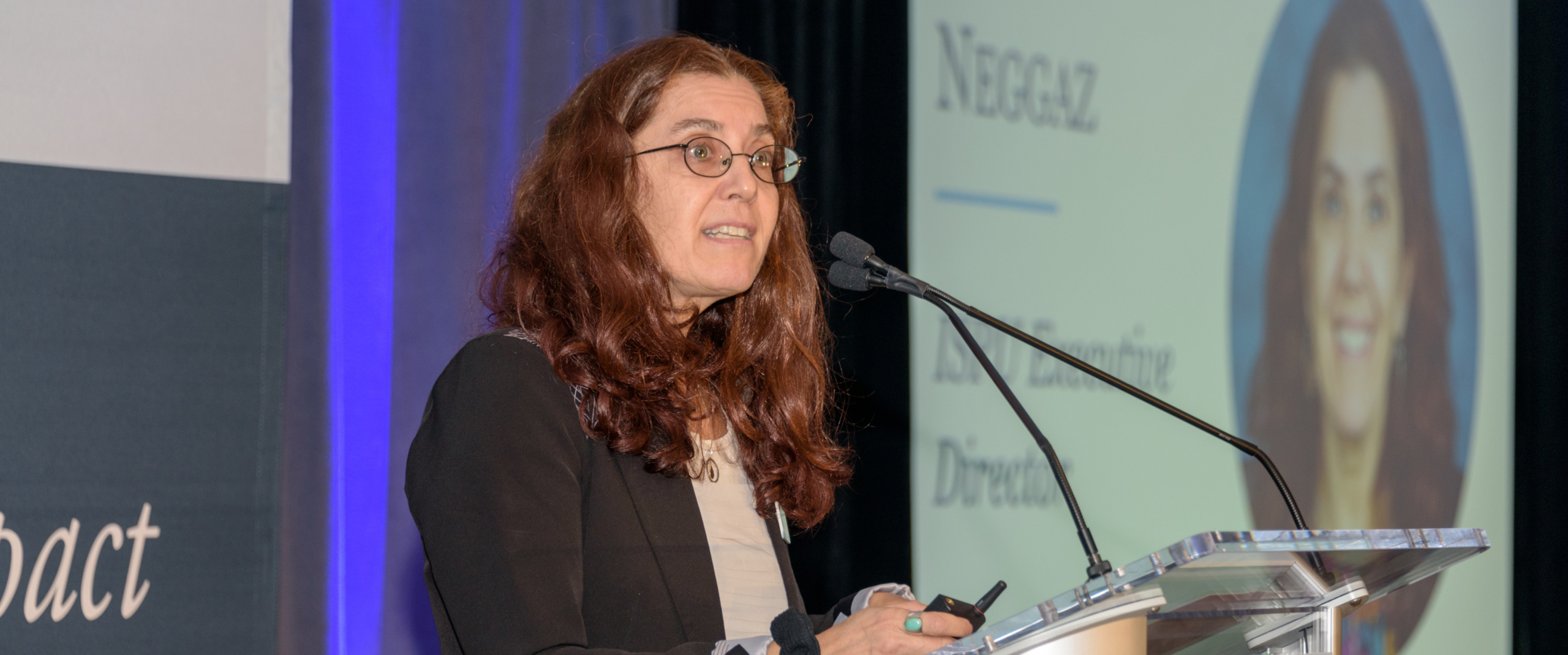
Meira Neggaz, the institute’s executive director says that Pew only conducts large-scale surveys on the community, which give reporters and policy makers a 50,000-foot view, every few years. “What makes ISPU stand out is that we’re able to ask questions that are relevant and timely that a survey done every five to seven years can’t,” Neggaz says.
The institute focuses on the domestic Muslim community, not the global community, ISPU’s director of research Dalia Mogahed says. “We’re able to go a lot more in-depth, because we [aren’t] looking at such a broad spectrum of the world,” she says. (Before coming to ISPU, Mogahed was the executive director of Gallup’s Center for Muslim Studies.) “There are a lot more tools in the tool box,” she says, such as focus groups, interviews, and analyses of secondary sources or legal documents.
ISPU began in 2003, and largely framed its early work around the rise of Islamophobic rhetoric and policies in the post-9/11 era. One of its earliest reports, a 2004 survey of mosques in the Detroit area, tracked the demographics of various places of worship in the city, as well as congregants’ engagement, philanthropic tendencies, and “attitudes towards involvement in American society and public policy.”
The report, conducted during a time when government surveillance of Muslim places of worship was ramping up, found that “radicalism and isolationism are not evident in Detroit mosques.” ISPU has conducted its annual American Muslim Poll since 2016.
The organization straddles the line between public-policy and community-oriented research. In addition to its polling data, it produces reports specifically geared towards Muslim communities themselves. A series of recommendations from its 2018 “Reimagining Muslim Spaces” report discussed inclusivity in mosques for young people, converts, and women. It also proposed best practices for hiring imams who can best serve an individual community’s needs.
Journalists may well be wary of citing reports that seem affiliated with an agenda—a critique that’s often thrown at the Council on American Islamic Relations, one of the best known Muslim civil rights and advocacy groups.
“There’s this question of, ‘Are we biased?’ And [on the other side], this question from Muslim communities, ‘Are you airing dirty laundry?’” Neggaz says. But, she says, producing rigorous research for both audiences is “necessary and complementary” to influence both public policy and development programming. The Institute’s goal is to provide research that can strengthen anyone working in the Muslim American community, including journalists.
The Institute’s 2016 poll, for example, asked survey participants of various faith groups about their attitudes on religious laws. “We wanted data that would inform the debate or discussion [at the time] on the sweep of legislation that was banning sharia law,” Neggaz says. The survey found that 10 percent of Muslim Americans agreed that their religion should shape laws in the US. As a sound bite, that number would seem to bolster narratives about Muslim Americans’ support for sharia law, a system of laws based on interpretations of the Koran. “But when you compare that number to other faith groups, Muslims were less likely to say that than Protestants,” Neggaz says. “That’s why we try to contextualize these topics with a series of questions, and to dig deeper and give more nuance with quantitative data.”

ISPU Director of Research Dalia Mogahed. Photo courtesy of ISPU.
HERE’S ANOTHER statistic, from the institute’s April 2018 report on “local and media responses to ideologically motivated violence in the United States.” Suspected terrorists who were perceived as Muslim received twice as much media coverage as non-Muslim suspects. In cases of unsuccessful attacks, suspects perceived as Muslim received nearly eight times the coverage of those perceived as non-Muslim.
The April 2018 report concludes that many journalists rely on Department of Justice press releases to determine whether or not an act of violence qualifies as terrorism. According to the report, the agency is six times more likely to issue a press release if the perpetrator is perceived as Muslim.
After the report was published, the Asian-American Journalists Association’s Muslim task force offered up a set of guidelines to avoid the double standard highlighted in the report. Those guidelines suggest that newsrooms should have their own standardized definition of terrorism, so that coverage doesn’t simply parrot the disparities obvious in government press releases.
“A lot of times, coverage is lopsided not because of journalists, but because of prosecutors,” says Waliya Lari, who authored the guidelines for AAJA. “Our hands are tied because all the quotes and sound bites are from officials calling it terrorism. But it’s incumbent on journalists to really push back on that.”
The report drew specifically on coverage from The New York Times and The Washington Post, two of the country’s largest newspapers. “If there are any papers in terms of reputability that have a chance of covering [terrorism] in a more balanced way, it would be these papers,” Mogahed says. According to ISPU, the study hasn’t yet led to dialogue between the institute and editors or reporters at those papers about the disparity, though that’s a conversation they hope to have. (Both the Times and the Post declined to make editors available for comment.)
While the study on ideologically motivated violence focused on broad national trends, the Institute’s annual American Muslim poll provides a plethora of entry points for journalists at any newsroom covering religious communities. Their data was cited more than 450 times in 2017 and has been featured in pieces published by BuzzFeed News, The Intercept, NBC, and the Chicago Sun Times.
When journalist Aysha Khan covered the Brooklyn Historical Society’s oral history project, collecting narratives of Muslim Americans in the borough, she used ISPU’s Muslims for American Progress study to provide a broader context to her story. The ISPU study tracked the social, economic, and cultural contributions of Muslims to the New York City area, as well as their demographic presence in the city.
“I would have had to rely on more broad data available from Pew and other sources on Muslims in America as a whole,” Khan says. “The [Muslims for American Progress study] provided data on a very specific subset. [It] helped corroborate what was happening at the Brooklyn Museum. And it kind of put a face to the data—or rather several dozens of faces—by saying, there are this number doctors or engineers and taxi drivers, and creating characters around them.”
Khan also curates Creeping Sharia, a newsletter on Muslim Americans whose name is a tongue-in-cheek reference to fears of Muslims implementing religious laws in the US. “What I really value is reporting that is compelling to both Muslims and non Muslims,” she tells me. She avoids what she describes as “incredibly boring” explainer stories on the hijab or the Muslim ban—pieces that aren’t interesting to Muslim readers because they simply rehash cliched narratives. In her own journalism, ISPU data has made it easier to pitch interesting and timely stories, and to contextualize pieces about topics like bullying or mental health.
Arming curious reporters with data and context is just a small part of the solution, however. Creating a baseline standard in journalism on sourcing and the framing of Muslim American communities is a bigger challenge, Lari says, particularly when it comes to training senior leadership in newsrooms.
“There’s all this academic research going on, and then there is the actual practice of journalism—there is a disconnect between the two a lot of times,” she says. In her role with AAJA, she’s been thinking of ways to create a bridge between the two, particularly since reporters on deadlines may not seek the types of context that ISPU hopes to provide.
“I think the challenge is, how do we reach the management level so they are more aware of this issue? How do we make sure that newsrooms are inherently doing this, and it’s not just the people proactively seeking to improve the thoughtfulness of their work?”
ICYMI: Resettled in Virginia, Afghan journalists struggle with underemployment
Has America ever needed a media defender more than now? Help us by joining CJR today.