Sign up for the daily CJR newsletter.
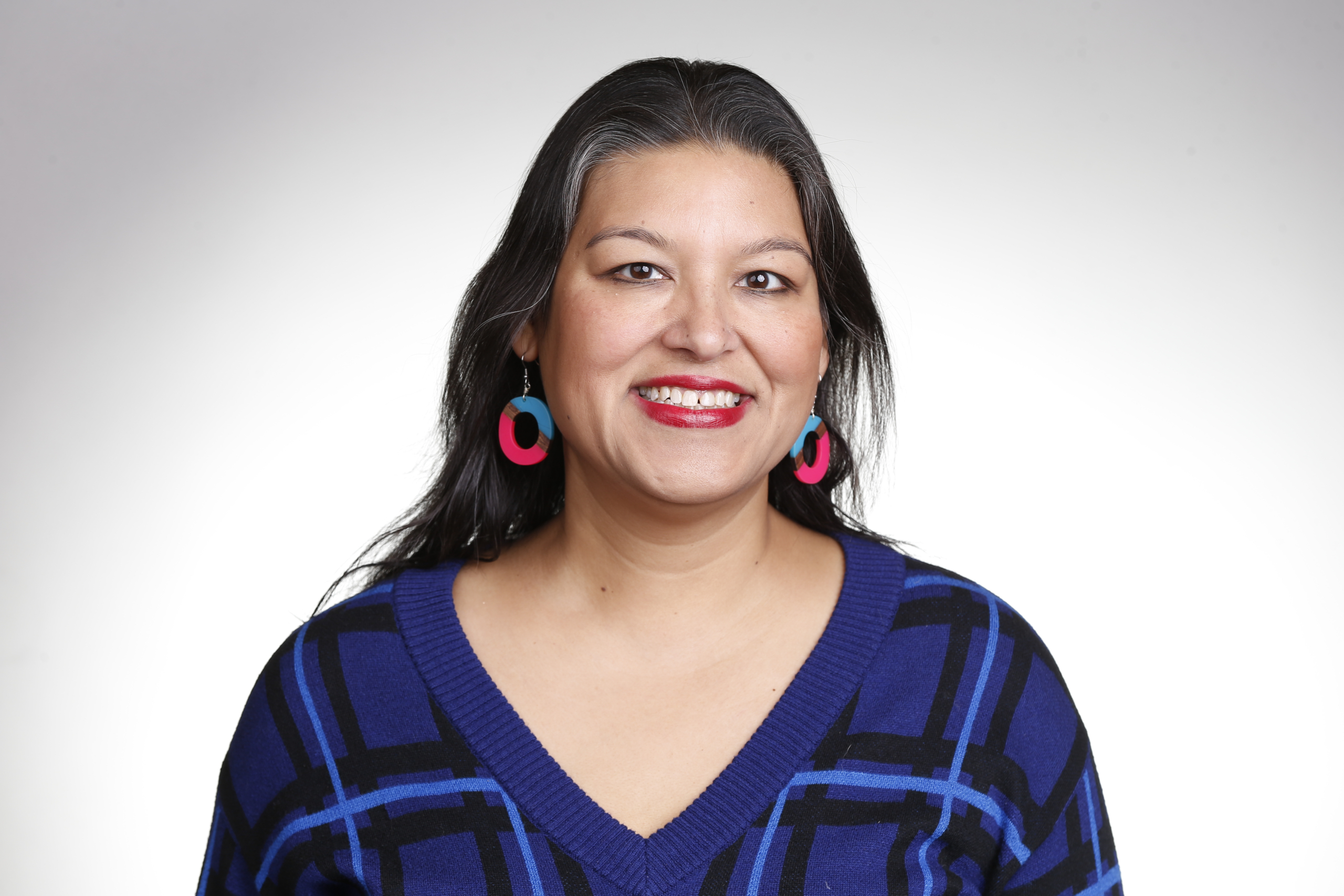
S. Mitra Kalita was a senior vice president at CNN when she left, in late 2020, to pursue her own journalism venture. The financial leap was scary, she says, but her idealism outweighed her fear. “When we lose belief in idealism, we really lose the basic tenets of what drives journalism and what drives democracy,” Kalita told me.
Her startup, URL Media, which she cofounded with WURD Radio CEO Sara Lomax, is a multiplatform network that shares revenue, distribution, content, and other resources among news outlets that primarily serve communities of color. “The media that is most trusted and squarely has a sense of who it’s for is often the least resourced,” Kalita said. That’s the problem URL Media seeks to address.
WURD Radio, one of the only Black talk radio stations in the United States, and Epicenter NYC, Kalita’s local news site, were URL’s first publishing partners; other early collaborators included the Haitian Times and Documented, both based in New York. Five years later, URL has forty partners, the most recent being the Amsterdam News, New York’s storied Black newspaper. With the help of a new five-million-dollar grant from the Knight Foundation, URL hopes to support one hundred publisher partners by 2028.
Kalita, forty-nine, is the daughter of Indian immigrants and grew up in New York and New Jersey, with a stint in Puerto Rico in between. She now lives in Jackson Heights, Queens. Our conversation has been edited for length and clarity.
LS: Why did you choose a for-profit model for a mission-driven company?
SMK: If Sara were here, she would say, “We know that money is power.” For many of our communities, a nonprofit lens is a lens of charity. We do not view our communities as charity cases. We view ourselves as markets. We view ourselves as forces. We view ourselves as power brokers, as customers, as leaders. We believe in operating from a place of power, and our initial formation as a for-profit company seized ambition and possibility, and recognized the capitalistic forces that underscore success in America. I want to make sure that I don’t discount the importance of charity and nonprofit institutions for our communities. But for how we were set up, we centered revenue as a necessary layer of the success of these media organizations, and a for-profit model was more flexible for that reality.
Is URL profitable?
URL Media was profitable for our first four years, and then this past year was break-even. We bootstrapped. Meeting a need and being a mission-driven company really was on our side in a for-profit world. Who would have thought?
My understanding is that URL handles ad sales for its partners and shares the revenue. Can you explain how that works?
URL is a one-stop shop. It can be very inefficient for clients to deal with multiple outlets, but we’re able to help you target certain demographics at scale. We’ve worked with clients like Nike, Hulu, the State of New Jersey, and the City of New York. And then we take a percentage in a similar manner that an ad agency would.
It’ll continue to be a work in progress. For our first advertising deal, we tried to divide it evenly among what was then eight partners. What we quickly discovered was that audiences vary; the execution varies. So we’ve shifted to a model where we basically go to the partners with a deal before us, and we’ll say, “What is possible for x amount?” If we have a deal, not all forty partners are participating. It could be as few as two, as many as dozens.
Advertising isn’t what it once was for the media industry. What does that mean for URL and its partners?
A lot of things have been on our side in the five years since we launched. Facebook traffic and referral traffic is no longer what it was, so the idea of small, trusted, discrete audiences has become important to our clients. With online search traffic tanking, what we represent is that we know our audience. But this past year on the advertising front has been challenging. That’s a lot because of the forces around digital media. And then if you look at even the uncertainty in markets and the tariff issue, a lot of the retailers that would once have been advertisers are in an era of uncertainty. Thankfully, this quarter, we’ve started to get a number of meetings. It feels like people are ready to spend again.
Your website says one of the criteria for being a partner with URL Media is whether the outlet has established community trust. How do you measure that?
Our conversations with partners go pretty deep on measurement. During the digital phase of my career, much of my day was parked on Chartbeat. For the most part, I found that if you could drive traffic and drive revenue, there was a place for you in the newsroom. When we evaluate partners, we know that you might not show up on Chartbeat, but we know that you might have published an item in your newsletter and suddenly connected six people in your community to resources that are life-altering, whether that’s a food pantry or health resources. The partners that measure that are actually really good examples of the partners that are successful at URL.
Melissa Bell, who cofounded Vox and is now CEO of Chicago Public Media, is a close friend of mine. She talked to me years ago about the “velocity index,” which was the length of time between visits to a news site. At that moment, everyone in digital media was obsessed with uniques. Melissa introduced me to the idea of loyalty—how often do you need us? Fast-forward ten years later, what we found is that this repeated behavior, that action of me turning to you repeatedly, is one of trust. The velocity index is something that I’d really love us to keep exploring at URL, because what we’re sensing from partners is that it’s harder to measure this at scale, because it could even be in the dozens, but that action of dozens of people in a community having somewhere to go is a necessary infrastructure for the success of a community.
A reporter for Epicenter wrote about what it felt like to be excluded from Zohran Mamdani’s press conference for content creators and influencers this month. How did you feel when you realized that traditional journalists from outlets like Epicenter weren’t invited?
The framework I believe they’re using is old media, new media, and constituent media, and much of ethnic media is being lumped in with constituent media. The truth is, we straddle all three areas. We know the lines are blurry. What’s really important is that these outlets come from a place of trust. I just really hope that we’re not siloed or excluded from access, because in so many cases, local and community and ethnic media straddle exactly what we saw Zohran Mamdani seizing upon for his victory, which was grassroots, person-to-person interaction; the power of social media and personalities; and trust in institutions and some of the nonprofits to convey a message.
What do you think about how journalists are covering ICE operations right now? Are there any best practices?
It’s really complicated, and it’s community by community. What worked in Chicago might not work in New York. That being said, seeing what Chicago did is important in Minneapolis and in New York City. And so what I do appreciate about our partners is that, from a very ground view, they’re able to say, “This is how our communities dealt with it, or are dealing with it.” In some communities, whistles, for example, are welcomed. In other communities, there’s concern that whistles are contributing to chaos, noise, and fear. So you really need to take the lead from the community you’re serving. And I think our news outlets are so good at that. We don’t really practice one-size-fits-all journalism. You can glean some patterns, but that does not mean the solutions are uniform.
Under the Trump administration, there’s been a rise in anti-DEI, anti-POC, anti-immigrant rhetoric, as well as attacks on journalists. How has that impacted URL and its partner outlets?
A lot of folks over the last year asked: “How do we respond? Should we just keep our heads low? Who’s going to speak up for the media?” And Sara’s been very clear: “If not us, then who?” We’ll even be in meetings with clients, and when they say they have to be careful around their commitment to diversity, Sara will explicitly say, “We are who we are. There’s no changing who we are.” I think that’s a really important message. There is no hiding. There is no white knight coming to save us. For all of us in the media, an attack on one of us is an attack on all.
As the rest of the country despairs, I’m so grateful that we have a network that is both authentic, meaning they’re capturing what’s happening on the ground, but they’re also constantly thinking of solutions for their communities. Last I checked, capitalism relies mightily on democracy. Financial support for the Fourth Estate has never been more important, and it needs to come from all quarters.
Has America ever needed a media defender more than now? Help us by joining CJR today.