Sign up for the daily CJR newsletter.
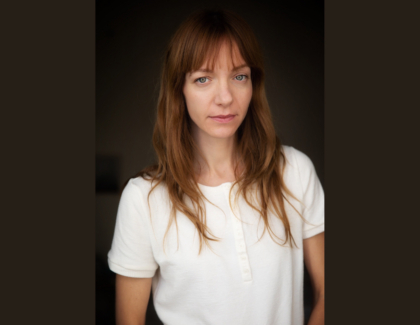
On Tuesday, Estefany Rodríguez, a journalist at a Spanish-language outlet called Nashville Noticias, was in the suburbs southeast of Nashville, covering a series of raids by Immigration and Customs Enforcement. Rodríguez, who is from Colombia, reported from the parking lot of a residential complex where three ICE agents detained a man believed to be of Venezuelan origin; ICE also arrested at least three others nearby. On Wednesday, she headed to a gym in South Nashville with her husband, Alejandro Medina III, who is a United States citizen. They’d taken a car marked with the Nashville Noticias logo. When they were outside, they suddenly found themselves surrounded: according to a statement from Nashville Noticias, “several men got out and demanded that our colleague be taken into custody.” They presented no warrant. (The Department of Homeland Security, which oversees ICE, has since commented that there was a warrant, signed by an immigration officer. An attorney for Rodríguez, Michael Holley, told me that the warrant was only received days after the fact, and that a box was checked—“the failure to establish admissibility subsequent to deferred inspection”—indicating that it was issued “well after arrest, which still appears to have been warrantless.”) Rodríguez was detained and brought to Alabama, where she remains now, expecting to be transferred to a center Louisiana.
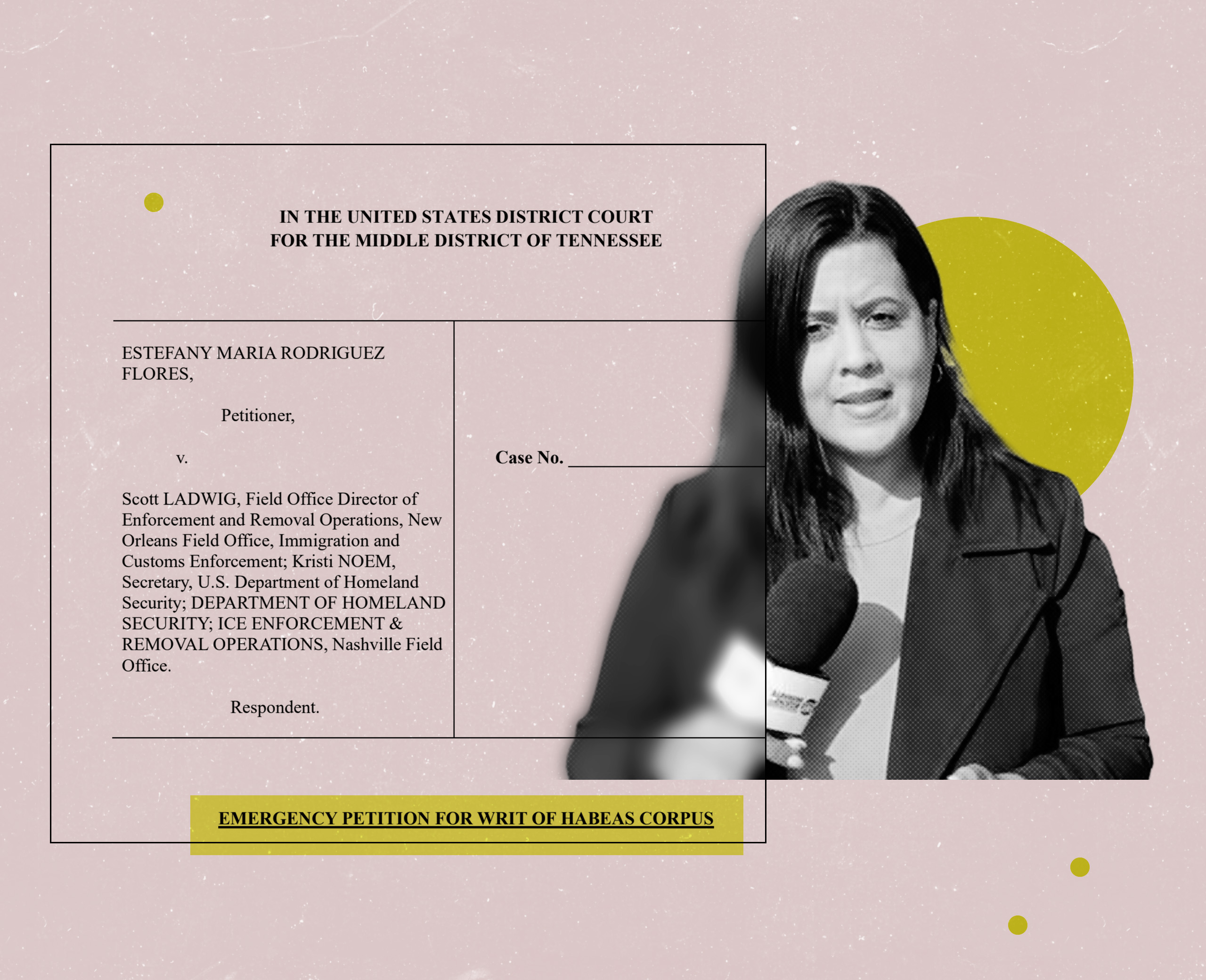
An emergency petition for her release, filed in the US District Court for the Middle District of Tennessee, notes that Rodríguez arrived in the US in March of 2021 on a tourist visa and, while the visa was still valid, filed for political asylum. Back in Colombia, where she covered stories relating to “cartels and organized crime,” she received death threats, Joel Coxander, one of her lawyers, told me. Later, she married Medina, and they filed for permission to adjust her status to that of a lawful permanent resident. She has a valid work permit; in addition to Nashville Noticias, she has previously contributed to Univision 42 Nashville. Ahead of her arrest, she, Medina, and Coxander had been actively engaged with the ICE field office in Nashville—a back-and-forth involving repeated delays because of an ice storm, an unexpected office closure, and an agent unable to find Rodríguez in the computer system. They’d come in to talk, and been given a date to return: March 17. “For a warrantless case like this, ICE has to have both an immigration violation and reason to believe there is a flight risk for this person,” Coxander said. In the petition, Rodríguez’s lawyers argued that the Department of Homeland Security lacked legal basis for her arrest—after all, she’d intended to make her appointment.
Holley told me that the petition for Rodríguez will be amended to add a claim for first amendment retaliation because “that appears to be central to the case.” Veronica Salcedo, the director of Nashville Noticias, told me that this “feels like a nightmare”—and still she and her colleagues have a responsibility to continue reporting. “As journalists it’s important to continue documenting what is happening,” she said. “And what is happening is what happened to Estefany.” Speaking to members of the press, Freddie O’Connell, Nashville’s mayor, weighed in: “We’ve continued to share our concerns about the way this activity is happening,” he said. “I think Estefany’s case is yet another example of how this is not about dangerous criminals or even actual legal status because she has been in a process of asylum review.” In a statement, the Tennessee Immigrant and Refugees Rights Coalition said, “It’s not lost on us that as a reporter, Estafany honestly and courageously told real stories about the harms caused by ICE and the people they targeted and detained.”
Rodríguez’s detention follows a series of shocking journalist arrests. In late January, federal agents booked Don Lemon and Georgia Fort, accusing them of conspiring with activists to disrupt a religious service at a church in St. Paul whose pastor serves as a regional director for ICE. And last June, in Doraville, Georgia, north of Atlanta, ICE arrested Mario Guevara, an Emmy-winning reporter originally from El Salvador; after more than a hundred days in custody, he was deported—in what is believed to be the first case of a journalist being removed from the US in retaliation for their work. “I couldn’t help but think of Guevara,” Katherine Jacobsen, a program coordinator for the Committee to Protect Journalists, told me. “The government tried to put forward arguments that it was an immigration case, or say that his livestreaming was a danger to the public, when it was really, at its core, silencing a local community reporter for his work covering immigration.”
Jacobsen believes that similar dynamics are also at play in Rodríguez’s case. The Trump administration has “zero regard for procedure,” she said, and a “disturbing comfort with using Department of Homeland Security apparatuses” to stifle journalists. That appears likely even post Kristi Noem, who was named in the Rodríguez petition and ousted as secretary of homeland security (for unrelated reasons) the next day. The fact that Guevara and Rodríguez both worked for Spanish-language media, and were seemingly presumed to have “access to communities greatly impacted by immigration,” is notable, per Jacobsen—as is the fact that they each had a “lower national profile.”
In a statement, Nashville Noticias said that it “expresses its respect for the laws of the United States and hopes the situation will be resolved favorably for our colleague so that she can be released soon, as she needs to reunite with her young daughter and husband to continue her legal process within the framework permitted by law.” But regardless of what happens next, Rodríguez’s detention may well deter other journalists from reporting on ICE in their communities, Jacobsen fears. “It’s one arrest, but it’s dozens, if not more, stories that will not be told because people are scared to go out and cover them,” she said.
Editor’s Note: This story has been updated to reflect that DHS contested the status of the warrant in Rodríguez’s case, as well as a comment from her lawyer in response; the lawyer also clarified where Rodríguez is being held.
Has America ever needed a media defender more than now? Help us by joining CJR today.