Sign up for the daily CJR newsletter.
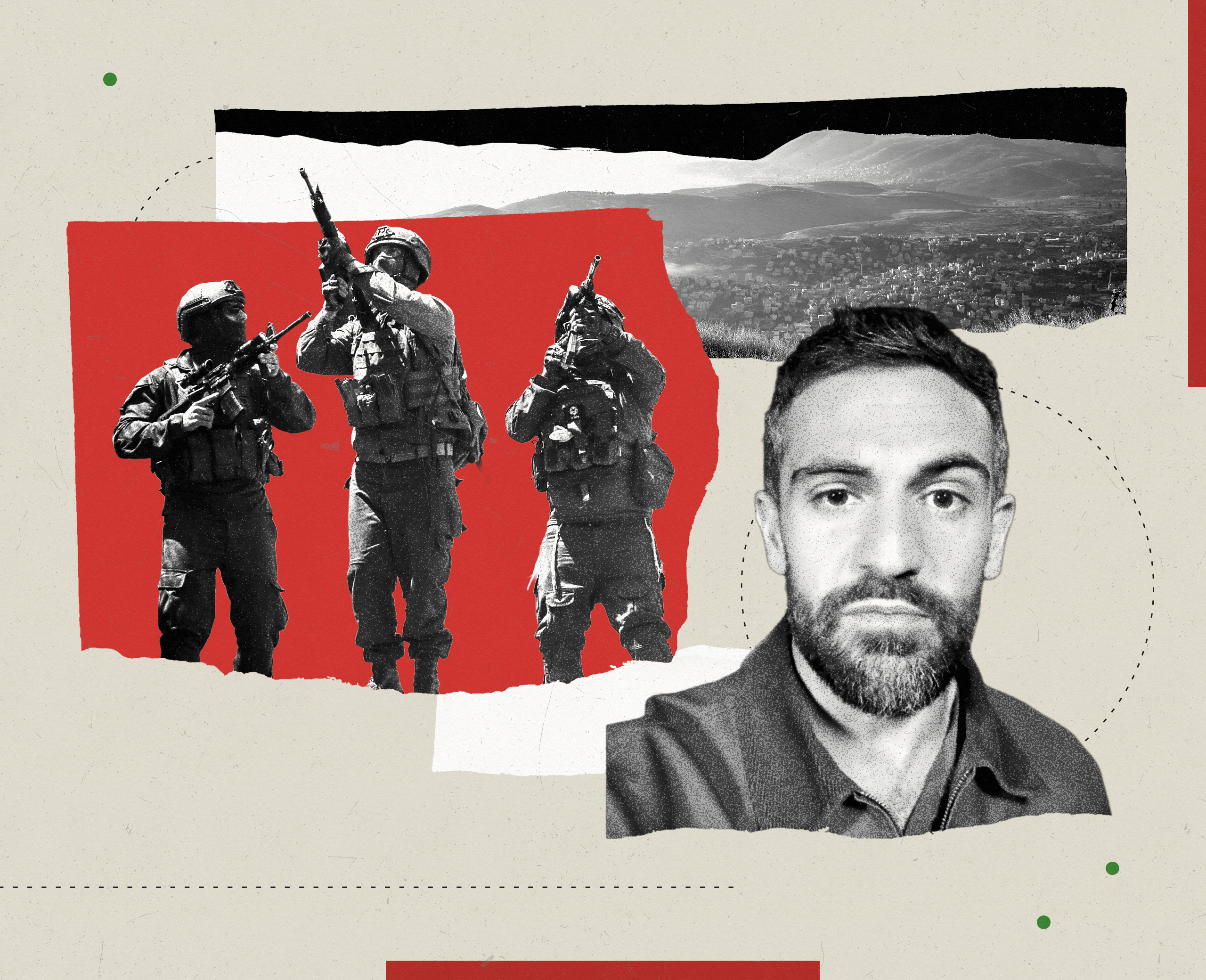
In March, in the West Bank village of Tayasir, Jeremy Diamond, CNN’s Jerusalem correspondent, headed out with his news crew to report on the savage beating of a seventy-five-year-old Palestinian man named Abdullah Daraghmeh. The day before, in the course of establishing an illegal outpost, settlers looking to intimidate the locals had entered Daraghmeh’s home in the middle of the night and attacked. As the CNN crew walked around Tayasir speaking with the residents, “out of nowhere,” Diamond told me, “Israeli soldiers show up, pointing their rifles at us, shouting commands, telling us to sit down.” One soldier approached Cyril Theophilos, a CNN cameraman, put him in a choke hold, and forced him to the ground. Later, while reviewing the footage, Diamond told me he was struck by the timing. “From the moment when the soldiers first showed up, to when they assaulted my cameraman, it’s seventy-two seconds. That’s how quickly things escalated.”
Afterward, Israel Defense Forces (IDF) soldiers detained Diamond and the crew for two hours, then released them without charge. The soldiers who detained them were reservists with Netzah Yehuda, an IDF battalion with a well-documented history of violence against Palestinians. Haaretz has reported that the battalion, composed of ultra-Orthodox men, operates as “an independent militia that doesn’t obey the army’s rules.”
During the detention, Theophilos kept rolling, and Diamond kept the soldiers talking. “They were speaking to me in Hebrew in a way that they would speak to their friends,” he told me. “They were trying to relay their perspective. They thought they could convince me of the merits of their actions.” The soldiers told him that all of the West Bank belonged to the Jewish people; that their actions in Tayasir were, in part, “revenge” for the recent death of a settler; and that, “slowly, slowly,” this illegal outpost would be legalized. “Once the soldier said ‘revenge,’ I knew we had a story,” Diamond said. “The interplay between the Israeli settler movement and the Israeli military is so hard to get on camera. That’s one of the reasons I think our report got so much attention around the world and in Israel. It was the perfect microcosm of that broader playbook. And to have such a clear acknowledgment—it made it undeniable.”
Diamond’s reporting for CNN has been part of a recent wave of attention-grabbing West Bank coverage. This week, Nicholas Kristof, a columnist for the New York Times, published a piece on Palestinian victims of sexual violence perpetrated both by Israeli authorities and settlers. Vatican news outlets with massive international reach have reported on settler violence, specifically toward Palestinian Christians. L’Espresso, an Italian magazine, made international headlines with an arresting cover photo showing an Israeli settler leering at a Palestinian woman. Steve Bannon, the former Trump adviser and committed MAGA warrior, has discussed the subject on War Room, his influential podcast. Even Steve Kerr, the head coach of the Golden State Warriors, has been moved to speak out. “Israeli settlers are taking over the West Bank illegally, with the approval of Israel’s government and the US ambassador, Mike Huckabee,” he said in a recent interview with The New Yorker. In the past few years, more than fifty-eight hundred Palestinians have been displaced. In 2025, there were over eight-hundred incidents of settler violence, a twenty-five percent rise from the year before.
The reporting has been so widespread that the Israeli establishment was forced to respond. In late March, the London Initiative, a network of Jewish dignitaries, wrote an open letter to Isaac Herzog, the president of Israel, calling out the “death and destruction inflicted by Jewish-Israeli extremists against innocent Palestinians across the West Bank.” Herzog responded to the letter on the Office of the President’s X account. In mid-March, Avi Bluth, the head of the IDF’s Central Command, sent a letter directly to settler leaders calling on them to curb the violence.
Maya Rosen, an assistant editor for Jewish Currents who is based in Jerusalem and covers the West Bank, told me it’s not unusual to encounter this reaction from the Israeli establishment following upticks in settler violence. “You’ll see an outcry from people abroad and sometimes even within Israel. And, definitely, the last month has been one of those moments,” she said. “But it’s important to focus not on what Israeli officials are saying but what they are doing.” Dialogue with groups like the London Initiative allows the government to avoid confronting how intertwined settler violence is with official state policy, Rosen argued. In a recent interview, Prime Minister Benjamin Netanyahu told Fox News that settler violence is largely carried out by a small group of “teenagers who come from broken homes.” Meanwhile Bezalel Smotrich, a far-right minister in Netanyahu’s coalition, recently published an op-ed in Hebrew calling for the end of settler violence—on its face, a shocking move. Yet his argument was grounded in the movement’s astonishing recent success: tens of thousands of new settler housing units, billions of dollars spent on settler roads and transportation infrastructure, settlement after settlement made legal.
Bluth’s officers have held ceremonies at the outpost that houses Yinon Levi, the settler who last year shot and killed Awdah Hathaleen, a nonviolent Palestinian activist. The Israeli government recently announced a plan for combating settler violence that earmarks millions for “therapeutic and recreational spaces” for young settlers; the activist group Peace Now calls it a “program to expand settlements under the guise of combating violence.” Following CNN’s reporting from Tayasir and the violence toward the CNN cameraman, the IDF suspended the Netzah Yehuda reserve battalion. Just a month later, after the Netzah Yehuda reservists underwent an educational seminar, the unit is back in action.
In a statement about the lifting of the Netzah Yehuda suspension, an IDF spokesperson said “the battalion underwent a comprehensive process to strengthen its moral and professional foundations and conduct.” Speaking about the situation in the West Bank more generally, the spokesperson said: “The IDF’s mission is to safeguard the security of all residents in the area and to act to prevent terrorism and activities that endanger the residents of the State of Israel. Over the past year, there has been an increase in the scope and severity of nationalist crime incidents. In light of this trend, the IDF, the Israel Police, the Border Police, and Shin Bet have established a dedicated joint task force aimed at thwarting, preventing, investigating, and prosecuting those involved in violence against Palestinians.”
L’Espresso faced pushback for its cover image from Jonathan Peled, Israel’s ambassador to Italy. On X, Peled bashed the cover as “manipulative,” adding that “responsible journalism must be balanced and fair.” (He tagged his post #MediaResponsibility.) When Barak Ravid, a reporter for Axios, followed up to ask Peled if the photo was “real” or “AI,” Peled responded, “Hard to prove.”
The image is real. Pietro Masturzo—a freelance photojournalist who has been reporting in the West Bank since 2010—shot the photo on October 12, 2025, in a small village near Hebron, as settlers in military gear disrupted the olive harvest. The woman in the photo is an activist and lawyer named Meead Abu al-Rub. “It became an international issue thanks to the Israeli ambassador,” Masturzo told me. “I have to thank him, actually.” (Peled’s office did not respond to a request for comment.) Of late, Masturzo has struggled to be paid for his journalism. To fund the reporting trip to Hebron in October, he was forced to crowdfund. “But I still believe,” he said. “One picture among thousands of pictures can still do a job.”
Diamond said that his reporting in Tayasir “prompted a conversation in Israeli media about settler violence that we haven’t seen in years” and that the Netzah Yehuda reserve unit’s brief suspension “was a significant action and fairly unprecedented in speed.”
But, he added, “we have not yet seen the kind of broader policy action to address the role that the Israeli military plays in supporting and propping up the settler movement. The lesson that some Israeli soldiers are taking from this is the wrong one—it is that you should watch what you say in front of journalists.”
Has America ever needed a media defender more than now? Help us by joining CJR today.