Sign up for the daily CJR newsletter.
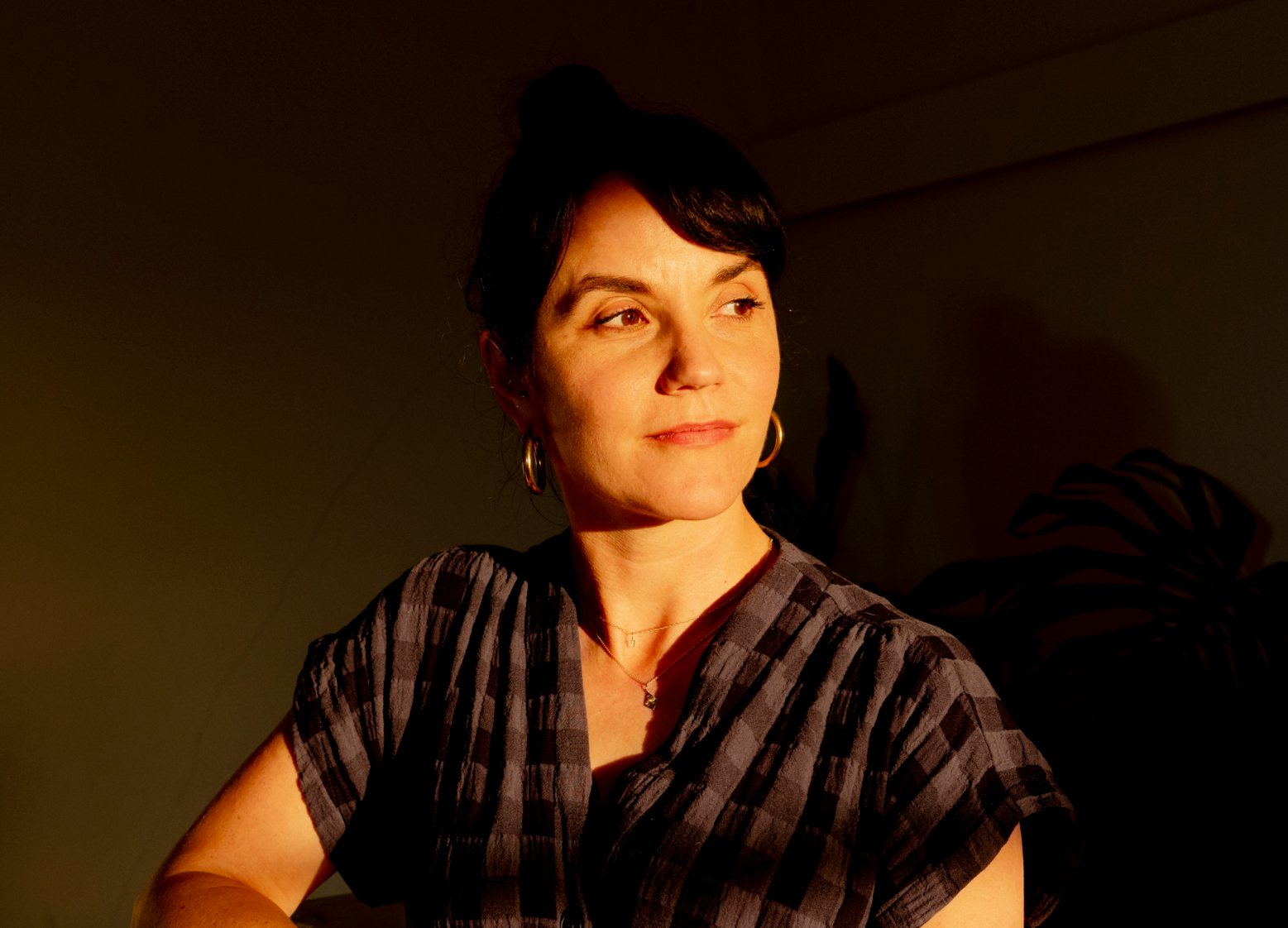
In 1965, Tracy Clark-Flory’s mother, then a pregnant eighteen-year-old college student in Indiana, was sent to a home for unwed mothers by her father and forced to place her baby for adoption. Years later, when Clark-Flory was a teenager, her mother sat her down at their kitchen table in California and shared the secret she had been carrying for decades: that she had another daughter out there, somewhere.
Clark-Flory’s new memoir, My Mother’s Daughter: Finding Myself in My Family’s Fractured Past, follows her eventual search for that sister. What she uncovers along the way is a story about the systemic misogyny and racism that shaped her mother’s—and ultimately her own—life. “Maternity homes were part of a broader racist effort at the time, but they were also part of a centuries-old history of using women’s bodies for white supremacist aims in the United States,” she writes. Almost ten years after her mother’s death, from lung cancer, a DNA test ultimately leads Clark-Flory to her lost half sister, Kathy. Together, the two women reckon with what really happened to their mother and what it actually means to be family.
Clark-Flory is a journalist whose previous memoir, Want Me, was named an NPR Best Book of the Year. She has written for publications including Jezebel, The Guardian, and New York and is adept at weaving archival research with cultural criticism and feminist history to explore the impact of racism, sexism, power, and privilege on her family. Written with empathy, the book is about emotional inheritance—the shame we absorb from our mothers, how we carry it, what it costs us, and what is finally possible when we let it go. Our conversation has been edited for length and clarity.
SB: It struck me as I was reading the book that you’re developing this relationship with your sister while, at the same time, you’re essentially doing research for the book. When did you decide you were going to write about this?
TCF: From the very beginning, I started taking notes and writing about what I was experiencing, just because that is what I do to try to make sense of what’s happening in my life, period. And then as I was starting to dig into this research around the history of homes for unwed mothers, and started drawing connections between my mom’s past and my life, it occurred to me that there was a big project here, possibly a book. But I was also aware that there was no way I was going to tell this story unless my sister was fully on board.
How did you approach it with your sister, Kathy? That must have been something you were nervous about.
I was very nervous about it. Luckily, I didn’t have to approach her about it because, maybe four months in, as the story started to unfold in wild and unpredictable ways, including the fact that we were able to find her father, who was never told about her existence, she actually said to me, “Tracy, you have to write this book.” And I was like, “I agree.” And we had a conversation at that point where I expressed my concerns around, “Is this my story to tell? This is obviously your story as well.” And she was just immediately like, “I’m not a writer. You’re a writer. You have to tell this story.” And it was really clear that she had a sense of investment in the meaning of this story, of our coming together, and that she actually wanted it to be shared.
Did you have any anxiety around how your mom might feel about you writing about this chapter of her life?
In terms of feeling any conflict around exposing this part of her life, I think it would have been much more complicated if she were still alive. But I also had the sense that, given how she had reacted to being written about in the past, she would embrace it—counter, really, to the experience of shame and secrecy that had surrounded her first pregnancy and Kathy’s birth.
One of the things I struggle with is the fact that my mom never dove into this research to understand the histories of these homes. She was pulled into this system, but she never had the opportunity to really reckon with the ways in which her story was not just a hard personal predicament, which was kind of how I had understood it earlier on in my life. I thought she was a teenager who got pregnant in the Midwest, and her father sent her away. Then I came to understand the broader systemic context, the fact that so many of these adoptions were coerced and that many of these women were left traumatized by the experience. My mom never got to a point of having outrage about the system, or a sense of solidarity with those other women who had been processed through that system, so I’m left to sit here wondering: If she had lived longer, and if we had found Kathy together, would there have been an opportunity for her to come to those realizations and to have a different perspective on what had happened back in 1965?
A year or so after placing her baby for adoption at one of these homes, my mother was committed to a mental institution in her grief. And I came to find that she was not alone in suffering from mental health issues, struggling with substance abuse. This was something experienced by so many other women, and she never saw their experiences, how they reflected her experiences, and that she wasn’t alone.
You write about how the history of these homes was really about maintaining the privilege and power of white Americans. But your mom’s story is slightly different because your sister is Black. Her biological father is Nigerian. How did you approach that part of the story?
There were 1.5 million women, it’s estimated, who were sent away to homes for unwed mothers in that pre-Roe era, and most of them were white. The idea was that as soon as they started to show, they would be hidden away behind the walls of these homes. Evidence of their premarital sexuality would be concealed from neighbors and friends and extended family. Lies were told about where they were. And they would stay there until they could give birth and place their babies for adoption, usually with white married couples who were struggling with infertility.
It was all part of a broader system really designed to reinforce marriage and the white nuclear family norm. White women were expected to vanish into these institutions, place their babies for adoption, and then have a second shot at becoming proper women, wives, and mothers. Black unwed mothers, on the other hand, were expected to raise their own children, in part because of racist stereotypes about Black women’s hypersexuality, which ruled out the idea of redemption. White women were already assumed to be pure and innocent, and by getting pregnant outside of marriage, they had fallen from their pedestals, and this system of maternity homes was designed to return them to those pedestals, to both oppress them as women and to return them to the privilege of their whiteness.
Our mom was pulled into this system as a white woman. But my sister, Kathy, was adopted by a Black family, who had also adopted three other babies who had white mothers and Black fathers. I think part of what I was trying to sort through, at a certain point in this journey, was how my sister’s race played into my mom being sent away. Did my grandfather, who sent my mom away to the home, know that his grandchild was Black? And was that part of the decision? But what I ultimately came to realize was that, regardless of what my grandfather knew or didn’t know, race was absolutely central to this story, because this system of homes would not have existed were it not for an attempt to essentially slate white unwed mothers on one path and Black unwed mothers on another.
You tie your own work to what happened to your mother and your choice to pursue a career focused on sexual control and liberation. Can you talk about that?
For a while, I had seen this parallel between my mom’s life and my career, that she had been sent away in shame and that I then turned shame into my career, in a certain sense. But I saw that as a coincidence or a poetic irony or maybe even a testament to generational change, that this was what was available to me all these decades on. It was really only in coming to understand these homes as institutions built by shame that I drew a direct connection between what had happened to her and the career that I designed for myself. I was also, in many ways without realizing it, trying to write against what happened to my mom. Part of what I found in my research was that homes for unwed mothers initially focused on trying to, quote-unquote, save sex workers. And I spent a large swath of my career writing about sex worker rights, writing about the porn industry, so it came to feel really clear that this wasn’t just poetic irony, but I was also kind of stuck within this cycle of shame. I had had these aims of achieving shamelessness in my writing, but had never really achieved it until I started to understand the sources of that shame, and that’s when it began to dissipate.
In a lot of ways, the book is also about processing grief, the profound grief you felt after your mother passed, and it struck me that you’re rewriting her story as a sort of tribute to her.
I opened the book with this quote from Violette Leduc: “I am telling you your own past. I want to explain it to you, I want to cure you of it.” The work of writing this book, the work of researching her past, digging into these histories, drawing all these connections between these histories and feminist theory and scholarship, that is me trying to give my mother this gift of a new understanding of her past. It’s also a gift to myself and, I think, to my sister, Kathy, too, in that it certainly helped me understand myself in new ways and understand my relationship with my mom in entirely new ways.
You write about how becoming a mother really opened you up to your mother’s story. Do you think you would have embarked on this journey if not for that?
I think that before becoming a mom, the phrase “homes for unwed mothers” felt like such an abstraction. It concealed more than it revealed, and that allowed me to kind of hold it at a distance. And that was the point of these homes; it was an act of concealment, truly.
Once I became a mom, and I experienced what it was like to carry pregnancy, to give birth, to fall in love with my child, it became harder to go through the motions of saying, “My mom got pregnant as a teenager and she was sent away to a home for unwed mothers where she placed her baby for adoption.” It’s like suddenly there’s a record scratch, like, what? Part of what I experienced in researching her past was grieving her lost motherhood as a mother myself. I just found myself doubled over in pain for her because I could empathize so well, now, with what it must have meant for her to have never even been allowed to hold her baby.
Has America ever needed a media defender more than now? Help us by joining CJR today.