Sign up for the daily CJR newsletter.
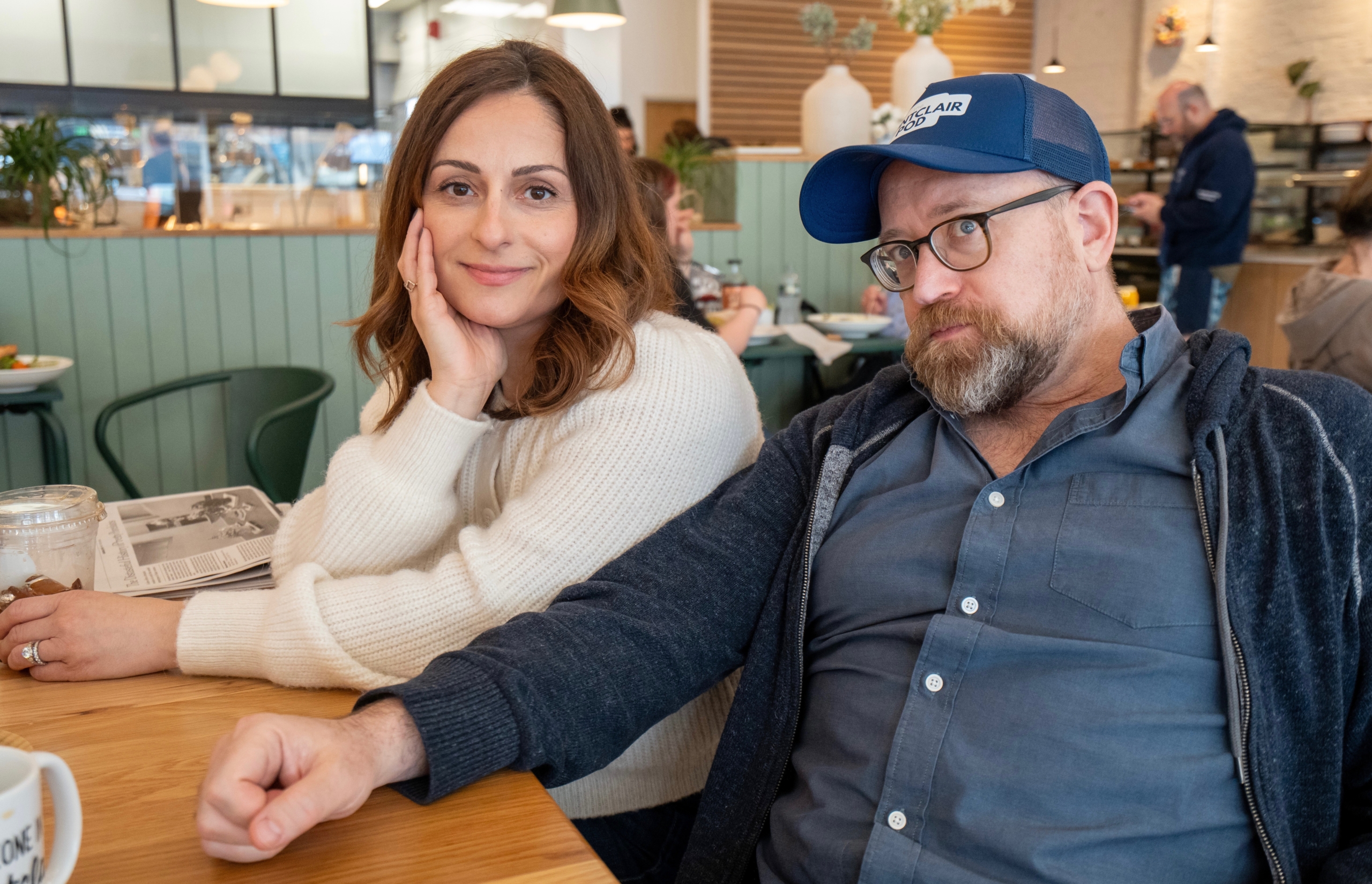
Last September, days after students returned to classrooms from their summer breaks, Ruth B. Turner, the superintendent of schools in Montclair, New Jersey, sat down for an interview with a hyperlocal news podcast called The Montclair Pod. Montclair, an affluent town of forty thousand people about forty-five minutes by train from Manhattan, had been facing a serious school budget deficit. At the time, the deficit was reported to be around eleven million dollars. But the number was actually “about eighteen million dollars,” Turner told the podcast’s cohosts, Farnoosh Torabi and Michael Schreiber. Hearing Turner blurt out that figure, Torabi and Schreiber—who have both had children in the Montclair school system—knew: this was huge. “We broke that news,” Torabi told me, “and it went wild.”
Since then, in Montclair, nothing could possibly seem more important. There have been debates and a contentious referendum on what to do about the deficit: Raise taxes? Take a state loan? When Mikie Sherrill—the governor of New Jersey and a former Montclair resident—weighed in on the deficit crisis during a separate interview with The Montclair Pod, she triggered a new cycle of uproar. “The town became divided,” Torabi said. “It was politically charged. A lot of drama. Really high stakes. It anchored our show as the go-to media source in town.”
Since debuting, eighteen months ago, The Montclair Pod has racked up nearly seventy thousand downloads and broken two thousand subscribers. It has also generated eighty thousand dollars in revenue, mostly from ads and sponsorships—and nearly all from businesses that approached the podcast directly, Torabi is quick to point out; she estimates that if they had a sales team, they could generate “mid–six figures annually.” The show also won a Signal Award, in the “Best Local News Podcast” category.
Torabi and Schreiber, who met at Columbia Journalism School, both work full-time: Torabi hosts So Money, a podcast about personal finance; Schreiber runs MediaFeed, which helps businesses and nonprofits start editorial operations. They both moved to Montclair from New York, a classic migratory pattern, especially for working journalists. (Anecdotally, Montclair is home to roughly half of the staff of the New York Times.) But while Montclair is rich in reporters, that hasn’t historically translated to coverage of the town. And local media across the state is dealing with the same challenges familiar to small outlets throughout the country. In 2025, the Star-Ledger, historically New Jersey’s biggest newspaper, stopped printing a physical edition and closed its print plant, which in turn led three other papers to go online-only and one paper, the Jersey Journal, to shutter altogether.
For Torabi, the impetus for The Montclair Pod was a desire to do something “community oriented,” she said. “I wanted to feel connected to this town. I don’t want to write a check. I want to participate.” The plan had been to produce a single season of twelve episodes. They thought it would be mostly “gabby and gossipy,” Torabi said. “We ended up loving it, the town ended up loving it, and the stories were never running dry.”
The podcast sticks to a few core topics—transportation, dining, and, of course, education—trying to explain who’s running this town. Ahead of the midterm elections, they have also covered statewide politics. (Along with Governor Sherrill, they’ve interviewed both of the state’s senators, Cory Booker and Andy Kim.) “I’ve never felt invested in my stories the way that I do here,” Torabi said. “I don’t know if, as journalists, we can say we want something to succeed, but I want this town to succeed, and if that’s my bias, so be it.” They’ve found that their audience is similarly dedicated, for good and bad: after certain episodes, they’ve been stopped in the street. “There were days where I didn’t want to leave my house,” Torabi said. “I was afraid to go to Whole Foods!”
The hosts have been so energized by their experience that they’re looking to generate clones. “We’re onto something here that could be meaningful beyond Montclair,” Schreiber said. “This is a very good medium for local journalism that has not been exploited from a business model perspective.” There are plenty of hyperlocal newsletters and a number of local podcasts; City Cast, a network of daily local news podcasts, has iterations in Nashville, Las Vegas, Denver, Madison, and Salt Lake City. But podcasts focused on towns as small as Montclair are rare. Torabi and Schreiber believe a version of The Montclair Pod would thrive in any number of similar towns—from Boulder, Colorado, to Bethesda, Maryland, to Evanston, Illinois. Their loose definition of “Montclair-ish” is a population ranging between thirty- and a hundred thousand with a median household income of around a hundred twenty-five thousand and an engaged community.
“The barriers to entry are very low to do quality local news journalism,” Torabi said. To kids coming out of the nation’s elite grad schools hoping to land jobs at commensurately elite publications, Torabi said, “God bless ’em, I hope they get there. But there’s really important work to do in local journalism.” Schreiber added, “If you structure it in the proper way and leverage the tools, you can support yourself.” They advocate creating a podcast as a “flywheel,” from which you can spin off short social media posts, articles, or YouTube videos. Schreiber and Torabi are already getting work consulting journalists who want to start podcasts catering to small, local audiences or to other niche communities. “There’s riches in the niches,” Torabi said.
The Montclair Pod’s rise hasn’t come without complications, Torabi said: “There is some tension between us and the local paper,” the Montclair Local. “They do not allow their reporters to come on our podcast anymore. Maybe they’re feeling like we’re stepping on their turf?” At a recent event in town, the art museum’s Food Truck Fest and Cocktail Crawl, where they saw Montclair Local staffers, Schreiber said it was “very uncomfortable.” (Liz George, the publisher of the Montclair Local, dismissed this as “manufactured friction,” and attributed her reporters’ declining a podcast invitation to scheduling conflicts.)
The Montclair Pod’s hosts noted that the Montclair Local does excellent work, as do a number of other local outlets: TAPinto Montclair, the Montclair Patch, the Jersey Bee. Also, they pointed out, Andrew Rice, a New York magazine staff writer, now publishes My Montclair Education, a Substack about the school budget crisis. “There’s room, guys,” Torabi said. “The more the merrier.”
This summer, The Montclair Pod will be focusing on the latest twists in the school budget crisis: the town has announced a forensic audit. For now, Torabi said, despite evidence that the deficit resulted from poor bookkeeping and wasteful spending, some of the podcast’s listeners are convinced that someone, somewhere has made off with millions. “We would love to break that story,” Torabi said, and smiled. “If you’re holding on to some information, or you have sources, you need to come out with that.”
Has America ever needed a media defender more than now? Help us by joining CJR today.