Sign up for the daily CJR newsletter.
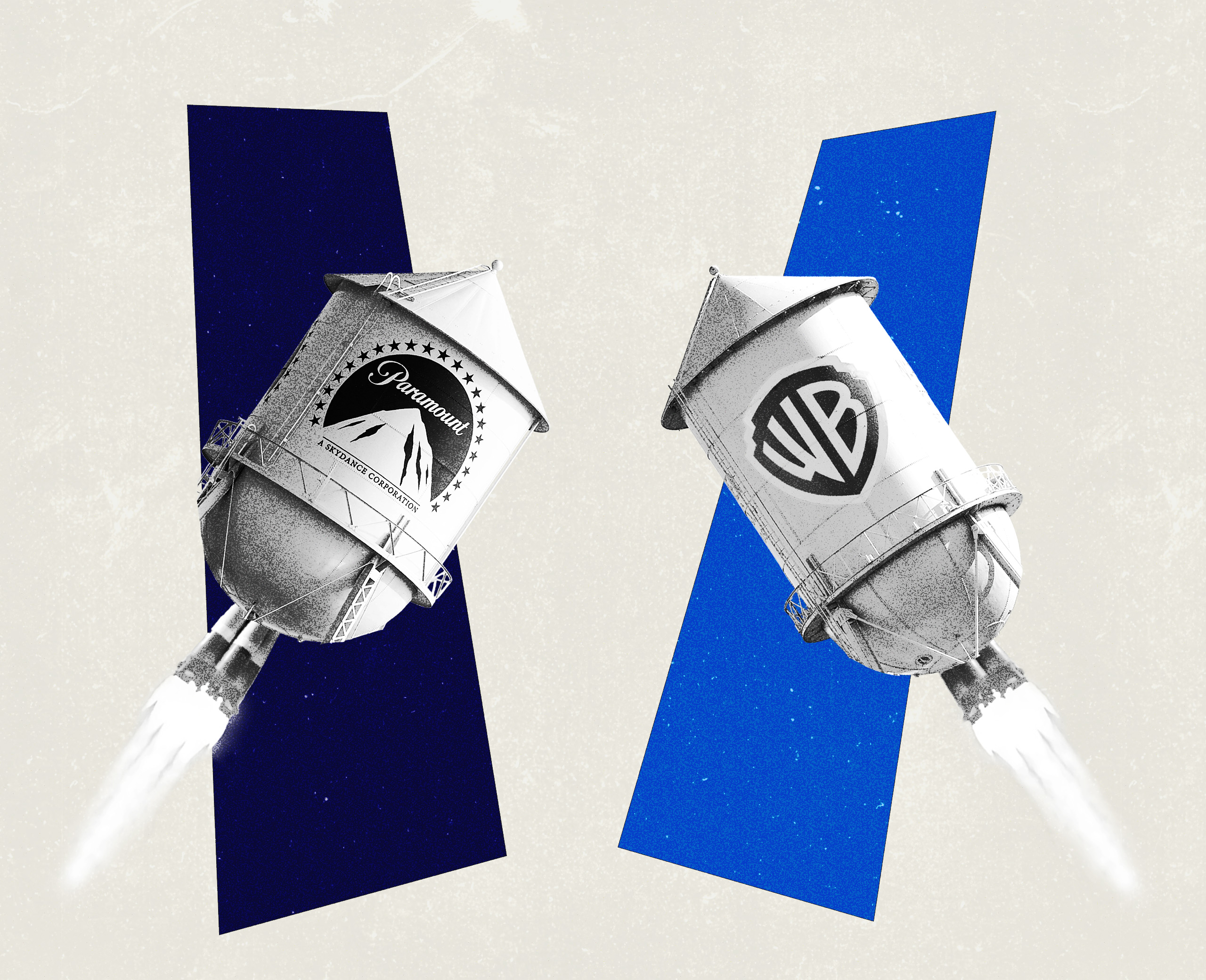
Last month, the Department of Justice officially blessed Paramount Skydance’s merger with Warner Bros. Discovery (WBD), praising the proposed deal for its potential to boost competition “across the media and entertainment ecosystem.” On July 13, a coalition of twelve state attorneys general, including Rob Bonta of California and Letitia James of New York, filed a federal lawsuit in the Northern District of California arguing more or less the opposite. “The unlawful merger of these two entertainment behemoths would lead to higher prices, lower quality, and less content for film and television,” Bonta said in a statement. “Film and television are not commodities,” the lawsuit itself states, adding that “the competitive health of markets” determines “the breadth of voices and viewpoints that reach the public.”
David Ellison, the chairman of Paramount Skydance and the son of Larry Ellison, the billionaire Oracle founder and a close ally of Donald Trump, wants to combine Paramount and WBD, as well as their streaming services Paramount+ and HBO Max. The merger would also bring Paramount’s CBS News under the same roof as WBD’s CNN. According to Axios, Bari Weiss—the embattled head of CBS News, who shares pro-Israel views with the Ellisons—may oversee CNN as well. According to the Wall Street Journal, Larry Ellison has explicitly told Trump that CNN will undergo an “overhaul” under his son’s control.
The DOJ and the Federal Trade Commission have historically been the most powerful antitrust regulators in the United States. But under the second Trump administration, the federal government has voluntarily ceded that role to the states. Earlier this year, after the DOJ dropped an antitrust lawsuit against Live Nation/Ticketmaster, state attorneys general picked up the case—and won.
While regulators in the United Kingdom and in Europe are reviewing the merger, experts told me that the suit brought by the attorneys general has the best chance of slowing or stopping the deal. “This thing is not remotely over,” said Alvaro Bedoya, a former commissioner of the FTC under President Joe Biden and now a senior adviser at the American Economic Liberties Project. “Of course Paramount is going to tell you it’s inevitable. But as a former law enforcer responsible for enforcing the nation’s antitrust laws, I see red flag after red flag, which makes me think this deal is illegal.” John Newman, a law professor at the University of Memphis and a former deputy director of the FTC under Biden, said that while Paramount Skydance “will likely try to turn it into a media circus,” ultimately this is “a very traditional antitrust case. The states are facing a tough battle, but it’s one they can win.”
Part of Bedoya and Newman’s confidence stems from the nature of the transaction itself.
The deal is a horizontal merger, meaning one taking place between two competitors. Historically, such tie-ups have been easier to block than vertical mergers, Andrew Schwartzman, a senior counselor at the Benton Institute for Broadband and Society, told me. According to Schwartzman, “the question becomes, can they use their clout to unlawfully exercise monopolistic-type control over the market?” Paramount Skydance argues that the merger will in fact boost competition in the movie industry by creating a new megacorporation that can compete with Netflix, Amazon, and other streaming platforms. In the lawsuit, the states say they believe the merger would harm competition not only in Hollywood but across the movie theater and basic-cable industries as well.
The states have asked Paramount Skydance to stop the merger while the legal process plays out, according to Bonta’s office. If it refuses, the states will then seek a temporary restraining order. If the merger is paused, either by Paramount Skydance voluntarily agreeing to do so or by court order, the companies would then have to sit idly by awaiting trial, which Schwartzman estimated could take six months to a year to begin. He pointed out that California’s Northern District is known as a slow court, which would theoretically benefit the states.
Under ordinary circumstances, the prospect of a drawn-out trial process would certainly spook a company in Paramount Skydance’s position, Newman told me. “But this is not exactly an ordinary deal,” he said. “It’s the son of one of the richest men on earth buying himself a position of influence and power. That weighs in favor of Paramount being willing to drag out a fight up to the appellate courts where another company might just walk away.”
Newman also noted a “wild card” factor: “If the states are right, this merger is going to harm a bunch of people who are really good at telling stories.” He pointed to the Penguin Random House and Simon & Schuster merger, which the Biden administration’s DOJ blocked in 2022 after a trial featuring testimony from celebrity authors. “People say that the day Stephen King testified is the day the DOJ won,” Newman said. “At the end of the day, it’s just persuading another person that your story is right.”
Paramount Skydance did not respond to a request for comment. In a statement, the company said that the states’ challenge “reflects a fundamentally flawed application of the antitrust laws.” It also said that “delaying this transaction will only harm entertainment workers who have already suffered over recent years as technology has disrupted their livelihood and cost California tens of thousands of entertainment jobs.”
Newman is skeptical that regulators in the UK or EU have the resources to pose a genuine challenge, or that they see it as a priority. “I don’t see any non-US enforcers being the roadblock to stopping the deal,” he said. But he did say that it is possible the EU and the UK could “slow things down” by forcing Paramount to agree to small compromises. (According to Reuters, the EU may grant the merger approval if Paramount abandons a joint venture with Universal Pictures to distribute films.)
The potential consolidation of CBS News and CNN into one entity overseen by Weiss has sent panic through the journalism industry. But the crux of the deal is a movie studio merger, meaning its impact on journalism is almost inadvertent. “Just because it’s our motivation to defend democracy doesn’t mean it’s David Ellison’s motivation to destroy it,” Matt Stoller, the director of research at the American Economic Liberties Project, put it. “But that is what he’s doing. He’ll incidentally destroy democracy.”
Paramount has hired Jeffrey Kessler, an antitrust “rock star,” to defend against the states’ lawsuit. “CBS News is a tiny part of the CBS network, which itself is a small part of the overall thing,” Kessler told me. “And frankly, with respect to the news, most of the people who have expressed opposition to this—it’s not really because of the merger. It’s because they don’t like what happened with 60 Minutes,” where Weiss has recently fired veteran anchors and leaders. “That might be a political issue for some people one way or the other. But it’s not an antitrust case.”
If the deal does go through, it will saddle the new corporate entity that emerges with nearly eighty billion dollars in debt. Paramount Skydance has declared that the merger will net six billion dollars of value out of various “synergies.” But Graham Smith, a former investor and the host of the financial-news podcast What’s the Big Deal?, called that figure “crazy.” To find billions of dollars of savings, Smith is assuming that, post-merger, David Ellison plans on utilizing AI on a mass scale while gutting the company’s combined workforce. According to Smith, “the only way” to save money on that scale “is to say, ‘Yeah, we’re just not going to use people anymore.’”
Has America ever needed a media defender more than now? Help us by joining CJR today.