Sign up for the daily CJR newsletter.
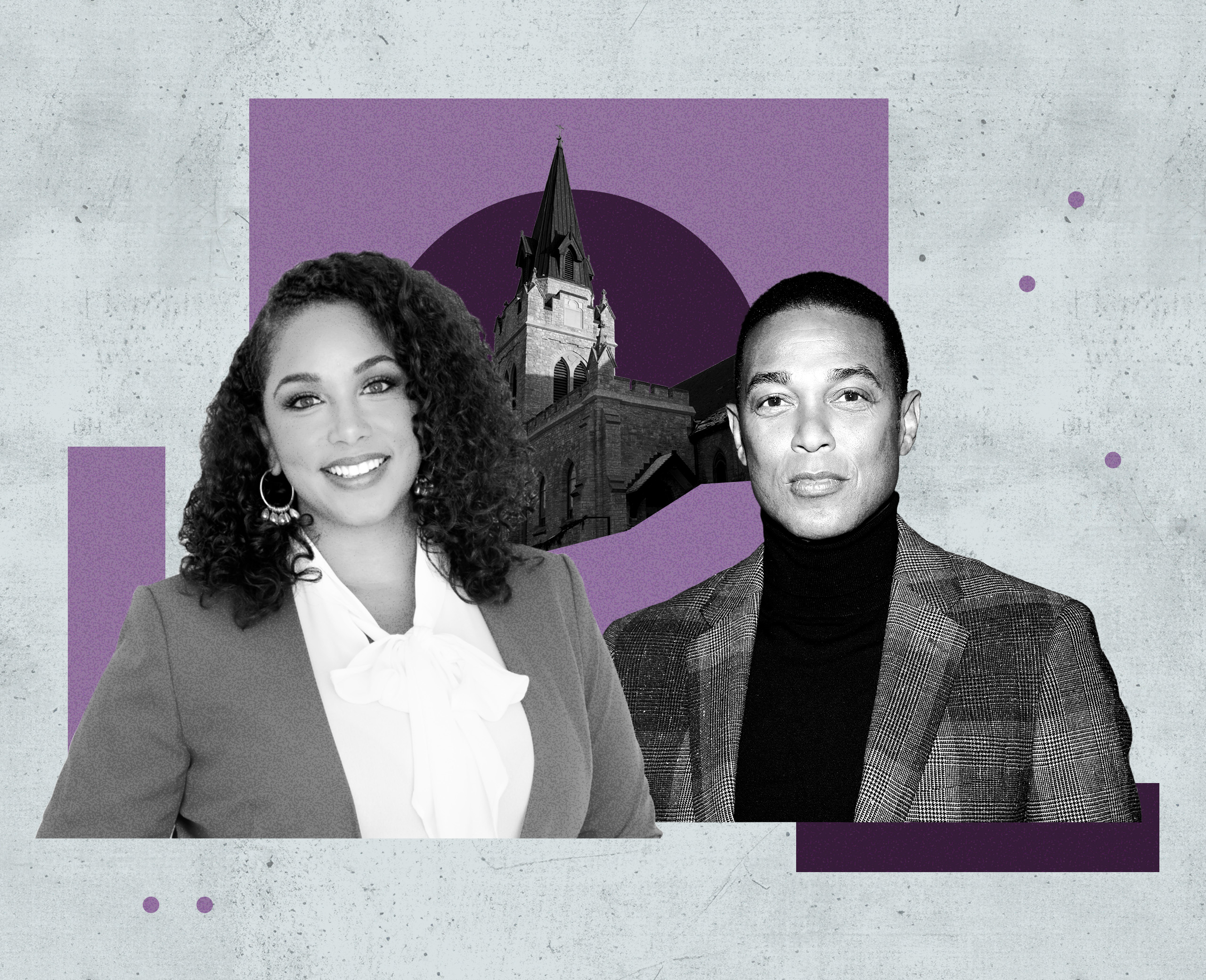
In the past twenty-four hours, federal officers arrested two journalists on charges that they had broken the law while covering an anti-immigration protest at a Minnesota church service: Don Lemon, a former CNN anchor and the host of The Don Lemon Show on YouTube, and Georgia Fort, a reporter from Minnesota who has, since 2020, run a company called BLK Press. Both of them operate as independent video correspondents; both are Black. “You cannot be neutral about the dismantling of our democracy and still expect to be protected by it,” Fort told CJR days before her arrest. “If the Constitution fails to protect US citizens, it will fail to protect the media, the free press. It’s not like there is a reality where constitutional rights don’t exist for American citizens but they continue to exist for the press,” she said. “That’s not how this is going to go.”
Lawyers for Lemon and Fort both vowed to “vigorously” defend their clients. Fort is being represented by Leita Walker, a Minnesota-based attorney at Ballard Spahr LLP, who specializes in First Amendment law. “Fort was present at the demonstration solely in a journalistic capacity, documenting an event of significant public interest and concern,” Walker said in a statement. “The free speech and free press guarantees of the First Amendment fully protect such newsgathering and reporting activities, and Fort’s arrest is a transparent and unconstitutional attempt by our federal government to intimidate journalists and chill their protected speech. She will be vigorously defending herself against these charges.”
Late on Friday, Fort was released from custody after Judge Dulce Foster found that she did not partake in “a crime of violence,” Sheree Curry, co-president of the Minnesota chapter of the National Association of Black Journalists, who was in the courtroom during the journalist’s appearance, told CJR. “I should be protected under the First Amendment just like all the other journalists I’ve been advocating for too,” Fort said in a statement upon her release. “Do we have a Constitution? That is the pressing question.” Don Lemon was also released from custody the same day. “I have spent my entire career covering the news. I will not stop now,” he said in a statement on social media. “In fact, there is no more important time than this very moment for a free and independent media that shines a light on the truth and holds those in power accountable.” CNN reported that his next court appearance is scheduled for February 9 in Minneapolis.
“Instead of investigating the federal agents who killed two peaceful Minnesota protesters, the Trump Justice Department is devoting its time, attention, and resources to this arrest, and that is the real indictment of wrongdoing in this case,” Abbe Lowell, who is representing Lemon, said in a statement. “This unprecedented attack on the First Amendment and transparent attempt to distract attention from the many crises facing this administration will not stand. Don will fight these charges vigorously and thoroughly in court.”
Lowell told CNN that Lemon was arrested on two counts: conspiring to violate a person’s constitutional rights and violating the FACE Act, or Freedom of Access to Clinical Entrances, which prohibits interfering with a person’s attempt to seek reproductive health services or to exercise their First Amendment right of religious freedom at a place of worship. “I’m not aware of any precedent of using the FACE Act to charge a journalist who’s doing nothing more than covering an event,” Elizabeth McNamara, a New York–based attorney at Davis Wright Tremaine LLP specializing in media law, said. “The FACE Act has a carve-out that specifically provides that nothing in the act should be construed to prohibit expressive contact protected by the First Amendment.” To charge him with violating the FACE Act, she added, prosecutors would have to show that Lemon “was using force or a threat of force or physical obstruction to injure or intimidate or interfere with, or attempt to interfere with, the places of worship.”
When charges have been brought against journalists covering protests on private property historically, they have largely been handled as trespassing cases at the state level, Gabe Rottman, vice president of policy for the Reporters Committee for Freedom of the Press, said in a statement. “Those charges are almost always dropped, or if the cases go to trial, the journalists typically prevail.”
In addition to Lemon and Fort, seven people were indicted, according to a filing released on Friday afternoon by the US District Court for the District of Minnesota. The government alleges that the defendants “conspired and agreed with one another and with other persons…to injure, oppress, threaten, and intimidate” multiple people, including clergy staff and congregants in the church. Pamela Bondi, the US attorney general, said on X that the arrests were made at her direction. The White House celebrated the arrests in its own post depicting a black-and-white image of Lemon. “When life gives you lemons,” the caption read, alongside two shackle emoji. Last week, the Justice Department attempted to bring charges against Lemon, but was rejected by a federal magistrate judge. The DOJ appealed; that, too, was turned away, by Judge Patrick J. Schiltz, an appointee of George W. Bush. Lemon and his producer “were not protesters at all; instead, they were a journalist and his producer,” Judge Schiltz found. “There is no evidence that those two engaged in any criminal behavior or conspired to do so.” The Justice Department did not respond to a request for comment.
In the moments before she was arrested, Fort posted a video on Facebook saying federal agents were at her door with a warrant for her arrest. “We are supposed to have our constitutional right of the freedom to film, to be a member of the press,” she said. “I don’t feel like I have my First Amendment right as a member of the press.” Fort said that the agents had an indictment from a grand jury and that she was aware she was on a sealed defendants’ list. Fort, who spent seventeen years working for local TV and radio news, has, of late, been on the streets of the Twin Cities, livestreaming what is happening daily—covering arrests, protests, and press conferences. “Every independent journalist is kind of every person for themselves, trying to search and get information, as opposed to having their own independent infrastructure where they’re able to source and vet information collectively,” Fort told CJR. “Not having that type of infrastructure is hurting independent journalism.”
“Independent reporters by their nature are more vulnerable to this kind of government pressure because they don’t have, necessarily, the resources of a larger press organization,” Katie Fallow, the deputy litigation director at the Knight Institute, said. “I think it’s also notable with the Trump administration that they have gone after major news organizations in many ways in an effort to silence critical reporting and pressure news organizations to give more sympathetic or favorable coverage to the administration.” In a statement, the National Association of Black Journalists said it was “outraged and deeply alarmed” by the arrests, which it views as part of “the government’s escalating effort and actions to criminalize and threaten press freedom under the guise of law enforcement.”
The Minnesota Star Tribune, Minnesota Public Radio, the Minnesota Reformer, the Minnesota Spokesman-Recorder, and the Center for Broadcast Journalism released a collective statement condemning the arrests, saying: “In America, we do not arrest journalists for doing their jobs. The Minnesota journalism community stands united in defense of press freedom and the essential role reporting plays in holding power to account.”
“The government’s arrests of journalists Don Lemon and Georgia Fort are naked attacks on freedom of the press,” Seth Stern, the chief of advocacy at the Freedom of the Press Foundation, said in a statement. “These arrests, under bogus legal theories for obviously constitutionally protected reporting, are clear warning shots aimed at other journalists. The unmistakable message is that journalists must tread cautiously because the government is looking for any way to target them. Fort’s arrest is meant to instill the same fear in local independent journalists as big names like Lemon.”
“There’s definitely been stories where we’re the only ones there, or we’re one of two,” Fort said, referring to her organization’s recent coverage of Immigration and Customs Enforcement operations in the Twin Cities. People from out of town, she observed, tend to focus on conflict, as opposed to moments that show the community coming together. “Those aren’t the stories that go viral, usually,” she said. “So you see folks who are focusing more on capturing what is going to really just shock people.”
Note: This story has been updated to include details of the indictment released Friday afternoon and to reflect Fort and Lemon’s release from custody.
Has America ever needed a media defender more than now? Help us by joining CJR today.