Sign up for the daily CJR newsletter.

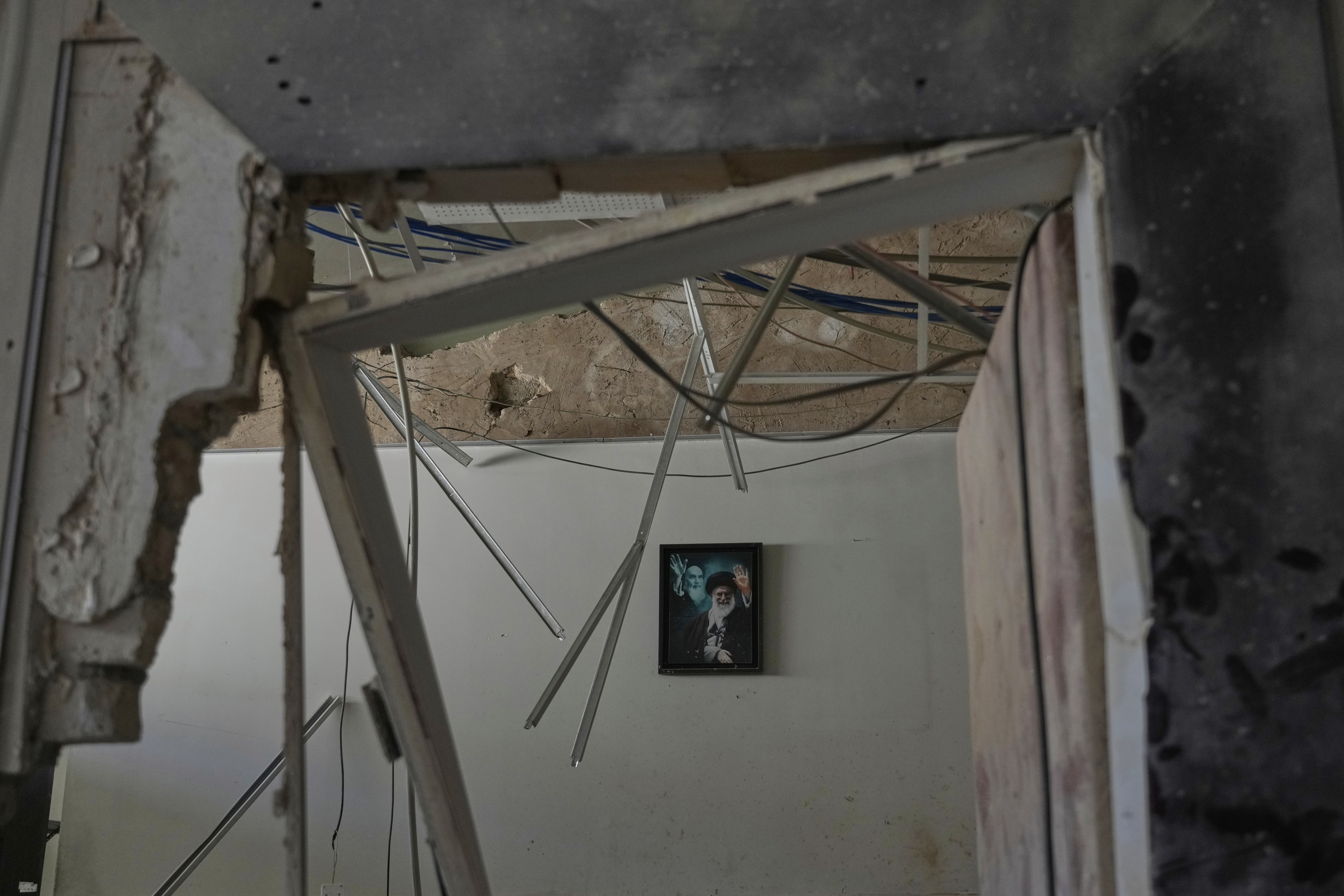
It has been almost a week since the United States and Israel began bombarding Iran in a coordinated military assault that President Donald Trump has said will last at least four weeks. The death toll in Tehran has already risen above a thousand people, and there is still a lack of clarity from the administration on the justification or objectives for the war. The country, battered from months of widespread government protests and a brutal crackdown that left more than seven thousand people dead, has been plunged into another near-total internet blackout. The ability of Iranians to communicate with one another or to get reliable information out of the country is severely limited.
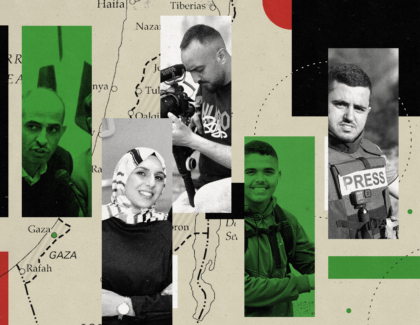
As I wrote here in January, Iran was already an extraordinarily difficult environment for journalism. Since the offensive began, it has gotten dramatically worse. “Journalists are working under foreign bombs and receiving menacing phone calls from the authorities,” an Iranian journalist told Reporters Without Borders. For many, dedication to covering the news has meant time in jail: according to the Committee to Protect Journalists, at least fifteen members of the press in Iran are behind bars. Among them is Narges Mohammadi, a journalist and Nobel Peace Prize laureate, who is one of Iran’s most prominent human rights activists.
There is grave concern for the safety of those prisoners—and all prisoners in Iran. During last year’s Twelve-Day War, Israel targeted Evin Prison, a notorious detention facility where dissidents are held, killing at least eighty people. Mehdi Mahmoudian, the cowriter of an Oscar-nominated film called It Was Just an Accident, was imprisoned in Evin at the time and wrote that guards used prisoners as human shields during the strike. Jason Rezaian, who was wrongfully imprisoned in Evin for eighteen months and whom I have known since we met in Tehran in 2003, told me that there are reports that prison authorities have fled, leaving inmates locked up without adequate food, medical care, or running water. “The human toll is extreme in a situation like that, and imagine being trapped in a prison where you’re already being unjustly detained,” he said. “I think that the international community has a responsibility to get those people out. And yet I don’t know how you would do that.”
He warned that darker days may lie ahead. “It’s a really high likelihood that things will get worse, not better,” Rezaian said. “I understand the elation and celebration around the taking out of the supreme leader. But I think people who witness those emotions don’t understand the larger context. People of Iran know very well that he was just one piece of the puzzle.”

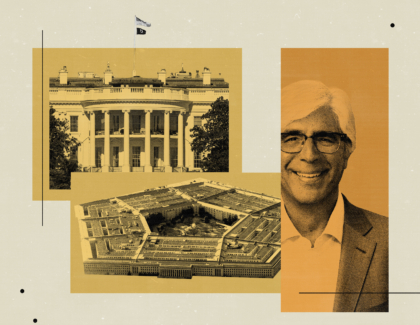
In October, a week after longtime Pentagon reporters surrendered their press credentials rather than sign a restrictive new media policy, the so-called Department of War announced a replacement press corps composed largely of friendly right-wing outlets and influencers. The group includes One America News, NewsNation, Turning Point USA, and the Daily Caller. Also represented are Lindell TV, the vanity media platform launched by Mike Lindell, the CEO of MyPillow, and Laura Loomer, the far-right provocateur who was reportedly among the first people Trump called after waging war.
Did the new press corps inspire confidence? On Monday, Pete Hegseth—the secretary of defense, or war, as he prefers—welcomed his loyalists to the Pentagon for his first briefing on the most consequential military action of Trump’s second term. They asked relatively straightforward, unchallenging questions, and then there was this, from a reporter for the Christian Broadcasting Network: “There are a large amount of US service members that are in harm’s way right now,” she said. “What is your prayer for them?” (Even in this incredibly friendly environment, as Ivan L. Nagy wrote for CJR, “Hegseth seemed unprepared to engage even with the new pro-Trump press corps.”)
The new Pentagon press corps may not be traditional journalists, but they have literally taken their seats; they’ll need to do better to meet this incredibly serious moment, as lives are at risk. Journalists play a vital role in helping Americans understand a complex geopolitical conflict and scrutinizing the leaders who are overseeing it. The New York Times, for its part, has filed a lawsuit against the Pentagon, alleging that the new limits are unconstitutional. Oral arguments begin today.
Nurul Amin Shah Alam, a nearly blind Rohingya refugee who spoke little English, had been in the United States for only a couple of months when he got lost during a walk and wandered into a neighbor’s backyard in Buffalo. That innocent mistake would set off a chain of events that would lead to his death last week.
Initially, the Erie County district attorney’s office charged Shah Alam with felony assault, burglary, and criminal mischief stemming from that incident. He spent more than a year in county jail awaiting trial, until he took a plea deal on lesser charges: trespassing and misdemeanor possession of a weapon—the pair of curtain rods he used as walking sticks. Last week, he was released. But afterward, for reasons that remain unclear, Border Patrol agents immediately took him into custody, even though he was not deportable. Hours later, they abandoned him at a closed Tim Horton’s at night in below-freezing temperatures without notifying his family, who waited for him for hours outside a holding center. Five days later, Shah Alam was found dead.
Shah Alam’s story has received national attention and sparked widespread outrage largely thanks to the work of the Investigative Post, a nonprofit newsroom in Buffalo. J. Dale Shoemaker, an investigative reporter at the Post, broke every major development in the case, from Shah Alam’s disappearance to the discovery of his body and calls for an investigation into his death. The outlet obtained police body cam footage of his arrest last year, as well as surveillance footage from Tim Horton’s that contradicted the Department of Homeland Security’s account of his release. (“This individual tragically died almost a week after this courtesy ride,” the DHS said. “It is ridiculous to blame Border Patrol for an individual’s death a week after their last interaction with them.”)
On Saturday, Shoemaker was there when Shah Alam’s wife and son spoke publicly about their loss for the first time. “On his dying bed, I couldn’t even see him,” Fatimah Abdul Roshid, Shah Alam’s wife, said. “I didn’t even know how he was. I didn’t know where he was. That’s what breaks my heart. That’s the regret that will last forever.”
On Monday, Jonathan Larsen, an independent journalist, broke the news that a US military commander had told troops that the strikes on Iran were “part of God’s divine plan” and that Trump was “anointed by Jesus to light the signal fire in Iran to cause Armageddon and mark his return to Earth.” According to Larsen, the Military Religious Freedom Foundation has received more than two hundred complaints from fifty different units “about commanders in military briefings and other venues sharing Protestant Christian views of the Iran war as a holy war” since the beginning of the military action.
Larsen, who last year reported that Hegseth sponsors a weekly White House Bible study led by a far-right evangelical group that “preaches support for Israel,” has been on the military-religion beat for a while. When we spoke, he told me that Christianity has increasingly become part of military culture over the years: “Both parties, when they’ve been in power, they’ve turned a blind eye,” he said. “They’ve turned a blind eye to this creeping, simmering white Christian nationalism that’s absolutely in the DNA of some people in the military. Definitely not all, but some.”
If you have a suggestion for this column, please send it to laurelsanddarts@cjr.org. We can’t acknowledge all submissions, but we will mention you if we use your idea. For more on Laurels and Darts, please click here. To receive this and other CJR newsletters in your inbox, please click here.
Has America ever needed a media defender more than now? Help us by joining CJR today.