Sign up for the daily CJR newsletter.
Last fall, Chilo’s—a bar in Bed-Stuy, Brooklyn, known for its excellent backyard taco truck—announced it was closing. Over its decade in business, Chilo’s had developed a loyal local following; its demise was met with the usual laments. This time, though, a familiar story had a twist: weeks after shuttering, Chilo’s reopened with Dave Zirin, the sports editor for The Nation, as its new majority owner.
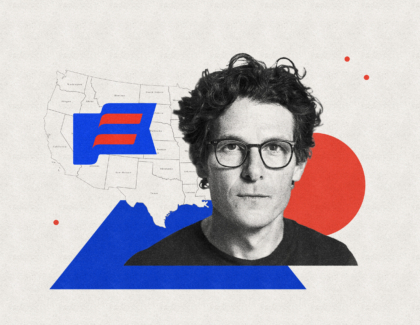
Zirin, a veteran journalist focusing on the intersection of politics and sports and the author of a dozen books, has been good friends with Lev Gewirtzman, one of Chilo’s longtime owners, since the nineties. (They grew up together on the Upper West Side.) When he heard Chilo’s was flatlining, he offered to take over. And since, he has worked to transform Chilo’s into an unofficial community hub for New York City journalists. “I have no idea how to make a drink,” said Zirin, whose latest book, The People’s Historian: The Outsized Life of Howard Zinn, comes out this summer. “I barely know what the word ‘inventory’ means. But I’ve been a journalist now for over twenty-five years. One thing I do know how to do is put on a meeting.”
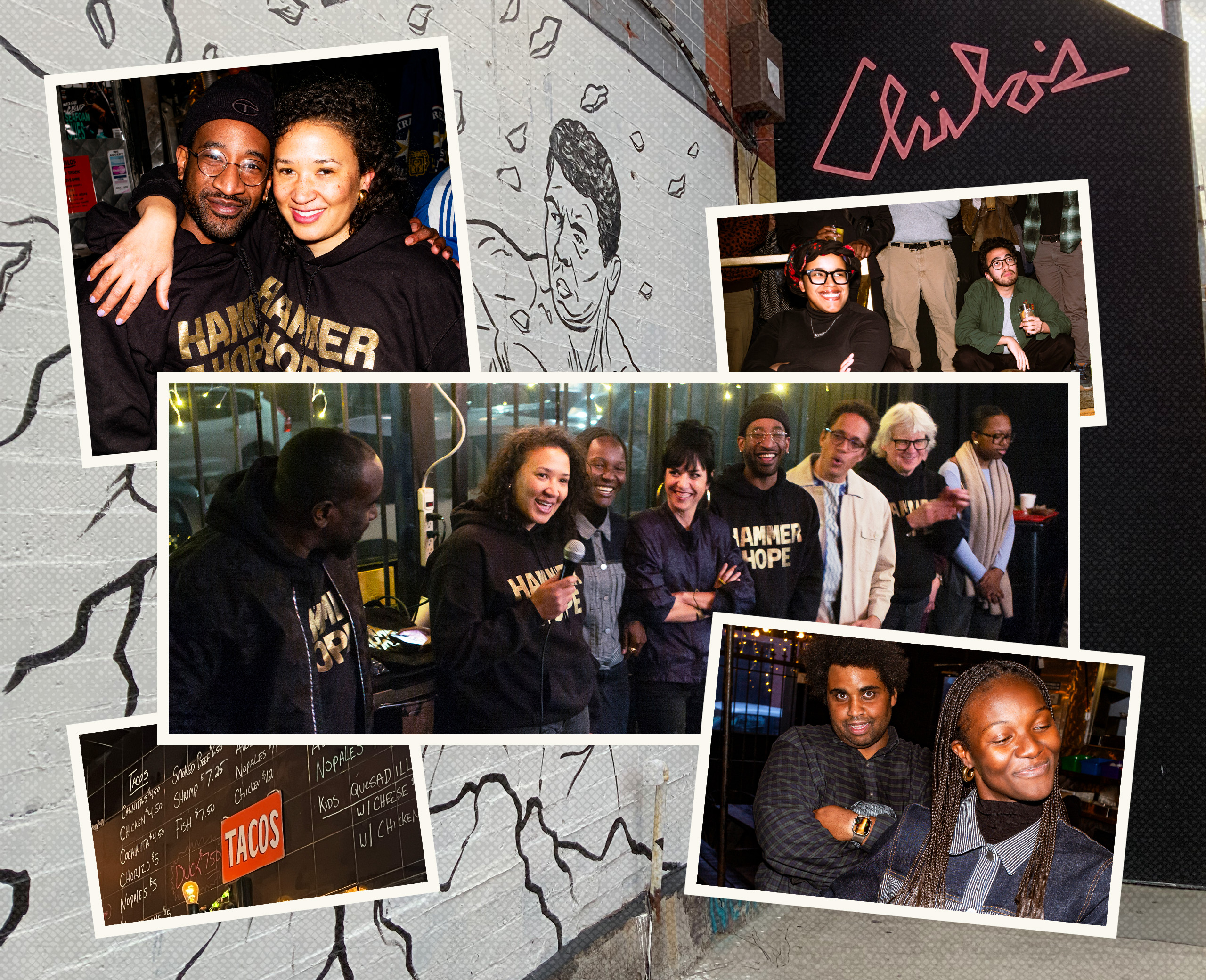
Since January, Chilo’s has hosted issue release parties for The Nation as well as Hammer & Hope, a buzzy Black politics-and-culture magazine. Golden Goal, a new publication that will cover the World Cup’s sociopolitical implications, put on a night of arcane soccer trivia. (In the year that Gabriel García Márquez won the Nobel Prize in Literature and John Updike’s Rabbit Is Rich won the National Book Award, what nation won the World Cup?) Brian Jones, an educator and author, held an event for his new book, Black History Is for Everyone. The bar also hosted a fundraiser for Claire Valdez, a congressional candidate endorsed by Zohran Mamdani, the mayor of New York City. Zirin is planning to use the bar to record live episodes of his podcast, The Collision, which he hosts alongside Etan Thomas, the former NBA player and activist. The Nation will return to Chilo’s next week.
For journalists in the city looking to put on an event, Zirin hopes that “the first space that comes to their mind is Chilo’s.” Watching the speakers at Hammer & Hope’s event was inspiring, he told me. “We have somebody telling a story about their parents who’d been imprisoned during Brazil’s dictatorship in the 1970s and someone talking about resistance to ICE in Minneapolis by the Somali community. I just looked at all of this and I thought, ‘Wow.’”
The magazine’s Chilo’s party “felt like being among family and community rooting for your success,” said Lovia Gyarkye, an editor at Hammer & Hope, who added that events are integral to growing the magazine’s membership base. “It’s really hard to overstate how helpful it is to have a place like Chilo’s.”
How can a working journalist afford to buy a bar? “It’s not a fun story,” Zirin told me. “My mom passed away and left me a small summer place. I could have kept it and had a place in the summer, or I could have sold it and had a retirement fund, or I could have sold it and bought a bar. I bought a bar.”
Since taking over Chilo’s, Zirin has had a mural painted on an exterior wall depicting Muhammad Ali smashing an iceberg; the text reads NO ICE. He’s also added a retractable roof (“like the SkyDome,” he said), which has turned the backyard into a year-round meeting space. He doesn’t plan to set any ground rules governing who can have events at the bar. “I’m not anticipating having to deal with, say, Newsmax wanting to do a special event in Bedford-Stuyvesant,” he joked. Then he added, “The need for spaces for people to come together has never been more acute. We actually need our own forms of solidarity and organizing to survive in this current climate.”
Chilo’s has also long been rumored to have a celebrity co-owner: Michael Cera, the actor. “I’ve never been able to confirm or deny that fact,” Zirin laughed. “But let me tell you this: any member of the extended Bluth family drinks for free at Chilo’s.” Gewirtzman clarified that Cera, who portrayed George Michael Bluth on Arrested Development, was an early investor.
Zirin’s relaunch of Chilo’s echoes other late-night spots doubling as journalism community spaces. On the Lower East Side, the Francis Kite Club—cofounded by Kyp Malone, a member of the band TV on the Radio—has hosted readings and journalism happy hours; on the days the bar is closed, OR Books, a progressive publishing company, uses it as an office. In Chicago, a new publication called the pub recently opened an events space, the pub house, for open mics and film screenings. And then there are other types of press-owned bars: in the late seventies, the Chicago Sun-Times famously bought and operated the Mirage Tavern as part of an undercover investigation into municipal corruption.
“Let’s be straight about it,” Zirin said. “Journalists love a good bar. They always have, they always will.” And even if younger generations of reporters live a drier life than the old-time hacks, he is betting they still yearn for community. “The best part about being a journalist was that daily fellowship and intellectual friction with others in the newsroom,” he said. “Whether we’re talking about cutbacks and austerity or the post-COVID reality of remote work, the newsroom just isn’t the newsroom anymore.” Plus, Zirin said, “we have the best tacos in all of Brooklyn.”
Has America ever needed a media defender more than now? Help us by joining CJR today.