Sign up for the daily CJR newsletter.
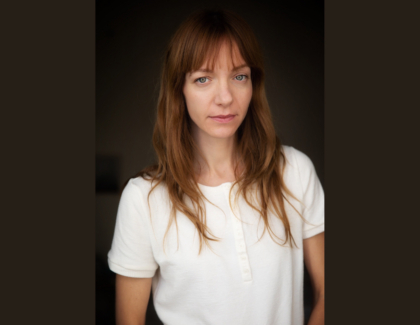
In April, not long after law enforcement intercepted a suspected gunman at the White House Correspondents’ Association (WHCA) dinner, the group’s president, Weijia Jiang, of CBS News, addressed a ballroom full of rattled journalists who had gone from ducking under tables to reporting the news of their experience. “I said earlier tonight that journalism is a public service, because when there is an emergency, we run to the crisis, not away from it,” she said. “And on a night when we are thinking about the freedoms in the First Amendment, we must also think about how fragile they are.” Jiang was in a champagne sequin gown, visibly shaken. An hour earlier, a series of gunshots had echoed across the dinner party, and Secret Service agents whisked Donald Trump, along with members of the administration, to safety. Back at the White House, late that evening, Trump hosted a press conference and praised Jiang for doing a “fantastic job” with the event. He also used the occasion to pitch his planned ballroom as a more secure site for the dinner—though the White House does not host it—and said that he wanted a do-over within thirty days. He’d reportedly hired joke writers to help him roast the press but, he said, “I don’t know if I could ever be as rough as I was going to be tonight.”
To be generous, Trump’s magnanimity lasted about twenty-four hours. The following evening, on 60 Minutes, Trump called Norah O’Donnell, who interviewed him in the wake of the party’s abrupt, dramatic end, “disgraceful” when she asked a question about a note attributed to the alleged gunman. She then quoted him a particular line: “I am no longer willing to permit a pedophile, rapist, and traitor to coat my hands with his crimes,” the suspect wrote. Trump replied, “I was waiting for you to read that, because I knew you would, because you’re horrible people.”
In the weeks leading up to this year’s “nerd prom,” as the dinner is known, the event was seen, at least to its proponents, as an opportunity to smooth tensions between Trump and the White House press corps. Its purpose is “to celebrate the First Amendment and the hard daily work of the journalists who defend it,” in Jiang’s words, and since 1921 it has been the marquee event of the WHCA, a nonprofit with some one thousand members from nearly three hundred news outlets. Critics of the dinner find it deeply out of touch with how the vast majority of the country sees the media and even antithetical to the mission of holding the powerful to account: more glitz than guts. For years, a number of prominent reporters have skipped the event; the New York Times has not attended since 2007, when Frank Rich, a columnist, called guests “captive dress extras in a propaganda stunt.” This year had the added complication of hosting Trump—attending for the first time as president—which seemed only to reinforce the idea that the media is complicit in his attempts to weaken scrutiny of his administration. Ahead of the event, a group including the Society of Professional Journalists and others called on the WHCA to issue a defense of press freedom and a condemnation of those who threaten it, arguing that the association should “speak forcefully, in front of the man who seeks to undermine our country’s long tradition of an independent, strong, and free press.”
The statement was appended with a litany of the administration’s assaults on newsgathering, including lawsuits, regulatory attacks, and the arrest or detention of journalists including Mario Guevara, a reporter in the Atlanta area who was deported to El Salvador. Under Trump, the Pentagon has succeeded in kicking long-standing members of the defense press corps out of the building; though a federal judge ordered that they be let back in, the legal back-and-forth continues, and no one expects access to be restored as before. Trump has overseen efforts to defund public media—the Corporation for Public Broadcasting has been dissolved—and the US Agency for Global Media, which includes Voice of America, among others, and is now engaged in an existential fight in court. He has also brought cases against the BBC, CNN, and the Wall Street Journal—representatives of which had gathered for the WHCA dinner, waiting to be awarded for their coverage of Trump’s apparent birthday letter to Jeffrey Epstein, over which the president sued.
White House journalists, and the WHCA specifically, continue to endure anti-press machinations: Early last year, the administration kicked the Associated Press out of the pool—that is, the group of journalists permitted to accompany the president in the Oval Office, Air Force One, and other spaces that can’t accommodate the full press corps. Then the White House took over management of the list and rotation determining what outlets get pool spots, which had been the purview of the WHCA for the past century. The administration had sought to seize control of the seating arrangements in the press briefing room; it has not yet followed through, though the White House did restrict access to the offices of the press secretary and senior communications aides. It opened the briefing room to some, as they say, ideologically diverse new-media journalists—and stocked the place with sycophantic MAGA outlets. The dynamic is complicated: in recent months, Trump has been picking up reporters’ calls to his cellphone—it seems as though everyone in Washington now has his number—even as the White House designates a “Media Offender of the Week.”
The view on the WHCA’s response to all of this has been mixed. The WHCA is essentially a trade organization, concerned with the operations involved in coverage of the president, serving as “the bridge between the White House press corps and the administration,” as Jiang put it on CBS. (The WHCA also gives out scholarships.) “While we have an advocacy role for our members, we also have a diplomatic role,” Jiang told me. “When I became president, last July, my goal was to restore and normalize the relationship with the White House. We have to have a functioning relationship so that our members can do their jobs. When they can’t do their jobs on campus, that’s when real access to public information and what the president is doing is impacted.” Depending on your view, the association has been either shrewdly calculating in its restrained approach or shamefully feckless, projecting normalcy during an autocratic time. After the White House took over the pool rotation, the WHCA released a statement saying the administration’s decision “tears at the independence of a free press in the United States.” But the various factions the organization comprises―print, TV, radio, new media—did not unite in solidarity against this treatment.
I spoke with more than a dozen journalists for this story, and many feared that it would be tough to win back ground with future administrations. “It’s frustrating because we don’t want to be fighting,” Peter Baker, the chief White House correspondent for the Times, told me. “We want to be covering. We want to be doing our jobs.” Trump, he said, “wants to make us the opposition. He says it all the time, and it’s tough to avoid falling into that trap,” he added, “without rolling over and doing a disservice, not just to ourselves and our institutions, but to future journalists who may find that future White Houses will then take the precedent that has been set here and impose further limits on us.”
The WHCA executive board is tight-lipped about its strategy, but Jiang hinted at her approach in an essay about the dinner that wasn’t. “Above all, I had hoped it would restore some normalcy between the Trump administration and the press,” she wrote. “Maybe I was naive, but I wanted it to be a room we don’t see enough of in Washington: a bipartisan one. And it was.” When I spoke to Jiang, she told me, “At the end of the day, our mission is to fight for access and for the freedoms the First Amendment gives us.” She added, “How the administration engages with the association makes a huge difference in all of our coverage.”
A former WHCA board member, who spoke on the condition of anonymity because they didn’t want to violate an understanding that past members do not weigh in on the business of the current board, suggested that dealings with Trump are anything but straightforward. “On the one hand, you’ve got someone who provides extraordinary access to members of the press. This term you’ve got him giving out a cell number and people texting him at six in the morning so they can get a scooplet,” the journalist said. “Then at the same time you’ve got these efforts to kick news outlets out of areas where they’ve had decades of equal access to other organizations. It’s safe to assume that whenever something happens where you go ‘Oh my God, what?’ that any iteration of the board is saying, ‘Okay, how should we respond to this?’ If the public can’t see it, it doesn’t mean that nothing’s happening.”
Following the 2024 election, the WHCA assembled a pool to cover Trump in the weeks leading up to his swearing-in. The pool headed south, hoping to get into Mar-a-Lago, Trump’s Palm Beach club. “The Trump people just did not work with us,” a White House correspondent told me. (Few of the journalists I interviewed for this piece were comfortable speaking for attribution about their colleagues and the White House, or their employers did not permit them to do so.) At the time, Eugene Daniels—a White House reporter for Politico, who had focused on Kamala Harris—was the association’s president. Trump seemed game for engaging with some in the media, sitting down with Time magazine for its Person of the Year issue and NBC’s Kristen Welker to discuss plans for his first hundred days. But Trump’s team “did not want to work with Eugene,” the correspondent said, “so things were off to a rocky start.”
Multiple reporters described the White House’s refusal to deal with Daniels, who is Black and gay, as an expression of racism and homophobia, as well as a view that Daniels had been an advocate for Harris. The Trump camp seemingly considered Daniels, who was then a coauthor of Politico’s Playbook, as “the physical manifestation of the wokeness they wanted to kill,” a White House reporter said. “He probably should have resigned when it became clear that, for frankly completely unfair reasons that weren’t his fault, the White House wasn’t going to deal with him.” During the transition, Daniels traveled to Palm Beach to try and end the standoff. But the result was still, for the first half of the year, “pretty open warfare between the press office and the association,” the reporter said. (Neither Daniels, who has since moved to MS Now, nor the White House responded to requests for comment.)
Less than a month into Trump’s term, the administration took aim at the AP, the arbiter of house style at many news organizations, for refusing to refer to the Gulf of Mexico by its newly executive-ordered name, the Gulf of America. The administration retaliated by barring the AP’s journalists from the pool. The AP sued, citing viewpoint discrimination. “We’re basically dead in the water on major news stories,” Evan Vucci, an AP photographer, testified. A federal judge effectively sided with the AP, ruling that the administration need not guarantee access to limited events but that the AP “cannot be treated worse than its peer wire services either.” The administration appealed; the case is still pending. “We strongly believe this case could have much wider implications, not only for other news organizations, but for anyone in America,” Julie Pace, the executive editor of the AP, wrote.
In the meantime, the White House did not back down. Less than two weeks after removing the AP, the administration took over pool logistics entirely. Then, in April, the White House ended the practice of having the three major wire services—the AP, Bloomberg, and Reuters—share a rotating spot. Key to understanding this move was that it was seemingly designed to comply with the judge’s orders by effectively demoting the AP’s peers. The response to this outcome among White House journalists varies. I’ve talked to some who saw the AP’s treatment as a chilling encroachment on press freedoms; others weren’t all that upset to see the wires taken down a peg. “If you talk to the wire people, they’re outraged at the lack of solidarity,” especially from powerful TV journalists, a print reporter told me. “But at the same time, what they’re requesting is that they turn back into elite reporters, and the rest of us turn back into D-listers.”
The WHCA filed an amicus brief in support of the AP’s case against the administration, but did not otherwise organize collective action. The journalists who believe the episode demanded more of a response point to 2009, when the major networks banded together to prevent Barack Obama’s White House from excluding Fox News from an interview. (At the time, Jake Tapper, who was then with ABC News, called Fox a “sister network.”) Some print journalists, especially those from the wires, were apparently upset the TV networks weren’t now willing to use their considerable clout to stand up to Trump. “The administration cannot survive without pool TV and without still photos, and so they have the power,” a print correspondent said. “Yet they’ve refused to join with us as a group to say, ‘Okay, if you don’t want the pool, then you won’t have any of us.’”
The AP wasn’t the only outlet singled out. The White House barred the Journal from Air Force One in response to its reporting on the Epstein birthday card; Karoline Leavitt, the press secretary, defended the decision as a reaction to the paper’s “fake and defamatory conduct.” At one point, the White House pulled S.V. Daté, HuffPost’s senior White House correspondent, from a pool rotation, offering his seat to the Journal (which declined it) and Axios. Daté is a spirited critic of the administration who, months later, managed to elicit an on-the-record response of “Your mom” from Leavitt. Daté did not lose his spot again; he never learned why, or whether the WHCA directly advocated on HuffPost’s behalf. Speaking with CJR in October, Daté described feeling that, in the wake of restrictions on Defense Department reporting, the Pentagon Press Association took a strong, collective stand of a kind he didn’t see at the White House. “The problem is that the White House Correspondents’ Association is made up of different constituencies with different goals,” he said. “I think the White House Correspondents’ Association is in a much weaker position than the Pentagon Press Association. For example, TV demands fresh footage of Donald Trump every day. Coincidentally, Donald Trump wants fresh footage of himself on TV every day, so that’s very symbiotic. Same thing with the photographers. So that gives Trump a lot of leverage.”
Publicly, at least, none of these events occasioned a bold response from the WHCA. A February 2025 statement from Daniels suggested the association had reached an impasse with the administration over the pool and saw no option but to cede total control. “This board will not assist any attempt by this administration or any other in taking over independent press coverage of the White House,” Daniels told WHCA members. “Each of your organizations will have to decide whether or not you will take part in these new, government-appointed pools.”
Daniels’s term as president ended in July. Jiang, who had served as his vice president, seems to be widely regarded among the press corps as a skilled diplomat who pulls no punches, especially after the near tragedy of this year’s dinner. She also represents the rising influence of TV journalists within the association. It’s not a stretch to imagine that Jiang’s employer’s parent company, Paramount—which has taken steps to appease the administration to protect its business interests, from settling a sixteen-million-dollar lawsuit with Trump to installing a former Trump adviser as an ombudsman to review “any complaints of bias or other concerns” against CBS—may have factored into his decision to attend the event. The WHCA did not reveal how Trump’s appearance came about, though the association broke from tradition this year by opting not to hire a comedian and instead recruiting Oz Pearlman, whom Jiang described as “the world’s most celebrated mentalist.” Trump, for his part, said that the WHCA asked “very nicely.”
That Jiang was praised around the Beltway for her handling of the dinner and its aftermath may speak to the delicate relationship between the WHCA and the White House, as well as to a wide feeling that, among reporters and the administration sources with whom they’re enmeshed, there ought to be collegiality. This view seems not to have come up for meaningful assessment in light of the Trump administration’s divergence from democratic norms. The WHCA’s mission, in theory, is the same now as it was in 1914, when the organization formed to cover the press conferences of Woodrow Wilson. “The association was founded because of access,” George Condon, a National Journal White House correspondent and the historian for DC’s Gridiron Club, told me. “Woodrow Wilson was starting to have what would be considered modern press conferences. Those were really his innovations. Theodore Roosevelt had let people talk to him while he was getting shaved in the morning, but there weren’t real press conferences until Wilson.” After the attack on Pearl Harbor, in 1941, the Secret Service took over White House press credentialing from the association. Later, there were debates over whether and how to include TV and digital news in coverage. “There’s always going to be a new wrinkle, and you need a professional association that can deal professionally and seriously with the White House,” Condon said.
Condon, who is a former WHCA president, is now writing a book on the organization’s history. Access within its own ranks has always been fraught. In 1944, Franklin Roosevelt’s press secretary accredited Harry McAlpin, making him the first Black reporter to attend a White House press briefing, but the association did not admit its first Black member, Louis Lautier, until 1951. There were no women among the organization’s founders. The women who eventually joined the WHCA were not allowed at the dinner until 1962, when Helen Thomas, then a White House correspondent, brought the matter to John F. Kennedy, who refused to attend until the WHCA changed its policy. (In 1975, Thomas became the WHCA’s first female president.) The late eighties ushered in the era of celebrity attendees at the dinner. In 1993, the association put the event on C-SPAN. “I’m responsible for putting the dinner on TV for the first time,” Condon told me. He doesn’t regret it. “People who don’t think an adversarial relationship ever allows you to have dinner with the current White House and administration would be against it whether it was on TV or not.”
The WHCA’s elections, held annually for three-year terms, are a window into the association’s power dynamics. During last year’s campaigns, the very idea of the association’s purpose, and efficacy, was up for debate. “I was expressing a lot of frustration that the rank-and-file members were feeling, mainly like ‘Why are we paying dues to this organization?’” Christian Datoc, a Washington Examiner reporter, told me. He ran for an “at large” seat but lost to Time’s Brian Bennett. Datoc was upset that the WHCA “basically totally ceded all of our responsibilities in terms of self-management.” He said the changes to the pool ultimately undermine the duty of the press corps. “We’re supposed to be informing people of what’s happening in Washington and trying to explain very confusing policy ideas and wonky political mechanics that a lot of people in DC aren’t even privy to,” he told me. “We can’t do that if we’re not in the room and don’t have some sort of autonomy over how we collectively pool our resources.”
Jiang’s term is up in July, at which point she will be succeeded by Jacqui Heinrich, the senior White House correspondent for Fox News. Last year, Trump called Heinrich an “absolutely terrible” reporter who “should be working for CNN, not Fox.” The association’s other officers include journalists from ABC News, Bloomberg, Getty Images, and Reuters. Heinrich declined to speak with me, deferring to Jiang as the WHCA’s president, but suggested to The Wrap that access is the WHCA’s priority. “We get asked all the time, ‘Why don’t you come to this reporter’s defense when they are targeted by the president, that’s your job,’” she said. That question, she suggested, reflected a misunderstanding of the organization’s role. “We of course advocate for access and broad responsibility of journalism, and that falls under the First Amendment. But you can’t do anything in service of the First Amendment without that access.”
As the WHCA goes about restrained diplomacy, Trump has, of his own accord, offered unprecedented access to many journalists. He has invited reporters to spend hours in cabinet meetings and, compared with Joe Biden, has acceded to far more press questioning. And then there’s his cell number. “It’s really proliferated to a point where I’m afraid he’s going to stop,” a White House reporter told me. Following the capture of Nicolás Maduro, Venezuela’s president, Tyler Pager, a White House correspondent for the Times, reached Trump at four-thirty in the morning. Andrew Kaczynski, a senior politics reporter for CNN, called Trump to ask about a top Federal Emergency Management Agency official who claimed he teleported to a Waffle House. In a March call, Trump told Jiang that the Iran war, still ongoing, was “very complete, pretty much.”
Individual journalists may not need the WHCA to get close to the president, but major outlets, collectively, still feel they need it for access to the administration more broadly. “Even if this is not an ideal system, and the White House has far more control now than they did, you still need Kaitlan Collins, Kate Sullivan—people who are really willing to take risks when they ask questions,” Jake Lahut, a freelancer who has covered the White House, said. “The major outlets, if they weren’t around, you’d have to ask what would replace them.”
In November, Trump hosted Mohammed bin Salman, the crown prince of Saudi Arabia, whom Trump called “a protector of human rights,” for his first visit to the White House since 2018, when Jamal Khashoggi, a Saudi journalist, was killed. Ahead of the meeting, WHCA members exchanged emails about how background materials from a pooler with a Saudi media outlet omitted any reference to Khashoggi’s murder, which American intelligence linked to bin Salman. “Ignoring it or sidelining those who bring it up does not help the credibility of the pool system and our work which is already under attack as it is,” a reporter wrote to Jiang. She replied that the note was “disruptive and distracting.” During the press gaggle, Mary Bruce, the chief White House correspondent for ABC, turned to bin Salman, remarking that “US intelligence concluded that you orchestrated the brutal murder of a journalist” and asking, “Why should Americans trust you? And the same to you, Mr. President.” Trump replied, “ABC? Fake news,” and dismissed the question, saying of Khashoggi, “A lot of people didn’t like that gentleman that you’re talking about” and that “things happened.”
The National Press Club, responding to Trump’s comments, described Khashoggi’s killing as “a direct attack on press freedom.” The WHCA made no statement, about Khashoggi, ABC, or Bruce, whom Trump scolded when she posed a follow-up: “I think you are a terrible reporter.” He continued, “It’s the way you asked these questions: you start off with a man who is highly respected, asking him a horrible, insubordinate, and just a terrible question,” and added, “I’ll tell you something, I think the license should be taken away from ABC, because your news is so fake and it’s so wrong.”
The episode took place within days of Catherine Lucey, Bloomberg’s White House correspondent, asking a pointed question about the Epstein files, to which Trump responded, “Quiet, piggy.” Leavitt defended the comments as being more “frank” and “honest” than “what you saw in the last administration, where you had a president who would lie to your face and then didn’t speak to you for weeks.” This past February, when CNN’s Collins asked about Jeffrey Epstein’s victims, Trump admonished her for not smiling, calling her “the worst reporter” and saying that her employer “should be ashamed.” And in May, when Rachel Scott, the senior political correspondent for ABC News, asked Trump why he had taken on renovation projects during the war with Iran, he said, among other things, “Such a stupid question that you asked,” “This is one of the worst reporters,” and “She’s a horror show.” He also made a vague reference to her understanding “dirt”—which the National Association of Black Journalists (NABJ) called “especially disturbing” and said “landed as part of a familiar pattern in which Black women journalists are demeaned personally rather than answered substantively.”
In each of these instances, the press corps continued on without acknowledging Trump’s outbursts, and the WHCA, unlike NABJ, the Society for Professional Journalists, and other groups, did not make note of the exchanges afterward. A decade of covering Trump may have numbed many reporters to his insults, which are understood to be a reality of engaging with him. There’s also a more cynical calculation that applies to the WHCA, about weighing access and reputation. “I think that’s tricky,” a female White House reporter told me, “because any good reporter, they just want to do their job, they don’t want to become part of the story. And so if you’re banned from the pool or something like that, it’s nice to have the support of the WHCA or outlets banding together. But if you’re calling someone fat or ugly or gross-looking, I don’t think any reporter wants an official statement put out.”
In response to Trump’s belittlement of Scott, NABJ made note that “Black women journalists are too often singled out, insulted, or demeaned for asking legitimate questions, reporting facts, and holding power to account.” April Ryan, a White House correspondent for The Contrarian who during the first Trump administration worked for American Urban Radio Networks, was repeatedly told to “sit down” during a confrontation with Trump in 2018. Trump also called her “nasty” and a “loser.” When I reached Ryan, one of the few Black women to have served on the WHCA board, she put her feelings this way: “I can say advocacy, for us in this moment, is of the utmost importance. It’s crucial. However, a lot of people have their hands tied in these groups, for obvious reasons.”
Some journalists believe that failure to push back sends the wrong message. “You don’t have to grandstand,” Terry Moran—a former national correspondent for ABC, who now has a Substack called Real Patriotism—told me, about dealing with Trump. “When he goes off on reporters, I actually don’t think you need to fight him. You simply need to have a moment of decency where you try to reset the tone.” In April of last year, Trump called Moran “dishonest” and “not very nice” during a taped interview. Trump also ended the taping early, Moran said. “The White House Correspondents’ Association is right in the crosshairs, so I’m sympathetic,” he told me. “But I also understand how people could look at what’s happening at the White House and want a clear demarcation between the president and the press corps.”
A week before this year’s dinner, two former ABC journalists, Ian Cameron and Lisa Stark, organized an open letter to the WHCA board signed by nearly five hundred former journalists blasting the organization’s decision to host Trump. “There is a long tradition of presidents attending the White House Correspondents’ Association Dinner. But these are not normal times, and this cannot be business as usual with the press standing up to applaud the man who attacks them on a daily basis,” they wrote to the association. The evening’s ultimate turn of events didn’t change the organizers’ views. “Yes, the president had a kumbaya moment at the news conference that night,” Stark told me. “But the interview on 60 Minutes again made it clear that there is no letup in his assault on independent journalists and independent journalism.”
The night of the breach, Jiang amplified Trump’s desire to try the event again within thirty days. The board would meet “to assess what happened and determine how to proceed,” she said in a statement. A month out, the WHCA board was still having conversations about a redo event to honor award recipients. Given the logistics—including security—a second attempt is unlikely to be anywhere near as lavish as the original, which costs news organizations 480 dollars a seat to attend. “As I’ve said to my members, allowing that night to have the final word during a year when all we’re talking about are the pillars of our democracy, I don’t think we can do nothing,” Jiang told me. “The board unanimously agreed that we have to do something—whether that’s just an event to execute our program, which includes awards and scholarships, or a dinner. I don’t think that just letting it pass and letting that be the final word is an option.”
The event has always been the subject of hand-wringing among the press, but the critiques leading up to this year’s event struck what felt like a bleaker note—even before a suspected gunman tried to dart past a security checkpoint and into the ballroom, in what federal prosecutors have alleged was an attempt to assassinate the president. Poynter’s Kelly McBride called it a “trainwreck” in the making (little did she know). Paul Farhi, a media reporter, wrote in The Atlantic that the spectacle “has always been a bit of an embarrassment.” Margaret Sullivan, a columnist for The Guardian US and the former public editor of the Times, told me the optics of the dinner were “especially troubling now” given that “the current administration so blatantly disparages and undermines the constitutionally protected mission of the press: holding power to account on behalf of the public.” Afterward, she wrote on her Substack, American Crisis, that if the WHCA is set on continuing the dinner as a celebration of “the First Amendment, free expression and press rights, don’t invite people who stand in clear opposition to that.”
Even the White House correspondents who regularly attend the dinner seemed clear-eyed about the experience, which journalists tend to defend as an opportunity to cultivate sources. “People are too polite to tell you to fuck off when you’re wearing tuxedos,” a DC-based reporter told me. Another correspondent said the dinner had become “stupid” and “boring,” whereas “there were years under Democratic and Republican presidents where it was very valuable” for the chance to get close to sources desperate for the tickets that outlets dole out to guests. Any easing of tensions between Trump and the press this year was short-lived. “We’re back to square one, which is a horrible place for our country to be just now,” a veteran White House correspondent told me.
Though much of the past year was bad for the press corps, not every development has been a net negative. Some independent journalists have praised the Trump White House for offering a seat in the briefing room for new-media outlets. “Very early in the administration, they granted me a hard pass, which I had never been granted under the Biden administration, despite trying,” said Gabe Fleisher, the author of a nonpartisan newsletter, Wake Up to Politics, referring to the press credential that gives journalists daily access to the White House grounds. “My hope is that more nonpartisan outlets and more ideologically diverse outlets will be able to have that immediacy. I obviously won’t want that to come at the expense of people who’ve been covering the White House for a long time. To me, it’s not a zero-sum game.”
The WHCA was not involved in the creation of a new-media seat, but it still controls the seating assignments in the rest of the briefing room—evidence to some of the WHCA’s shadow diplomacy. “I think the reason it hasn’t happened is this board has quietly advocated, quietly pushed back,” a veteran White House correspondent said. “Nine months ago, the association wasn’t winning any battles. These days there’s some modest progress on various things.” Trump has not totally excluded the press corps in favor of Breitbart and Lindell TV—as the Pentagon has done—which a number of journalists seem to believe represents the primary accomplishment of the current executive board. “It’s not what you’ve gained positively, it’s what you prevented from happening that may have been Jiang’s achievement,” Farhi told me.
In general, for Trump, cutting off journalists may simply be impractical and undesirable—after all, the man is a media figure foremost. “It’s just a wild thing,” remarked one White House correspondent, who not long before we talked had called Trump on his cell for a story. “Instead of calling up the press secretary, just call up the president.” Datoc, the Washington Examiner reporter, suspects the administration may have underestimated “what a pain in the ass” it would be to actually run the pool system, which is why it left the WHCA’s rotations largely intact. “I think the White House kind of recognizes—I don’t think they’ll ever publicly admit it—that they bit off more than they could chew.”
Has America ever needed a media defender more than now? Help us by joining CJR today.