Sign up for the daily CJR newsletter.
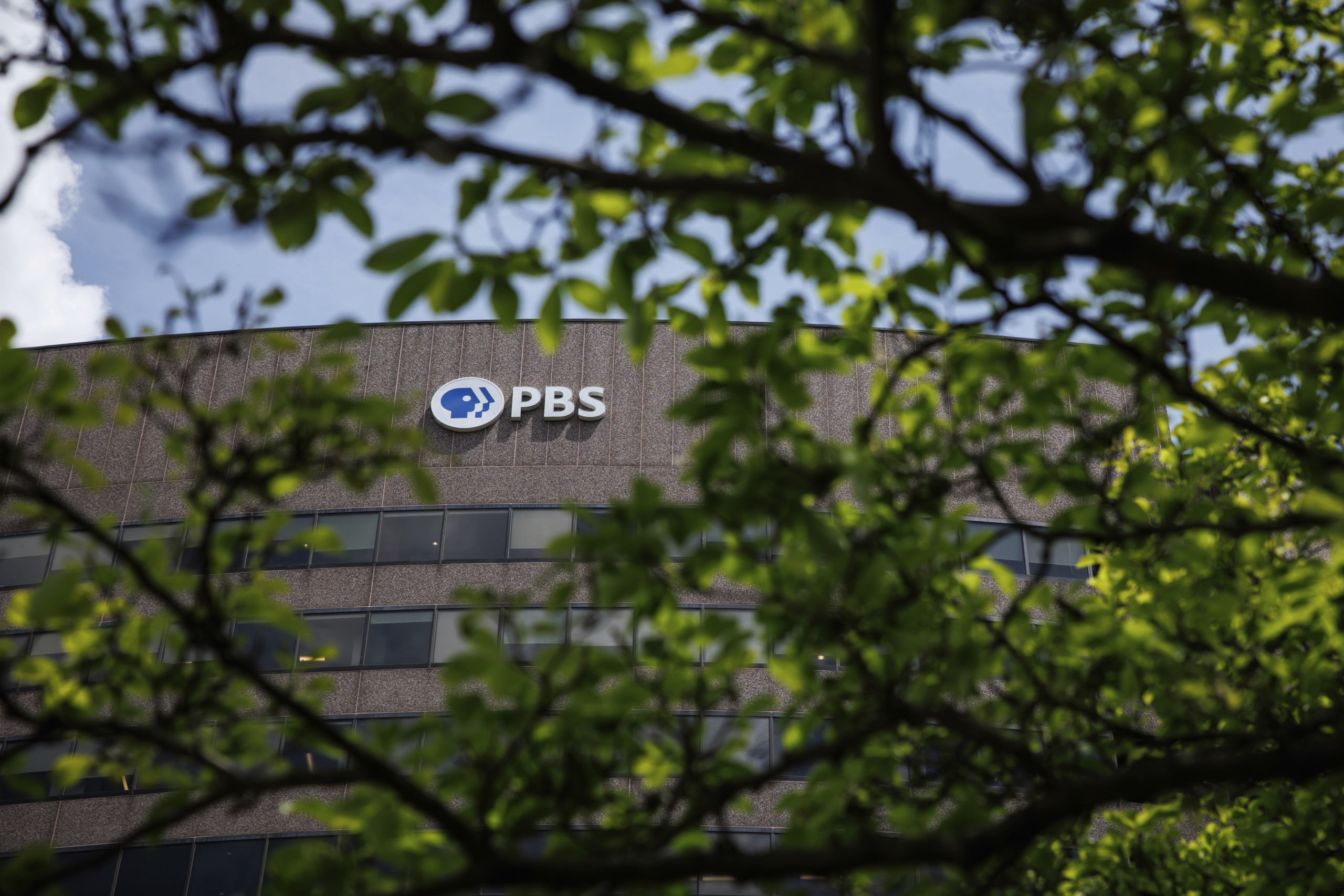
This week, the Corporation for Public Broadcasting—which oversaw the distribution of federal funds to NPR, PBS, and a system of more than fifteen hundred local public media stations across the United States—moved to dissolve. CPB, as it’s known, a private, nonprofit entity established by Congress fifty-eight years ago, was defunded in July, as part of a sweeping plan guiding the Trump administration laid out by the Heritage Foundation in Project 2025. In a statement, CPB called the shutdown an act of “responsible stewardship,” since a “dormant and defunded CPB could have become vulnerable to future political manipulation or misuse.” Patricia Harrison, the organization’s president and chief executive, said that the “CPB’s final act would be to protect the integrity of the public media system and the democratic values by dissolving, rather than allowing the organization to remain defunded and vulnerable to additional attacks.”
What this means for independent public media going forward is uncertain. In recent months, donations have poured in—and yet it’s hard to know whether the level of investment in the immediate aftermath of CPB’s defunding will sustain stations over the long term. Those in rural and tribal areas, many of which have relied on CPB for more than half their annual budgets, are at the greatest risk. It has also been the CPB’s role to ensure that local stations are compliant with the regulations of the Federal Communications Commission—now run by Brendan Carr, who wrote the chapter of Project 2025 dedicated to the FCC. (“What makes what’s going on right now somewhat unique—and I would say corrupt—is the out and open quid pro quo that Carr is effectuating,” S. Derek Turner, a policy analyst for the advocacy group Free Press, told Kyle Paoletta for CJR last year.)
“In two or three years, a number of stations with fewer donations might fall out of FCC compliance,” Josh Shepperd—the undergraduate chair of the department of media studies at the University of Colorado Boulder and the author of Shadow of the New Deal: The Victory of Public Broadcasting (2023)—told me. If that happens, their licenses could be revoked, then sold. “There’s a project to essentially starve the public system and then reallocate the signals,” he said, arguing that a goal of Project 2025 is not only to stop funding public media, but also to replace it with outlets politically favorable to Trump. In some communities reliant on public media, local news could be displaced by national coverage—which, Shepperd observed, represents the Trump administration’s preference.
Rodney Benson—a professor of media, culture, and communication at New York University and a coauthor of How Media Ownership Matters (2024), about press funding structures in the US and beyond—said that “it makes sense” for CPB to shut down “rather than to let someone else in this administration do it.” Shepperd said that the example of Voice of America—whose parent organization, the United States Agency for Global Media, was taken over by Trump appointees—may have guided CPB’s decision: “The board, if it becomes stocked by MAGA people, could transform it into state-based media.”
Benson looked at the organization’s closure as an opportunity for public media to reinvent itself in a more favorable political context someday in the future. “Trump’s hatred of public media is out of touch with public opinion—polls have shown that public media still have widespread support,” he said. “It wouldn’t necessarily be politically risky for a future administration to restore federal funding at some level.” In that event, Benson thinks that CPB, which has long been a political target in Washington, could be rebuilt with a new, more robust structure better able to resist partisan pressure. “The policy debate will be about how much public media should be even more locally driven, or how much it should engage nationally,” he said. “Arguably, filling the local news gap is the more urgent problem, and it would be easier to peel off some Republican support for a targeted, local approach.” In the CPB announcement, Ruby Calvert, the chair of the organization’s board, projected optimism: “Even in this moment, I am convinced that public media will survive, and that a new Congress will address public media’s role in our country because it is critical to our children’s education, our history, culture, and democracy to do so.”
Shepperd, however, views the shutdown of CPB as a “catastrophic” event. “It potentially decimates all of public media forever, depending on what happens in the next three years,” he said. “It eliminates the capacity for the government to give money within the Public Broadcasting Act.” The “clever” model of CPB, he noted, separated the federal government from local programming decisions. There could be other avenues worth exploring—an independent, BBC-like model, or an endowment system similar to how the Smithsonian operates. But lawmakers in Congress would need to show a willingness to invest. “It’s not a priority for either party, and one of the parties is just literally against it,” he said. “If the CPB had received certain assurances that it would be back on the docket, it might have gone a different way.”
In the absence of a federally funded CPB, the US might have to settle for a fragmented and uneven local media environment. “There still is public funding at the local and state level. We’re already seeing a very balkanized, decentralized system, with major differences in levels of funding,” Benson said. “Federal funding existed to even that out—that’s where the philanthropic community, or state and city governments, are either going to have to step up, or there’s going to be significant cutbacks. Until federal funding is restored, it’s going to be a very uneven landscape.”
Has America ever needed a media defender more than now? Help us by joining CJR today.