Sign up for the daily CJR newsletter.
Aaron Timms, a writer and critic, was standing in a corner at TJ Byrnes, an Irish pub in New York’s financial district, explaining the Paris Métro. “They’re building a network that is going to allow better connections between the different suburbs,” he was telling me when a woman cut him off. “Hey,” she said, making her way through the busy, low-lit backroom. “I loved your piece.” Timms had written about the suburbs in the newest issue of the New York Review of Architecture (NYRA). The roomful of young media types and design buffs had gathered under the pub’s stained-glass lamps that evening to celebrate the issue’s launch.
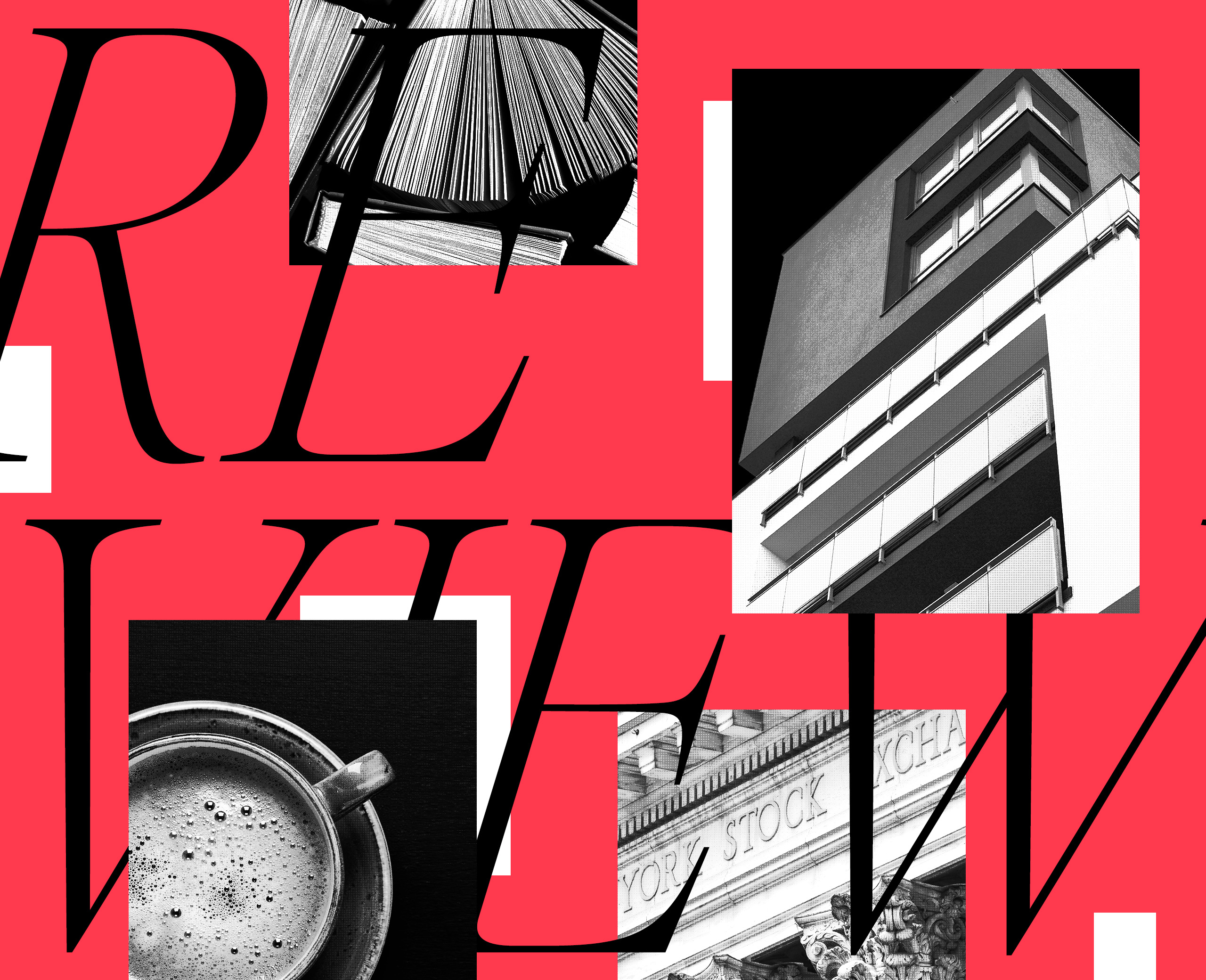
Founded in 2019, NYRA is a New York–based publication that publishes architecture criticism, though its reach extends far beyond that world. NYRA, unlike other design publications, aims to appeal to the literary crowd that older small magazines like n+1 and The Baffler draw. The latest issue includes a piece by Kate Wagner, The Nation’s architecture critic, on the demolition of the East Wing of the White House; an appraisal of the Villa Charlotte Brontë, in the Bronx; and an essay about castle keepers. And it’s not the only new effort of its kind. Recent years have seen the rise of a number of niche publications covering topics ranging from business to fine art to cemeteries: the New York Review of Finance, the Metropolitan Review, the Whitney Review of New Writing, the Graveyard Review, the Manhattan Art Review, the San Francisco Review of Whatever. These projects have been successful by some measures: their events are well-attended, and print editions can fetch ten dollars apiece. Chloe Wyma, NYRA’s deputy editor, told me that we’re living in the “reviewnaissance.”
That is a notable statement in part because the past few years have not been kind to critics. The Associated Press stopped publishing book reviews last year; Vanity Fair fired its chief critic; the New York Times reassigned four arts critics. Most recently, amid a round of mass layoffs, the Washington Post shut down its books section. And yet there’s a world where the art of the review is alive and well—and printed on cheap, single-color newsprint. If the review sections of newspapers are closing down, there’s a sense that this moment could make room for a meatier, weirder kind of criticism.
The “reviewnaissance” builds on a legacy. The New York Review of Books, the model upon which many of the new magazines are based, also came about during a crisis of sorts. In 1963, the Times and the Herald Tribune were both on strike, as were their book review sections. Over dinner one night, Robert Lowell, Barbara Epstein, Jason Epstein, and Elizabeth Hardwick, all in their thirties and forties at the time, were bemoaning the lack of passion and character in those sections (Hardwick wrote a Harper’s essay to that effect, “The Decline of Book Reviewing,” in 1959) when they decided to launch their own publication, which became the New York Review of Books. The strike presented a choice: “either create the kind of review that Lizzie”—Hardwick—“demanded forever or stop complaining,” Epstein wrote, recalling the evening in a 2013 piece for the magazine.
“Reviewing means evaluating, weighing, considering, judging—carefully, of course, and with an eye toward clarity and beauty. That’s an important part of engaging in democracy,” Emily Greenhouse, the current editor of the New York Review of Books, told me. “In a time when the newspaper industry is being demolished by billionaires, we can only say three cheers for more publications that champion critical thinking.”
Like the New York Review of Books, the new outlets try to publish “the unusual, the difficult, the lengthy,” as Hardwick put it in her Harper’s essay. “Our longest issue so far was eighty thousand words,” Samuel Medina, NYRA’s editor, said. “We probably put too much emphasis on word counts, and I doubt anyone in the world really cares. But for me it is a point of pride because it separates us from a typical design or architecture magazine or publication.”
Also present that night at TJ Byrnes was Michael Nicholas, an urban planner who works for the city and writes a column about coffee shops in the New York Review of Architecture called “the New York Review of Coffee.” Next to a coatrack from which a cluster of similar-looking black puffer jackets hung, he told me about his newest project, the New York Review of Finance.
Over the past few years, Nicholas, along with Paige Oamek and Niccolo Porcello, the NYRF’s other two cofounders, had been spending a lot of time thinking about hyper-financialization and the ways that process had made life harder for young people. They decided to found the NYRF last year because they felt traditional business journalism wasn’t tackling the subject in a way that appealed to their generation. For one thing, they thought, it wasn’t funny enough.
“Yeah, I mean, no one has a job or any money,” Oamek said. “So if you’re writing about finance for a young audience, it is ultimately kind of gallows humor.”
If finance and architecture are already taken, is there anything left to review? “The New York Review of New York is right there waiting for someone to take it,” Porcello said.
“I want the New York Review of Miami,” Oamek deadpanned. Then she brought up a friend, Leonor Grave, a bookseller and buyer, who recently started the Graveyard Review, which covers the world of horror films and reviews, she said, and “cemeteries high and low.”
“I think a lot of these reviews are playing off that same idea where you expect it to be this very hallowed publication, like the New York Review of Books or the London Review of Books, which do really incredible work,” Grave told me. “And it’s sort of like, okay, well, we’re not that, but we can take things seriously.”
Whitney Mallett started the Whitney Review of New Writing in 2023 as a journal of literary criticism that publishes author interviews and poetry as well as books, many of which are out on small presses like Semiotext(e) and Catapult. When I reached out, she made a similar point. “I do see my project as a laboratory for new ways to do criticism,” she said, adding that people only ever “find security briefly” in media jobs. Mallett acknowledged that she doesn’t enjoy that kind of security either, but said she is creating an alternative. “I’m building something I have control over,” she said.
For NYRF’s cofounders, the future feels uncertain, too. “It’s print media—it’ll either grow organically or it won’t,” Porcello said. The second issue comes out this spring. “But we’re having a lot of fun.”
Back at TJ Byrnes, Kira Petukhova, Charlie Richardson, and Max Gomez, three partygoers in their twenties, sounded hopeful enough about the future of print. While they are not writers—Petukhova works in PR, Gomez works at a tech startup, and Richardson is in advertising—they share an interest in being a part of the city’s cultural life.
“I think we’re losing the art of tangibility, and so it’s important to show up to things like this, grab a copy, and read,” Richardson said, hunched over the bar’s long communal table. Besides, “it costs as much as a matcha.”
Editor’s Note: This piece has been updated to reflect Chloe Wyma’s current job title.
Has America ever needed a media defender more than now? Help us by joining CJR today.