Sign up for the daily CJR newsletter.

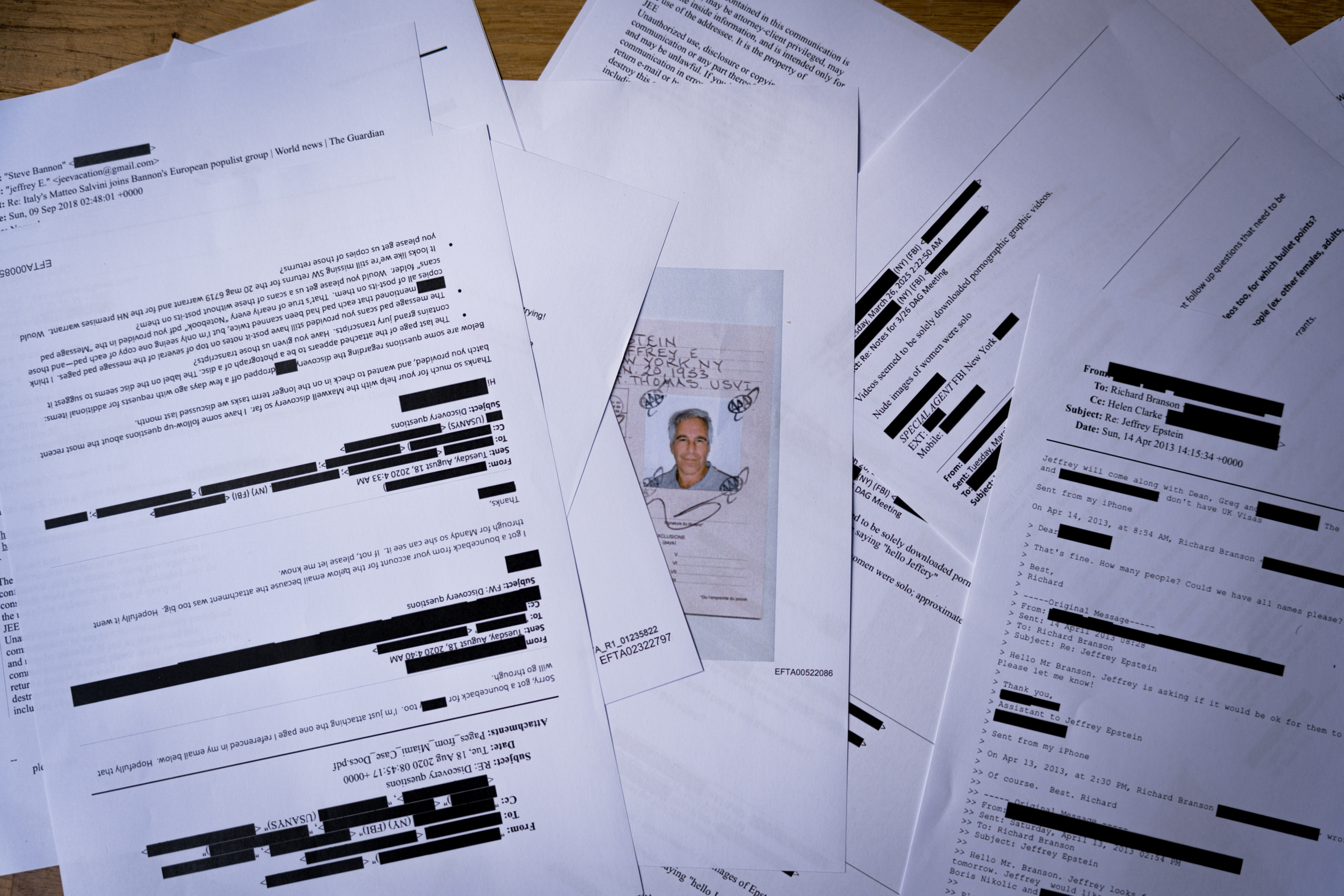
The release of files related to Jeffrey Epstein last month felt less like a disclosure and more like an information avalanche. The Department of Justice simply dumped millions of pages and thousands of videos without organization, explanation, or context. “The sheer amount of material” can feel “as indigestible as a spoonful of sawdust,” Jem Bartholomew recently wrote for CJR. And that may be the point: this is a form of disclosure that overwhelms more than it elucidates.
Enter Jmail, a brilliant Web project that lets you scroll through Epstein’s emails as if you’re in his Gmail inbox. Luke Igel, an AI programmer and the CEO of Kino AI, came up with the idea in November, when the House Oversight Committee released the first tranche of Epstein data. To make the project a reality, he recruited his friend and “tech jester” Riley Walz (I know “tech jester” doesn’t sound like a real thing; here is a New York Times story about Walz that explains the concept). They built the entire site in a single five-hour session. Walz unveiled it in an X post, writing, “We cloned Gmail, except you’re logged in as Epstein and can see his emails.” Igel feels this format allows readers to experience the shock of the emails in their original context: “We’re making this scandal hyperlegible,” he told me. “It was made legible through these documents, but hyperlegible to me implies that anyone who has ever used a phone can now very deeply dive into this very intricate scandal.”
Igel became interested in the Epstein story while he was a student at MIT. “I was a sophomore when the Epstein stuff happened, when he died. Tons of professors I looked up to were implicated in the scandal,” he said. “It felt like the next five years of my life was watching the rest of the world gradually, over time, become as obsessed with this whole scandal as I felt I was back in like 2020 and 2021.”
Jmail has drawn more than twenty-five million unique visitors and racked up more than four hundred and fifty million page views since the most recent release, Igel said: “It finally feels like it has kind of broken through into the mainstream in a way that it didn’t even a month ago.” Apart from an initial investment from Igel of about ten thousand dollars, the project is funded entirely by donations; there are more than ten volunteers who are helping build additional features and maintain the site.
You can now also search the archive by topic and person, scroll through Epstein’s photos in a Google Photos clone, and look through PDFs and other Epstein-related files in “JDrive.” All of this relies on AI. “None of that would have been feasible with our very, very small team of people, had it not been for just these amazing coding models that help us make the software,” Igel told me.
Igel doesn’t consider himself a journalist, but he calls Jmail a free, open transparency journalism project. “I think we are doing a newer form of journalism,” Igel told me. “So I think it’s like a new thing. I don’t think I’m the type of person who would have been in the terrain fifty years ago. But I do like building these things that help with it.”

Last Thursday, Mississippi Today reported that the National Park Service removed brochures from the Medgar & Myrlie Evers Home National Monument that called the murderer of Medgar Evers a racist. The article cited Park Service officials who “asked not to be named for fear of retribution.” Evers, a renowned civil rights activist, was assassinated in 1963 by a white supremacist named Byron De La Beckwith in the driveway of his home in Jackson, Mississippi.
Condemnation was swift. “The murder of Medgar Evers was an act of racial terror. That fact is not partisan. It is historical,” Martin Luther King III posted on X in response to the story. “Sanitizing history from violence and racism does not bring the country together. It weakens our understanding of who we are and how far we still have to go.” Senator Raphael Warnock also weighed in: “This administration is celebrating Black History Month by erasing it. We won’t let them get away with it.”
And it would indeed be appalling if the administration were attempting to erase the context of Evers’s killing. There’s just one problem: it appears the brochures may not have been removed or edited at all.
When Jaylin Smith, a Mississippi Free Press reporter, visited the site for a follow-up piece, she found that the brochures were still available and unedited. Keena Graham, the monument’s superintendent, told another Free Press reporter, Kevin Edwards, that she was unaware of any directive to scrub references to racism, noting that any planned updates were merely cosmetic and operational. Strange. “We just did the most basic thing you could do and sent our reporter to confirm the brochures were gone,” Ashton Pittman, the news director of the Mississippi Free Press, told me. “But when she got there, they were still there.”
Before publishing, Pittman contacted Jerry Mitchell, the author of the Mississippi Today report and a local journalism hero, to clarify the discrepancy. Mitchell maintained the brochures were missing during his own visit “sometime last week, likely on Saturday,” per the Free Press, and that he had been told they were “in the office.”
Then, about an hour after the Free Press published its report confirming the brochures were available, Mississippi Today posted a follow-up claiming the brochures had been “returned.” Absent from the update: any mention of the Free Press reporting. “That was a red flag from a journalistic point of view,” Edwards said.
Faced with this new, conflicting narrative, the Free Press went back to Graham for a final clarification: Had the brochures ever been removed, even for a second? Her answer was “Not one second. Not one day. That’s all I can tell you.”
When I spoke with Mitchell, he said he later checked his records and that he actually visited the home on Tuesday, January 20. He declined to share specifics about whom he spoke with while there, but he was certain that he had been told the brochures were not available. He also noted that his original reporting was based on information from multiple sources. Mitchell told me that he did not reference the Free Press because an Associated Press reporter had told his editor that the brochures were available earlier the same day, and he had already drafted his second story before speaking with Pittman. But here’s another weird thing: the AP does not appear to have published a story on this topic.
In another piece published yesterday about the Evers monument, Mitchell did reference the Free Press reporting, but did not include a correction to his earlier coverage. When I asked why, he said, “We’re still digging into this. I think that’s the correct answer.”
Pittman stressed when we spoke that the intention of the Free Press was not to discount Mitchell’s report: “This is not about undermining the credibility of another news organization. It is just about reporting the facts.” But he said it is important that the staff at the monument are not misrepresented. “We saw comments from people saying shame on the staff at this monument for removing his brochures, for complying with this directive. And the fact is they didn’t do that,” he added. “If there was wrongdoing that we could find, we would report it,” he told me, “but we just don’t believe that that happened.”
Nataisha Clay’s thirteen-year-old daughter, London, was born paralyzed, and her brain is underdeveloped. As a child with severe developmental disabilities, London is legally entitled to home healthcare in Florida. Instead, she has been languishing on a state waitlist since the day she was born.
Clay is not alone. In a shocking and ongoing investigation, Craig Patrick, a reporter for Fox 13 in Tampa Bay, has interviewed dozens of families like hers and found that more than twenty-one thousand severely disabled children in Florida are stuck on a waiting list for home care, despite the fact that the state has nearly nine hundred million dollars in designated funds that could be used to help them.
Patrick has been reporting on the backlog since 2005, through four governors and countless legislative sessions. In that time, the waitlist has only grown. Last year, he visited Clay at her home, where she was struggling to carry her daughter around and pleading for help from the state. In his most recent update, Patrick reported that Clay has since suffered a stroke. Her daughter has still not received care.
Hat tip to Bill Grueskin for the Mississippi item and to the Local Matters newsletter for the Fox 13 story. If you have a suggestion for this column, please send it to laurelsanddarts@cjr.org. We can’t acknowledge all submissions, but we will mention you if we use your idea. For more on Laurels and Darts, please click here. To receive this and other CJR newsletters in your inbox, please click here.
Has America ever needed a media defender more than now? Help us by joining CJR today.