Sign up for the daily CJR newsletter.

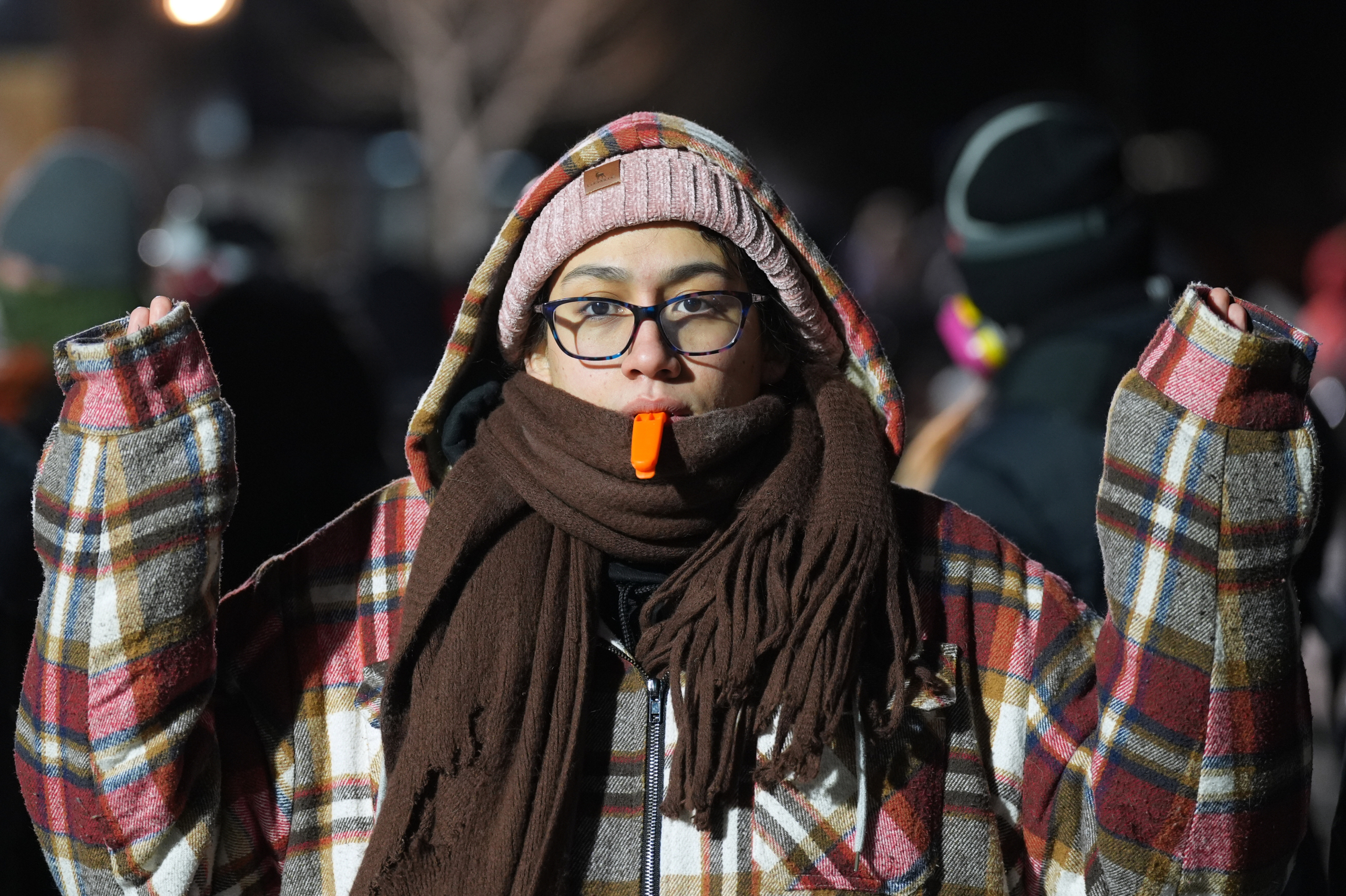
For more than a month, Minnesota has been at the center of a national immigration enforcement storm. This week’s first laurels go to all the local reporters who have risen to meet this unprecedented moment with extraordinary clarity and resolve.
In recent columns, I have highlighted the important work of the Minnesota Star Tribune, the biggest news organization in the state, and the Minnesota Reformer, a nonprofit newsroom with only five full-time staffers, which published the first bystander video of Renee Good’s shooting. I want to draw attention to a few other outlets, large and small, that are likewise working tirelessly in an often hostile environment to provide independent, accurate, real-time information.
- The local TV news stations in Minnesota—KARE 11, WCCO, KSTP, KMSP—remain the primary news source for most Minnesotans. On Saturday, Jana Shortal, a reporter for KARE 11, was shoved and pepper-sprayed by federal agents while reporting from the scene of Alex Pretti’s killing. She described the incident in a post on Instagram: “I yelled I am press don’t push me, he shoved me again. And then I was sprayed. Behind the line. I played by the rules doing my job. They did not.”
- Minnesota Public Radio is one of the largest and most influential public radio organizations in the United States, with a forty-five-station regional network. Its coverage of the immigration crackdown in Minnesota has served as an important reminder of the value of public media.
- Sahan Journal is a nonprofit digital news organization founded in August 2019 by a journalist named Mukhtar M. Ibrahim to provide dedicated coverage of the immigrants and communities of color in Minnesota who are at the center of the immigration action in the state. (CJR’s Riddhi Setty wrote about the role it’s played lately.)
- The Minnesota Daily is the independent student newspaper of the University of Minnesota. It is the largest college paper in the country and has been published since 1900.
There is plenty of evidence that when local news disappears, democracy suffers. The work of reporters on the ground in Minnesota has clearly shown why hearing from local journalists is essential. As Kathleen Hennessey, the editor of the Star Tribune, said to Max Tani at Semafor: “You cannot be an informed person and just sort of scroll through social media, it’s distorting and it doesn’t add clarity, I don’t think. Ultimately, that’s what journalism is in for. You, you need to shed some light and bring true understanding.”
“The closer we got, the louder and more intense the gunfire became, and the street was covered in blood.”
“I know people who took their [dead] children not to a hospital or an official doctor because they’re afraid that [authorities] would seize their bodies and not give it back to them. They took the body and buried it in their gardens or farms so it wouldn’t fall in the hands of the state.”
“A city turned to ash before our eyes, and we burned with it.”
In December, an uprising erupted in Iran that carried into the new year. On January 8, the country was plunged into darkness when the regime shut down most internet and phone access. The near-total communication blackout provided cover for a sweeping crackdown, one of the most violent periods in Iran’s history.
Painting an accurate picture of life in Iran during protests can be extremely challenging. During the blackout, it became exceedingly difficult. Accounts of shooting sprees, bodies strewn in the street, and mass burials have been slowly trickling out through journalists and activists in Iran willing to risk their lives to share the toll of the government’s brutality.
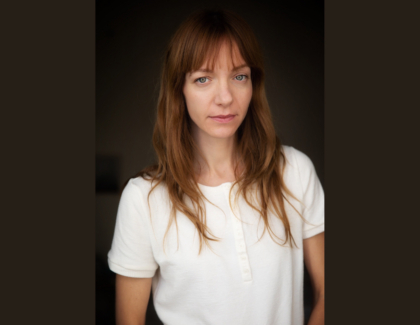
Much of what we know is because of their courage and the meticulous work of Iranian journalists such as Nilo Tabrizy, a visual forensics reporter for the Washington Post, who works in the United States. She’s been covering Iran since 2017 and is the coauthor of For the Sun After Long Nights: The Story of Iran’s Women-Led Uprising, a book about women-led protests in Iran in 2022. The quotes above come from a detailed account she produced this week with her colleagues, examining a particularly violent episode in which security forces massacred protesters as they fled a burning market. “The level of violence that I’ve seen is completely incomparable to any other protest that I’ve covered in Iran,” she told me. “Just the amount of footage of people who’ve been killed, the amount of footage that you can see blood on the pavement or the horrifyingly grim visuals from the Kahrizak morgue. I’ve never encountered that.”
Tabrizy’s reporting often involves researching, organizing, and authenticating videos and pictures sent to her by sources through secure channels or shared on social media. But she emphasizes that to truly understand what is happening in the country, journalists must find ways to connect with voices on the ground. “It’s not just verifying visuals,” she said. “You need someone who was in that moment who can speak to the video or maybe who themselves was actually in the video or filmed it. That is deeply important. You have to really blend open-source reporting and traditional reportage.”
For Tabrizy, the work is deeply personal, not only as a record for the outside world but also as an act of bearing witness for Iranians themselves so they don’t feel abandoned. “It’s important to let people in Iran know that we are listening and we’re covering everything that we can, especially when there’s an internet crackdown and people do not have connectivity,” she said, “that we are paying very close attention to what’s going on.”

In the wake of the shooting of Pretti, the nation’s four leading newspapers—the New York Times, the Washington Post, the Wall Street Journal, and the New York Post—all published editorials sharply critical of the Trump administration’s immigration crackdown and handling of the fatal encounter. (Although the Journal did throw in this widely criticized effort to blame the victim: “Pretti attempted, foolishly, to assist a woman who had been pepper-sprayed by agents.”)
The once-great Chicago Tribune handled the national crisis differently. Two days after Pretti was killed, after Vice President JD Vance reposted Stephen Miller’s incendiary and false accusation that Pretti was an “assassin,” the Tribune published an editorial celebrating the “happy news” that JD and Usha Vance, the Second Lady, are expecting.
“You don’t need to share the Vances’ political views to be happy for them,” the editorial proclaimed. “A new life always invites optimism about the future.” It was possibly the most tone-deaf and ill-timed commentary of the week. For many Americans, the mood on Monday was marked less by optimism than by unease.
Under different circumstances, that topic would have been harmless, if banal. But it was hard not to think immediately of another child: Liam Conejo Ramos, the five-year-old Minnesota boy in a blue knit bunny hat whose image went viral after he was swept up in an immigration raid last week. He and his father remain in the custody of Immigration and Customs Enforcement.
At least the editorial board can take comfort in knowing that this is not the worst editorial the Chicago Tribune has ever run. That dubious distinction still belongs to a column, published on the tenth anniversary of Hurricane Katrina, headlined “In Chicago, wishing for a Hurricane Katrina,” which has since been scrubbed from the paper’s website.
Inpatient mental health facilities are supposed to be safe havens for people in crisis. But in an extensive and troubling Seattle Times investigation, reporter Hannah Furfaro finds that medical staff in Washington State and at least twenty-eight other states have used “spit hoods” to subdue patients, despite risks that include psychological harm, suffocation, and even death.
Spit hoods are mesh or fabric sacks that can be placed over a person’s head to prevent spitting or biting. They are typically used by law enforcement, corrections officers, or medical staff. But unlike in law enforcement, where their use is often regulated or outright banned, spit hoods in medical settings are subject to little oversight or accountability. The Times describes them as a method of restraint “so dehumanizing and dangerous that experts say it should never be used.”
“It makes me feel really ill,” one former administrator at a nonprofit mental health facility told Furfaro, adding that they can’t “think of much else that’s legal that you can do that is more dehumanizing than covering somebody’s entire head and face.” According to Furfaro’s reporting, spit hoods have been used on people with serious heart conditions, sex trafficking victims, teenagers following suicide attempts, and children as young as eight years old.
If you have a suggestion for this column, please send it to laurelsanddarts@cjr.org. We can’t acknowledge all submissions, but we will mention you if we use your idea. For more on Laurels and Darts, please click here. To receive this and other CJR newsletters in your inbox, please click here.
Has America ever needed a media defender more than now? Help us by joining CJR today.