Sign up for the daily CJR newsletter.
For months, Sahan Journal, the Minnesota-based nonprofit news outlet, has been covering the Trump administration’s stepped-up measures against immigrants in the Minneapolis–St. Paul area, reporting on US Immigration and Customs Enforcement arrests and how people should approach interactions with ICE. Earlier this month, as the Department of Homeland Security launched an operation targeting Somali immigrants and President Donald Trump referred to the community as “garbage,” Sahan Journal dug in, expanding its coverage of the administration’s policies and their impact on local Somalis.
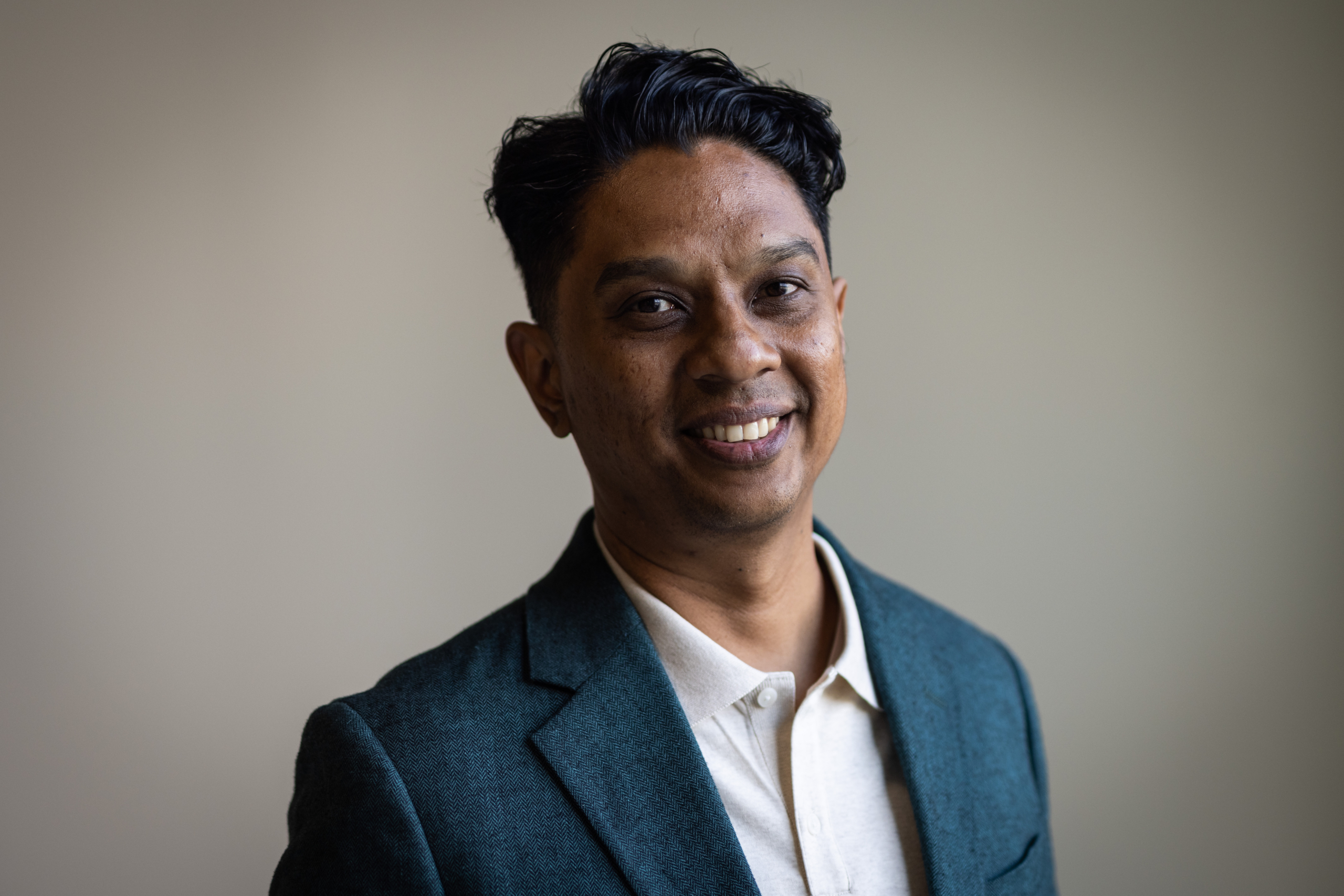
Created in 2019, Sahan Journal is dedicated to covering immigrants and people of color in Minnesota, which is home to the world’s largest Somali diaspora community. Executive editor Vanan Murugesan is not a journalist by training; he describes himself as a news junkie with an ambition to disrupt the current media financing death spiral. Murugesan set out to be a mechanical engineer, but felt his work lacked meaning and joined the nonprofit sector instead, working most recently with an organization that provides family support, civic engagement, and job readiness programs. When he was offered the top job at Sahan Journal last year, he saw a chance to combine his passion for journalism with his nonprofit expertise.
I spoke with Murugesan this week about how his publication is covering immigration under increasingly trying circumstances, the risks to frontline journalists, and the role of local coverage when legacy media falls short. Our conversation has been edited for length and clarity.
RS: Sahan Journal is built for immigrant communities. Looking at Portland, Los Angeles, and Chicago, were you gearing up to cover ICE action, or was it a shock when things started happening in Minnesota?
VM: It wasn’t a surprise at all. We could see the trend, and knowing that Minnesota is a blue state and Minneapolis and St. Paul are blue cities, it’s almost like it would be ridiculous if it didn’t happen, right? We’ve been learning and observing what’s been happening in other cities; we’ve been talking to newsrooms in those places and taking steps to get us ready for this moment. But personally—and I don’t think my reporters feel this way—when it did happen, it was still like, Woah. The scale, the frequency, and the intensity were big for me.
What steps did you take to prepare?
One of the obvious steps was around physical safety. We’ve had the ability to not just purchase safety equipment, but learn from other newsrooms about what they purchased, like models of eye protection, gas masks, wipes. Before a field assignment, everyone goes through some kind of safety briefing. We are blessed that we have a First Amendment lawyer who does pro bono work for Sahan, and we write this person’s name and phone number on reporters’ hands before they go out. The priority is always safety, and if the reporters feel like at any moment their safety could be compromised, we encourage them to leave.
I want to stress that we have reporters that come from our immigrant communities. Our editor in chief is very mindful of this, and there is an internal practice that reporters aren’t necessarily assigned coverage solely based on their identity. For example, we do have a Somali reporter, and he covers criminal justice. But it’s not, “Hey, you’re the Somali guy, cover the Somali community.” In fact, we try to provide some form of separation, because we don’t want them to be pigeonholed. There’s also some level of emotional and social burden of being that person—they live in that community, they have friends and family in that community, and it can be an extra burden if you’re also covering that. We learned this from the post–George Floyd newsroom coverage.
One of our main reporters that covers our Somali community is Joey Peters. He’s a six-foot-five white guy and obviously not Somali. But with the work he’s done, the quality of the journalism and the consistency that he’s shown in his coverage, he’s opened himself up to a lot of the folks within the Somali community to tell him their stories.
How do you ensure the safety of reporters who are not US citizens covering immigration?
I’ll be honest: at the beginning this was a question, and now it doesn’t matter, because what we’ve seen is that ICE and certain authorities will do whatever they want, regardless of your citizenship status. The practices we incorporate are the same for everyone, but I think my videographers, who are carrying cameras, are most frequently targeted. They are US citizens, but they’re from an immigrant background, and I can assure you no one is checking citizenship before reacting in some way.
What has been your editorial strategy in covering this increase in immigration enforcement?
This is not a new thing for us. It’s kind of our bread and butter, and we’ve been doing it since day one. I think the real difference here, right now, is actually the intensity of the coverage, the frequency, and the national spotlight. We’ve been doing this type of story since January of this year, and we’ve been covering a lot of different angles, but now, on a daily basis, there’s a national spotlight on ICE raids, and the frequency has been really heavy.
We have a main immigration reporter, but lately it’s definitely been all hands on deck. It’s not our strategy to go after every single ICE raid. We do ask ourselves, “What is it that we can offer to that story, to our reader, that a national or legacy outlet cannot?”
One of the things that immigrant communities and communities of color commonly face is that when there’s a crisis or tragedy that’s impacting them, the first few days or weeks, there’s a lot of attention paid to it by either local or national outlets, and then they are gone. It feels a bit like you’re being used and then you’re no longer part of the news cycle. The aftereffects continue to linger in the community, and that’s what Sahan Journal was created for. We stay with the story to understand those effects. Our strongest strength is the trust we build within the community. Consistently, because of that, we are able to provide the type of coverage that legacy media may have a slightly harder time doing because they don’t have that infrastructure.
At the end of the day, I’m a bit kumbaya-ish, but having national and local outlets work together on these types of situations actually would benefit the reader and the audience much more. So what needs to happen is collaboration.
Have you found that Sahan Journal is more on the national radar or the president’s radar now because of the nature of your coverage?
When you say radar, I keep thinking about how he calls out CNN or NBC. He’s not personally called out Sahan the way he picks on the national outlets, but there was an incident a few months ago, when Kristi Noem came to do a press conference, and the Sahan Journal and Minnesota Reformer reporters weren’t allowed in the room. The reason they gave was a lack of space, and my editor in chief lodged some kind of complaint. It felt somewhat like we were being picked on by the administration.
I’m curious what your thoughts are on the role of the media in an environment where news reporting can be used selectively to justify a violent government response?
That’s a tough one. Some of our strongest coverage in recent years was around the Feeding Our Future scandal, in which more than seventy-five people faced federal charges for stealing two hundred and fifty million dollars from a federal child nutrition program in Minnesota during COVID. One of the main leaders of the scandal was a white woman who led the Feeding Our Future nonprofit, but there were also a number of individuals, characters, and organizations that were tied to the Somali community. Sahan Journal’s founder Muktar Ibrahim is Somali. He endured a lot of attacks from all sides, including from the Somali community, about covering this kind of incident. But in his mind, it’s news. It’s something that needed to be reported. He believes this, and I believe this.
The point is, we cannot control how other people use our stories. Our role as reporters is to cover an issue. When it comes to coverage that involves immigrant communities, Sahan does it better than anyone else in Minnesota because of the trust we’ve built with those communities. Not only are we speaking with sources, but we follow the story for a long time. Yeah, it might be used one day by someone who wants to harm the community. But our job is to cover the news. We do it responsibly, with care, not just to the communities, but with our reporters. We don’t make tons of money just because a million people read the story, so we are not clickbaity in that sense. We take time to get it right. If people want to cause harm, that’s something that we can’t avoid. And we hope there are responsible leaders in other sectors and other parts of the community that can do something about that.
Has America ever needed a media defender more than now? Help us by joining CJR today.