Sign up for the daily CJR newsletter.
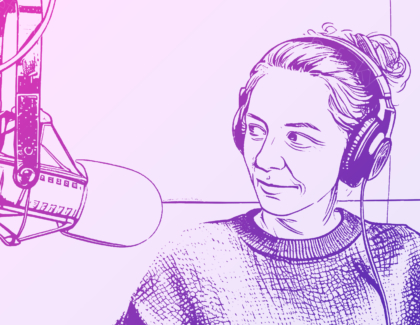
Kim Kalunian, a reporter and anchor at WPRI 12, in Providence, also known as Channel 12, has lived in the area all her life. “What I loved about reporting was the fact that I was reporting on a place I knew intimately well,” she told me. On Saturday afternoon, when a colleague called to let her know that a mass shooter had opened fire on Brown University’s campus, Kalunian was at home, in a Providence suburb. She knew she had to drive to the scene.
Scanner traffic can be hard to understand. Erroneous reports, including one that claimed a suspect had been taken into custody, started circulating fast. In the aftermath of the attack, one of at least seventy-five school shootings this year, it was revealed that two students—Ella Cook and Mukhammad Aziz Umurzokov—had been killed. Nine others had been injured. On Sunday, local police reported they had a person of interest in custody. On Monday, that person was released. Authorities have not yet identified a shooter. “Frankly, I think the entire state is grieving,” Kalunian said. Her account has been edited for length and clarity.
It was a strange day, as you might imagine. My husband, Ted, is actually one of my colleagues. He also works at Channel 12 as a reporter, and he had gone in to work on something else that afternoon. We have a three-and-a-half-year-old, so I was home with her, and when I’m with her, I try not to look at my phone, because parenthood is all-consuming—especially when you’re parenting a toddler. That day, I happened to have my Apple Watch on, which I normally don’t at home. Tim White, our chief investigative reporter, called me. It made me a little nervous, frankly, because Ted wasn’t home. It seemed unusual. And so I rushed to get my phone to see what was going on. When I picked up, Tim said, “Are you aware of what’s going on?”
I opened my email and looked at this text that I had gotten from my husband and realized that something very serious had happened. I had my daughter with me, so I couldn’t spring into action immediately. Ironically, though, I had been scheduled to do an event that night, and my mother was on her way to my house to take care of her. And so once she arrived, which was pretty soon after all this unfolded, I was able to say, “I can’t go to that event. I have to go to the scene.”
In the beginning, we were trying to get a sense of just how serious this was. We were listening to the scanner traffic, but sometimes that can be murky or inaccurate. Then we started to get alerts from Brown University’s security system, which went out to the campus and beyond, so we started to get a better handle on things. Later, there was this erroneous report that the suspect had been taken into custody—that turned out not to be the case. So there was confusion over that.
I was calling my news director and finding out where she wanted me to go. I just got in the car and started to drive to Providence because it wasn’t clear. I was thinking to myself, “Should I head to the hospital? Should I go to the police department? Straight to the scene?” Then we heard there was going to be a briefing, so I started to drive toward that, because that felt like a good place to start, and it was just a couple of blocks away from the scene. I caught the tail end of the briefing, and my phone was just sort of blowing up with people from the newsroom saying, “Can you meet a photographer? Can you get closer? We need you on TV.”
We needed to get this information out to the public. I tried to navigate these very familiar streets, but they were all blocked off with crime scene tape and police cruisers. And because so many of the streets in this area are one-way, I had to circumnavigate the entire Brown University campus to get around. Finally, I met up with my photographer, Ryan. I parked my car, walked to the scene, and took it all in. That was the hardest moment.
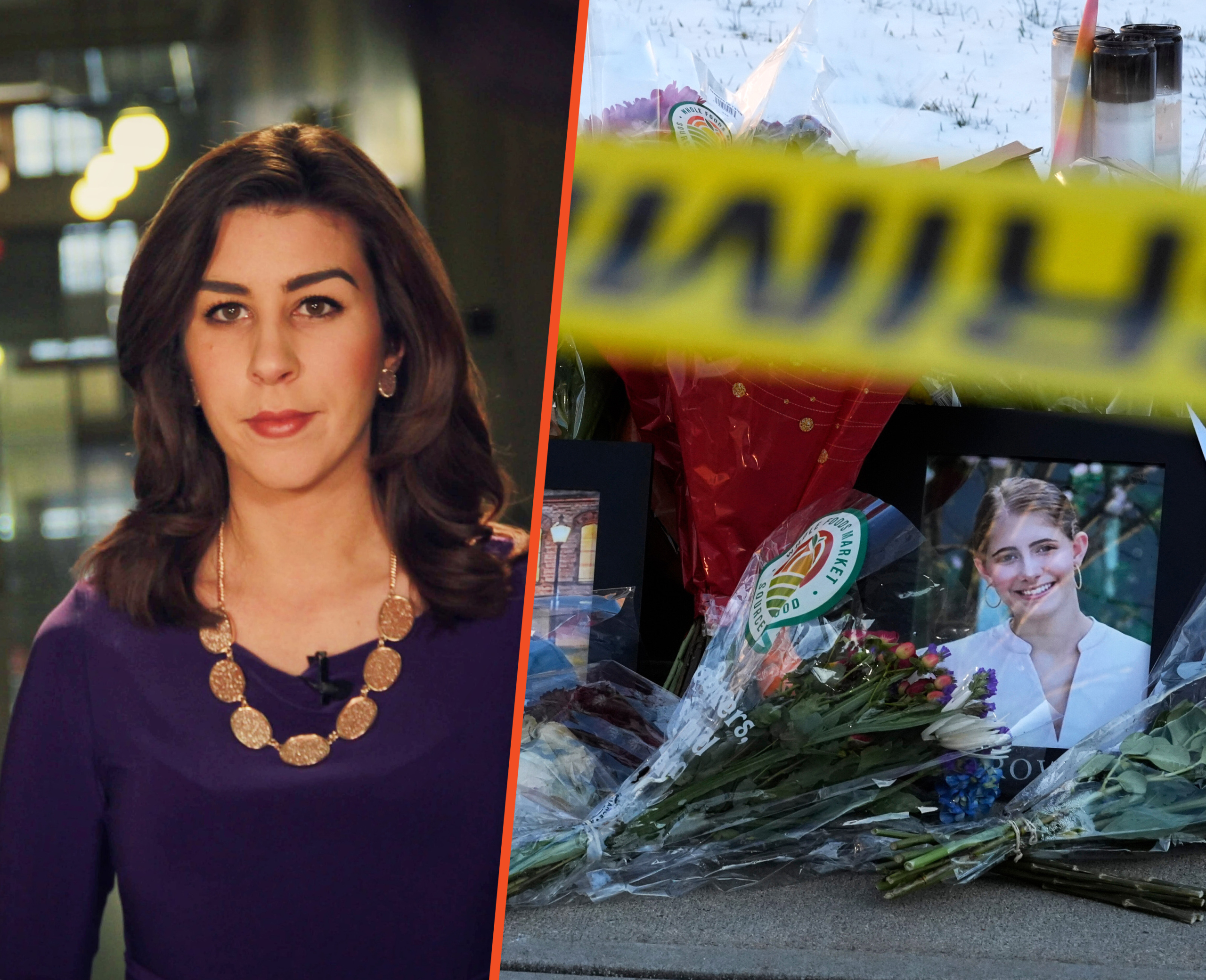
The place where I was live on Saturday night was this really busy thoroughfare called Thayer Street. It’s a major retail area—lots of shops, lots of restaurants—so it would have been flooded with people who were out and about on a Saturday night on a typical evening: students, their families, people in Providence having a good time a week and a half before Christmas. Instead, it was circled with crime scene tape, and there were flashing lights and police in tactical gear with long guns. There were no pedestrians, there were no cars. I just got goosebumps all over my body. It was a rite of passage in high school to be able to go to Thayer Street with your friends and hang out. That’s where I came of age. To see it in this sort of state was just so haunting.
We also had no idea where the shooter was. As we talk now, we still don’t. But that was in the back of my mind, too. When I’m broadcasting live, I always want to be true to how I’m really feeling. The experience was somber and surreal. I wanted to try to convey that to people at home. But it’s also a balance, right? Because this was a potentially dangerous, horrifically sad situation, and yet our job as reporters in that moment is to find a place of calm within ourselves so that we can convey information to viewers in a way that doesn’t feel frenetic, or frantic, or fear-based. Sometimes, that’s hard to do, because in the pit of your stomach, you’re wondering, “Is the gunman still in this area? Are we safe?” These were questions we certainly couldn’t definitively answer at the time. But adrenaline was flowing. I had a job to do, so I was trying to clearly communicate to the people at home what I was seeing, what I was hearing from the police, what I was learning, what the questions I was still trying to answer were.
It hadn’t dawned on me that all of these empty storefronts around me weren’t actually empty. There were people inside hiding. When I started to text some people I knew from the Brown community, I was able to get in touch with someone who told me there was a group of three hundred in the basement of this Brown University building waiting for police to tell them it was okay to leave. I realized that I was in the middle of this scene that seemed so quiet and deserted, but that’s because everyone was still fearing for their safety. That was really chilling.
Later that day, they started to bring in city buses to evacuate people from these buildings, and I started to see students and staff pour out from all sorts of places. I began seeing people in the windows of the Brown University bookstore. Slowly, over the course of the night, hours and hours after the shooting had happened, everyone was slowly allowed to go to a different location, and then hours after that, allowed to go home. So it was certainly a lot to process. I think I’m still processing it.
Has America ever needed a media defender more than now? Help us by joining CJR today.