Sign up for the daily CJR newsletter.
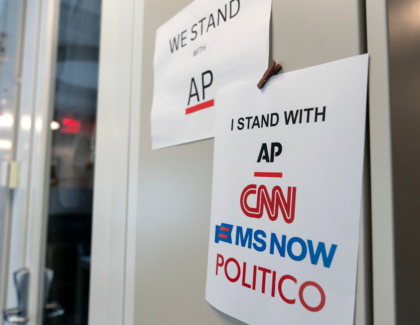
In 2025, CJR extensively covered alarming assaults on free speech and press freedom in the United States and across the world. I am referring to the killing fields of Gaza, but not only that. I am also thinking of the banning of the Associated Press from the White House’s press briefing room in February, and the absurd new rules imposed on the Pentagon press corps in October, as well as physical attacks by Immigration and Customs Enforcement on journalists, and the deportations of at least two media figures, Mario Guevara and Sami Hamdi. Billionaires are fighting for control of media companies, and many media workers of color are being pushed out of their jobs. In short, this year has felt like an endless horror film.
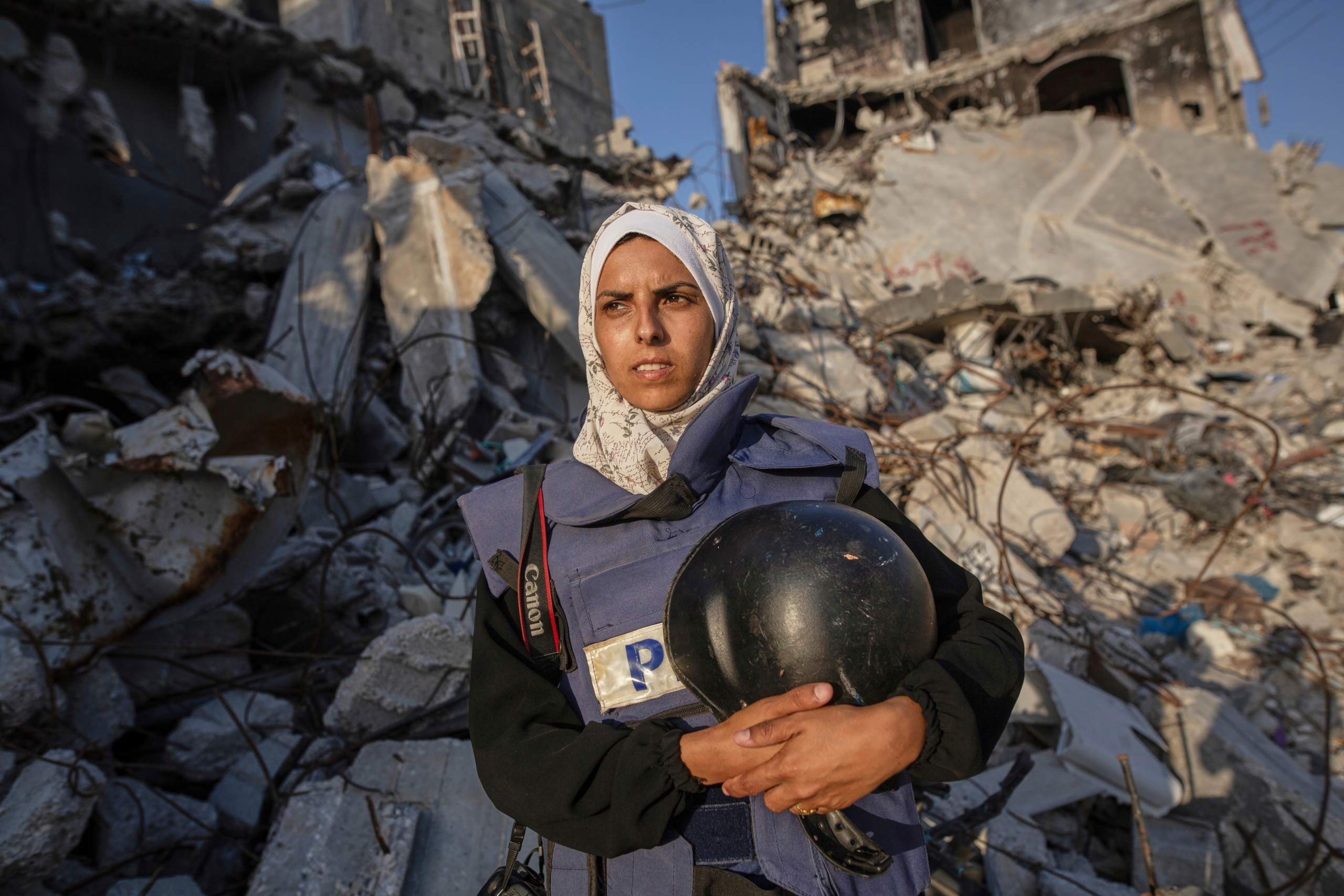
I started 2025 by reading Omar El Akkad’s One Day, Everyone Will Have Always Been Against This—a book that hit me strongly because it spoke more eloquently than I could have ever imagined about the fraught relationship between Western institutions and someone like me: a Moroccan, Muslim journalist closely following the devastation of Gaza. According to the Committee to Protect Journalists, nearly two hundred and fifty journalists and media workers have been killed in Gaza since October 7, 2023. (Other sources put the count higher.) These journalists also faced acute starvation; in a CJR story about the famine from July, Meghnad Bose quotes a journalist saying, “I used to chase the truth. Now I chase calories.” In so many instances, reporters in Gaza were targeted precisely because they wore their press vests.
The second chapter of El Akkad’s book is called “Witness.” It discusses “utterly meaningless” words on the killing of journalists by Antony Blinken, the former secretary of state. El Akkad writes, “The journalists who bring the reality of the world to light are daily slaughtered. Meanwhile an embarrassing number of their Western colleagues, who for the most part fear no such outcome but accept it as the sad lot of those distant others, travel within the protective cocoon of people like the very concerned secretary and measure his vacuous declarations of solidarity with their craft as just another part of the horse race, just another part of the game.”
In March, months before he won the National Book Award, I interviewed El Akkad for CJR. He told me that accolades no longer meant much to him, because “I’ve seen them not be applied when the moment called for it most vehemently.” In other words, being compensated and rewarded for urgent, rights-defending work by the very institutions that have failed to express the same urgency or values rang hollow to him. This sentiment was something I would spend the rest of the year thinking about.
In August, CJR asked an essential question: What can the media do collectively to stop Gaza from being the deadliest place for journalists in the world? We collected almost two dozen responses from journalists, academics, and advocates to think through solutions. My colleague Azmat Khan wrote about the “muted responses” of journalism organizations to the killings of journalists by Israel: “A growing number have come to view this, ultimately, as a failure to contend with man-made human catastrophe in Gaza, including for reporters—and it has marked a breaking point in their relationships with legacy news institutions.” Atossa Araxia Abrahamian also put it well when she wrote, earlier this month, “Over the past two years, Gaza has shown governments around the world just how much they can get away with when it comes to silencing the press.”
To me, the way the media industry has responded to the horrors happening in Gaza has not come as a surprise. My own past experiences with extractive journalistic relationships, where my local knowledge was indispensable to news companies while my labor was erased by several peers, made the dehumanization I’ve witnessed these past two years feel inevitable rather than anomalous.
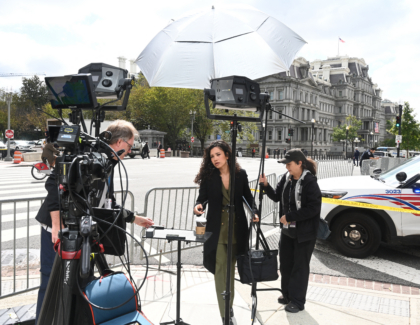
A crisis abroad can only weaken journalism at home. What we tolerate elsewhere eventually hurts us—and the pressure from outside the industry is real. The second Trump presidency has been marked by daily assaults on the press. I mean not only viral sound bites, but also real restrictions. In April, I profiled Karoline Leavitt, the White House press secretary, and spoke to reporters who called the atmosphere in the briefing room “surreal.” CJR’s Ivan L. Nagy wrote a suite of stories about new policies implemented by the Pentagon that exchanged accreditation for agreements from reporters to have their material vetted. As a result, the Pentagon press is now staffed with MAGA sycophants.
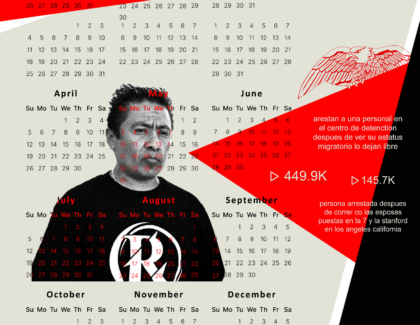
The Trump presidency will also be defined by the deportations of Guevara and Hamdi and by ICE’s violence against US journalists. On CJR’s podcast, The Kicker, Josh Hersh talked with journalists from Chicago’s Block Club, which joined several of that city’s news outlets in a lawsuit against the Trump administration and other top officials, filed in US District Court, alleging that federal agents had used “extreme brutality” against the press and others at protests. “We have seen clashes and we have seen federal agents, initially just ICE—then Border Patrol, led by Gregory Bovino—using chemical weapons on protesters and journalists,” Francia García Hernández, a reporter for Block Club, said. Stephanie Lulay, Block Club’s co–executive editor and cofounder, told Hersh, “Four of our journalists have been shot with pepper spray bullets and tear-gassed while covering protests.” Just last week, my colleague Jem Bartholomew covered a new report from the Freedom of the Press Foundation that documented at least thirty-two arrests and a hundred and seventy assaults on journalists so far in 2025.
Through all of this, journalism survived—as reporters continued to do their work in spite of attacks on their dignity and safety. In so many instances it continues to thrive. I have never been more in awe of the people who are delivering timely and essential reporting around the world—such as the more than twenty journalists who were arrested in October for trying to reach Gaza. But at the same time, I fear that press freedom is slowly and quietly eroding while institutional silence and apathy do nothing to protect it. Freedom is never lost at once.
Other Notable Stories…
By Jem Bartholomew
- Three hours before broadcast, CBS News abruptly pulled a Sunday-night report on CECOT, the Salvadoran megaprison where the Trump administration deported more than two hundred and fifty Venezuelan migrants earlier this year, sparking a backlash from one of its high-profile correspondents. According to Semafor, Bari Weiss, the editor in chief recently installed by David Ellison—I wrote about Weiss for CJR in October—had “serious concerns about the piece,” with the network holding the segment “pending comment or an interview with White House officials next year.” In an email to colleagues last night seen by the Wall Street Journal, reporter Sharyn Alfonsi said that Weiss “spiked our story,” which she said “was screened five times and cleared by both CBS attorneys and Standards and Practices.” Alfonsi said the decision was political, not editorial. (For more on the ordeals of 60 Minutes, read this reported feature from the fall by Adam Piore.)
- The Justice Department released thousands of files relating to investigations into convicted sex offender Jeffrey Epstein on Friday afternoon. (The timing was notable, as Jim Derogatis and Seth Stern write for CJR, as it follows the R. Kelly secrecy playbook.) The DOJ said it will keep releasing documents in the coming weeks, with hundreds of thousands of files reportedly still being reviewed. That defies the instructions of the Epstein Files Transparency Act, passed on November 19, for all files to be released within thirty days. In the meantime, news organizations set about sifting through Friday’s cache, but the files were heavily redacted and contained few revelations. (The release appeared to shield Donald Trump while focusing the spotlight on Bill Clinton; a Clinton spokesperson said he was being used as a “scapegoat.”) Trump’s reluctance to unearth the Epstein files has led to a fracturing of his MAGA base, with, as Emily Bell wrote for CJR earlier this year, the president “now confronting the outcome of a media ecosystem he invented, one based on panicky, consensus-squashing conspiracy theories.”
- On Wednesday, Brendan Carr, the chairman of the Federal Communications Commission, appeared before an oversight hearing by the Senate Committee on Commerce, Science, and Transportation. The testimony made headlines for Carr’s comment that the FCC “is not an independent agency, formally speaking”—a statement that alarmed many observers as another instance of power flowing toward the executive branch under Donald Trump. (In the minutes after Carr’s comments, Axios’s Sara Fischer spotted that the FCC website was updated to scrub “independent” from the agency’s description.) Carr has already faced criticism for wielding the FCC like a political cudgel, pressuring ABC over late-night host Jimmy Kimmel and exacting promises from Skydance to remake CBS News in its takeover of Paramount. Texas Republican Ted Cruz, the Senate committee chairman, told Carr on Wednesday: “Democrat or Republican, we cannot have the government arbitrating truth or opinion.” (For more Carr’s allegiance to Trump at the FCC, read our piece by Kyle Paoletta.)
- Over the past year, Susie Wiles, the White House chief of staff, has spoken eleven times to Chris Whipple, a Vanity Fair writer, addressing a range of topics with unexpected candor. But when the piece finally went live on December 16—alongside close-up portraits of administration officials—Wiles attacked the write-up. (Among her comments: Trump has “an alcoholic’s personality,” JD Vance is “a conspiracy theorist,” Elon Musk is an “odd duck” and “avowed ketamine” user, and Trump will “keep on blowing boats up until [Venezuelan leader Nicolás] Maduro cries uncle.”) While not denying the veracity of the quotations, Wiles said on X: “Significant context was disregarded” and much material was “left out of the story.” Christopher Anderson, the photographer for the story, said about his blemishes-and-all photo shoot: “It was my attempt to circumnavigate the stage-managed image of politics and cut through the image that the public relations team wants to be presented.”
- Paramount Skydance suffered another rebuff last week in its takeover attempt of Warner Bros. Discovery—this time for more than 108 billion dollars—with the board rejecting the offer, in favor of progressing with Netflix’s takeover, in a reported unanimous vote. According to Variety, that was despite Ellison, Paramount’s chairman and chief executive, offering Warner Bros.’ David Zaslav a pay package worth hundreds of millions of dollars. (Ellison reportedly texted Zaslav: “It would be the honor of a lifetime to be your partner and to be the owner of these iconic assets.” Zaslav did not reply.) Meanwhile, the Financial Times reports that Soo Kim, the founder of New York hedge fund Standard General, has been approached by at least one major Warner Bros. Discovery shareholder about acquiring CNN.
- On Thursday, the UK prime minister’s office announced a shake-up of press briefings. Instead of twice-daily, on-the-record briefings from the prime minister’s spokesperson to political journalists (“the lobby”), the plans call for one briefing a day. This will also sometimes be replaced by a press conference, where content creators and trade journalists may be invited, at which questions must be submitted to officials ahead of time. The government defended the plans as an attempt to broaden scrutiny. But the UK Society of Editors condemned the move, saying it could limit accountability. The Foreign Press Association (FPA) told CJR it’s part of a wider distaste for scrutiny since the Labour government was elected in 2024. “Labour has effectively canceled the foreign lobby,” Deborah Bonetti, the FPA director, said, citing accreditation struggles at recent summits and conferences leading to “a broken relationship.” “Their questionable approach to press scrutiny has now spilled into the UK lobby,” Bonetti said.
- And the BBC said it will defend itself against a ten-billion-dollar lawsuit filed by Trump over the editing of a speech he made on January 6, 2021, in a 2024 documentary. As I wrote for CJR last month, “The BBC’s error is regrettable not so much for its content—the program’s larger point that Trump was cheering on an antidemocratic riot still holds true—as for how it was ultimately weaponized to call the broadcaster’s legitimacy into question.” As right-wing foes circled, the director general and head of BBC News were forced to resign. Last Monday, Trump sued in Florida—claiming defamation and violating a trade practices law—ratcheting up his pressure on the press following his lawsuits against the New York Times and Wall Street Journal. But the case itself, legal scholars have said, holds little merit. “Trump must show knowledge of falsity or reckless disregard for the truth,” a very high bar, said RonNell Andersen Jones, a University of Utah law professor, in comments to CNN.
Has America ever needed a media defender more than now? Help us by joining CJR today.