Sign up for the daily CJR newsletter.
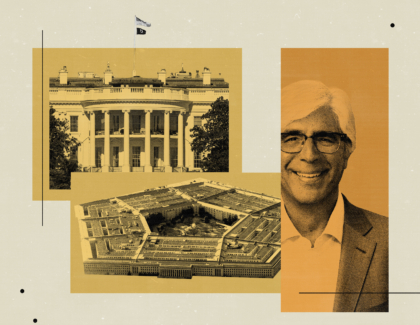
On January 21, the day after his second presidential inauguration, Donald Trump walked into the White House’s Roosevelt Room tailed by three billionaires. He was announcing a major AI initiative, and offered warm words for the technologists beside him: Sam Altman, chief executive of OpenAI; Masayoshi Son, chief executive of SoftBank; and Larry Ellison, executive chairman of Oracle. “That’s a massive group of talent, and money,” Trump said. He saved his most lavish praise for Ellison, whose gifts went “way beyond technology,” he said—he’s “sort of CEO of everything.”
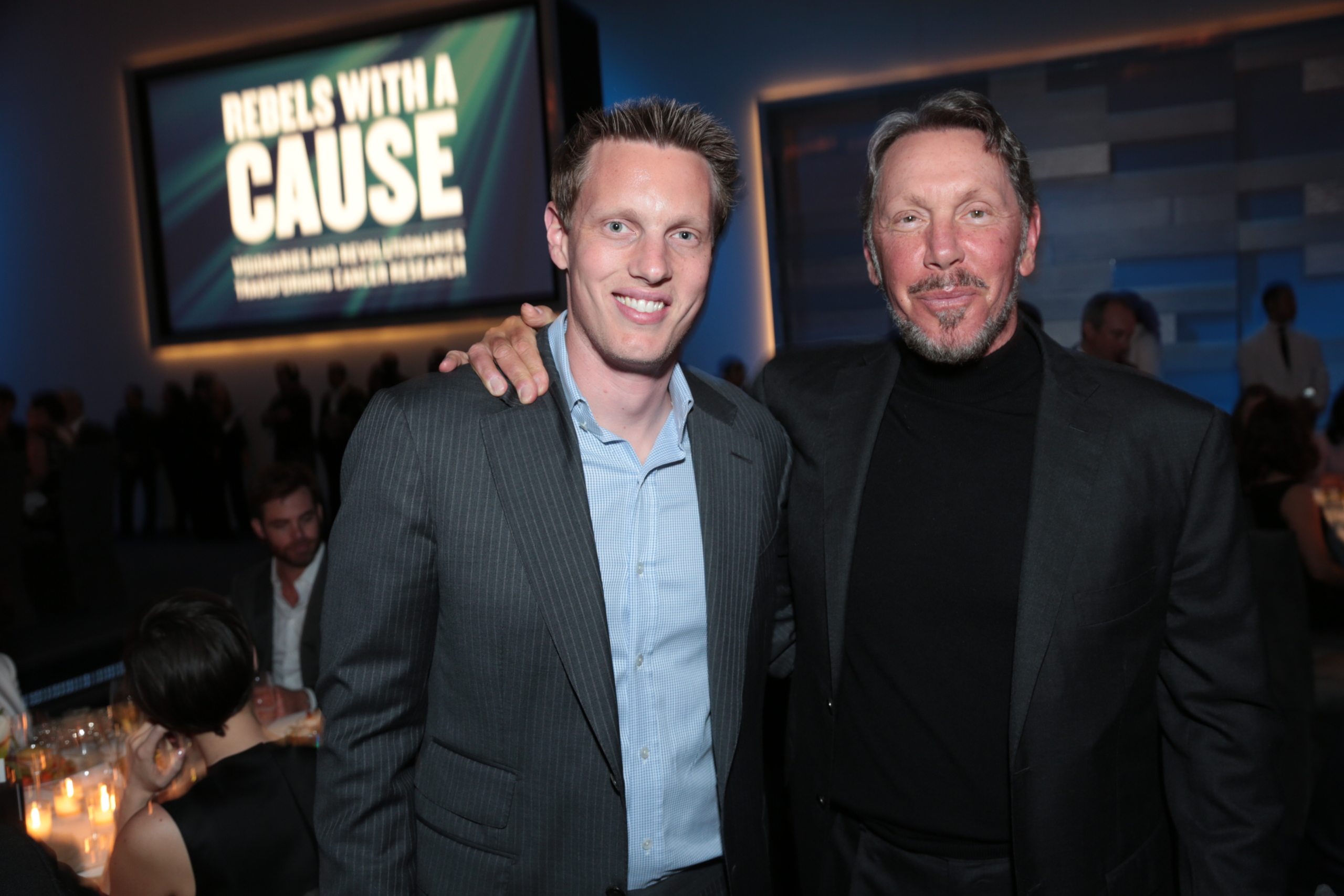
Trump might have been referring to how Oracle, cofounded by Ellison in 1977, has become a key provider of the cloud infrastructure that enables AI—for which its share price has skyrocketed this year. But if you take into account Larry’s son David Ellison, the title “CEO of everything” takes on a prophetic quality. In July, Brendan Carr, the Trump-appointed chairman of the FCC, approved an eight-billion-dollar merger of Skydance Media and Paramount Global, owner of CBS. The deal made David Ellison chief executive of a new media giant, Paramount Skydance. This month, the Ellisons made bids to take charge of another media giant, Warner Bros. Discovery, which owns CNN, HBO, and Comedy Central. And then there’s the plan for American investors including Larry Ellison to take over US operations of TikTok.
At the time of writing, the Ellisons have been rebuffed three times by Warner Bros. Discovery—their latest bid was worth around sixty billion dollars, Bloomberg reports—and details about TikTok’s future remain opaque. But these deals, which they seem intent on pursuing, would give the Ellisons unmatched power over the US media and entertainment landscape. Their content megafarm would make Rupert Murdoch’s press empire look like a meager homestead.
So: Who exactly are the Ellisons? And how did they suddenly become CEOs of everything?
While delving back into old news reports for this column, I noticed an interesting evolution of monikers for Larry Ellison, now eighty-one. In the eighties the New York Times refers to him simply as “co-founder and chief executive” of Oracle. Then in the late nineties he becomes “the billionaire founder of Oracle software.” In the aughts he morphs into “one of the richest men in the world,” “famous for reportedly spending $200 million recreating a Japanese-style home” in California. In 2020 he’s the host of “a fund-raiser for President Trump at his home.” In the autumn of 2024 he is briefly “the world’s richest man,” before falling back into second place, behind Elon Musk. And finally, this year, a fresh epithet: “media magnate, one whose portfolio and power could exceed those of fabled predecessors like Hearst and Pulitzer.”
Larry Ellison’s net worth is currently 342.5 billion dollars, according to Forbes. As a businessman, Ellison characterizes his approach by paraphrasing Genghis Khan: “It is not sufficient that I succeed. Everyone else must fail.” Politically, he described himself as a centrist in 2018, yet he has contributed millions to Republican candidates. He is a supporter of Trump, with Oracle cosponsoring the president’s June military parade in DC, and court records show that he participated in a phone call after the 2020 election to discuss how Trump’s defeat could be contested. Ellison is also a long-standing supporter of Israel and friend of Prime Minister Benjamin Netanyahu: in 2017, he donated 16.6 million dollars to Friends of the IDF, and after the October 7, 2023, attack Oracle temporarily doubled the salaries of all employees in Israel and declared “solidarity with Israel” during its war on Gaza.
David Ellison, meanwhile, was described in a 2015 GQ profile as “a man who bought his way into Hollywood because he was rich and stayed there because he was good.” After a faltering acting career, David Ellison gained prominence as a competent movie producer of the action films Top Gun: Maverick, Star Trek into Darkness, and the critical flop Flyboys, in which he costarred. Tom Cruise once sang his praises, saying, “He’s not afraid to pick up a shovel and dig.”
The forty-two-year-old scion is harder to pigeonhole politically. In 2024, he contributed nearly a million dollars to Joe Biden’s reelection campaign, but he has since been pictured ringside with Trump at a UFC fight. On culture-war issues he’s easier to define. Amid taking charge of CBS as chief executive of Paramount Skydance, David Ellison promised to gut DEI policies. He hired right-wing think-tanker Kenneth R. Weinstein to a new ombudsman position to review “any complaints of bias.” And he installed Bari Weiss, the anti-“woke” and pro-Israel opinion journalist, as editor in chief at CBS News, despite her lack of experience in either broadcasting or newsrooms.
Extreme wealth tends to encourage strange quirks, and both Ellisons have their indulgences. Larry Ellison fashioned that California estate after a Japanese emperor’s sixteenth-century palace. He bought most of a Hawaiian island. He once owned, then sold, a four-hundred-million-dollar yacht. He underwrote a roughly twelve-million-dollar college football deal to impress his young wife by benefiting her alma mater. He wants to live forever. David, meanwhile, is an aviation nut, with a passion for aerobatic flying. It’s fun to laugh at billionaires. But dwelling on their eccentricities supports “the fantasy that they are special ,” an n+1 editorial argues, not “the inevitable product of our political-economic regime .”
About ten years ago, a group of political scientists charted how billionaires—there are roughly three thousand around the world—deployed a playbook of “stealth politics.” They hosted fundraisers and donated aggressively behind the scenes, but rarely talked openly about their policy goals. In recent years, though, I feel something has shifted. Under the current regime of cronyism trickling down from the White House, billionaires like the Ellisons are coming out into the open, publicly chasing their personal agendas. (In addition to the Ellisons, look to Musk, Jeff Bezos, Peter Thiel, George Soros, Stephen Schwarzman, Michael Bloomberg, Reid Hoffman, Steve Wynn, the Kochs, the McMahons, the Mercers…) We appear to be in the midst of a concerted effort by the world’s superrich to mould the institutions of Western democracy to their will—and as a means of building power and influence, buying media companies is a key part of this process.
The Ellisons are not the only billionaires buying newspapers, seizing power over TV networks, and remaking social media platforms. But what makes their efforts more formidable is the vertical integration they would command: movie studios, news networks, part of a social media platform, and user data on millions of people, all in one package.
What the Ellisons will do with this control is still an open question. The clues so far tell me they’re unlikely to turn storied journalistic brands into carbon copies of Fox News. But under them, the sharp blade of journalistic scrutiny will surely be blunted into acquiescence; and the culture-war pendulum will swing farther in the anti-woke direction. What is clear is that the Ellisons are here to stay—and are poised to become the Trump era’s reigning media moguls.
Other notable stories …
- When S.V. Dáte, HuffPost’s senior White House correspondent, asked press secretary Karoline Leavitt who chose Budapest as the site for Donald Trump to meet Vladimir Putin, she replied: “Your mom did.” For CJR, Ivan L Nagy interviewed Dáte about the “juvenile” incident. “I mean, that’s an insult that elementary-school kids say to each other,” Dáte said. But he urged people not to be distracted by the “nonsense” and to focus on the “autocratic threat” the nation faces. “The danger here is we can become more like Hungary, we can become more like Turkey, and we won’t appreciate that it’s happening until it’s too late to turn it around,” he said. You can read the Q&A here.
- With just 28 percent of Americans expressing a “great deal” or “fair amount” of trust in the mass media to report the news fully, accurately, and fairly, according to Gallup, Harper’s magazine convened a roundtable on this credibility crisis featuring Jelani Cobb, dean of Columbia Journalism School; Taylor Lorenz, an independent journalist and founder of User Mag; Jack Shafer, a media critic; and Max Tani, a Semafor media, tech, and politics reporter. Cobb highlighted declining local news as a key part of this trend: “We’ve lost the proximate, familiar institutions people actually trusted, leaving only the large, remote institutions that Americans have distrusted throughout our history,” he said.
- For some data that illustrate this, last week saw the release of the 2025 “State of Local News” report from Northwestern University’s Medill School of Journalism. Some of the headline stats: two hundred and thirteen US counties have no local news source, up from two hundred and six last year. Since 2000, nearly thirty-five hundred US newspapers have vanished; print circulation has dropped 70 percent since 2005. The newspaper industry has lost more than three-quarters of its jobs since 2005; this included a 7 percent decline over the past year.
- Disney’s short-lived decision to suspend Jimmy Kimmel after pressure from the Trump administration seems to be coming back to bite the company. Disney+ and Hulu cancellation rates doubled from August to September—from 4 and 5 percent to 8 and 10, respectively—according to figures released by Antenna, which tracks data for streaming services. Kimmel’s suspension on September 17, after remarks about the politicization of the murder of right-wing activist Charlie Kirk, became a flashpoint in a national debate around free speech (which Jon Allsop wrote about for CJR). Kimmel returned on September 23, after ABC audiences, major celebrities, and trade unions across the US stood behind him.
- In the UK, former Conservative prime minister Rishi Sunak last week joined the long list of senior politicians who have landed plum jobs in the media, with the announcement that he’ll write a column for the Sunday Times business section. The newspaper is part of Rupert Murdoch’s media empire. Sunak, the prime minister from 2022 to 2024, will be treading the same ground as other Conservative government ministers after leaving office: former prime minister Boris Jonson (Daily Mail columnist), former housing secretary Michael Gove (Spectator editor), former chancellor George Osborne (previously Evening Standard editor), and former culture, media, and sport secretary Nadine Dorries (Daily Mail columnist).
- And it was announced that Sid Davis, a White House correspondent for Westinghouse Broadcasting, died on October 13, aged ninety-seven. Davis was a witness to the swearing-in of Lyndon B. Johnson in 1963, after being on the press bus behind President John F. Kennedy’s open limousine during his assassination. “I heard the shots,” Davis told the New York Times. “We looked up ahead, and we saw the presidential limousine just dart forward, just take off, and I can see a pink blur on the car, and that was Jackie standing up, stunned by what had happened.” Davis drew praise for providing a “generous” pool report to other journalists of Johnson’s swearing-in. After Westinghouse, Davis joined NBC News in 1977, then Voice of America in 1987—where he directed worldwide programming from 1994 to 1998—and later lectured on the media.
Has America ever needed a media defender more than now? Help us by joining CJR today.