Sign up for the daily CJR newsletter.
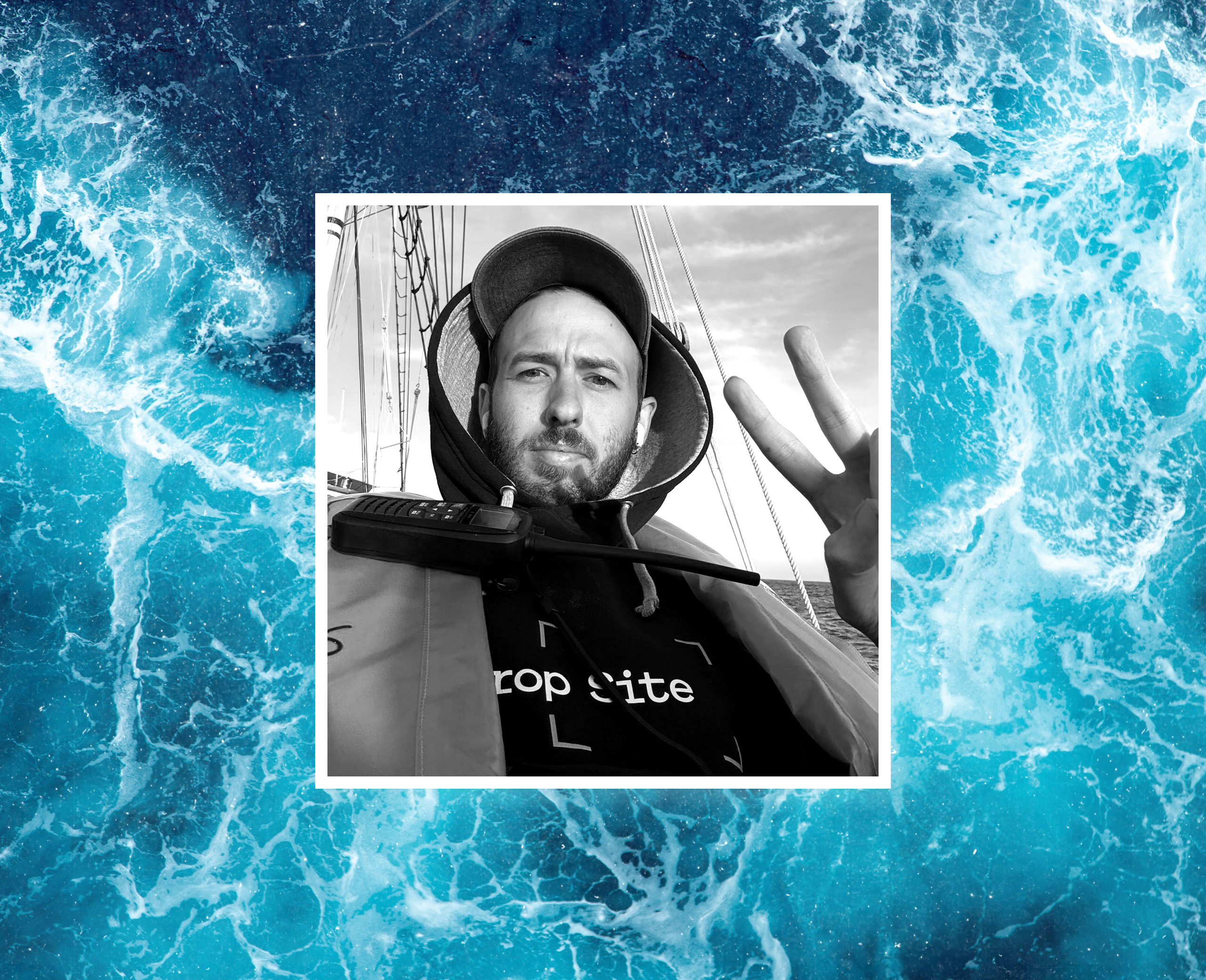
On August 31, in Barcelona, Alex Colston, an editor for Drop Site News, boarded a vessel of the Sumud flotilla along with some thirty-seven other passengers, a collection of politicians and humanitarian workers carrying aid bound for Gaza. (Sumud, an Arabic word for “steadfastness,” refers to Palestinian resilience.) Colston, who is thirty-four and lives in Brooklyn, has a beard and wears a metal chain necklace; he packed a black T-shirt, sleeves cut off, bearing the word PRESS in capital letters. He grew up in Florida, where he worked as a deckhand as a teen. This was slow sailing; en route, he reported on the nautical happenings surrounding Israel and edited colleagues’ work about ceasefire talks. He also kept night watch and helped repair the boat’s water system. He lost weight. “It felt like a purposeful thing to do,” he told me. The trip lasted until October 1, when the vessel was intercepted by the Israeli navy and Colston was detained—as were some twenty other members of the international press, on a fleet of aid boats scattered across the sea.
Ships approached the Sumud about fifteen miles off the coast of Gaza. “They circled us like sharks,” Colston said. The Israeli navy’s commander at sea made remarks to his sailors: “The Navy stands up to a mission that requires determination and professionalism, to ensure that any attempt to breach the maritime security blockade will be stopped far from our shores. I have full confidence in you that you will carry out the mission successfully while upholding our values.” Then officers grabbed a ladder, which they attempted to latch on to Colston’s boat. It took a few tries until they affixed it, which struck Colston as absurd, even as the officers made it on board, carrying assault rifles. “It just felt really goofy to me,” he said. For hours, the officers confined passengers on deck, as they steered to the Port of Ashdod, south of Tel Aviv.
Israel’s military detailed the operation in an announcement: “The IDF will continue to resolutely maintain the maritime security blockade around the Gaza Strip,” the message went. In all, according to Israel’s account, “hundreds of individuals aboard 41 naval vessels” were taken into custody over a period of twelve hours. One more boat arrived a few days later. “Following the operation, the flotilla members were safely transferred,” per the statement, “for further processing by the Israel Police.” (The IDF did not reply to a request for additional comment.)
When they arrived, Colston said, passengers were strip-searched. “One of the port authority people or naval people put their foot on my head and told me to sit on my knees: Don’t move,” he said. “They would tell us, Don’t smile, don’t laugh, don’t show any emotion.” That was tough for him. “I have a strong sense of humor about this stuff.” He saw Greta Thunberg—the activist, who had been on another vessel in the convoy—wrapped in an Israeli flag, pushed to the ground and forced on her knees. Itamar Ben-Gvir—a far-right leader who has been convicted of supporting terrorism and is now Israel’s minister of national security—arrived. “He was yelling in Hebrew at us. Most of us didn’t understand what he was saying,” Colston said. “We only understood the word ‘terrorist.’” (In a statement, the Israel Ministry of Foreign Affairs referred to the Sumud as “the Hamas Flotilla.”)
The group was held in detention for days. “As if we were terrorists,” Colston said. Footage of the Hamas attacks of October 7, 2023, were played for them on a continuous loop. Colston couldn’t sleep and felt increasingly ill. Gradually, people were released; after about a week, Colston was sent to Amman, Jordan. There, he described his experience to a group of diplomats, and expressed his frustration that—as a United States citizen, and a journalist—he hadn’t been better protected. A few times, he recalled, a diplomat told him, “We are not here to babysit you.” Colston told me that one of the diplomats cried. “It’s been, from my point of view, incredibly underwhelming and disappointing,” he said, of the response. “We got out of prison. Why are you the one crying?” (The American consulate in Amman did not respond to a request for comment.)
Colston was one of many journalists sailing around the region. According to Reporters Without Borders, members of the press were on board naval vessels covering the story for El País, the Spanish newspaper; RAI, the Italian public broadcaster; and Al Jazeera, among others. All were taken into Israeli custody along with the five hundred or so other members of the flotilla’s crews. Most recently, on October 8, Emily Wilder, a reporter from Southern California working for Jewish Currents; Noa Avishag Schnall, a Los Angeles–born visual journalist based in Paris, reporting for Drop Site News; and Henri Sulku, a Finnish editor at Turning Point magazine, were detained with about ninety others from a boat called The Conscience.
For Colston, the experience was revealing. In early September, during a stop in Tunisia, he reported on Israeli drone attacks on ships. Later, he covered blasts off the coast of Crete. “I could see all of our other ships,” he said, referring to flotilla vessels. “Every once in a while, you could see an explosion. And so journalistically, I thought, ‘Well, I need to be able to capture that.’ But then my first thought is, ‘I should probably look up to make sure there’s no drone above our boat.’” Since the start of Israel’s military campaign in Gaza, according to the Committee to Protect Journalists, at least 237 journalists and media workers have been killed.
There is now, with news of peace, hope that another chapter of the story will begin. And yet, when Colston landed back in the United States, at John F. Kennedy Airport, he was a bit miffed: no American news outlet was there to interview him. The first video on his ordeal was by Anadolu, a Turkish news agency. He’s brought home a media critique: coverage tends to “defer to Israeli press statements,” he said. “It just wouldn’t capture anything about the flotilla.”
Has America ever needed a media defender more than now? Help us by joining CJR today.