
Sign up for the daily CJR newsletter.
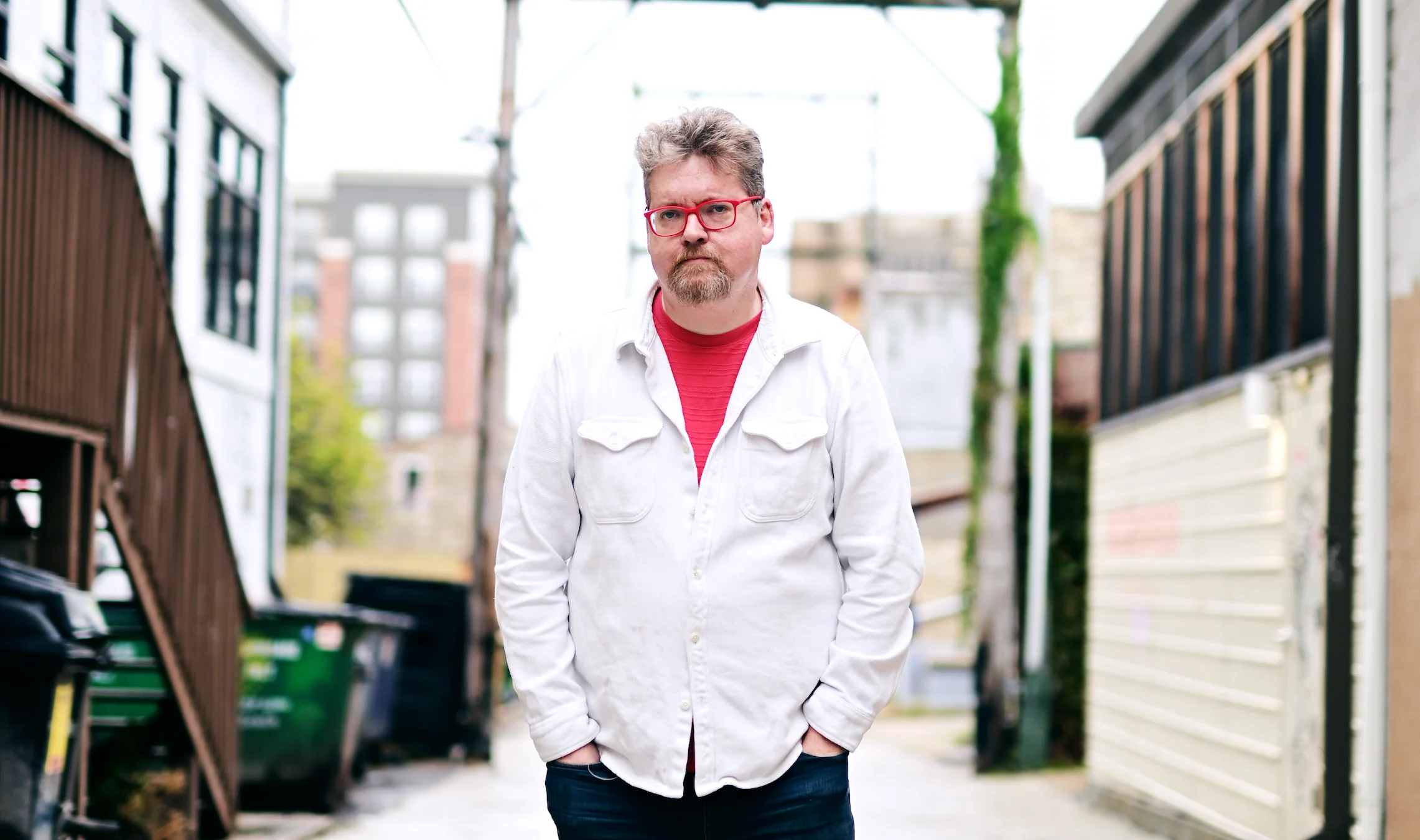
Kansas has the same number of full-time opinion-section editors as it has United States senators. Clay Wirestone, of the Kansas Reflector, a statewide nonprofit news organization, is half of the former.
When he assumed his role, five years ago, Wirestone told me, he was shocked at what had become of local opinion writing in a state that produced William Allen White—who revolutionized the op-ed format—and can boast of a long, proud history of civic changemakers who made their voices heard through the press. So Wirestone dived into newspaper archives, long-forgotten books, and miles of microfilm to find out how the culture of opinion writing in Kansas has developed over the past century. The result is Opinionated: Kansas Journalists Who Proved Why Commentary Matters—Then and Now, which was published in September and includes profiles of twelve of the most influential opinion writers in the state’s history.
Wirestone’s look at the past raises questions for the present. How might opinion writing play a meaningful role in democracy again? What is the significance of local, as opposed to national, opinion sections? Are we reverting to a time when editorial boards are perfectly aligned with their outlets’ owners? “If you were looking at the editorial page of the Emporia Gazette when William Allen White was the editor, even if he might not have written every word, you knew that was what William Allen White believed,” Wirestone told me. “Today, what does an unsigned editorial even mean? If Jeff Bezos wants to write editorials for the Washington Post, great—let him write them and sign them.” Our conversation has been edited for length and clarity.
Is Kansas a textbook case of what’s been happening to local opinion writing across the country, or is it unique in some way?
I think what’s partially unique to Kansas is that there’s a really strong tradition of opinion writing here, and a lot of it comes from William Allen White’s example. He was not just an award-winning journalist, but also a trainer; the University of Kansas has the William Allen White School of Journalism, which was established by people who had worked for and learned from him. So healthy civic debate and civic life is a special part of Kansas history, but the problems of the current media landscape appear everywhere. Gannett got rid of daily opinion pages, McClatchy is going through cuts, and that leads to diminished investment in local opinion writing everywhere. The Kansas tradition only makes that change starker.
What surprised you most while researching this vast history?
I think the thing that will surprise audiences most is how incredibly politically connected and involved many of these people were, specifically in the Republican Party. William Allen White ran for governor on an explicitly anti–Ku Klux Klan ticket. The Boyd family, who published multiple papers—I write about the matriarch, Mamie Boyd—helped catapult Bob Dole, a longtime Kansas senator, to prominence. So the idea that there was this era at some point when there was no interaction between newspapers and politics is absolutely not true.
When I started this book, I did not want to just write about white men, even though they were the people who mostly owned papers, so I profiled several women and folks in the Black press. And what I found really surprising is that this very diverse group all knew each other! The people in the Black press interacted with people in the white press, and the guys knew the female writers and publishers. When academics look at journalism, the approach is often “We’re going to write about the Black press, and it’s over here; we’re going to write about the white press, and it’s over there.” And it’s just not true.
You depict a time when publishers and editors were one and the same. Since the 2024 electoral cycle, news outlets have been under fire for the decreasing distance between owners and editorial boards. Can you talk about the state of editorial writing today, and how op-ed writers can maintain their independence given the increasing partisanship of media owners?
In this book, I tried not to write about the national scene, because I think that it’s fundamentally different from local opinion writing. You are not going to be able to call up Nick Kristof or see him at a coffee shop and say, “I liked what you did.” The thing I see value in is people writing about their own communities in smaller towns, which is something that doesn’t even exist in a lot of places anymore.
I actually don’t like the traditional, four- to five-hundred-word, unsigned editorial format. I think it is antique. I think it has served its purpose. And it’s not being written by the editor anymore. Today, you have entire separate editorial departments and a whole bunch of different editors. My preference would be to have most opinion pieces written by people whose names are on them.
Opinion writers and editorial boards at national newspapers are losing some of their agenda-setting power. On the flip side, with Substack, podcasts, and social media, we’ve never had so many opinion makers in the public sphere. Are we in a dark age or a golden age of opinion writing?
I think the success of these opinion spheres suggests that there’s a real appetite for opinionated commentary and individual voices. Where we’ve fallen off is that almost none of that stuff is connected to state or local communities. I know there are some folks in the Substack space who are doing that, but if you want to bring back local reporting, it’s really valuable to have an opinion component that is part of the same fact-checked journalistic package.
An optimistic view of the atomization of journalism is that Substacks and podcasts could bring about the rebirth of hyperlocal journalism. What do you think of that?
I’m not optimistic that those things will bring it about. Substacks and podcasts show that there is an appetite and an audience; the challenge is for people who are funding and creating local journalism startups to figure out how to meet and match that demand.
Your book covers how opinion writing has served as a crucial tool in political history. It also underscores how opinion writers, while championing progressive cases, were often flawed characters and blind to some important problems. What do you see as the role of opinion writing in democracy today?
I think the best opinion writing addresses issues that are of paramount concern to the readers it serves. I could write a column every day about Donald Trump—to many people, perhaps including myself, his presidency is the biggest public event that could exist. But there are a lot of people doing that, and there’s a preexisting audience for it. As an opinion writer in Kansas, what I can do that no one else can do is write about Kansas’s government, Kansas’s elections, and what’s going on in the lives of Kansans. Sometimes I will not be writing about what is objectively the biggest story of the day because something here outweighs it for my readers, and they expect me to talk about it.
To give you an example: While we are recording this interview, we have this giant story that Trump banned news outlets from the White House. Simultaneously, here in Western Kansas, where we have some of the world’s largest meatpacking plants, we’ve been having giant ICE raids that are throwing those communities into an uproar. Only one of those things is what I need to be writing about.
Has America ever needed a media defender more than now? Help us by joining CJR today.