Sign up for the daily CJR newsletter.
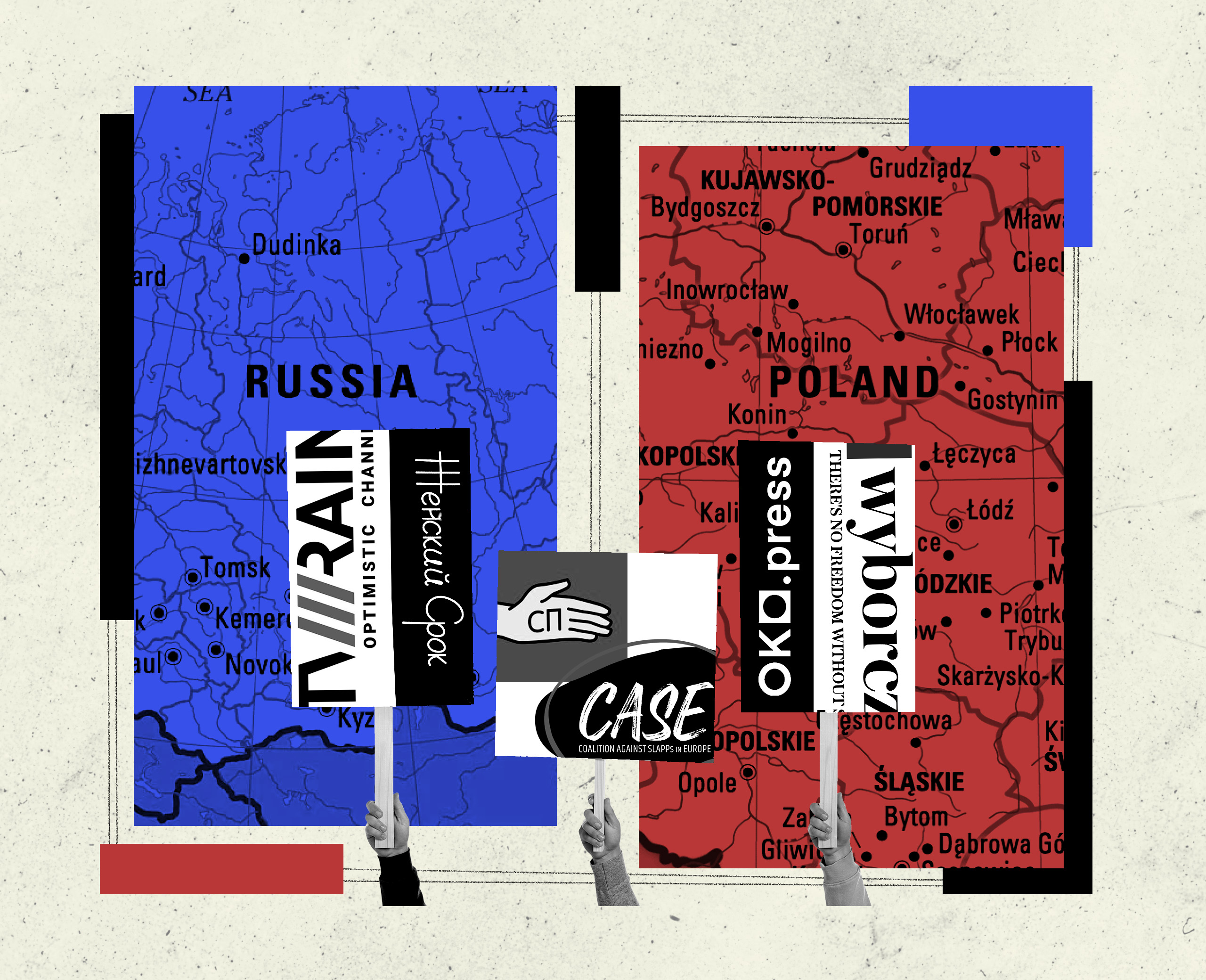
The ongoing deterioration of press freedom and independence in the United States is deeply concerning to many journalists who don’t know where their country is heading. That chilling uncertainty is one we have lived through ourselves. We are journalists from Russia and Poland. Ksenia has been forced to leave her home in order to continue working, and has watched countless friends and colleagues do the same. Paulina decided to change her career to academia. In Moscow, TV Rain, where Ksenia worked, was declared an “undesirable organization,” and its reporters were forced to relocate. In Warsaw, Gazeta Wyborcza, where Paulina worked, faced economic and legal pressure from the government and its cronies, and had to learn how to fight back.
Poland and Russia are different countries with different trajectories, but both have experienced similar slides toward authoritarianism. As a result, journalists in these countries have come up with novel ways to stay engaged and fight back. We wanted to share some lessons from those experiences, in the hopes that it could offer some optimism to journalists in the States wondering what their future might look like.
Russia
Before the war with Ukraine, Ilya Krasilshchik was a senior executive at a major Russian tech company and the publisher of the Latvian-based independent outlet Meduza. But in 2022, following Russia’s invasion of Ukraine, he left his position and moved to Berlin. The next year, Meduza was legally banned in Russia, and Krasilshchik was convicted in absentia on charges of distributing false information, and sentenced to eight years in prison. In its place, Krasilshchik founded Helpdesk Media—which exists solely on Instagram and Telegram, making it impossible to fully block in Russia. Helpdesk has collected hundreds of personal stories and crucial testimonies about the war, including conversations with rescuers from the completely destroyed city of Bakhmut, an interview with a Ukrainian soldier whose father is a Russian officer, and the story of a family who lost three children to Russian shelling.
Helpdesk is one example of the many ways Russian journalists and human rights defenders have found solutions with limited or no resources—or, as we say in Russian, made porridge from an ax. Many of these innovators have seen success by focusing on niche, targeted projects that tackle specific problems. This is how the movement Feminist Resistance Against War came to be: activist and writer Darya Serenko founded an organization with public spokespeople but no central leadership and limited hierarchy. The group helps Ukrainian refugees who were forcibly displaced to Russia. Another project, the podcast Women’s Sentence—produced by Sasha Graf, a journalist who reported on women’s incarceration for almost seven years and now lives in exile—tells the stories of women who are imprisoned in Russia, and raises funds to send them care packages.
The people behind these projects have had to become extremely versatile, and play multiple roles at once. It’s not uncommon for a single person to pitch, write, investigate, edit videos, fundraise, and manage partnerships. They’ve also had to learn how to engage a younger generation of content consumers—and contend with a flood of government-produced propaganda in schools and on social media. Still, some have managed to break through: many independent journalists have turned to platforms like YouTube and TikTok to reach young audiences. In 2024, twenty-four-year-old blogger Prikolena began posting parodies of Russian politicians—including opposition figures—on TikTok and Instagram. Her videos quickly went viral, and she was soon invited to join TV Rain as an intern and social media specialist. Alexander Makashenets, the YouTube channel host for the Anti-Corruption Foundation, the nonprofit group founded by the late Alexei Navalny, launched a personal TikTok account after the war began, where he satirizes Russian state propaganda. Despite TikTok being technically restricted in Russia, some of his videos have garnered over a million views.
Poland
Trump’s lawsuits against media companies like CBS and ABC—and the subsequent decisions of these networks to settle rather than fight—have a particular resonance for journalists in Poland, where Gazeta Wyborcza, one of the country’s most influential daily newspapers, faced more than a hundred defamation lawsuits by politicians from the Law and Justice party, which led the country from 2015 to 2023, and their allies. These so-called SLAPP lawsuits ranged widely: Jarosław Kaczyński, the leader of the party, sued Wyborcza in 2019 after it published embarrassing recordings of him discussing a controversial skyscraper deal; the minister of justice, Zbigniew Ziobro, and his staff repeatedly used the ministry’s budget and lawyers to sue the newspaper, seeking retractions. Most of these lawsuits were rejected by the courts.
Recognizing the gravity of the threat, Wyborcza decided to go on the offensive. In 2020, the paper launched a public campaign to inform readers about the avalanche of lawsuits and how they were being abused. It was a departure from long-standing practice; Polish newsrooms have typically avoided discussing defamation cases, worrying that acknowledging them would undermine their credibility.
Soon, independent outlets like OKO.press and some owned by the Ringier Axel Springer publishing group followed with their own disclosures. Banding together in common cause allowed media advocates to gather data showing that, from 2010 to 2023, Poland had the greatest number of such lawsuits in Europe. In 2021, the Coalition Against SLAPPs in Europe mockingly awarded Kaczyński its “SLAPP politician of the year.” Soon, readers and international organizations surged to the defense of Polish independent media, offering funds and legal guidance.
The resistance held out long enough to make it to late 2023, when a political turning point brought some relief. In parliamentary elections, voters ousted the ruling government, and the new authorities swiftly signaled a change in approach. The Justice Ministry moved to withdraw dozens of ongoing lawsuits that its predecessors had launched against independent media. The threat of legal harassment, while not gone, has now significantly diminished.
These aren’t stories of institutions saving the press—they’re stories of journalists saving each other. In Poland and Russia, independent media didn’t survive because of laws or elections; they survived because people refused to give up. American journalists still have more room to maneuver—but that window is narrowing. When institutions falter, journalists have to be creative about where they find community. And the time to start building those connections is now.
Has America ever needed a media defender more than now? Help us by joining CJR today.