Sign up for the daily CJR newsletter.
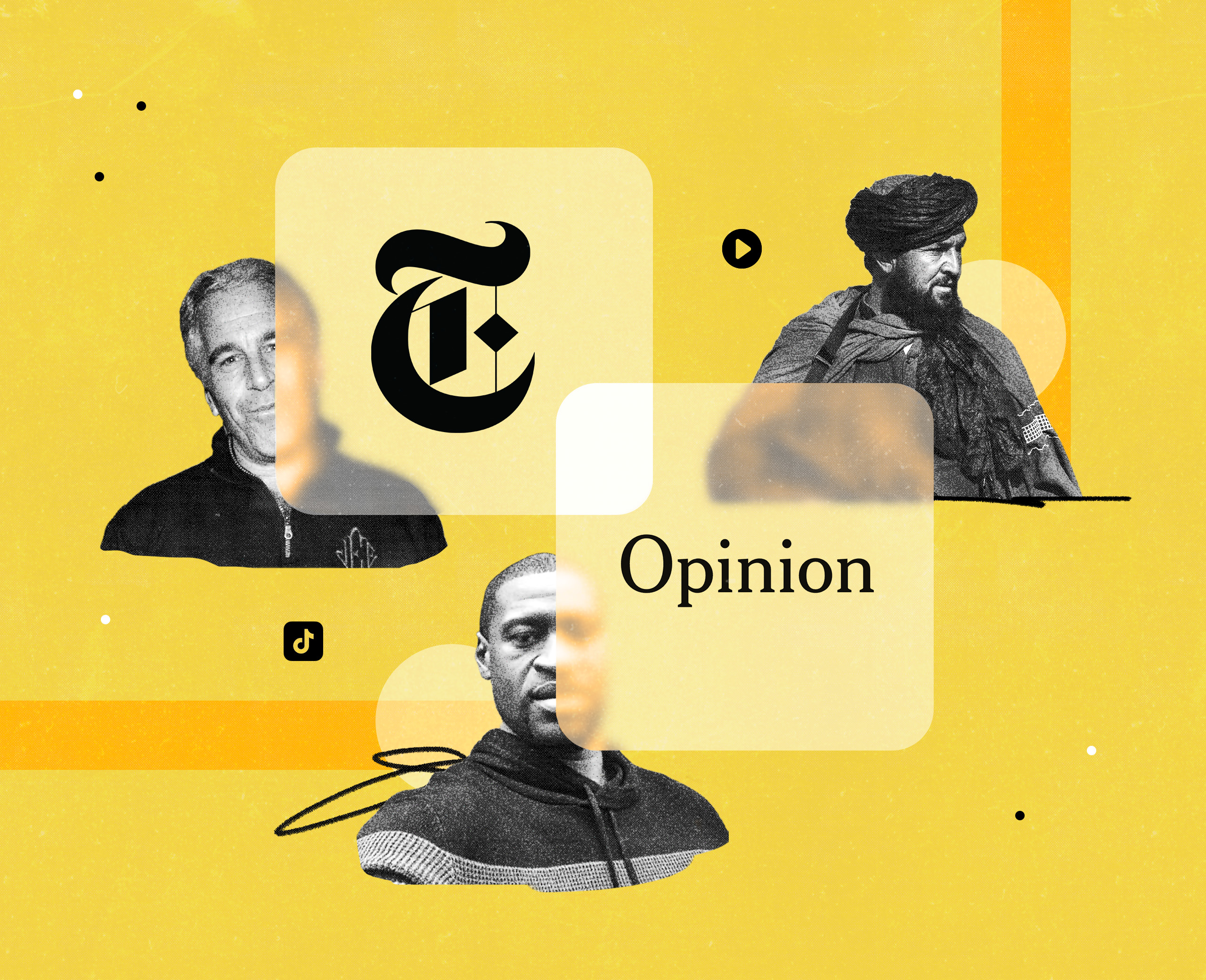
In 2022, the New York Times Opinion desk published a video investigation that crystallized the section’s ambitions for original multimedia reporting. The video focused on Afghanistan, alleging that, in the first six months since the Taliban seized Kabul, they had approved the extrajudicial killing or disappearance of at least four hundred and ninety former security officials, in direct violation of the general amnesty the new regime had promised for Afghans who supported the US occupation.
As printed portraits of victims dangle from thread in a darkened room, a narrator intones, “The Taliban are on a campaign of revenge killings, slaughtering the Afghans who fought against them over the past two decades.” The video, which was produced by Sanjar Sohail, Barbara Marcolini, and Alexander Stockton, goes on to show graphic footage of the execution of a former security official named Haji Mullah Achakzai, a white scarf tied over his eyes, as well as the blood-splattered apartment where a female police officer named Nikie Daar and three others were killed. The narrator allows for the possibility that many of these killings were not officially sanctioned. Still, she says: “Make no mistake, the Taliban’s revenge campaign is deliberate and widespread.”
The day after the Times released the documentary, the Taliban issued a livid response. The “New York Times report on the assassinating of former security personnel is baseless and biased. No Mujahid has right to take revenge from anyone after the general amnesty announced by the Islamic Emirate of Afghanistan.” Of course, there were reasons to doubt the Taliban’s honesty. There was also a reaction internally, since the Times bureau in Kabul had not been given a chance to review the video before its release. Soon, sources familiar with the Times’ operations in Afghanistan told me, news staff had to deal with incensed government officials, some of whom threatened to force the Kabul bureau to close. To take some pressure off the reporters on the ground, editors from Opinion got involved, trying to explain to Afghan leaders that the newsroom had nothing to do with the video. But the distinction between opinion and news was meaningless to the Taliban.
Dissension over what separates news from opinion coverage has been a constant far beyond that. At the Times, the liberal tilt of the editorial board has long complicated the work of the paper’s reporters, often on the Politics desk. What has changed lately, though, are the prominence and resources of Opinion in the digital era, as well as the scale of its original reporting, leading to more overlap between the Times’ divisions and, inevitably, more hard feelings. This spring, Nicholas Kristof’s report on Israeli soldiers sexually assaulting Palestinian detainees set off a major round of recriminations. Newsroom journalists offered anonymous quotes to Puck (“I am sick of being embarrassed by the Opinion section,” an aggrieved Times employee said). Similar blowback greeted an Opinion profile by a freelance contributor, Ankush Khardori, of Kathy Ruemmler, a former White House counsel during the Obama administration and senior lawyer at Goldman Sachs, who had refused to talk with the newsroom’s reporters about her friendship with Jeffrey Epstein. In both cases, outraged observers have sought to diminish Opinion’s reporting by stoking an abiding misapprehension that its writers do not have to follow the same standards of accuracy as their peers in the newsroom. That isn’t really the case: as a spokesperson for the newspaper put it, “Both news and opinion journalism at the Times is produced with deep journalistic rigor.”
When I asked Kathleen Kingsbury, the section’s editor, about these recent instances of opinion reporting triggering anonymous gripes from the newsroom, she affirmed that “news and Opinion do not coordinate editorially.” She continued, “That’s the system that we have built very purposefully, right? This is a long-standing idea, that the newsroom should be able to report independently without having to answer for the opinions in the Opinion section.” The so-called firewall ensures “that we feel confident that we can opine without necessarily worrying about, for instance, access to sources.”
As I spoke with editors, writers, and producers for the Opinion section this summer, it became clear how much stress the desk’s expansion has put on that firewall. Two decades ago, Opinion had only about fifty employees, namely columnists and the editorial board. The section’s role had evolved since the late nineteenth century, when Adolph S. Ochs, the publisher who bought the Times in 1896, wrote of his desire to turn the paper into “a forum for the consideration of all questions of public importance, and to that end to invite intelligent discussion from all shades of opinion.” It remained oriented around unsigned editorials issued by the board and articles by columnists, typically Times reporters such as Thomas Friedman, Maureen Dowd, and, yes, Kristof—journalists who had been rewarded for their strong track record on their respective newsroom beats with the ability to bring their personal perspective into their reporting.
Opinion has the same DNA today, even as the section now boasts some two hundred employees. Though still dwarfed by the Times’ newsroom (which has ten times the staff), the build-out of Opinion into a full-fledged newsroom within a newsroom means the section’s reporters are increasingly operating in the same arena as their down-the-middle colleagues. Opinion publishes two dozen guest essays every week, while more than a dozen columnists not only write but contribute to multimedia, with Ezra Klein and, until his recent departure, Ross Douthat hosting regular video podcasts; others rotate through a roundtable show called The Opinions. However influential Opinion columns remain, the section’s video side has far greater potential to reach people outside the Times ecosystem: The Ezra Klein Show regularly ranks in the top ten of the Apple Podcast subscriber chart, and some of the short documentaries have garnered more than ten million views on YouTube. In recognition of video’s growing prominence, Opinion recently consolidated its podcast and video operation into a single “Shows” team. Every year, that division continues to publish about a dozen enterprise video reports, which are produced in-house, and a similar number of “Op-Docs,” which are acquired from outside filmmakers.
Whether it be in a reported article or video dispatch, Opinion writers and newsroom reporters are increasingly producing overlapping work. Michelle Goldberg’s coverage of the fight for the soul of the Democratic Party—from Maine to Michigan to New Jersey—parallels the reporting of the Times’ Washington bureau, just as M. Gessen’s dispatches from Ukraine and the West Bank do the newsroom’s international efforts. Muddying the matter further, reporters on the other side of the firewall occasionally produce articles labeled “news analysis,” while writers for the Sunday magazine can make forceful arguments. How is the audience supposed to distinguish one section from the other?
“Fundamentally, the thing that makes New York Times opinion journalism distinctive from punditry,” Kingsbury said, is that the section’s columnists are often doing field reporting. “They’re gathering information, and that is what I think of as the evidence that supports the argument.” Even if it’s operating at a far greater scale, Kingsbury believes, Opinion is still very much filling its founding mandate. “If the newsroom tells you how to understand the world,” Kingsbury said, “the work of the Opinion desk is to give you clarity and context around it.”
When Kingsbury took over the Opinion desk, her job was to establish strong safeguards. She had been hired as deputy editorial page editor in 2017 by James Bennet, whose tenure running the section had culminated in an op-ed from Senator Tom Cotton arguing that the United States military should be deployed to quell protests against the murder of George Floyd. More than a thousand Times staffers signed a letter protesting the op-ed as “an affront to our standards for ethical and accurate reporting for the public’s interest.” Bennet admitted he had not read the piece before it ran; a few days later, he resigned.
When Bennet arrived—from The Atlantic, in 2016—Opinion had around seventy-five employees. Its only multimedia venture was Op-Docs, which published short-form documentaries each month despite only having a staff of three. To ensure the section would drive engagement online, Bennet began implementing a vertical organizational structure mirroring that of the newsroom, with expanded teams for graphics, audio, and video. Those changes were quickly rewarded with a bigger audience: A video about a sprinter named Mary Cain ultimately garnered more than twenty million views on YouTube. Opinion articles routinely started to receive more comments from Times subscribers than did news reports. Opinion’s rising prominence necessitated internal discussions about how best to convey the difference between news and opinion for an online audience that is not necessarily familiar with print-section divisions and rules. Opinion pieces are now visually distinguishable by their own special headline typeface—but the cues are likely too subtle for the casual reader to decipher. (“We are constantly thinking of ways to better present Times journalism to audiences,” a spokesperson for the Times told CJR. “This includes providing context and explanation as to how our journalism works. Opinion journalism shows up on our site and print editions clearly labeled as such.”)
Once she took over Opinion, in 2020, Kingsbury instituted additional layers of editorial review and expanded the desk’s fact-checking team, as she continued Bennet’s effort to build a robust multimedia operation. At least one longtime columnist, Paul Krugman, publicly decried the alterations, and left. Kingsbury recruited new columnists in the Kristof mold: veteran reporters who could operate with more latitude on the Opinion desk than they might in a newsroom. She attributes some of that emphasis to her background as a foreign correspondent for Time magazine. “I have always been attracted to columnists who want to take readers to places,” Kingsbury told me. She cited recent international coverage by Gessen, Lydia Polgreen, and David French—one of the section’s conservative (albeit anti-Trump) columnists—all of whom “talked to people affected by policy or affected by decisions by governments, and in a really meaningful way that made their pieces richer.”
A good example is Polgreen’s June report from Lebanon on frustrations over the nation’s inability to escape the cycle of bloodshed between Israel and Hezbollah. Polgreen’s dispatch didn’t receive nearly as much criticism as Kristof’s, but it contained reporting that described Lebanon’s army as “underfunded and underequipped”—not just because of the nation’s “shambolic economic situation,” but also because “of American policy that seeks to keep regional armies weaker than Israel’s.” Had this been a news story, this assertion—that the US is preventing Lebanon from becoming strong enough to control Hezbollah—would likely have been credited to a subject-matter expert and followed by a response from a State Department official. Here, there was no need for signaling impartiality. (Polgreen did not respond to my requests to speak with her for this article.)
In our conversation, Kingsbury emphasized that Opinion always does the same due-diligence work as the newsroom. Columnists and outside writers submitting a guest essay are asked “to go back to people that they are criticizing or presenting information about to allow them to respond,” she said. Sometimes those responses are included in the text, sometimes not. Regardless, “if we were only relying on facts that were coming from, for instance, the New York Times newsroom, it would not have the same texture that our opinion work does in terms of going out, gathering facts, firsthand accounts, and realities that folks are seeing on the ground.”
To Kingsbury, Kristof is a columnist who has built up the credibility to do exactly that. This meant she was surprised that some readers had reacted so vociferously to Kristof’s May report, which included graphic accounts of Israeli security officials sexually assaulting Palestinian detainees, including a journalist from Gaza who detailed having his genitals zip-tied and his captors summoning a dog that mounted and penetrated him.
Much of the social media chatter about Kristof’s article was not made in good faith. Some focused on process: Commentary magazine’s Seth Mandel derided Kristof’s reporting as “uncorroborated allegations of state-sanctioned abuse.” Kingsbury and Kristof felt moved to respond to those charges, as well as to Benjamin Netanyahu’s contention that the column spread “blood libel” against Israel, equating it to the anti-Semitic rumormongering that has precipitated pogroms throughout history. In a Q&A, the pair went through the accusations made against the piece. “In the case of each person I quoted, I also talked either to a witness to the abuse; to a family member, lawyer, or social worker the person had confided in; or I backed up the individual’s story with public comments the person made previously,” Kristof said. (Kristof did not respond to requests to speak with me.)
Of course, fraught subjects typically generate the most debate about what’s out of bounds for Opinion. Those debates become even more salient when the writer in question is a freelancer. Khardori, a former Politico legal columnist, published his guest essay just a few weeks after Ruemmler had been the subject of a newsroom report that detailed her relationship with Epstein. The report centered on Ruemmler’s efforts to repair her reputation by engaging the services of a company called Terakeet and mentioned that she and Epstein had met dozens of times; it also quoted from emails in which she referred to Epstein as “sweetie” and “Uncle Jeffrey.”
Ruemmler declined to comment for the newsroom story, but she sat for multiple interviews with Khardori. His profile in Opinion argued that, for powerful lawyers such as Ruemmler, “doing business with Mr. Epstein, and people like him, was business as usual for the top ranks of the legal profession.” Though Khardori mentioned the same mortifying details included in the news article, some reporters on that side of the firewall were aghast at his more sympathetic portrayal of Ruemmler. A few newsroom staffers provided anonymous quotes to Status and the New York Post about Khardori’s supposedly “uncritical” treatment of Ruemmler, claiming “everyone thought the story was a joke.”
When I spoke to Khardori, he described the editorial process that his essay underwent between when he first pitched it to editor Laura Reston in April and its publication in June. “The process for fact-checking and editing at the New York Times is more rigorous than any other outlet I’ve written for,” he said. When I mentioned a line that many critics of the piece had seized on—that Ruemmler “seemed oddly naïve” about Epstein—he emphasized that she had met him in 2014, long before his 2019 arrest, and at a time when the details of his 2008 plea deal with then–US Attorney Alex Acosta for solicitation of prostitution were not common knowledge. (Julie K. Brown’s first story in the Miami Herald connecting that agreement to accounts from the women Epstein sexually abused was not published until 2018.)
Matthew Rose, the editorial director of Opinion, declined to discuss specific articles. But both he and Kingsbury stressed that the Opinion section abides by the same standards as the rest of the Times, even if its sensibility is, of necessity, different from that of the newsroom. “The news folks are pursuing independent journalism and dealing with the news as it’s thrown at them,” Rose said. “We are publishing things that have a very explicit point of view and making an argument. But in terms of the standards that we follow, and the rigor that we apply to those standards, I would not draw any difference between the way we would think about it and the way the newsroom would think about it.”
As Opinion has leaned hard into original reporting, the 2022 Taliban documentary shows just how high the stakes can get. Though the Taliban was furious about the video’s release, they weren’t the only ones who questioned its content. One reporter who has worked in Afghanistan since the US occupation suggested to me that the video did little to support its central contention. They also drew attention to the video’s closing credits, which include a special thanks to a former intelligence official they said had ties to Asadullah Khalid, a onetime governor of Kandahar Province alleged to have ordered the killing of five United Nations employees and to have maintained a private dungeon in his palace.
To discuss the production of the documentary, I reached out to Sohail, one of its producers and the founder and publisher of Hast-e Subh Daily, an independent Afghan newspaper based in Canada. When I asked him to explain the reporting behind the claim that the Taliban had endorsed revenge killings that resulted in four hundred and ninety deaths, he declined to respond, citing the psychological toll of working on the video. Sohail’s coproducers, Marcolini and Stockton, did not respond to my requests for comment.
After the Taliban protested the video, a source familiar with the situation told me, the Opinion desk initiated a three-week review of its production that included its head of fact-checking and its Standards team. Masthead editors from the newsroom were even invited to participate—a rare breach of the firewall. Though the group debated some of the video’s editorial decisions, it was ultimately decided that nothing had been misreported.
In the years since, the Opinion desk’s video team has produced a succession of impressive documentaries. Samer Attar’s video diary from his time volunteering at a hospital in Gaza during the Israel-Hamas war garnered an Emmy for Outstanding News Discussion and Analysis: Editorial and Opinion in 2025, the fifth year in a row that Opinion won that category. Last year, internal metrics showed that a majority of the desk’s new followers on TikTok stemmed from either its enterprise videos or those featuring Klein. Video has become such a priority that vertical videos of columnists including Jamelle Bouie, Jessica Grose, and Tressie McMillan Cottom speaking directly to camera are now a fixture of the Opinion desk’s social media feeds.
Video has emerged as a tentpole of Opinion, but not without growing pains. Some producers told me they viewed a string of recent high-profile departures as symptomatic of the section’s shifting priorities, as exemplified by the consolidation of Opinion’s video and podcast operations into the Shows team. Adam Westbrook, the producer of a series of videos with the satirical political commentator Jonathan Pie, recently left the Times, as did Lindsay Crouse, a producer who helped found Op-Docs and oversaw an influential series on unequal treatment of women athletes, including the one featuring Cain. Opinion staff have also moved to the newsroom: most recently, Adam Ellick, the longtime head of Opinion video, took over the Brazil bureau in São Paulo. Others have gone to the Times magazine.
Late last month, Douthat took a job as a correspondent on 60 Minutes, leaving behind both his column and Interesting Times, his video podcast. When I texted Kingsbury about Douthat’s departure, she assured me that the show would go on. Though her team was taking its time to find “a new permanent host,” she wrote, “we will likely have guest hosts to begin with, but I wouldn’t be surprised if other Times columnists took up the mic for stints as well.”
Given the expansion of the Opinion desk, it’s natural to wonder: How much bigger can it get? For her part, Kingsbury seemed satisfied with the current scale of Opinion when we spoke. “Our audiences are engaging with us for our world-class journalism—our world-class opinion journalism—in many formats that meet people where they are,” she said. When she contemplates the future of the section, she’s focused less on head count than content. “Does Opinion have its eye on the ball of what is happening in terms of the threat to American democracy right now?” she asked. “Are we giving people enough information about the new technological era that AI is ushering in?”
It seems that the Opinion desk has reached the culmination of the transformation that Bennet kicked into gear a decade ago. It now exists as a true newsroom within a newsroom, one with no qualms about competing with the reporters on the other side of the firewall to push important stories forward. If that approach inspires hard-news reporters to complain anonymously to the New York Post, so be it.
Even if some observers seem wedded to a conception of the Opinion desk as a passive entity where columnists react to news rather than break it, Rose suggested that “the best sort of counter for that is consistently doing accurate work.” He drew a comparison to the relationship that often develops between a reader and a columnist, telling me, “That kind of trust comes with a long-standing reputation that they built up over years.” The Opinion desk may be nearly as old as the Times itself. This version of Opinion, though? We’re still getting to know each other.
Has America ever needed a media defender more than now? Help us by joining CJR today.