
Sign up for the daily CJR newsletter.
It may be hard to believe now, but there was a time, in the early 2000s, when many felt that social media would revitalize the public sphere and herald a new age of democratic participation. Two decades later, each week seems to bring fresh evidence of how tech platforms enable, amplify, and even encourage racist and misogynistic abuse. The coordinated campaign against Jane Doe, the woman at the center of the Cornell Seven case, is only the latest example in the headlines.
Julie Posetti, an award-winning journalist and a leading researcher of online misogyny, has watched this worrying reality unfold in real time. Two decades ago, she was optimistic that social media would help women in public life. More recently, she has overseen two major studies for UN Women, in 2020 and 2025, that reveal, based on surveys with women human rights defenders, activists, and journalists, a shocking escalation in attacks against women in public life. “When we surveyed this group in 2020, one-fifth of them reported offline attacks, abuse, and harassment connected to the online violence they had experienced,” Posetti wrote, summarizing the report’s findings. “But when we repeated the survey five years later, that alarming statistic had more than doubled—to 42 percent.”
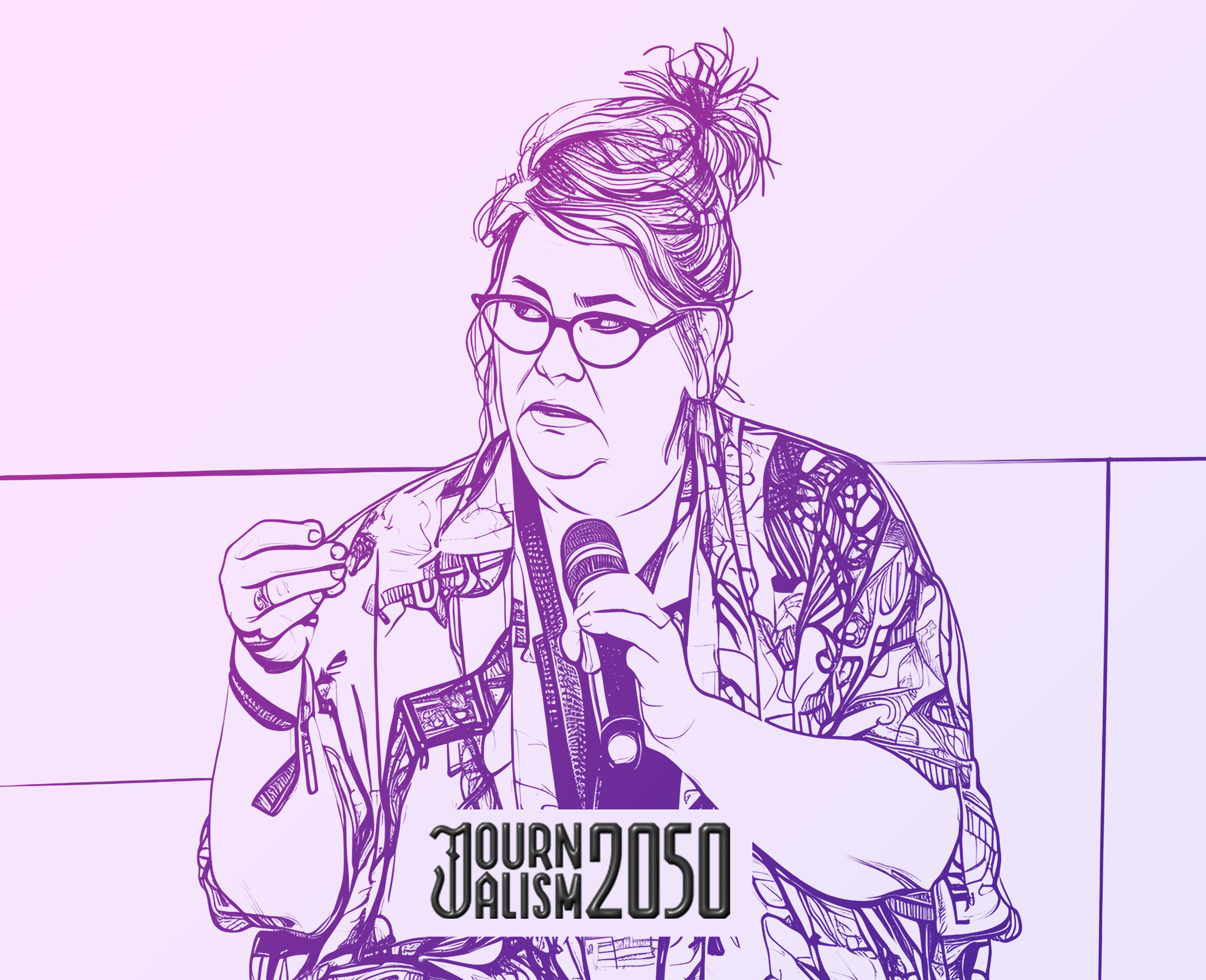
In this episode of Journalism 2050, recorded live at Zeg, a storytelling festival held this past June in Tbilisi, Posetti joins cohosts Emily Bell and Heather Chaplin to discuss the stakes for women reporters on the internet and how we got here. “The licensing of networked misogyny is explicit,” Posetti says. “There’s a global rollback of women’s rights happening before our eyes.”
Credits:
Producer: Sarah Myles
Research: Samuel Earle
Production assistant: Hana Joy
Art: Katie Kosma
Music: Henry Crooks
Has America ever needed a media defender more than now? Help us by joining CJR today.