Sign up for the daily CJR newsletter.
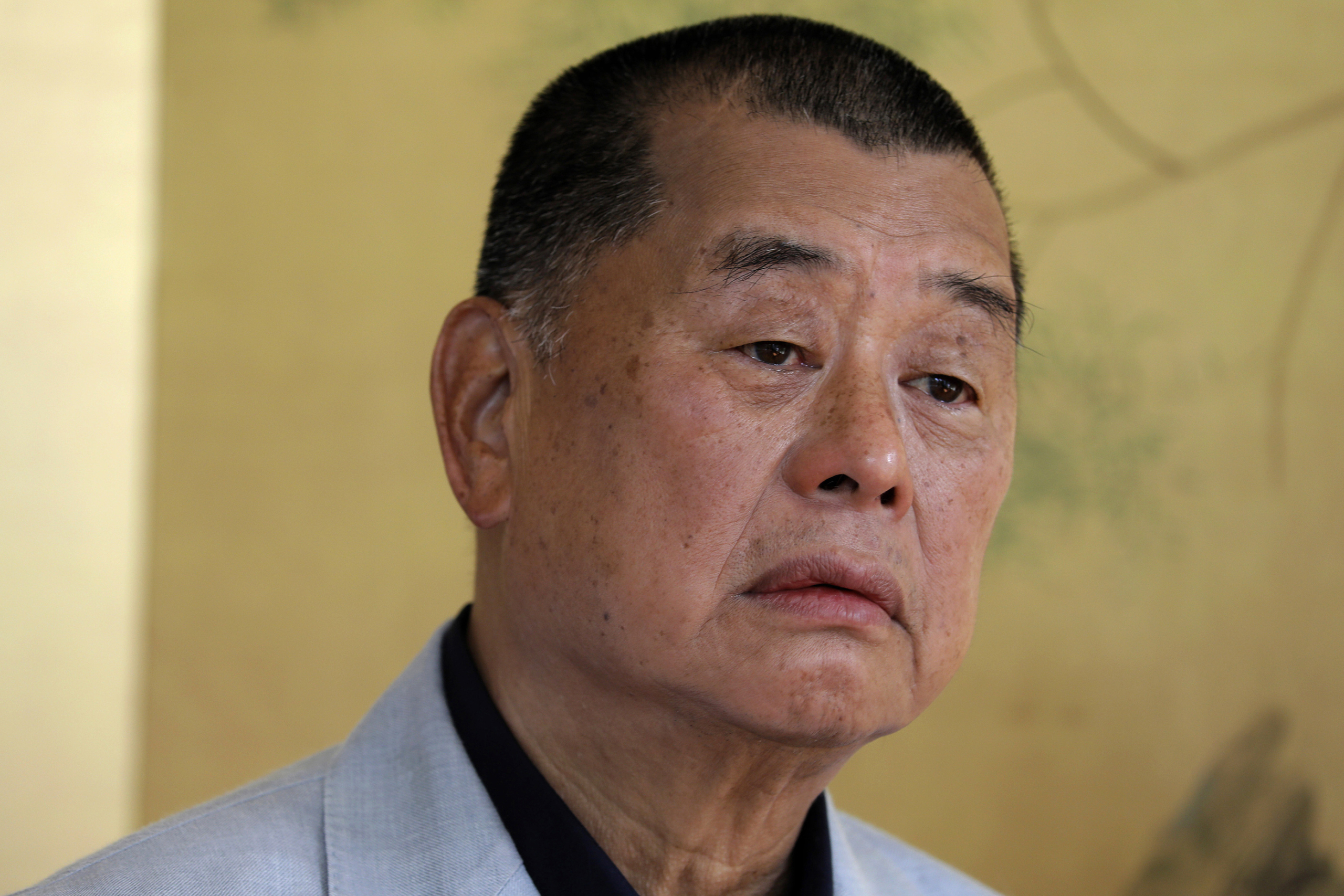
For five years, Jimmy Lai, the founder of a popular pro-democracy newspaper called Apple Daily, has routinely spent more than twenty-three hours a day in solitary confinement in a prison cell in Hong Kong. On Monday, a Hong Kong court found Lai, who is seventy-eight, guilty of sedition and conspiracy to collude with foreign forces. His sentencing will take place at a later date, but he is expected to spend the rest of his life in prison.
The verdict followed a landmark twenty-one-month trial that foreign governments and rights groups consistently condemned as politically motivated, and which was seen by many as an indication of the broader collapse of civil liberties and media freedom in Hong Kong since 2020, when China imposed a national security law there. “This was a sham trial,” Aleksandra Bielakowska, an advocacy manager at the Reporters Without Borders office in Taiwan, said. Bielakowska, who was deported from Hong Kong in 2024 when she traveled there to monitor Lai’s trial, observed, “It’s the death of press freedom in Hong Kong.”
Some of Lai’s supporters queued overnight outside the West Kowloon Law Court Building for a seat in the hearing; someone delivered a box of apples. On Monday, an 855-page verdict was handed down by three judges who were picked by the government for the case. Judge Esther Toh told the courtroom that Lai’s testimony was “evasive” and “unreliable” and that Lai had long held “resentment and hatred” toward China. Lai, seated in a glass box in the courtroom, was left to listen.
For the two collusion charges, the judges said Lai had engaged in “international lobbying with a view of soliciting international support” against Hong Kong authorities. For the sedition charge, the judges said Lai used Apple Daily to “carry out a consistent campaign with a view to undermine the legitimacy or authority” of Beijing and Hong Kong authorities. “Lai’s only crime is running a newspaper and defending democracy,” Beh Lih Yi, the Asia-Pacific regional director at the Committee to Protect Journalists, said.
Lai, who was born in China and became a British citizen, was arrested by Hong Kong police in 2020, as China was cracking down on dissent throughout the city. In 2019, Lai had participated in pro-democracy protests; for decades, Apple Daily had criticized the government. “Today’s process was a farce,” Caoilfhionn Gallagher—who leads Lai’s international legal team, based in London, which operates separately from his domestic team in Hong Kong—said. “It’s a stain on the once enviable Hong Kong legal system.” Yvette Cooper, the British foreign secretary, also gave a statement: “Jimmy Lai has been targeted by the Chinese and Hong Kong governments for peacefully exercising his right to freedom of expression,” she said. In the United States, the Congressional-Executive Commission on China likewise condemned the verdict. Neither the White House nor the State Department responded to requests for comment.
Last year, Donald Trump claimed that if he were reelected, he would “one hundred percent” be able to get Lai released, but it remains unclear if any effort to do so is underway. (“We have to make sure that we can get President Trump to honor what he said,” Nancy Pelosi, the former House Speaker, told me earlier this year.) During the trial, prosecutors pointed to Lai’s meetings with high-profile officials such as Mike Pence and Mike Pompeo, the former secretary of state, as evidence that Lai had asked foreign governments to sanction China and Hong Kong over their crackdown on free speech. The US did sanction Hong Kong officials in 2020; Lai denied the charges and testified in court that he had only asked the US to voice support for the territory.
Born in the city of Guangzhou, in 1947, Lai fled to Hong Kong, which was then a British colony, as a stowaway on a boat when he was twelve years old. He worked in a garment sweatshop and eventually founded Giordano, a clothing company that helped Lai become a billionaire. In 1995, two years before the British returned Hong Kong to China, Lai founded Apple Daily, which soon became one of Hong Kong’s most-read newspapers. After the era of British control ended, a “one country, two systems” framework was supposed to grant Hong Kong substantial autonomy, including free speech. Apple Daily became known for its criticism of China and support of greater political freedoms in Hong Kong. “It would be so boring just being a businessman,” Lai says in The Hong Konger, a 2023 documentary about his life. “I want to make my life more meaningful.”
The 2020 national security law, which Hong Kong officials say has fostered stability, portended a new era of diminished civil liberties for the city’s residents. In 2019, Hong Kong ranked 73 out of 180 countries on the World Press Freedom Index. By 2025, Hong Kong dropped to 140. In recent years, authorities have targeted the formerly independent public broadcaster and forced some news outlets to shutter; others have closed over fear of reprisals from the government. Apple Daily was also forced to cease publication, after Lai’s arrest and those of several other top editors, and the government froze the paper’s assets. “The closure of Apple Daily was a dark day for Hong Kong’s democracy. Today, it is the death knell,” Gallagher said at a press conference in London on Monday.
Lai is seen by many pro-democracy activists as a symbol of bravery and resistance, because he chose to stay and face the possibility of detention rather than flee, something he could have easily afforded to do. “If you’re a bird, you’d rather die singing than remain silent,” he says in the documentary. Blair McDougall, one of several British parliamentarians who have urged the British government to do more on Lai’s behalf, told me earlier this year that he admired Lai’s decision to stay despite the risks. “To make himself a symbol of the decline of the rule of law in Hong Kong is an extraordinary thing,” McDougall said.
Lai’s international legal team has criticized the British government for not doing enough to secure Lai’s release. Keir Starmer—the prime minister of the United Kingdom, whose office did not reply to a request for comment—is planning to visit China in January, but it’s unclear whether he plans to bring up Lai’s case with Xi Jinping, the Chinese president. “My father’s freedom should be a prerequisite to any engagement with China,” his son Sebastien told me in May. “He can’t be forgotten, because if he is forgotten, he will still have a beautiful story, but one that ends in Hong Kong prison. And that’s just not right.”
Lai’s health has declined severely in prison, according to his lawyers, in part because of what they say is inadequate medical treatment for diabetes. “The longer that this drags on, the higher the risk is of Jimmy Lai dying in prison,” Gallagher told me earlier this year. “We want to see him out of Hong Kong as soon as possible and reunited with his family.” (Hong Kong authorities reject the idea that Lai has been denied proper medical care.)
Although Lai appears set to spend the rest of his life behind bars, his legal team hopes the guilty verdict will open up additional options to help secure his release through some sort of political agreement with Beijing. “Now is the time to act,” Gallagher said.
Has America ever needed a media defender more than now? Help us by joining CJR today.