Sign up for the daily CJR newsletter.
It’s a jumpy cellphone video, shot through the window of a moving car, but what you see is clear: on a sunny day, a man in a mask runs up to a woman and clubs her in the back. The victim is a fifty-five-year-old Palestinian, Afaf Abu Alia. The man is a twenty-four-year-old Jewish settler named Ariel Dahari.
Settler attacks on Palestinians in the occupied West Bank are frequent and on the rise, averaging seventy per month in 2025. But the assault on Abu Alia, which occurred last October in the West Bank village of Turmus Ayya, broke through as very few do. Vermont senator Peter Welch displayed a picture of it in a congressional hearing; the Israeli Police District commander overseeing the West Bank shared an account of it with his officers, writing, “This image kept me awake at night.” Even more startling, considering the widespread impunity enjoyed by violent West Bank settlers: the assailant, Dahari, has actually been indicted on a terrorism charge.
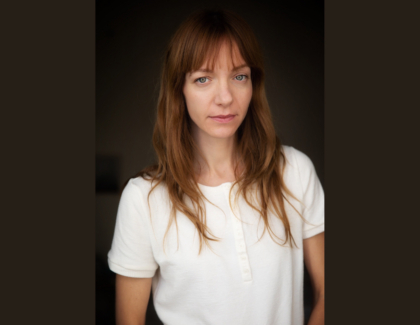
Jasper Nathaniel, who is thirty-eight, is the independent Jewish American reporter who captured the video. “A masked man wearing Jewish tzitzit clubbed a grandma,” he said in a recent interview from New York, where he lives when he’s not in the West Bank. “There’s no spinning that.” Nathaniel reports mainly on his Substack, Infinite Jaz, and on his social media channels. A week before capturing that attack, he posted, “after careful consultation with my financial advisor, I’ve decided to abandon the work that paid my bills for 15 years and go full-time into the lucrative world of independent reporting.”
After graduating college in 2010, Nathaniel spent a decade working for tech startups. “Not to be too dramatic,” he says, “but I found it totally intellectually bankrupt, and I felt like I was wasting my time on earth.” During the pandemic, he started posting writings from his travels through the US and East Africa on his Substack, which was then mostly read by his friends and family. In 2023, he enrolled in NYU’s Arthur L. Carter Journalism Institute, and that winter, he made his first visit to the West Bank. Now he’s been cited by major news organizations worldwide and makes enough on Substack to break even. “I hate myself for using this phrase, but I have an ‘entrepreneurial mindset,’” he says. “You just have to do things on your own.” Our conversation has been edited for length and clarity.
AB: How did you first decide to report from the West Bank?
JN: A couple days after October 7, there was a shooting—Zakaria al-Adra was shot in a town called At-Tuwani. I was waiting to hear more, and there was nothing, and then there was another shooting, and still nothing. I was realizing, “Oh, things are about to spin out of control over there.” I had a great reporting teacher at NYU named Johnny Dwyer. He was like, “Why don’t you go there? Nothing is stopping you except personal risk.” I couldn’t get into Gaza; nobody could. But the West Bank, especially as a Jewish person, it’s very easy to get into.
I had the experience that so many people have where they go there—I was completely gobsmacked by how much worse it was than I had imagined. I went during my first winter break, in January 2024. I had never published anything in an actual publication. I started posting on Instagram and Substack and immediately got this really big reception of people saying, “Holy shit.” Purely from an opportunistic journalistic perspective, I realized this was one of the most important stories in the world and the lane was wide open to cover it.
How did you land on your approach to covering the West Bank?
There was no part of me that was like, “I should call the New York Times and see if they want to hire me.” The idea of writing a pitch email—I was like, I don’t have time for this. I thought, “I’m doing the thing that matters. Getting the information directly to people.” To be clear, I did learn a lot in journalism school about integrity and how to source properly—I take it all very seriously. But I think that it’s important to not have any gatekeepers when you’re reporting on something. I’m building my own audience.
There’s a huge industry for these content creators and influencers who are making shitloads of money on the internet capturing “exciting content.” There was an Italian guy—he was in the West Bank. He got my information. He was texting me, “Where do you think the next attack will be?” And there’s lots of journalists who’ve spent decades doing phenomenal reporting in these places.
I need to bridge these two things. There’s no reason why I can’t be serious, thoughtful, educated on this matter, but also use these channels that these right-wing influencers are using. I’m posting stuff on my Instagram and on my Substack about which I’m doing deep research. I’m not just capturing a settler attack. I’m contextualizing it. Combining those two things has really resonated. A lot of people who are not reading the Times, who are just looking at social media—they want to know more.
You’ve said you post photos of yourself so that the social media algorithms will pick up your reporting.
People message me all the time—half jokingly, half seriously—“When’s the OnlyFans coming?” It’s tricky because, listen, I like attention and going on podcasts and being in videos, but I am very conscious to not make the story about me because, to state the obvious, it’s fucked up that people listen to me because I’m a white, young, Jewish guy in the West Bank. It shouldn’t be that way, but it is. I try to put myself in it in a thoughtful way that advances the story. I also feel, like, unshackled, unburdened, by some of the ethics. I’m compromised. I’m never going to be able to do straightforward reporting for a big paper, but that’s okay. I don’t know how anyone could frankly report on the West Bank and not form an opinion, and not want to share that opinion.
I was listening to The Daily, and they were talking about Michael Wolff and Epstein and saying, “We don’t advise our sources—this breaks every journalistic ethics guideline.” I was thinking, “I’m advising my sources all the time!” The parents of Mohammed Ibrahim, a sixteen-year-old US citizen incarcerated by Israel, were completely desperate to get him out. We were talking on the phone almost every single day. I’m not going to be like, Listen, I’m just here to report the story. No. I want the kid to get out of prison, and I’m not afraid to say that. I advocated for him. People can form their own judgment if I’m a reliable, credible source. People on the internet tell me every single day, “You’re not a real journalist, you’re an activist.” And I don’t care.
I’m going in, living with these people, I’m eating the food they’re eating. The thing about Palestinian people is, it’s an insult if you say no to their hospitality. “I’m just gonna grab food later.” “You don’t want the enormous dinner we prepared for you?!” I exclusively stay at people’s houses. After the attack in Turmus Ayya, when all these journalists were coming with a whole crew, I was in a house when they would come do an interview, and they’d be looking at me like, Who’s this guy who’s not Palestinian walking around in his socks?
When you pass the checkpoints into the West Bank, what do you tell Israeli authorities?
I just go as a Jewish guy there to see the Holy Land. But I think that ship has sailed for me. Next time, I’ll need a different story.
As the attack in Turmus Ayya was happening, what was going through your head? Was any part of you thinking, “This is good material”?
It was more like, I might get my head beaten in, and I hope there’s video so they can hold people accountable. There’s one point, as I’m running away from the mob, I put my phone in my pocket, and I was just straight-up running for my life. But frankly, what I was most scared of was getting my phone stolen or damaged. More than anything else, I was scared for my phone.
One focus of your reporting is the way the American government fails American citizens living in the West Bank.
The way Palestinians are covered, they’re always the victims or the terrorists. And the story of these Palestinian Americans breaks the mold. They’re more what you expect wealthy conservative business owners in Florida to be like. They own vape stores, gas stations, streetwear shops. Up until recently, they were Trump supporters.
It’s important to me to capture the normal ways that people are living, and that means humanizing every type of person, including the MAGA supporters who are cracking jokes about transgender kids that I am personally disgusted by. But it’s important to show that these guys are Palestinians too, and their children are also being killed.
It shows the utter deference of the US to Israel that they refuse to come in and protect the thousands of American citizens living in the West Bank, who most people—including myself, up until a few months ago—don’t know exist.
What has the response to your work been like from your peers and teachers at the NYU journalism school?
My professor Johnny Dwyer—he’s really old-school. He didn’t quite understand what I was doing right away, but he’s become my biggest supporter. He brought me in to talk to the class a few weeks ago. He’s Gen X, not a boomer, but it’s like a boomer starting to realize, These kids are onto something. Now he’ll read my Substack or see my Instagram posts and be like, You should try to talk to this person. He’s helping me apply hard-news expertise, which is incredibly valuable. I’m always wishing I had a good editor.
Has America ever needed a media defender more than now? Help us by joining CJR today.