Sign up for the daily CJR newsletter.
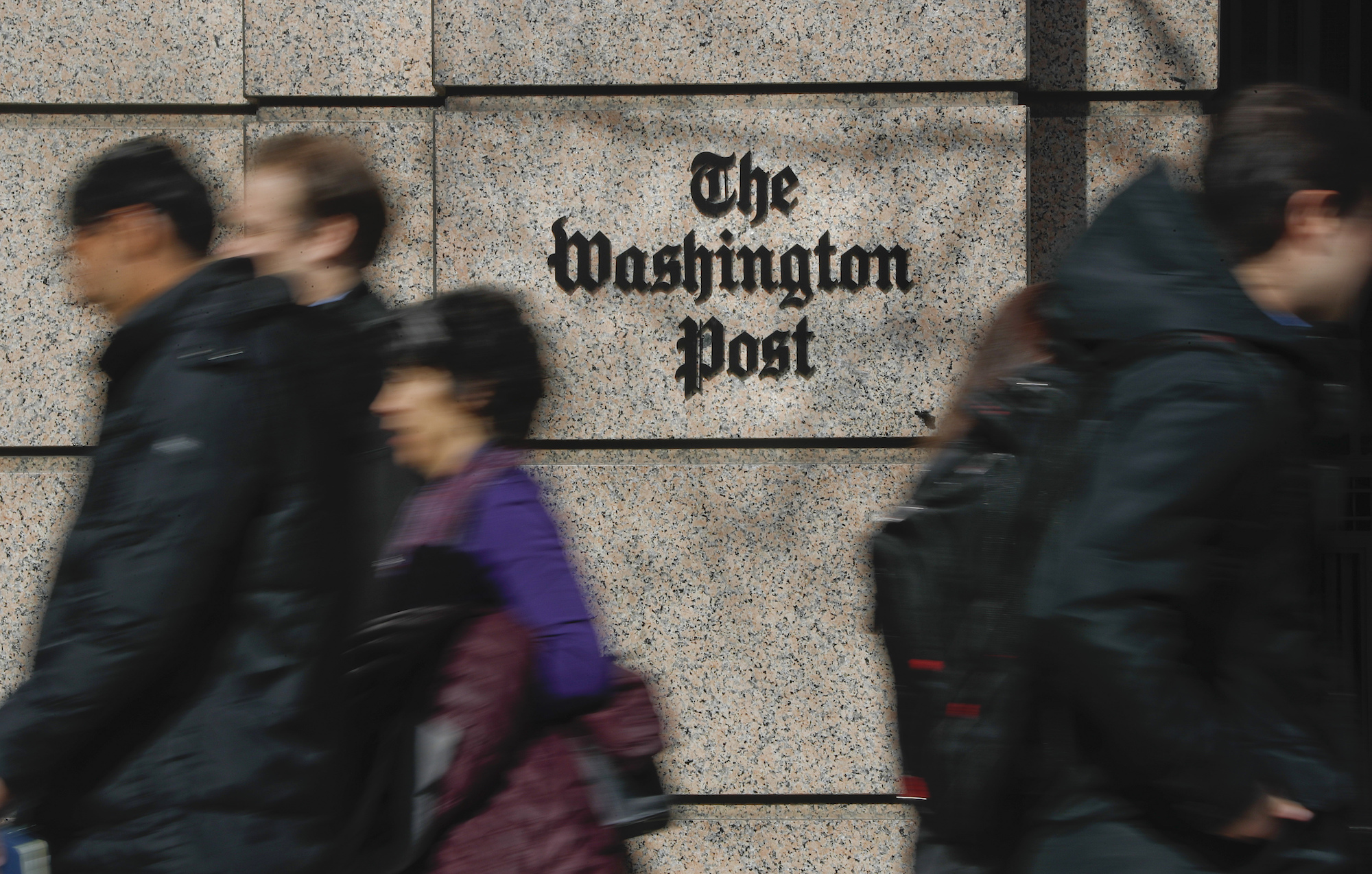
On New Year’s Eve, The Atlantic announced an eye-catching double hire from the Washington Post, bringing over the star political journalists Ashley Parker and Michael Scherer. The magazine situated the development in the context of a recent editorial expansion. But it would come to be more widely seen, in media circles, as emblematic of a contraction at the Post. Two days into the new year, it was revealed that another Post political reporter, Tyler Pager, would be returning to the New York Times, where he used to work; a few days after that, we learned that Josh Dawsey, also a political reporter, would return to the Wall Street Journal, and that Leigh Ann Caldwell, a high-profile journalist who anchored videos, events, and a newsletter for the Post, would join Puck; the day after that, it was reported that the Post was laying off around a hundred staffers on the business side of the paper. In the midst of all this, Ann Telnaes, a long-serving editorial cartoonist in the Post’s opinion section, quit after alleging that editors killed a cartoon depicting Jeff Bezos, the paper’s owner, and other billionaires (and Mickey Mouse) genuflecting before then-President-elect Donald Trump. “I will not stop holding truth to power,” she said.
David Shipley, the editor of the Post’s editorial page, denied that Telnaes had been censored; “the only bias,” he insisted, was against repeating a theme that had recently appeared in written opinion articles. Fast-forward to the end of February, and Shipley was gone, too: Bezos had just dictated that the Post’s opinion section would henceforth advocate “personal liberties and free markets,” and asked Shipley if he was on board, suggesting to him that “if the answer wasn’t ‘hell yes,’ then it had to be ‘no’”; clearly, Shipley’s answer was not “hell yes,” and he chose to depart. Erik Wemple, a media critic at the Post, reportedly attempted to write about Bezos’s edict but was told he couldn’t; Ruth Marcus, a longtime columnist, had an article criticizing the directive killed, and resigned. In April, her high-profile colleague Eugene Robinson followed her out the door, citing the “significant shift” in the opinion section’s mission. In May, the section announced a “voluntary separation program” as part of this transition; a similar program was offered to news staffers with more than a decade of service, as well as all video and copy desk employees. The Post’s newsroom, of course, is separate from its opinion section, but last month, Will Lewis, the paper’s CEO, characterized the opinion reorientation as part of an organization-wide “reinvention journey.” Those “who do not feel aligned with the company’s plan” should “reflect on that,” he wrote. In other words: Are you in, or are you out?
As the deadline for the buyout program, which fell last week, approached, many Post staffers—yet more boldface names among them—decided they were out. Among them, according to various reports, were the columnists Jonathan Capehart, David von Drehle, Perry Bacon Jr., Molly Roberts, Philip Bump, and Catherine Rampell; the head of the paper’s Fact Checker vertical, Glenn Kessler; the veteran political writer Dan Balz; and Dave Jorgenson, who became the face of the paper on TikTok and YouTube, achieving unusual social media cut-through for a journalist at a legacy media institution. Micah Gelman and Lauren Saks, who led the Post’s video efforts, left with Jorgenson, while a number of executives and editors reportedly quit, too: Krissah Thompson, Ann Gerhart, Monica Norton, Mike Semel, Lori Montgomery, Hank Stuever, Joe Yonan. The sports journalists Dan Steinberg and Sally Jenkins have recently joined The Athletic and The Atlantic, respectively; the political reporter Toluse Olorunnipa also went to the latter publication. Wemple; Ann Marimow, who covers the Supreme Court; and Adam Bernstein, the obituaries editor, have all jumped ship to the Times. Indeed, according to Politico’s Michael Schaffer, the Post’s entire obituaries desk took the buyout, with the exception of one staffer who was too junior to qualify. As a metaphor for the paper’s current situation, it feels horribly on the nose.
Is the Post dying? Some media-watchers have said so overtly; others have talked about its future in existential terms. It’s certainly clear that the paper has been in bad shape for a while. This crystallized last summer, when Lewis—dogged, around the same time, by allegations about his conduct as a Rupert Murdoch lieutenant in the UK a decade ago, and about his supposed efforts to kill fresh stories about those allegations, at the Post and elsewhere (he denies wrongdoing on both counts)—announced plans for a major reorganization, including the appointment of an old colleague from the UK as executive editor (which, ultimately, wouldn’t last) and the creation of a “third newsroom,” the remit of which, while vague, seemed to involve dragging the Post’s journalism into the modern age. Questioned on all this by staff, Lewis reportedly told them that the paper was hemorrhaging both readers and money, adding, “I can’t sugarcoat it anymore.” A few months later, Bezos intervened to block the opinion section from endorsing Kamala Harris over Trump; he characterized the decision as being about reader trust, but the timing, which he conceded was not ideal, looked to many readers like a sop to a man who could soon become president, and hundreds of thousands of them canceled their subscriptions in an apparent act of protest. Earlier this year, Clare Malone, a media reporter at The New Yorker, reported from a party at the Kennedy Center celebrating a documentary about Katharine Graham, the Post’s storied Watergate-era owner, that numerous attendees later described as a “wake” for Graham’s version of the paper; more broadly, Malone found that the Post was in a state of cratering morale and strategic drift, lacking clear direction from the top. (In exit interviews, she wrote, staffers “attributed their departures to Lewis’s lack of a discernible plan for the paper.”) Last month, New York’s Charlotte Klein reported that after months of tumult, staffers at the paper believed that it may have turned a corner—new hires were coming in, and its coverage of flooding in Texas had attracted new subscribers—but that this feeling seemed to recede as last week’s buyout deadline neared. “There’s been a lot of optimism that we were at the worst part a while ago,” a source said. “I just don’t think there’s any reason to believe that anymore.”
From the outside, there are several ways of interpreting all this. One (literally) cartoonish theory is that Bezos is now a thinly veiled Trump supplicant, who is trying his best to trash an independent news outlet. Bezos’s post-election behavior certainly invites the supplicant conclusion. But the trashing idea is more complicated. So far, there’s no evidence that he’s meddling in the Post’s newsroom—and if he were, there surely would be. (Journalists tend not to keep quiet about unethical dictates from owners.) On the opinion side, he did spike the Harris endorsement, and his “personal liberties and free markets” edict seems to have pleased Trump—with whom Bezos dined at the White House on the same day. (When a right-wing media personality put it to Trump that Bezos was trying to make the Post “more fair,” Trump responded, “I think it’s great.”) And yet, if Trump does appreciate the new mission of the Post’s opinion pages, it’s fair to ask why. Trump is hardly a defender of free markets these days, and the less said about his approach to personal liberties, the better. Any honest commitment to these principles would surely require calling him out on a daily basis.
Maybe we’re not looking at an honest commitment here. But I favor a different interpretation of the reorientation, which is less directly about Trump: that Bezos has become a rich anti-woke type, and is using the apparent permission structures of the new Trump age to channel this sensibility into his paper’s opinion pages, caring less than before that doing so might be perceived as a dishonorable encroachment. (Per Malone, he and his wife religiously read Bari Weiss’s Free Press, a prominent vector for this worldview. At the time, a Free Press columnist was rumored to be in the running to succeed Shipley, but the job ultimately went to Adam O’Neal, formerly of The Economist. In a mildly cringe-inducing introductory video—“You might be wondering, Who am I? That’s actually kind of a deep and philosophical question, and I’m not sure I went to school long enough to understand it”—O’Neal pledged that the section would be “unapologetically patriotic” and optimistic “about the future of this country.”) Indeed, what struck me most about Bezos’s intervention was not any theoretical Trump alignment, but his insistence that the ideology of personal liberties and free markets is “underserved in the current market of ideas and news opinion”—an obviously untrue assertion (just for starters, read the editorial pages of the Wall Street Journal) that is a telltale redoubt of the center-right elite.
At the same time as pivoting the opinion section, intentionally or not, to embrace ideas popular among this elite, Bezos has reportedly insisted that the Post as a whole move away from serving elites and instead appeal to America at large; he has spoken of broadening the paper’s appeal such that firefighters in the Midwest might want to read it. The patronizing assumptions behind this imperative aside, it appears incoherent; according to Malone, Bezos has also suggested to editors that the Post should be more like The Atlantic, a publication with a carefully targeted audience. This sort of strategic confusion has come across in other news out of the Post in recent months. An executive reportedly laid out what she called a “Big Hairy Audacious Goal” for the Post to eventually reach two hundred million paying users. (I can think of some other adjectives for this goal, but they’re not printable.) Recently, it was reported that what was once known as the “third newsroom” was being spun away from the (first?) newsroom and turned into a more commercial endeavor, with the ability to, for example, explore “enhanced brand integrations.” (“Lots of people are unsure what all of this means,” Klein wrote in New York. “Is the Post going to invest in newsfluencers? Video spon-con?”) It has also been reported that the paper has been working on a new opinion initiative (outside of the opinion section) that could, according to the Times, publish “opinion articles from other newspapers across America, writers on Substack and eventually nonprofessional writers,” the latter with the help of an AI writing coach. This struck me as a gesture toward older models—syndication, essentially, and that of the Forbes-style contributor network—whose heyday, it’s safe to say, is long gone. Besides, executives at local papers that the Post reportedly considered as potential partners told the Times they had no interest. “We are laser-focused on growing direct relationships with customers,” one said. “We think scale is yesterday’s war.”
At the same time, the changes at the Post clearly aren’t happening in isolation. However you judge them, all of them must be seen in a broader context; many publications, of course, are grappling with questions—how to attract and retain paying readers; how to engage with the content-creator space while maintaining editorial integrity; how to use AI—that lack easy answers. The recent wave of departures can be seen as intersecting with such broader trends, too. Jorgenson, the Post’s social media star, isn’t jumping to another legacy newsroom, but going independent on YouTube and the newsletter platform beehiiv; he told the Times that Lewis’s remarks on the buyout offer essentially “rolled out the red carpet” for his resignation, and that he was unconvinced by the Post’s strategic “road map,” but he’s not the first star journalist to have jumped into the creator economy, and he won’t be the last. Kessler’s departure from the Fact Checker vertical can be seen in light of both Post-specific factors—he has said that he wanted to stay on to train a successor, but couldn’t reach an agreement with bosses; the future of the vertical is now uncertain—and broader ones, in an era when, as I explored last year, the practice of fact-checking is much less in vogue across the news industry than it was during Trump’s ascent and first term. (“In an era where false claims are the norm,” Kessler wrote in a valedictory column, “it’s much easier to ignore the fact-checkers.”) Schaffer, of Politico, suggested that if the Post’s obituaries desk has been gutted, then it has reverted to the norm among newsrooms, rather than being some depleted outlier—the “juggernaut” desk at the Times, he wrote, “is almost the only game left in town when it comes to full-service obit staffs.”
As I’ve also written before, generalizing about waves of job churn in the media business is also difficult because personal motivations inevitably factor into the calculus. That is, again, the case here. The state of the Post’s strategy may have been among Jorgenson’s reasons for taking the buyout, but so, too, he has said, were “personal career ambitions” and the fact that he is now less afraid of the prospect of failing, which might have impeded him from going independent a few years back. Balz, the political writer, is retiring from full-time status at the Post after forty-seven years, but not going away entirely, it would seem; he wrote yesterday that he intends to remain affiliated with the paper and to continue to write on a less regular timetable. In a departure memo last week (that was itself lauded as a masterful piece of writing), Jenkins, the sports columnist, said that she wasn’t leaving because she’s unhappy at the Post, but because she’d landed “the only other job I ever coveted in this world,” at The Atlantic. “I have a weakness for literary pursuits,” she wrote, “and it got me.”
These personal reasons don’t mitigate the well-documented problems at the Post, nor lessen the blow of losing so many big-name journalists in one go. (On my own beat, I’d like to reserve a word for Wemple, whose writing on the media has always been both meticulous and provocative.) But I’ve also written before that journalism is more of a team sport than the industry focus on its stars sometimes acknowledges, and the Post is clearly retaining a corps of incredibly talented journalists. In their departure notes, Balz and Jenkins both emphasized this fact, with the latter writing that she sees “the glimmer of a new Washington Post—one that moves”; it will have “to be right-sized,” she added, “and young trees planted, but when the clocks all start chiming at the same time, it will be glorious.” Chelsea Janes, who covers baseball for the Post, and is staying, reacted to news of Jenkins’s exit with a different metaphor—that of a sports team that has been torn apart for unclear reasons—but added that there’s “plenty of talent still on the roster, and everyone on that roster plays to win.” I can sympathize with Janes’s analogy: my English soccer team is currently in the process of a full-scale rebuild, and a lot about it sucks. But it also feels like a moment of opportunity. That is, if the owners and management know what they’re doing. The same is true in journalism.
Other notable stories
By Jon Allsop
- On Friday, the Bureau of Labor Statistics released a jobs report showing a slowed pace of hiring last month, and numbers for May and June that had been revised down. In response, Trump fired Erika McEntarfer, the official in charge of BLS, accusing her, without evidence, of rigging the numbers; yesterday, Kevin Hassett, the head of the White House National Economic Council, denied that Trump had shot the messenger, but implied that there were “partisan patterns” in the data, and said that “the president wants his own people there, so that when we see the numbers, they’re more transparent and more reliable.” Writing in the Times, Peter Baker situated the firing within a broader pattern of Trump seeking to control the flow of official information, warning that his “war on facts” echoes an “authoritarian playbook.”
- Also on Friday, the Corporation for Public Broadcasting—the entity that funnels federal funds to NPR, PBS, and public-media stations across the US—announced that it will shut down early next year, after Republicans in Congress voted recently in favor of a rescissions package clawing back its budget; according to NPR, “public media officials had held a glimmer of hope that lawmakers would restore some of the money for the following budget year,” but on Thursday, “the Senate Appropriations Committee declined to do that.” NPR and PBS will survive since they get relatively little funding directly from the CPB, but the effect on smaller, often rural stations will likely be significant. The CPB will lay off most of its staff at the end of next month.
- Last week, we wrote in this newsletter about media coverage of the starvation crisis in Gaza, and noted claims from pro-Israel voices that widely published photos showing a malnourished child were misleading—even part of a Hamas-driven disinformation campaign—given that the child had preexisting health issues. The Times, which was among the outlets to run one of the photos, subsequently updated its story to note this fact. Semafor’s Max Tani now reports that the Times had decided not to use a photo of a different malnourished child because he had cerebral palsy, and explores the intense scrutiny critics have placed on the paper’s Gaza coverage.
- In the UK, The Guardian’s Michael Savage profiled Emma Tucker, the British editor of the Wall Street Journal, in the wake of her refusal to kill a story about Trump’s past ties to Jeffrey Epstein, prompting Trump to sue the paper. An “enigmatic quality” has long surrounded Tucker, who is seen as “disarmingly grounded” and perceived not to share the right-wing views of Rupert Murdoch, the Journal’s owner, per Savage. But she has two qualities Murdoch loves: “a willingness to make unpopular decisions for the sake of his businesses and a lust for a politically contentious scoop.”
- And we wrote recently about a bombshell investigation, in the British newspaper The Observer, that cast doubt on the background of Raynor Winn, the author of a hit memoir about hiking a coastal path; among other things, the book claims that Winn and her husband set off on the journey after a bad investment in a dishonorable friend’s business caused them to lose their home, but The Observer alleged that the Winns lost their home after Raynor was accused of theft. Now the paper is out with a follow-up story, for which it interviewed business owners and others who dispute how Winn portrayed them in the memoir. Winn depicts the owner of a café behaving abusively toward a young employee who then decides to quit, handing Winn a free panini on his way out. In fact, per The Observer, the café has never served paninis.
Has America ever needed a media defender more than now? Help us by joining CJR today.