Sign up for the daily CJR newsletter.
In 1971, the Supreme Court ruled that the New York Times and the Washington Post had the right, under the First Amendment, to publish classified documents exposing serious deceptions by the government during the Vietnam War—revelations that came to be known as the Pentagon Papers. The landmark decision prevented the government from preemptively censoring the press. Last week, however, a new media policy took effect at the Pentagon. It requires reporters to sign a pledge agreeing only to use material that is “approved for public release by an appropriate authorizing official before it is released by any military member, DoW civilian employee, or contract employee, even if it is unclassified.” Journalists who refused to fall in line lost their passes.
“It’s like college move-out day,” one reporter told Ivan L. Nagy, who covered the Pentagon’s new policy in a series of articles for CJR, referring to dozens of veteran correspondents packing their desks and leaving the building. Nearly every major media outlet, including Fox News, issued a statement about why they refused to comply. “Securing access to the Pentagon, to the building, is not worth giving up the ability to write more than press releases and official statements,” one editor told Nagy.
Just three US outlets and a handful of independent reporters signed the pledge. Those outlets were One America News, The Federalist, and the Epoch Times, where one national security reporter, Andrew Thornebrooke, resigned in protest. Thornebrooke wrote in his resignation email that signing the pledge was a choice to “abdicate our responsibility as journalists in favor of merely repeating state narratives.”
Pentagon spokesperson Sean Parnell insisted that the policy change was a matter of national security, and did not “impose restrictions on journalistic activities.” But all signs indicate that basic reporting practices, such as asking for tips on social media or posing questions to defense personnel, are no longer welcome.
Seth Stern, the director of advocacy at the Freedom of the Press Foundation, called the Pentagon’s actions “a classic case of unconstitutional prior restraint.” He is referring to the same concept that the Supreme Court rejected when the Nixon administration tried to block publication of the Pentagon Papers. Although that 1971 decision was a significant win for press freedom, it did not protect journalists or their sources from prosecution after the fact. That vulnerability would be used extensively against whistleblowers and journalists in the decades that followed. President Barack Obama in particular prosecuted a long list of government officials who leaked classified information under the Espionage Act of 1917—which was originally passed to protect US interests during World War I and then weaponized against whistleblowers—no matter the value of that information to the public. Edward Snowden, who sought asylum in Russia and who has faced bipartisan resistance to a pardon, released documents that provided the foundation for some of the most celebrated journalism in recent history. The Espionage Act was also used against Julian Assange, Chelsea Manning, and Reality Winner.
The Pentagon’s strategy of designating reporters “security risks” rather than subjecting them to outright censorship serves as yet another means of criminalizing the reporting that makes accountability of the government possible. After 9/11, “national security” was routinely invoked against those who reported critically on the Iraq invasion. The expanding government surveillance of journalists, and the prosecution of their sources, shared the same goal of controlling information.
In a recent article for the New York Review of Books, Cora Currier traces how the media’s failure to cover the motivations for foreign American wars—and then the full extent of the casualties—ends up normalizing bipartisan support for these military interventions. “The continued existence of the military commissions and the detention center at Guantánamo, the occasional drone strike in Somalia, the batch of trainers dispatched to Niger—these once controversial policies have turned into mere state functions,” she writes. The Pentagon’s new policy could move the press further in the direction of uncritical coverage and the government toward uninterrogated military action.
Journalists are not the only ones feeling intimidated by the Pentagon’s new policy. It is also sending a chilling message to government officials inside the building who want to share information crucial for the public to know. “The fear is palpable,” Thomas Brennan, founder of The War Horse, told Nagy. “I would say the resistance to talk is stronger than it’s ever been before, at least in my thirteen years. There’s a real fear of retaliation.”
Without access to sources inside the Pentagon, reporters will lose insider information and tips; without access to the building itself, reporters won’t be able to observe meetings or make use of spontaneous face-to-face encounters. “You lose the convenience of, on your way to the cafeteria for lunch, running into the chairman of the Joint Chiefs and saying, ‘Hey, what’s going on? Here’s the story I’m working on. Can you help?’” Barbara Starr, a former CNN reporter, told the Washington Post.
The Pentagon’s restrictions come at a time when the United States is engaged in a series of bombing campaigns in the Caribbean. The reporters covering this military action will face obstacles in providing the public with time-sensitive and valuable information on the conduct of the Army and the consequences of these strikes. It’s clear that this sort of obfuscation is the goal of these restrictions. Some publications may sue to strike down the policy, or expand their foreign reporting. But proximity to power is arguably not the most ideal way to report on a government that has been highly militaristic for decades, regardless of which political party is in the White House. Some of the most consequential reporting on the effects of US wars was done in the field, not inside the Pentagon.
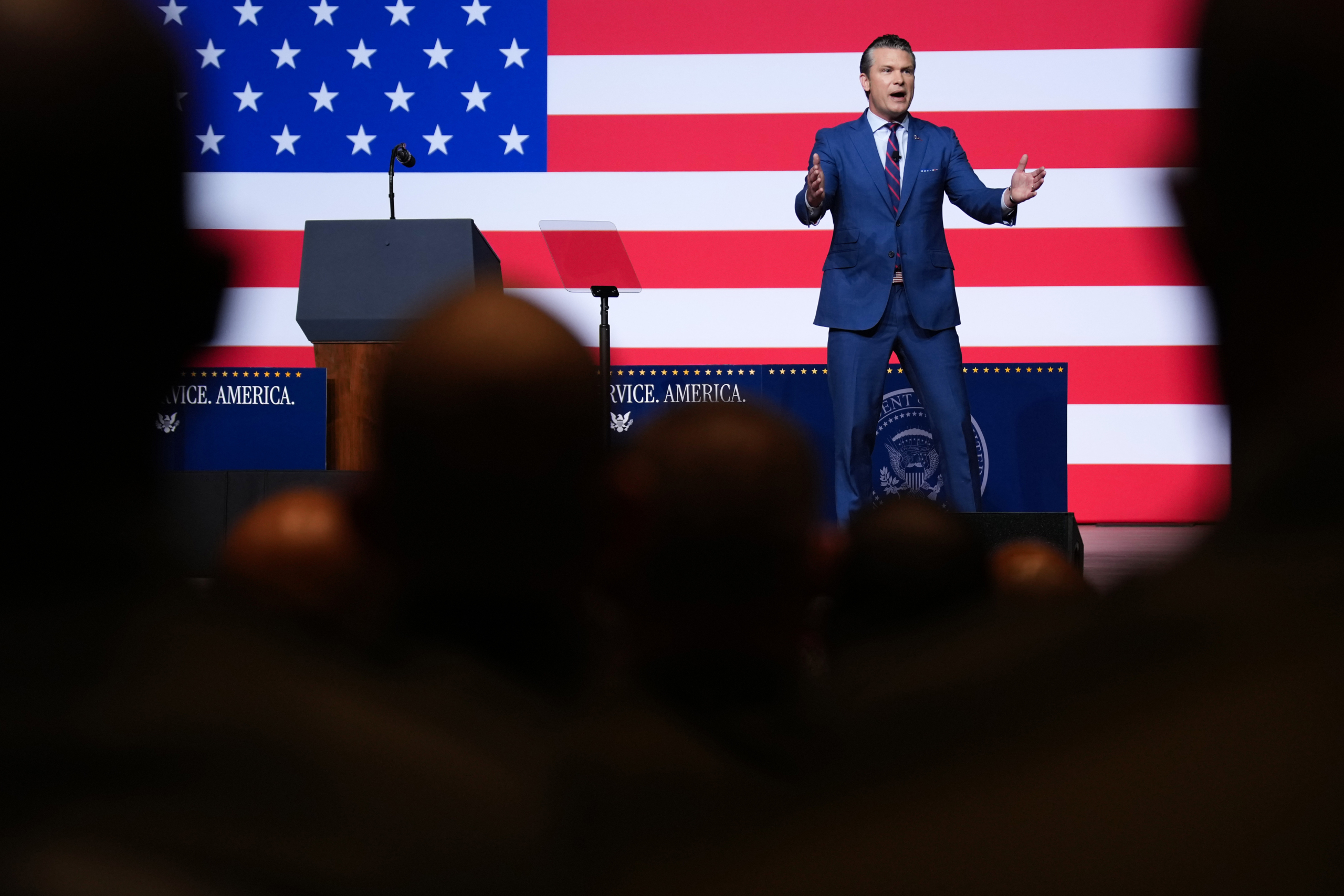
Defense Secretary Pete Hegseth, a former contributor to Fox News, mocked journalists on his social media by directing a waving-hand emoji at the New York Times and the Washington Post, and reposting an image depicting The Atlantic as a crying baby. His taunts tried to signal victory. Yet the most consequential leak of this administration happened in March, when government officials accidentally added Jeffrey Goldberg, the editor of The Atlantic, to a Signal group chat where military operations in Yemen were being discussed. Sometimes the press doesn’t need leaks, or inside sources, or even a badge, to discover national security secrets—the government’s blunders will do it for us.
Other notable stories…
By CJR Staff
- Mario Guevara, an independent reporter who was deported from the United States to El Salvador earlier this month, spoke with Atlanta’s 11Alive about his return to the country he’d left decades earlier upon receiving death threats for his journalism. He received a hero’s welcome, he said. He also pledged to continue reporting.
- Roughly 150 people were laid off last week by NBC News. Among the cuts were teams dedicated to covering Black, Asian American, Latino, and LGBTQ+ groups, as Corbin Bolies reported for The Wrap. A recent Nieman Lab article by Hanaa’ Tameez on the decline of DEI efforts in journalism reports that journalism jobs relating to race, diversity, and equity declined significantly by 2023, and that many race, diversity, and identity products at newsrooms—such as Politico’s The Recast and Bloomberg’s Equality newsletter—have shut down.
- AI-generated news farms are taking over dormant domains and filling those sites with recycled writing from reputable news titles like The Guardian, Nieman Lab reported. These AI news slop sites are becoming increasingly prevalent in Google Discovery and Google News feeds, as Google does not explicitly bar writing created using artificial intelligence. In a study released in May, NewsGuard tallied nearly thirteen hundred AI-generated news sites across sixteen languages.
- Late last week, days after Bari Weiss was appointed editor in chief of CBS News, Claudia Milne, the senior vice president of standards and practices at the company, announced her departure. Last year, CJR interviewed Milne about new public-facing fact-checking initiatives at outlets including CBS. Milne said, “We want to show the process by which we go about verifying things so that audiences can see the care that we take to make sure that what we put on air is real.”
- And Deep South Today, a nonprofit network of local newsrooms, and the New York Times’ Local Investigations Fellowship are launching the Deep South Today Investigative Reporting Center, an initiative to deepen the work of participating news outlets like Mississippi Today, Verite News, and The Current and to bring Times fellows to cover the South. Adam Ganucheau, Deep South Today’s executive editor and chief content officer, said local familiarity combined with the Times’ expertise will create “a regional force for accountability and change.”
Editor’s note: Language quoting from the Pentagon’s press policy was partially omitted due a transcription error. It has been updated.
Has America ever needed a media defender more than now? Help us by joining CJR today.