Sign up for the daily CJR newsletter.
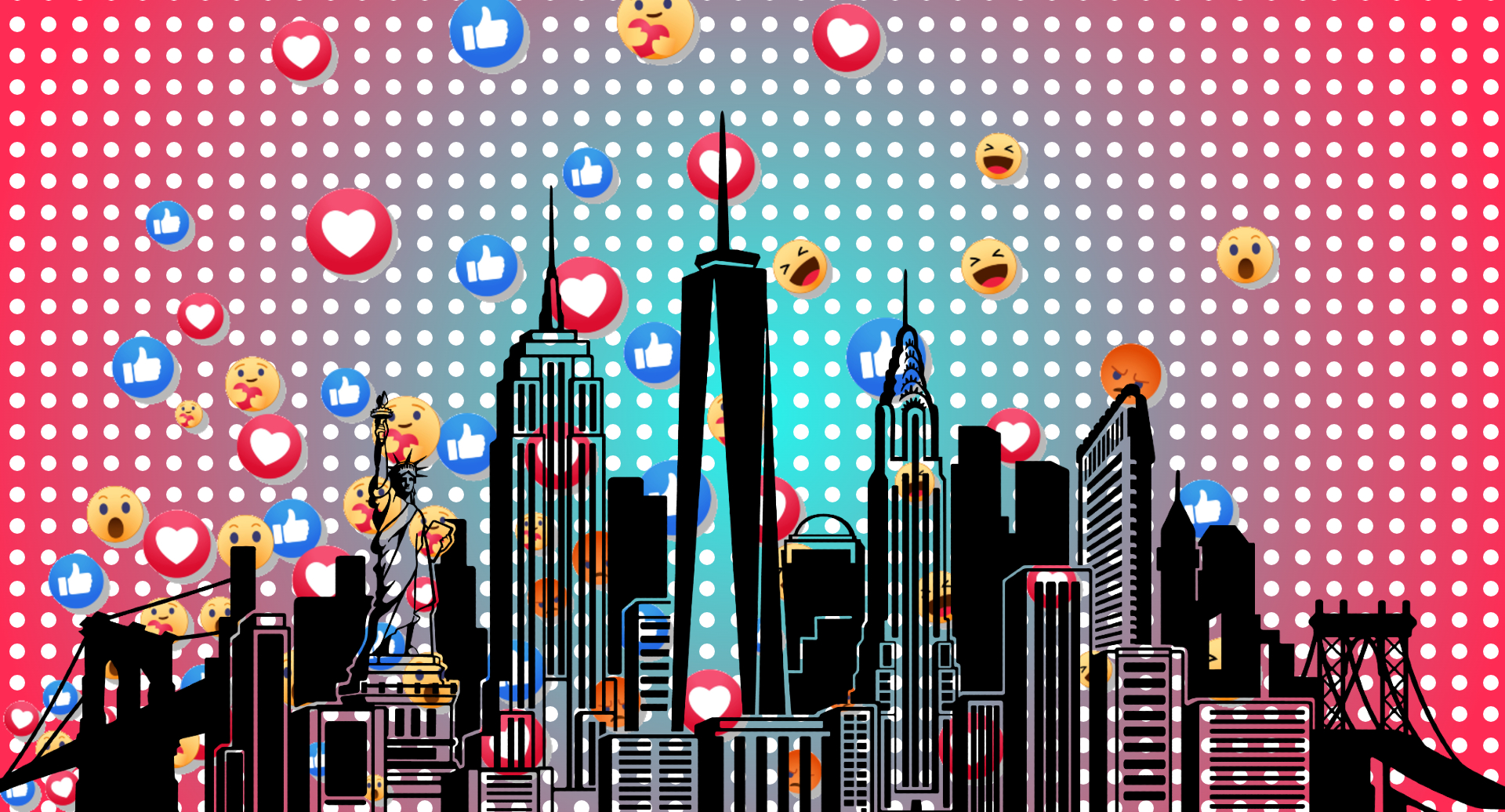
Whether he’s sitting with kids to promote pre-K, putting on a hard hat and holding a shovel to announce a new infrastructure project, riding a bicycle in support of bike lanes, or answering a question from an influencer on the street, Mayor Mamdani’s administration appears to be keeping busy promoting new policies and city services. The mayor’s office has held influencer-only press briefings, hired a host of new communications staffers, and created a network of influencers who push out his messages to their followers.
On TikTok and Instagram, influencers remind New Yorkers to vote, go to the doctor, participate in city budget talks, and compost their food waste.
Our forthcoming report, to be published by Columbia Journalism School’s Tow Center for Digital Journalism and the Initiative for Policy Dialogue at Columbia University, maps this new ecosystem and the changes that have taken place in New York City in 2026.
We reveal that there are two types of relationships in place. There are pilot programs aimed at using influencers on Instagram and TikTok to promote city services and initiatives including immigration rights, public budgeting processes, and tenants’ rights, as well as preexisting campaigns providing information about voting and healthcare.
There is also a newly created Signal group just for influencers, which was formed out of the Creators4Zohran group that supported the mayor’s election campaign. NYC Creators Announcements is run by Emilia Rowland, the director of new media and cultural communications at the NYC Office of the Mayor. Via the encrypted-messaging app, members receive daily updates, talking points, and clips to use in their posts. They are invited to events and offered interviews with city officials.
Influencers who are selected to join the group fill out an intake form that describes where they live and what topics they are interested in. They will then receive invitations targeted to their interests, such as being invited to join a neighborhood canvass or film the preparation of a canvass.
In many ways, the Signal group is similar to a traditional press list created and used by communications teams, in that the influencers receive updates and can decide what they choose to cover. There are, of course, clear differences between the work of journalists and social media influencers. These influencers have been criticized for not asking adversarial questions or doing tough investigative reporting. Influencers in the Signal group are not paid by the city for their coverage, although some are paid by city agencies for work on particular messaging campaigns.
The mayor’s communications team did not respond to repeated requests for a list of NYC Creators Announcements members. Members we interviewed say there are more than two hundred influencers in the group, ranging from micro-influencers with five thousand to ten thousand followers to some with millions of followers.
For our report, we compiled a list of 189 influencers with ties to the Mamdani administration. We used reverse image searches to create a list of those who attended the January press briefing and added other content creators who seem to share connections. We looked at the frequency of content they posted about the Mamdani administration and non-social-media information pointing to an existing relationship, including press coverage or publicly available information about contracts with city agencies.
As well as mapping the New York influencer ecosystem, we discuss how the influencers are selected and the types of collaborations that exist in the city. We are interested in formal and informal relationships and how these creators interact with more traditional journalists. We conclude with recommendations for best practices regarding disclosure of payments.
Background
City agencies have long tried to engage with New Yorkers and provide quality information, but the COVID-19 pandemic was an inflection point. The thousands of deaths created a sense of urgency for city officials, who knew they had to reach residents with important health information, especially those in underserved areas or in particular ethnic communities.
José Bayona, who served as the founding executive director of the New York City Mayor’s Office of Ethnic and Community Media from January of 2022 to May of 2024, remembers that during the pandemic, “the outlets the city relied on to reach communities and promote vaccination were the ethnic and community media, and those outlets were the original influencers, because they held decades of community trust.” Bayona points to journalists such as Ricot Dupuy of Radio Soleil, a trusted voice in the Haitian community, as well as media outlets serving Latino, South Asian, Chinese, and other Caribbean communities.
In August of 2020, New York City Health + Hospitals, an independent agency funded by the government, began marketing campaigns with celebrities and paid online influencers, as well as traditional media outlets, to spread the word about COVID testing and later the vaccine.
Emily Golloub and Carmen Boon, who were the agency’s communications directors during the pandemic, wrote in a 2021 paper that for the Test & Trace campaign, the agency recruited twenty-four nano- (fewer than a thousand followers) and micro-influencers (between a thousand and a hundred thousand) with a total reach of twelve million followers. These creators posted targeted video content “based on guidelines and assets” provided by New York City Health + Hospitals, which paid to boost the videos online.
A number of city agencies continue to work with social media creators. “I can’t think of an agency that does not work with influencers,” said Natalia Goldstein, a digital media strategist with the NYC Campaign Finance Board, noting that the board expanded its efforts in 2021 and began to scale and bring in-house its influencer work in 2023.
In 2021, the MTA enlisted online content creator New York Nico (filmmaker Nicolas Heller) to get celebrities such as Jerry Seinfeld, Remy Ma, and Fran Lebowitz to record announcements about good behavior on the subway, including reminders to give seats to people with disabilities and not to delay the trains by holding doors open.
Also in 2025, the Sanitation Foundation hired marketing firm Caryn Pace to use New York Nico as part of its broader campaign to remind New Yorkers not to litter. Belinda Mager, director of communications for the NYC Department of Sanitation, said in an email that the department received a one-time grant and hired influencers to spread the word about NYC’s composting program, which expanded to more city neighborhoods in 2024.
City employees we spoke to said that paying influencers to disseminate messages is only one way to reach New Yorkers. Paying influencers is cheaper than TV and radio advertising and can reach demographics that are not reached by traditional media outlets.
“Spending fifty thousand dollars on influencers gets you ten influencers who can replicate the message, while fifty thousand dollars on a TV ad is only one or two ads, and you cannot be sure anyone sees them, so talking about the math, that is the way to go. And once Mamdani won, he elevated all of this, and that is where we are today,” Bayona said.
The NYC Campaign Finance Board works with influencers as part of its mandate to reach underserved populations. Research in 2019 carried out by the board identified neighborhoods in Brooklyn and Queens that were underserved for voter outreach and education.
“NYC Votes was already really good at reaching voters who tend to turn out year after year, and influencers were a way to reach folks who weren’t already plugged in or following,” Goldstein said. NYC Votes is an initiative of the Campaign Finance Board and provides practical information about voter registration and election dates. “They’re reaching audiences we’re not reaching. We always ask about their audience breakdown—ages, location—so if we’re targeting youth, for example, we can confirm the fit, and we’re always looking for a large following in New York City.”
For their part, many influencers believe that transmitting information provided by the city and the mayor’s office is a public service and want to help. Some of the influencers we spoke to see themselves as filling a gap in the information ecosystem by providing and disseminating information their audiences might not otherwise be aware of.
Sari Beth Rosenberg, a public school US history teacher and digital content strategist for the American Federation of Teachers union, was one of the two hundred influencers invited by the Democratic National Committee to attend the 2024 convention. She has some four hundred and fifty thousand followers across multiple platforms and posts about history, political news, pop culture, her workout routine, and the importance of the teachers’ union.
Rosenberg views herself as providing information that is no longer easily accessible because of the hollowing-out of local news and the way online algorithms work. “A lot of people are too busy to seek out news about New York City, but they might follow my content or someone else’s, and might engage with it more, so that it’s going to pop up on their feed more,” she said.
Like Goodwin et al. (2023), we found that influencers were motivated by personal beliefs. They feel that their relationship with the city and the information they conveyed is useful for their followers and important for them to know. In their study of German influencers on YouTube, Fischer et al. (2022) describe this as “journalistic extension.” Influencers “commit themselves to journalistic ethics, but often with an alternative set of normative standards to fulfill traditional journalistic roles such as being a watchdog or giving voice to minorities—thereby embracing partiality to a greater extent than mainstream journalists.” In that sense, these influencers have points in common with the solutions journalism or civic journalism movements. But journalists point out that influencers don’t do the extensive watchdog reporting that well-funded media outlets are positioned to do.
Jose Vilson, an adjunct professor and education activist, has a PhD in sociology and education from Teachers College, Columbia University. Vilson posts about politics, education, racial justice, and New York City on his Instagram account, where he has twelve thousand followers. His posts include an interview with Afua Atta-Mensah, New York’s chief equity officer. Vilson recently interviewed legendary antitrust and competition scholar Lina Khan and Commissioner Sam Levine, arranged by the Department of Consumer and Worker Protection.
“The majority of us don’t want to just be associated with Zohran,” Vilson said. “We want to ask good questions because we care about the city.” He describes his audience as “working-class people [aged twenty to sixty] who are trying to make sense of what is happening out there in the world.”
Other influencers say their personal support of the mayor is the reason they want to help. Diego León has a bachelor’s degree in childhood education as well as a master’s in literacy education. He was working as a preschool teacher in 2014 when he realized he could make more money as a content creator. On Instagram, where he posts as @dandyinthebronx, he focuses on sharp dressing and being a role model for young, low-income Bronx residents.
During Mamdani’s campaign, León got invited to an event in the Bronx and became even more of a supporter than he was previously. León says that Mamdani has shown that New Yorkers can have a better life, and the mayor’s videos on Instagram convey that message and also show what the mayor is doing to improve the city.
“I didn’t know about the government until Zohran showed up. Adams, de Blasio, Bloomberg were just guys on TV. What were our mayors doing for the last thirty years? These people literally did not exist to me,” León said.
Influencer Contract Agreements
Despite the fact that taxpayer money is being spent on campaigns involving influencers, information about these relationships is closely guarded. The procurement notices signed with the marketing and advertising agencies that handle the influencer contracts do not list the names of content creators, and officials in the mayor’s office did not respond to multiple requests for information. This lack of transparency comes up frequently in debates about the role of journalistic social media influencers.
New York City agency employees told us that the going pay rate is five thousand to twenty thousand dollars per influencer campaign. The fees are paid to influencers who are given contracts by marketing and advertising agencies that have contracts with the city. The campaigns may involve cocreating content that includes messages the city agency wishes to promote. The influencers are hired as independent contractors; under New York State law, this gives them autonomy and, city officials said, contributes to their freedom from editorial interference. For example, they may refuse to put a city announcement early on in their video.
City officials and influencers we spoke to told us that some influencers will offer discounts or even work for free because they want to support Mamdani, and that they benefit from the traffic that comes from being associated with the mayor. City employees outside the mayor’s communications office told us that having a small budget means they cannot get influencers to work with them. “I do believe they are really helpful. Just haven’t been able to get them to work for us, generally, with our very limited/nonexistent ad budget,” said a member of the Public Engagement Unit, which was created to provide information about tenant and housing rights, among other topics. Meanwhile, city agencies with large followings are able to get influencers to work for free because the influencers want the traffic.
Not being paid gives influencers freedom from editorial interference, which some of them appreciate. “I have not received a dime, and I think that’s fine,” Vilson said. “It gets weird, for example, when you have a legit critique of someone who happens to be paying you. I would rather keep the lines clear, as someone thinking of social impact as opposed to just content creation.”
Access to important figures has always been viewed as a form of currency in journalism. Journalists need access to experts, government officials, and sources who can provide background information, original insights, and breaking news. Interviews with important figures can boost circulation and elevate the importance of the journalists who do those interviews.
Historically, figures such as the New York Times columnists Flora Lewis and Thomas L. Friedman or the Wall Street Journal’s Karen Elliott House were considered celebrities in their own right, but were often ridiculed for being too friendly with the people they covered. Access journalism can lead to what Joseph E. Stiglitz describes as “cognitive capture,” in which reporters become so close to their sources that they begin to take on the worldview of those sources. (Disclosure: Stiglitz is married to the author of this article.)
This leads to the paradox of influencer credibility, noted by some of our interviewees. Credibility is earned because a messenger or a message is trusted, but many of the influencers and content creators are paid for content that is designed to look authentic.
“Influencer-created content will look more like something that isn’t paid,” said one communications staffer who works with influencers. “If we’re boosting a video of an influencer talking to a camera, people are more likely to stop and watch without realizing it’s an ad. It’s a little sneaky, but that’s the idea. It’s good to have a mix of content types in our ad campaigns so we get information about what performs better.”
While some paid promotions are clearly labeled as such, others are not. We found that labeling is inconsistent. New York City Health + Hospitals uses a #paidpartnership hashtag for announcements such as actor Grasie Mercedes encouraging menopausal women to make doctor appointments. A video with Clarence Angelo talking about going to the Pride Parade and telling people about vaccines and other services also has a #paidpartnership label. The Campaign Finance Board uses #NYCVotesPartner, while influencers promoting the Civic Engagement Commission have used @nyccec and @thePeoplesMoney.
Is the Money Spent on Influencers Worth It?
There is a question of whether influencers have any impact beyond raising awareness. The influencers we interviewed say they don’t really know. But they believe that providing accurate information about New York City is important in its own right.
Those we interviewed say the main metric they focus on is the engagement rate, which they define as audiences showing some sort of reaction, such as a heart or a like. They note that one of the limitations of advertising on radio and television is that it is difficult to see audience reactions. So while engagement rates online do not reveal audience behavior after exposure to a message, they do indicate some sort of response. According to Goldstein, “because each influencer has a different audience makeup, we mostly look at engagement rate, calculated based on their specific audience. As a rough guideline, 4 percent is strong, while 8 percent would be excellent.”
In addition to engagement rates, city officials may ask for information about when audiences click through to the relevant government website and how long they watch the video for.
Allia Mohamed is the cofounder and CEO of Openigloo, which provides information for tenants about housing in New York City. She pointed to an example of a video she made that directed people to the state Division of Housing and Community Renewal website, which provides building rental histories. After her post, the website crashed because so many people visited it.
Recommendations for New York
In our paper, we argue that the rapidly evolving environment of political relational influencers in New York City requires some regulation. The blurry lines between being a friendly content creator and a paid promoter for city programs is confusing. The lack of consistent disclosure is worrisome.
“This is the Wild West right now, and people are coming up with the rules themselves,” Rosenberg said. “I truly believe there need to be standards and federal policy around this. There are so many loopholes.”
When it comes to disclosure, the people we interviewed, including those who hire influencers, seemed uncertain as to what the laws were and suggested that consistent rules about disclosure of paid relationships would be a good idea.
“When we have a paid relationship, I don’t know that we include a direct ad disclosure,” one marketing person from a city agency told us. “Those videos tend to be integrated into our organic social and not categorized as an advertisement. My understanding is when we pay an influencer and it’s not an ad, then it’s a different thing. Influencer marketing is still undefined and still a new frontier.”
Standardizing how influencer collaborations are disclosed could help rebuild public trust. Regulation could also help prevent the future weaponization of these influencers in political campaigns. Analysts say there is a danger that influencers who benefit from their relationships with the city could be mobilized to support other politicians or campaigns in the future, and they worry about the potential risks.
Texas and California have focused on disclosure of payments, and New York has a proposal for paid political campaigns. Governments in France, Canada, and other parts of the US pay social media influencers to disseminate information about healthcare, voting, and climate change. The difference is that the European Union (EU) has rules.
In the EU, the consumer protection framework covers the case of influencers and paid relationships as well as the disclosure of political advertising. In all EU countries, influencers can be regulated as “audiovisual service providers”—provided they meet certain criteria, generally based on reach, frequency in posting content, and the presence of paid partnerships in their content—and are required to follow national media rules stemming from the Audiovisual Media Services Directive. In Spain, influencers are clearly mentioned in national media legislation under the term “users of special relevance,” and have to clearly disclose commercial relationships. Influencers may not use phrases like “thanks to” or “in collaboration with,” but have to clearly state the content is an advertisement or paid. This disclosure must be visible and repeated throughout the message. France has similarly strong regulations.
In our paper, we argue that New York could do more to require disclosure and transparency, and our paper concludes with a short list of recommendations.
Wyatt Christlieb contributed to this article.
Acknowledgments: Megan Sluzhevsky, Erich Munch, Emily Bell, Hana Joy, Tory Lysik, Dhrumil Mehta, Vicky Walker.
Editor’s note: This piece has been updated to clarify the relationship between Anya Schiffrin and Joseph E. Stiglitz.
Has America ever needed a media defender more than now? Help us by joining CJR today.