Sign up for the daily CJR newsletter.
As the presidential campaign wound down, it became clear that the media’s factchecking effort, which played a more prominent role in the coverage than it had in any previous election, is at something of a crossroads. Thanks to the truth-squadding—by teams at PolitiFact and FactCheck.org, as well as individual reporters around the country—we learned, among other things, that Mitt Romney lied about President Obama’s changes to the welfare law; that President Obama was misleading about what Romney’s Medicare plan would cost seniors; and that Paul Ryan was hypocritical when he criticized Obama for not adopting the recommendations of the Simpson-Bowles deficit-reduction committee. (CJR got its licks in, too, with our Swing States Project, which after the election will become the United States Project.)
And yet, tangible results of all this good work—in the form of contrition from the campaigns, public outrage, etc.—were less evident than one might hope. By last summer, the debate among the media about the efficacy of factchecking had arrived at this question: Are we in a “post-truth” era? At times during the campaign it seemed that the candidates could lie with impunity, because their supporters either don’t care, don’t know (they consume only partisan media), or they believe the factcheckers are themselves untrustworthy.
This question gave rise to a number of suggested responses by the press, including that reporters have boilerplate rebuttals on hand to drop into their stories as needed to counter the repeated lie. But perhaps the most useful suggestion was this: Everyone needs to be more realistic about what factchecking alone can accomplish. It can’t, for instance, make politicians do what they’ve concluded isn’t in their best interest. It can’t reduce political polarization. It can’t change human psychology and overcome deep-seated bias.
More fundamentally, the really important questions confronting our nation are too complex for the swift, unambiguous judgments that are the coin of the factchecking realm.
For instance, are the following statements true or false?
• We will have to raise taxes to keep Medicare solvent.
• Teachers’ unions are a major obstacle to improving our education system.
• Reinstituting Glass-Steagall would prevent a repeat of the 2008 financial crisis.
The relevant facts do not all sit comfortably on one side or the other of these issues. And what voters believe about such claims, and the policy implications that come with them, will have more impact on the republic than Mitt Romney’s pants-on-fire assertion that President Obama ended the work requirement for welfare recipients.
Parsing these assertions in a way that helps the public decide what to believe requires both the factchecker’s prosecutorial mindset and the reporter’s knack for judiciously assembling context. The goal is not a yay-or-nay verdict, but an intellectually honest analysis that includes the historical record, is clear about what is unknowable or genuinely open to differing interpretations, and yet doesn’t shy away from concluding that the weight of evidence favors one side or the other.
Toward that end, newsrooms should free factchecking from its specialized ghetto—the sidebars and boxes and special factchecking columns—and let its spirit infect every beat. The idea, as The New York Times’s David Leonhardt put it in an interview, is for the “analysis of the legitimacy of political claims” to be “at the core of what we do.”
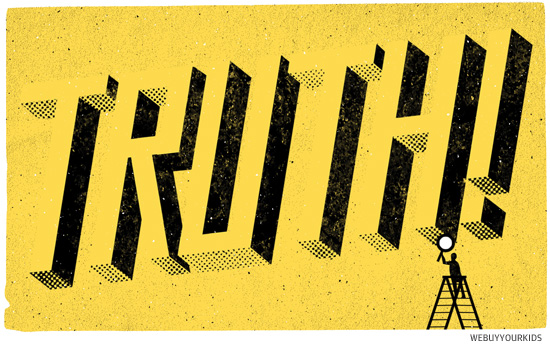
It’s hardly a radical idea. Journalism has always purported to be about uncovering facts in the service of discovering truth—or at least as much of the truth as it’s possible to know. If the political culture is “post-truth,” then journalism must be more than just a presenter of facts; it must be truth’s dogged—and vocal—advocate.
Has America ever needed a media defender more than now? Help us by joining CJR today.