Sign up for the daily CJR newsletter.
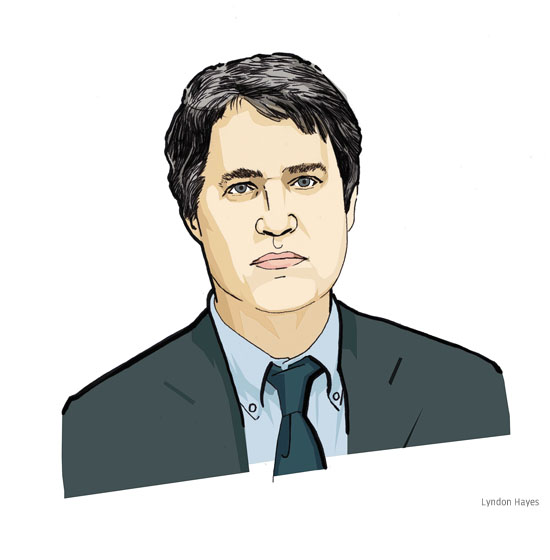
Mike Hudson began reporting on the subprime mortgage business in the early 1990s when it was still a marginal, if ethically challenged, business. His work on the “poverty industry” (pawnshops, rent-to-own operators, check-cashing operations) led him to what were then known as “second-lien” mortgages. From his street-level perspective, he could see the abuses and asymmetries of the market in a way that the conventional business press could not. But because it ran mostly in small publications, his reporting was largely ignored. Hudson pursued the story nationally, via a muckraking book, Merchants of Misery (Common Courage Press, 1996); in a 10,000-word expose on Citigroup-as-subprime-factory, which won a Polk award in 2004 for the small alternative magazine Southern Exposure; and in a series on the subprime leader, Ameriquest, co-written as a freelancer, for the Los Angeles Times in 2005. He continued to pursue the subject as it metastasized into the trillion-dollar center of the Financial Crisis of 2008—briefly at The Wall Street Journal and now at the Center for Public Integrity. Hudson, 5250, is the son of an ex-Marine and legendary local basketball coach. He started out on rural weeklies, covering championship tomatoes and large fish and such, even produced a cooking column. But as a reporter for The Roanoke Times he turned to muckraking and never looked back. CJR’s Dean Starkman interviewed Hudson in the spring of 2011.
Follow the ex-employees
The great thing about The Roanoke Times was that there was an emphasis on investigation but there was also an emphasis on storytelling and writing. And they would bring in lots of people like Roy Peter Clark and William Zinsser, the On Writing Well guy. The Providence Journal book, the How I Wrote the Story, was a bit of a Bible for me.
As I was doing a series on poverty in Roanoke, one of the local legal aid attorneys was like, “It’s not just the lack of money—it’s also what happens when they try to get out of poverty.” He said basically there are three ways out: they bought a house, so they got some equity; they bought a car so they could get some mobility; or they went back to school to get a better job. And in every case, he had example after example of folks, who because they were doing just that, had actually gotten deeper in poverty, trapped in unbelievable debt.
His clients often dealt with for-profit trade schools, truck driving schools that would close down; medical assistant’s schools that no one hired from; and again and again they’d be three, four, five, eight thousand dollars in debt, and unable to repay it, and then of course prevented from ever again going back to school because they couldn’t get another a student loan. So that got me thinking about what I came to know as the poverty industry.
I applied for an Alicia Patterson Fellowship and proposed doing stories on check-cashing outlets, pawn shops, second-mortgage lenders (they didn’t call themselves subprime in those days). This was ’91. We didn’t have access to the Internet, but I came across a wire story about something called the Boston “second-mortgage scandal,” and got somebody to send me a thick stack of clips. It was really impressive. The Boston Globe and other news organizations were taking on the lenders and the mortgage brokers, and the closing attorneys, and on and on.
I was trying to make the story not just local but national. I had some local cases involving Associates [First Capital Corp., then a unit of Ford Motor Corp.]. Basically, it turned out that Ford Motor Company, the old-line carmaker, was the biggest subprime lender in the country. The evidence was pretty clear that they were doing many of the same kinds of bait-and-switch salesmanship and, in some cases, pure fraud, that we later saw take over the mortgage market. I felt like this was a big story; this is the one! Later, investigations and Congressional hearings corroborated what I was finding in ’94, ’95, and ’96. And it seems so self-evident now, but I learned that finding ex-employees often gives you a window into what’s really going on with a company. The problem has always been finding them and getting them to talk.
I spent the better part of the ‘90s writing about the poverty industry and about predatory lending. As a reporter you don’t want to be defined by one subject. So I was actually working on a book about the history of racial integration in sports, interviewing old Negro-league baseball players. I was really trying to change a little bit of how I was moving forward career-wise. But it’s like the old mafia-movie line: every time I think I’m out, they pull me back in.
Subprime goes mainstream
In the fall of 2002, the Federal Trade Commission announced a big settlement with Citigroup, which had bought Associates, and at first I saw it as a positive development, like they had nailed the big bad actor. I’m doing a 1,000-word freelance thing, but of course as I started to report I started hearing from people who were saying that this settlement is basically giving them absolution, and allowed them to move forward with what was, by Citi standards, a pretty modest settlement. And the other thing that struck me was the media was treating this as though Citigroup was cleaning up this legacy problem, when Citi itself had its own problems. There had been a big magazine story about [Citigroup Chief Sanford I.] “Sandy” Weill. It was like “Sandy’s Comeback.” I saw this and said, ‘Whoa, this is an example of the mainstreaming of subprime.’
I pitched a story about how these settlements weren’t what they seemed, and got turned down a lot of places. Eventually I went to Southern Exposure and called the editor there, Gary Ashwill, and he said, “That’s a great story, we’ll put it on the cover.” And I said, “Well how much space can we have?” and he said, “How much do we need?” That was not something you heard in journalism in those days.
I interviewed 150 people, mostly borrowers, attorneys, experts, industry people, but the stuff that really moves the story are the former employees. Many of them had just gotten fired for complaining internally. They were upset about what had gone on—to some degree about how the company treated them, but usually very upset about how the company had pressured them and their co-workers to mistreat their customers.
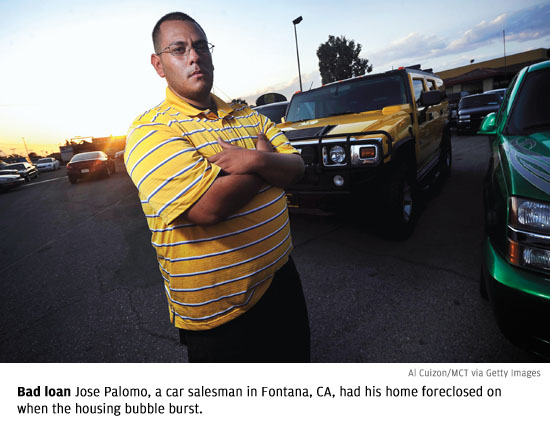
As a result of the Citigroup stuff, I got a call from a filmmaker [James Scurlock] who was working on what eventually became Maxed Out, about credit cards and student loans and all that kind of stuff. And he asked if I could go visit, and in some cases revisit, some of the people I had interviewed and he would follow me with a camera. So I did sessions in rural Mississippi, Brooklyn and Queens, and Pittsburg. Again and again you would hear people talk about these bad loans they got. But also about stress. I remember a guy in Brooklyn, not too far from where I live now, who paused and said something along the lines of: ‘You know I’m not proud of this, but I have to say I really considered killing myself.’ Again and again people talked about how bad they felt about having gotten into these situations. It was powerful and eye-opening. They didn’t understand, in many cases, that they’d been taken in by very skillful salesmen who manipulated them into taking out loans that were bad for them.
If one person tells you that story, you say okay, well maybe it’s true, but you don’t know. But you’ve got a woman in San Francisco saying, “I was lied to and here’s how they lied to me,” and then you’ve got a loan officer for the same company in suburban Kansas saying, “This is what we did to people.” And then you have another loan officer in Florida and another borrower in another state. You start to see the pattern.
People always want some great statistic [proving systemic fraud], but it’s really, really hard to do that. And statistics data doesn’t always tell us what happened. If you looked at some of the big numbers during the mortgage boom, it would look like everything was fine because of the fact that they refinanced people over and over again. So essentially a lot of what was happening was very Ponzi-like—pushing down the road the problems and hiding what was going on. But I was not talking to analysts. I was not talking to high-level corporate executives. I was not talking to experts. I was talking to the lowest level people in the industry— loan officers, branch managers. I was talking to borrowers. And I was doing it across the country and doing it in large numbers. And when you actually did the shoe-leather reporting, you came up with a very different picture than the PR spin you were getting at the high level.
One day Rich Lord [who had just published the muckraking book, American Nightmare: Predatory Lending and the Foreclosure of the American Dream, Common Courage Press, 2004) and I went to his house. We were sitting in his study. Rich had spent a lot of time writing about Household [International, parent of Household Finance], and I had spent a lot of time writing about Citigroup. Household had been number one in subprime, and then CitiFinancial/Citigroup was number one. This was in the fall of 2004. We asked, well, who’s next? Rich suggested Ameriquest.
I went back home to Roanoke and got on the PACER—computerized court records—system and started looking up Ameriquest cases, and found lots of borrower suits and ex-employee suits. There was one in particular, which basically said that the guy had been fired because he had complained that Ameriquest business ethics were terrible. I just found the guy in the Kansas City phone book and called him up, and he told me a really compelling story. One of the things that really stuck out is, he said to me, “Have you ever seen the movie Boiler Room [2000, about an unethical pump-and-dump brokerage firm]?”
By the time I had roughly ten former employees, most of them willing to be on the record, I thought: this is a really good story, this is important. In a sense I feel like I helped them become whistleblowers because they had no idea how to blow the whistle or what to do. And Ameriquest at that point was on its way to being the largest subprime lender. So, I started trying to pitch the story. While I had a full-time gig at the Roanoke Times, for me the most important thing was finding the right place to place it.
The Los Angeles Times liked the story and teamed me with Scott Reckard, and we worked through much of the fall of 2004 and early 2005. We had thirty or so former employees, almost all of them basically saying that they had seen improper, illegal, fraudulent practices, some of whom acknowledged that they’d done it themselves: bait-and-switch salesmanship, inflating people’s incomes on their loan applications, and inflating appraisals. Or they were cutting and pasting W2s or faking a tax return. It was called the “art department”—blatant forgery, doctoring the documents. You know, it was pretty eye-opening stuff. One of the best details was that many people said they showed Boiler Room—as a training tape! And the other important thing about the story was that Ameriquest was being held up by politicians, and even by the media, as the gold standard—the company cleaning up the industry, reversing age-old bad practices in this market. To me, theirs was partly a story of the triumph of public relations.
Leaving Roanoke
I’d been in Roanoke almost 20 years as a reporter, and so, what’s the next step? I resigned from the Roanoke Times and for most of 2005 I was freelancing fulltime. I made virtually no money that year, but by working on the Ameriquest story, it helped me move to the next thing. I interviewed with The Wall Street Journal [and was hired to cover the bond market]. Of course I came in pitching mortgage-backed securities as a great story. I could have said it with more urgency in the proposal, but I didn’t want to come off as like an advocate, or half-cocked.
Daily bond market coverage is their bread-and-butter, and it’s something that needs to be done. And I tried to do the best I could on it. But I definitely felt a little bit like a point guard playing small forward. I was doing what I could for the team but I was not playing in a position where my talents and my skills were being used to the highest.
I wanted to do a documentary. I wanted to do a book [which would become The Monster: How a Gang of Predatory Lenders and Wall Street Bankers Fleeced America—and Spawned a Global Crisis, Times Books, 2010]. I felt like I had a lot of information, a lot of stuff that needed to be told, and an understanding that many other reporters didn’t have. And I could see a lot of the writing focused on deadbeat borrowers lying about their income, rather than how things were really happening.
Through my reporting I knew two things: I knew that there were a lot of predatory and fraudulent practices throughout the subprime industry. It wasn’t isolated pockets, it wasn’t rogue lenders, it wasn’t rogue employees. It was really endemic. And I also knew that Wall Street played a big role in this, and that Wall Street was driving or condoning and/or profiting from a lot of these practices. I understood that, basically, the subprime lenders, like Ameriquest and even like Countrywide, were really just creatures of Wall Street. Wall Street loaned these companies money; they then made loans; they off-loaded the loans to Wall Street; Wall Street then sold them [as securities to investors]. And it was just this magic circle of cash flowing. The one thing I didn’t understand was all the fancy financial alchemy—the derivatives, the swaps, that were added on to put them on steroids.
It’s clear that people inside a company, one or two or three people, could commit fraud and get away with it, on occasion, despite the best efforts of a company. But I don’t think it can happen in a widespread way when a company has basic compliance systems in place. The best way to connect the dots from the sleazy practices on the ground to people at high levels was to say, okay, they did have these compliance people in place; they had fraud investigators, loan underwriters, and compliance officers. Did they do their jobs? And if they did, what happened to them?
In late 2010, at the Center for Public Integrity, I got a tip about a whistleblower case involving someone who worked at a high level at Countrywide. This is Eileen Foster, who had been an executive vice president, the top fraud investigator at Countrywide. She was claiming before OSHA that she was fired for reporting widespread fraud, but also for trying to protect other whistleblowers within the company who were also reporting fraud at the branch level and at the regional level, all over the country. The interesting thing is that no one in the government had ever contacted her! [This became “Countrywide Protected Fraudsters by Silencing Whistleblowers, say Former Employees,” September 22 and 23, 2011, one of CPI’s best-read stories of the year; 60 Minutes followed with its own interview of Foster, in a segment called, “Prosecuting Wall Street,” December 14, 2011.] It was very exciting. We worked really hard to do follow-up stories. I did about eight stories afterward, many about General Electric, a big player in the subprime world. We found eight former mortgage unit employees who had tried to warn about abuses and whom management had shunted aside.
I just feel like there needs to be more investigative reporting in the mix, and especially more investigative reporting—of problems that are going on now, rather than post-mortems or tick-tocks about financial disasters or crashes or bankruptcies that have already happened.
And that’s hard to do. It takes a real commitment from a news organization, and it can be a high-wire thing because you’re working on these stories for a long time, and market players you’re writing about yell and scream and do some real pushback. But there needs to be more of the sort of early warning journalism. It’s part of the big tent, what a newspaper is.
Has America ever needed a media defender more than now? Help us by joining CJR today.