Sign up for the daily CJR newsletter.
What’s the best way to get through to stubborn writers? —Kjerstin Johnson, Portland, OR
The editing process should be a collaboration, and if both the writer and editor don’t see it that way, conflicts are bound to crop up. There are certainly problem editors, too, but since you asked specifically about problem writers, I’ve broken them down into five categories; these aren’t exhaustive, so add yours in the comments:
The Newbie.

She’s fresh from the college newspaper and has labored over each word of her piece, so she cannot bear the thought of you making a single change. Your questions about her thesis and requests for additional reporting practically drive her to tears. Your edit should contain lots of comments that explain why you’re making changes you are. If you don’t have the time for that, get her on the phone to discuss. Yes, I know this is annoying. But if she’s smart, she’ll learn quickly. And she’ll value you as an editor who took the time to show her the ropes.
The Know-It-All.

Most writers who have been in the business a long time welcome a thorough edit. But occasionally you’ll run across one who would rather inform you, again and again, how accomplished he is and how rarely he needs to make revisions to his copy. Worst case? He’s an academic who insists that everything has to be phrased just so (nevermind the mind-numbing repetition) in order to be accurate. Your response? Sometimes it’s easiest to pass off your choices as driven by things beyond your control. “We never publish Web pieces over 700 words.” Or, “We’re running a piece next week that makes this point, so I needed to cut it.” Yes, I’m telling you to lie. And then never work with this writer again. If he hasn’t learned how to be edited by now, you’re not going to be the one to teach him.
The Poet.
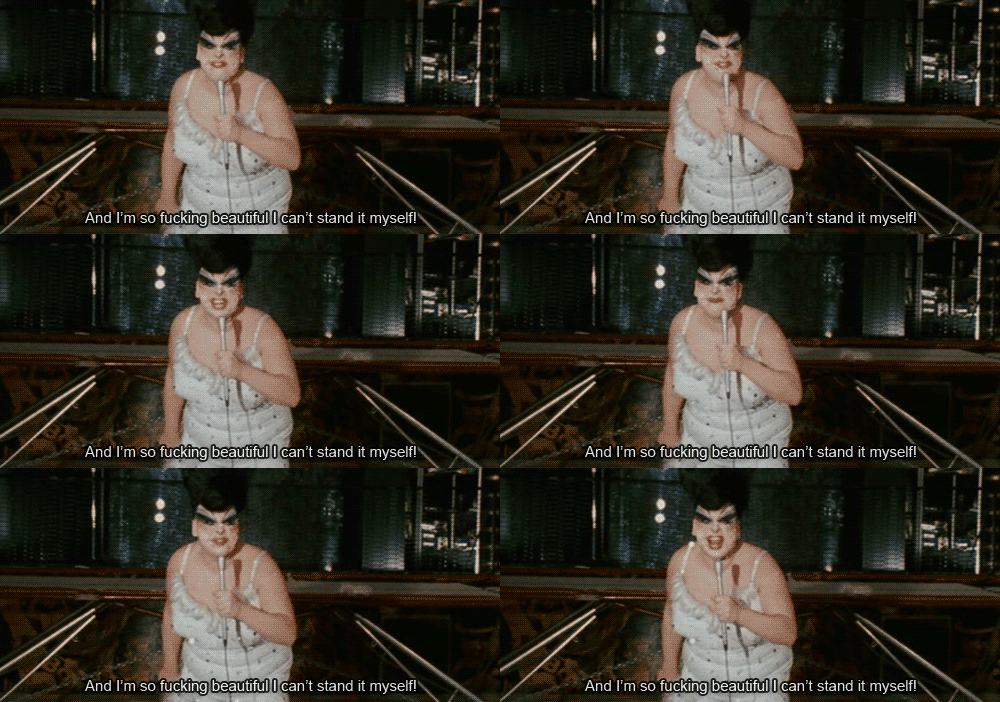
Her draft is a case study in adjectives and adverbs run amok. Just reply, “Our style guide prevents us from using the word ‘mellifluous.’ My hands are tied.” Suggest that she publish a post on her personal blog featuring all of the poetic descriptions you excised from her piece.
The Procrastinator.
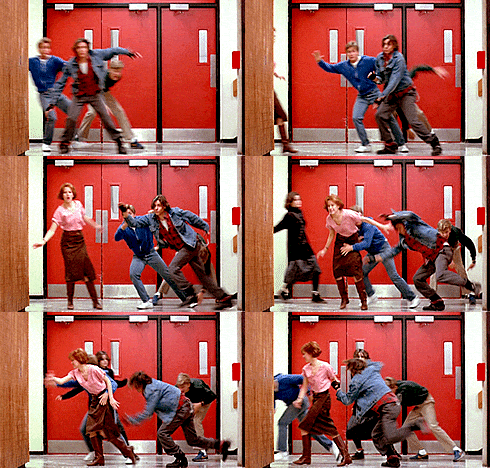
He’s filing so soon. Like, in half an hour. Almost there! Just waiting on a source to call back. Just had something else crop up. (Nevermind that he’s been tweeting and updating his Facebook status and probably learning to bake bread and doing yoga and god knows what else in the interim.) Two days later, you haven’t seen any copy, and the news hook is rapidly expiring. After he’s blown the deadline once, reply with a drop-dead date/time by which you need a draft. Assume he will also miss this deadline. Start looking for another writer or piece to fill the hole. And half an hour after your revised deadline, email him to tell him you’re killing it. Tough love! I usually give this writer a second chance, but if it happens twice, no more.
The Sloth.

She responds to your queries about her draft in email or in comments but doesn’t bother to change the actual text of the piece. She accepts all of your changes without even doing a full read-through, let alone a revise. When you ask for a different quote or anecdote, she’s got nothing. This is a file-it-and-forget-it writer. Her actions have indicated that she just doesn’t care. Feel free to rewrite whole paragraphs and steamroll her prose into shape, or just kill the thing outright. Do not work with her again.
To be fair, I know that there are problem editors, too. I’ve listed some types over at my personal blog.
I was wondering if you had any advice for someone who wants to get started freelancing? —Stephanie Tait
Save up. You’ll need a generous financial cushion. Start by pitching editors you know, and read the publications that you’re pitching. Invest a lot of time and energy in your Web presence: Be active on Twitter and frequently update your personal blog. And after you get an assignment? Don’t be a problem writer.
In need of some #realtalk? Email your questions, conundrums, and requests to editorrealtalk@gmail.com.
Has America ever needed a media defender more than now? Help us by joining CJR today.