Sign up for the daily CJR newsletter.
On July 7 in Houston, an Immigration and Customs Enforcement (ICE) agent shot and killed Lorenzo Salgado Araujo, a fifty-two-year-old Mexican man. Audrey Colocho and Katherine Torres of El Grito Media—which this spring started publishing stories directly on Instagram, X, YouTube, and TikTok instead of on a dedicated site—tried to piece together what happened, beginning with a social media post. Soon, they had collected more footage, from more angles—providing a definitive account that became a source for major news outlets.
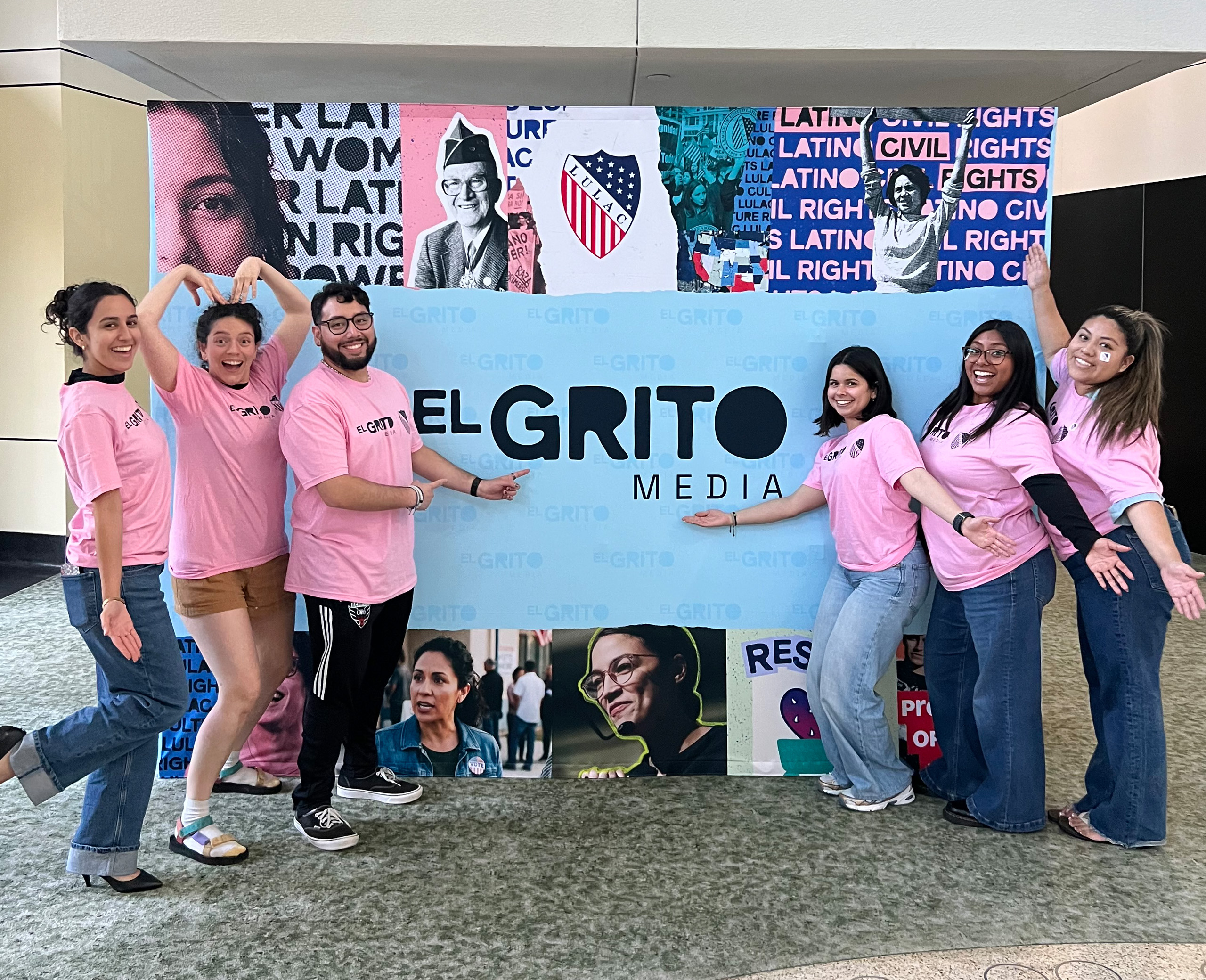
El Grito, Spanish for “the yell,” based in Washington, DC, is an initiative of the League of Latin American Citizens (LULAC), which provides the newsroom with funding but no editorial oversight. The staff, led by editor Arleen Aguasvivas, comprises two full-time members, one fellow, and seven interns: Colocho is a rising senior at the University of California, Berkeley, and Torres, who just graduated from Wellesley, lives in Boston. Their short videos, which cover a range of subjects affecting the Latino community, from immigration and law enforcement to mental health and childcare, attract tens of thousands of views.
Juan Proaño, LULAC’s chief executive, told me that he began entertaining the idea of working on a media-related project last year when CBS halted a 60 Minutes story about a group of Venezuelan detainees deported by the Trump administration to El Salvador’s CECOT prison. LULAC had filed a claim with the federal government seeking compensation for the “wrongful arrest, detention, and removal” of the prisoners—many of whom have said they endured physical and mental abuse while in custody. “After literally months of working on that, they called us up,” Proaño told me, of CBS, “and said, ‘Hey, we’re going to kill the story.’ The team were very apologetic, and I could tell that they themselves were disheartened by it.”
Though the segment eventually ran, Proaño began to feel as though the writing was on the wall: LULAC was not going to be able to get Latino stories “through the more traditional national media networks.” He decided something needed to change.
He wasn’t quite sure what that would look like until Aguasvivas, who was in talks with him about a role at LULAC, spelled it out. “I was like, ‘You want a newsroom,’” she told me. Proaño asked her to run it. Aguasvivas, a video producer and journalist who worked at NBC News for nearly a decade, made sure to set up ethical guidelines: “I got guaranteed, in writing, that regardless of who our funders might be or the advocacy side of what the organization might be pushing, LULAC would always respect that El Grito is editorially independent,” she told me. Transparency is a priority too. Whenever her reporters receive information from LULAC’s advocacy arm, she said, reporters disclose that connection.
The majority of El Grito’s staff is either in college or recently graduated. Aguasvivas has advised them on ambitious investigations and timely reporting, on ICE shootings and Supreme Court cases that engage the Latino community. In states such as Maine and Texas, entire neighborhoods “have received calls” from El Grito journalists, she said. “They are doggedly determined.”
With its reels, El Grito Media is also educating its audience: One video features Brittany Francis, the executive director of Peoples’ Counsel, a nonprofit that advocates for survivors of police abuse, who explains why law enforcement can’t stop bystanders from sharing video. In another, Ana Paula Sanchez, a student journalist who is also a rising senior at UC Berkeley, outlines financial risks to immigrants taking on loans.
Torres told me she believes El Grito Media is providing a valuable service by publishing old-school journalism on social media platforms that tend to be flooded with biased content or misinformation. People often get sucked into “black holes,” or echo chambers, but El Grito doesn’t “have an agenda of what they want Latinos to think or vote,” she said. Next, Torres and Colocho are investigating the use of excessive force by the El Paso Police Department. “We want to present the most accurate truth,” Torres said.
Has America ever needed a media defender more than now? Help us by joining CJR today.