Sign up for the daily CJR newsletter.
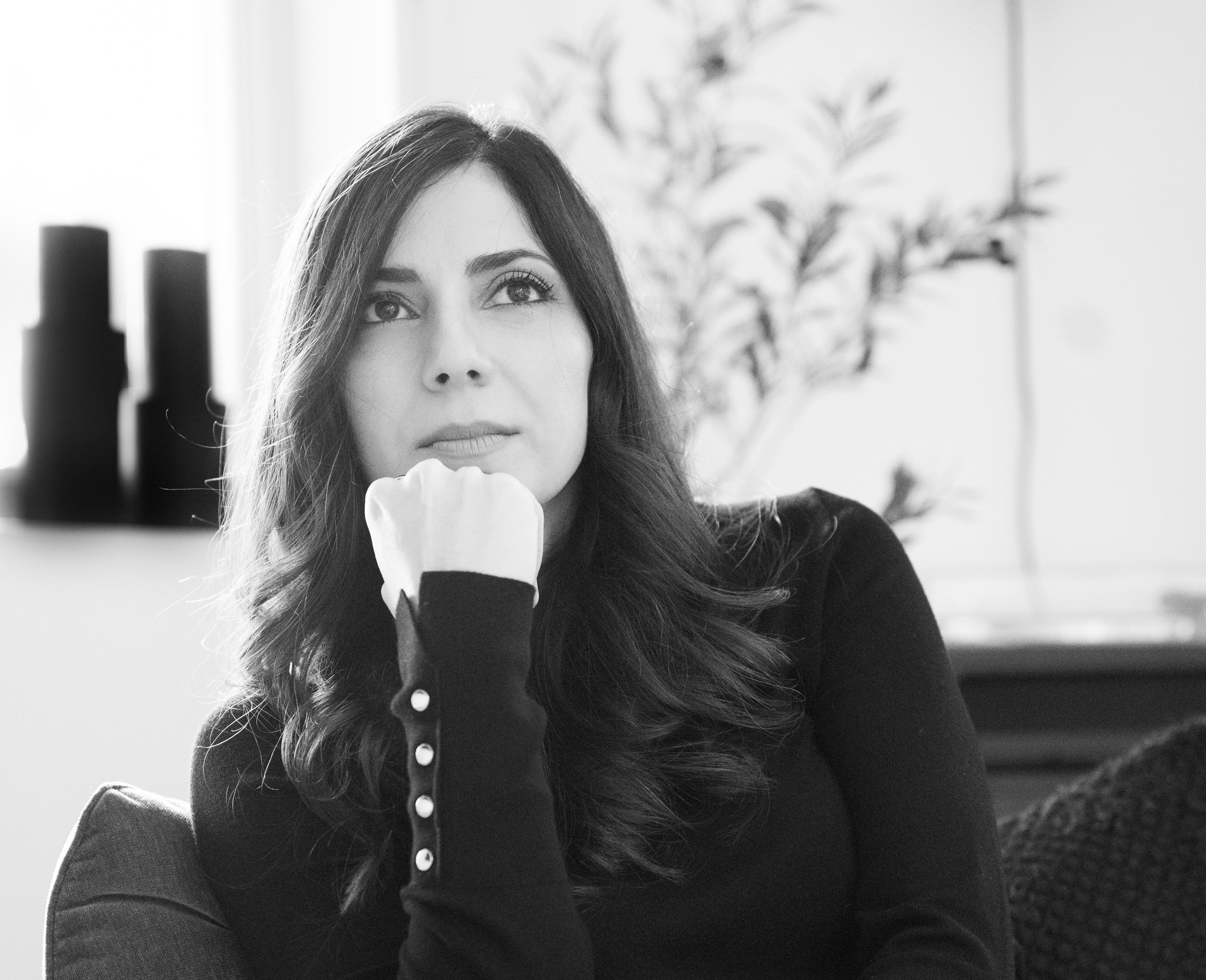
Assal Rad, an activist and Middle East historian, has become known for social media posts in which she edits headlines that she finds absurd, largely for their refusal to name Israel as the aggressor in its military campaign in Gaza. (Like this one, from the Washington Post on April 10, 2025: “How Palestinian First Responders Ended Up in a Mass Grave in Gaza.” Rad’s edit: “Israeli Forces Killed Palestinian First Responders and Buried Them in a Mass Grave in Gaza.”)
In Rad’s new book, Don’t Say Palestine: How the Media Manufactured Consent for Genocide, she takes a sweeping look back at press coverage of Israel’s assault on Gaza since October 7, 2023. Rad compellingly and provocatively argues that, in part by striving for traditional journalistic objectivity, the mainstream press has failed to properly inform the American public about Israel’s actions. “In March 2024, a Pew Research Center poll found that only about half of Americans could correctly say whether more Palestinians than Israelis had been killed in the war on Gaza,” she writes. “For those closely following the daily horrors in Gaza, this was baffling. How could so much of the public not know this most basic fact of what was happening?”
I recently spoke with Rad about the importance of headlines, the impartiality of truth, and how the press has enabled Israel’s assault on journalists. “When you’re repeating what Israel says, you’re legitimizing it, especially if you’re an authoritative institution like the New York Times or the Associated Press,” Rad told me. “Whether or not those publications think that’s what they’re doing, that is what they’re doing. This has created a dangerous precedent. Journalists everywhere in the world are likely facing more danger because targeted assassinations of journalists have been normalized.” Our conversation has been edited for length and clarity.
AB: Officially, there has been a ceasefire in place in Gaza since October of 2025. In that time, Israel has killed more than thirteen hundred people, including at least three hundred children. What is your analysis of press coverage of Gaza since last October?
AR: What’s happened since the so-called ceasefire is a decline in reporting. The facade of a ceasefire has created the space to cover it less. As if the war is not really happening anymore, as if we can move on to other news stories. In reality, the conditions on the ground for Palestinians in Gaza have not changed. The daily killings just get very little coverage.
In your book, you write that by the end of 2025, Israel had killed not just two hundred and seventy-eight media workers, but also more than seven hundred of their family members. You also make a connection between Israel’s ongoing killing of journalists and the Israeli military’s killing of Shireen Abu Akleh, a prominent Al Jazeera reporter, in the West Bank in 2022.
Shireen Abu Akleh was not only a well-known journalist among Palestinians and in the region as a whole—she was a United States citizen. But the US basically let Israel run an investigation. They let the criminal investigate itself. We leave it to Israel to investigate itself and, not surprisingly, 99 percent of the time Israel clears itself of any wrongdoing. This has been a continuous pattern, which we just saw again: Israel recently cleared itself of any charges for the killing of seven international aid workers for World Central Kitchen. There’s a facade of real order or procedure when, in reality, Israel is acting with total impunity. Abu Akleh was targeted and killed, and they got away with it. In my view, that really paved the way for what we’ve now seen come to pass. There’s never any consequences, and so Israel pushes the boundaries more and more and more. Even now, as it’s committing genocide, there are still no consequences.
How well do you think the media has covered Israel’s killing of journalists?
I remember when Israel targeted media workers in Lebanon, there was a Sky News post on Twitter that said “Hezbollah-linked media was targeted.” It’s as if they are creating space to legitimize the targeting of their own colleagues. Even if someone is Hezbollah-leaning, according to Israel, that doesn’t mean they’re combatants, that they’re legitimate targets. It’s insane that this is the way things are being framed. You add these buzzwords—“Hezbollah affiliated,” “Iran backed,” “Hamas”—and all of a sudden everyone is a justifiable target. It’s through that process that you’ve seen Gaza completely decimated.
There was an attack in August of 2025 on Nasser Hospital. It was a double-tap strike—actually, it ended up being three or four strikes. The reason it got so much attention is that it was caught on film. Al Jazeera was livestreaming. You see the bomb hit where there are rescue workers and journalists. Israel argued they were targeting what they called a “Hamas camera.” And every major media outlet ran with the story. The logic becomes so absurd: A camera is a legitimate reason to bomb a hospital? And in that case, it ended up being a Reuters camera. It had nothing to do with Hamas.
It feels to me that you are making a tacit argument that official statements from the Israeli government should not necessarily be trusted, or possibly even quoted at all.
I’m trying to raise questions. Israel stands accused of genocide. The consensus of every major humanitarian organization is that its actions in Gaza are genocide. Israel has repeatedly been caught in blatant lies, and it’s never described that way. They say things like “new information casts doubt on what Israel said.” With someone like Vladimir Putin, you’ll see the use of the words “deception” or “lies.” That language exists within the media’s lexicon. They just don’t apply it to Israel. This is a question of journalistic integrity. “This person said this,” and “this person said that.” But ultimately, the question is, what is the truth?
There’s a whole argument about impartiality, but the truth is impartial. What I would argue is, if a genocide is happening and you refuse to call it that, you’re not being impartial. You’re being partial because you’re not telling it as it is.
In the book, you draw some telling comparisons between the disparate ways in which the Biden administration spoke about Russia’s war on Ukraine and Israel’s war on Gaza.
The fact that these two things were happening at the same time gave us a clear example of how double standards and hypocrisy work their way into the political discourse. While Russia was attacking or repressing journalists, the Biden administration, including the president himself, had no problem lambasting Russia for doing exactly that and standing up for press freedom. They constantly used the language of international law.
When Palestinians are being starved to death in Gaza at an unprecedented rate—there were officials saying that it was the fastest onset of a hunger crisis that they’ve ever seen—it’s framed almost as if it’s a natural disaster, a tragic consequence of conflict and war. When Russia is doing it, it’s “starvation as a weapon.” The same language is not applied to Israel. What is the explanation for that besides that it’s a double standard?
In the State Department press briefings under Biden, journalists were really pushing the administration. The response from Matthew Miller, the State Department spokesperson, was, We can’t make assessments on war crimes in real time when the conflict is still ongoing. And yet they were making assessments in real time when it came to Ukraine. It took the Biden administration ten days, maybe two weeks, to say Russia was committing war crimes. Somehow, in something like fifteen months of overseeing the Gaza genocide, they couldn’t conclude one single case of Israel having committed a war crime. But later, after his tenure as the spokesperson, Miller said “without doubt” that Israel had committed war crimes.
You mention in the book that a few select Israeli outlets, most prominently Haaretz, are at times more explicitly critical of the Israeli government than American outlets are.
Look at the language that Haaretz uses when covering settler attacks: they talk about Jewish terrorism, they talk about pogroms. Why doesn’t our media use that language? The word “settler” is so neutral. It really masks what it is. These people are terrorizing civilians on a daily basis. They are killing animals, they’re burning houses, they’re shooting and killing people. And yet you’ve seen nowhere in the Western press the phrase “Jewish terrorism,” or even just “terrorism.” I saw a headline the other day in the Times that was something about how the Israeli military was failing to protect Palestinians against settlers. And it blew my mind. They’re not failing to protect them—they’re not there to protect them! They are an occupying force. They are there to protect the occupation.
Dr. Hussam Abu Safiya, a Gazan doctor who has been held by Israel without charge since December of 2024, is an example of the difference in language use. The man is a hostage. That’s just what it’s called. But Palestinians are never called hostages. They’re called prisoners. There was a CNN story that said an Israeli soldier was kidnapped from a military base. So Israeli soldiers can be kidnapped from military bases, but doctors are detained at hospitals. Subtle differences may seem like subtle differences. But when you call someone a prisoner, the assumption is that they’ve done something wrong.
Why do you choose to focus on headlines?
Because people often do not read past them. This is in no way a criticism of the general public. I’m a historian of the region. This is what I do. This is what I care about. But I don’t have the same depth of knowledge for many, many other areas around the globe. So how do I get information? I’m scrolling on social media platforms. I’m standing in a coffee shop and CNN is in the background and there’s a ticker. I’m at the gym and MS Now is in the background and there’s a ticker. There are these passive ways that we consume information. A lot of these articles are paywalled. What people see, more than anything else, is how the story is framed.
Recently, Reuters ran an article about the fact that 2025 was again a deadly year for aid workers. There was nothing about Israel in the headline. It’s a subtle difference to say “Gaza is the deadliest place for aid workers” versus “Israel is the leading killer of aid workers.” But how it’s phrased makes a difference in the narrative that becomes unconsciously entrenched in the public psyche.
Has America ever needed a media defender more than now? Help us by joining CJR today.